Miso-Marinated Black Cod with Japanese Greens, Roasted Kabocha and Sweet Potatoes
Silky black cod gets a lightly caramelized miso glaze, with tender Japanese greens bringing a savory, earthy counterpoint. Roasted kabocha and Japanese sweet potatoes add sweet, creamy centers and browned edges, finished with furikake and a restrained drizzle of honeynut squash tamari.
By Jonathan Katzman · Cooked and photographed · Recipe updated
Serves: 4 servings
Tags: gluten-free, paleo, dairy-free, nut-free, pescatarian
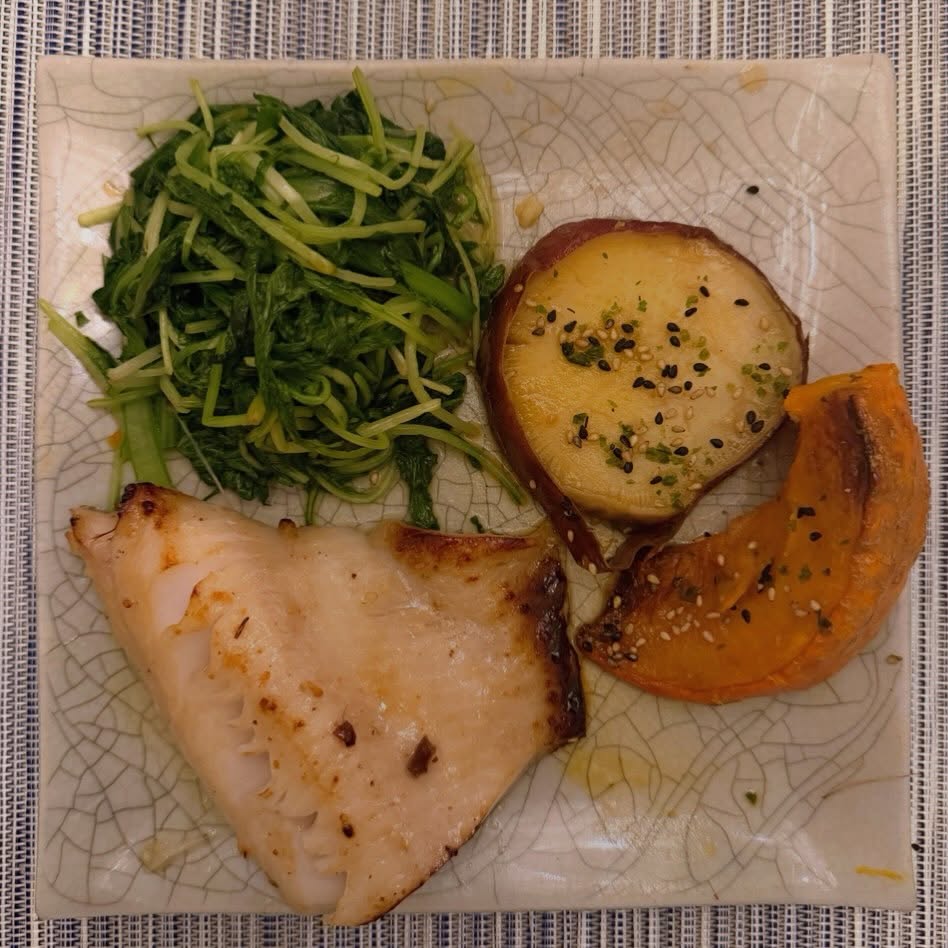
Miso-Marinated Black Cod
Black cod's rich flesh stays succulent under high heat, while a thin miso coating browns quickly. Wiping off excess marinade keeps the fish delicately glazed rather than heavily crusted.
Ingredients
- 4 portions black cod (sablefish), about 6 oz each, pin bones removed
- 3 tbsp gluten-free white or mild yellow miso
- 1 tbsp honey
- 1 tbsp unseasoned rice vinegar
- 1 tbsp water
- 1 tsp avocado oil, for the baking tray
Instructions
- Mix the miso, honey, vinegar, and water into a spreadable paste. Pat the fish dry and coat evenly. Cover and refrigerate for 12–24 hours.
- Heat the oven to 425°F. Line a rimmed metal baking tray with foil and lightly coat it with avocado oil.
- Wipe most of the marinade off the fish, leaving a thin film; do not rinse. Discard the used marinade. Arrange the portions skin-side down, or with their smoothest presentation side up if skinless.
- Roast for 10–15 minutes, depending on thickness. If the surface needs more color, switch to the broiler for 1–3 minutes, watching constantly so the miso does not burn.
- Cook until the thickest part reaches 145°F and the flesh separates into moist, broad flakes. Check early if the portions are thin, and rest for 2 minutes before lifting with a wide spatula.
Notes
- Do not add salt before cooking; the miso supplies the seasoning.
- Use a metal tray rather than glass under the broiler.
Japanese Greens with Morel Miso Tamari
A quick sauté preserves the greens' tender stems and fresh color. Morel miso tamari provides a concentrated earthy finish, balanced by a small splash of rice vinegar.
Ingredients
- 1 lb tender Japanese greens, such as mizuna or young komatsuna
- 1 tbsp avocado oil
- 1 tbsp gluten-free morel miso tamari, plus more to taste
- 1 tsp unseasoned rice vinegar
- 1 tbsp water, as needed
Instructions
- Wash the greens thoroughly, drain well, and cut into roughly 3-inch lengths. If the stems are substantial, separate them from the leaves.
- Heat the avocado oil in a wide skillet over medium-high heat. Add thicker stems first and toss for 1–2 minutes, then add the leaves. For tender mizuna, add everything together.
- Toss until just wilted and the stems are tender-crisp, about 2–3 minutes more. Add the water only if the pan becomes dry before the stems soften.
- Remove from the heat and toss with the morel miso tamari and rice vinegar. Taste before adding more tamari, and transfer out of the hot pan promptly.
Notes
- Specialty tamaris vary in salinity; start with the measured tablespoon rather than salting the greens separately.
Roasted Kabocha and Japanese Sweet Potatoes with Furikake and Honeynut Squash Tamari
Thick cuts develop browned surfaces while keeping their centers creamy. Furikake adds sesame crunch and seaweed savoriness, and the squash tamari sharpens the vegetables' natural sweetness.
Ingredients
- 1 lb kabocha squash, seeded and cut into 1-inch-thick wedges, edible skin left on
- 1 lb Japanese sweet potatoes, scrubbed and cut into 1-inch-thick rounds
- 2 tbsp avocado oil
- 1/4 tsp fine sea salt
- 2 tsp gluten-free honeynut squash tamari, plus more to taste
- 1 tbsp gluten-free, unsweetened sesame-nori furikake
Instructions
- Heat the oven to 425°F. Toss the squash and sweet potatoes with the avocado oil and salt.
- Arrange in a single layer on a large rimmed baking tray, with a broad cut face against the tray. Keep the two vegetables in separate areas so either can be removed when ready.
- Roast for 20 minutes, then turn the pieces carefully. Continue roasting for 15–25 minutes, until browned and easily pierced through the center. Remove individual pieces as they finish.
- While hot, lightly brush or drizzle with the honeynut squash tamari. Scatter with furikake just before serving.
Notes
- Leave space between pieces; use two trays if necessary to avoid steaming.
- Add the tamari after roasting so its concentrated sugars and solids do not scorch.
Overall Timing / Workflow
The vegetables take longest and tolerate a short hold. Cooking the greens last keeps them bright while the fish rests.
Instructions
- The day before: Coat the black cod with its marinade and refrigerate.
- 0:00 — Heat the oven to 425°F. Cut and season the squash and sweet potatoes.
- 0:15 — Start roasting the vegetables. Wash and trim the greens, and measure both finishing tamaris.
- 0:35 — Turn the vegetables. Wipe the fish and arrange it on its prepared metal tray.
- 0:40 — Put the fish in the oven on a separate rack. Check the vegetables and remove any pieces that are fully tender.
- 0:50 — Check the fish temperature. Remove the vegetables before switching to the broiler if the fish needs a browned finish.
- As the fish finishes — Sauté and season the greens. Rest the fish briefly, finish the roasted vegetables with tamari and furikake, and plate.
Notes
- Treat the timeline as a guide: thick sweet potato rounds may need the full 45 minutes, and fish thickness determines its cooking time.
Plating
Keeping the three elements distinct highlights the fish's delicate glaze and prevents the greens' juices from softening the roasted vegetables.
Instructions
- Use warm plates. Lift a portion of black cod onto each plate with its browned surface facing up.
- Place a compact mound of greens alongside, leaving excess pan liquid behind.
- Add a sweet potato round and one or two kabocha wedges, dividing any remaining pieces among the plates. Keep the furikake visible on the vegetables rather than scattering it over the fish.
Leftover Path
Separate storage allows the fish to reheat gently while the roasted vegetables recover their browned edges.
Instructions
- Refrigerate the fish, greens, and roasted vegetables in separate airtight containers within 2 hours. Use within 3 days.
- Reheat the vegetables at 400°F for 10–15 minutes. Add a fresh pinch of furikake after heating if available.
- Warm the fish covered in a 275°F oven with a small splash of water until it reaches 165°F; avoid broiling it again. Briefly warm the greens in a skillet.
- Alternatively, flake the chilled fish over the leftover greens and serve with the roasted vegetables at cool room temperature, keeping time out of refrigeration under 2 hours.