Miso-Marinated Black Cod with Nasu Dengaku, Simmered Kabocha, and Furikake Avocado
Buttery black cod gets a deeply browned miso crust alongside silky Japanese eggplant glazed with savory-sweet dengaku sauce. Dashi-simmered kabocha brings gentle sweetness and a little shichimi heat, while cool avocado and sesame-rich furikake round out this early-autumn plate.
By Jonathan Katzman · Cooked and photographed · Recipe updated
Serves: 4 servings
Tags: gluten-free, dairy-free, nut-free, pescatarian
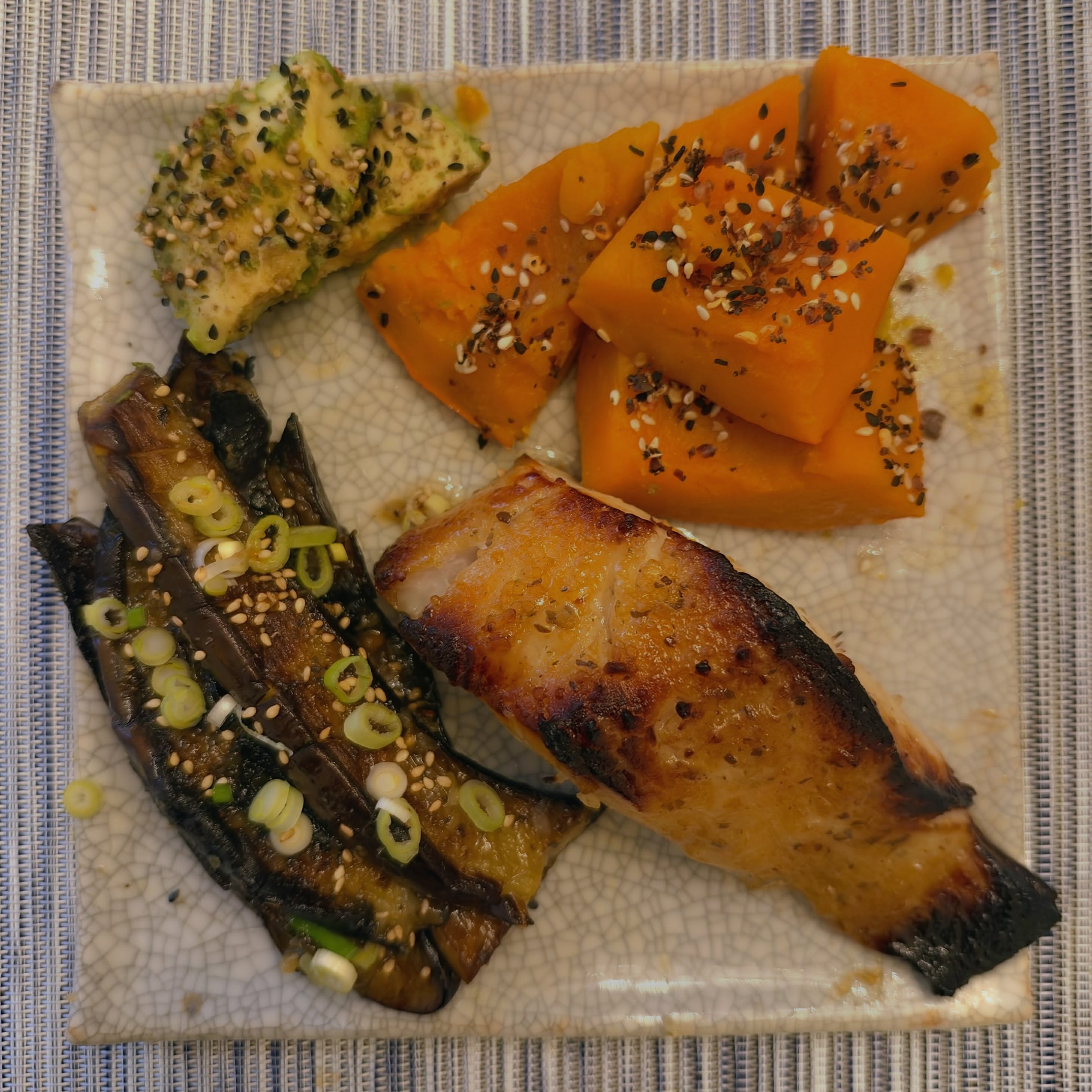
Miso-Marinated Black Cod
An overnight miso marinade seasons the rich fish throughout. Wiping away excess paste before roasting lets the surface caramelize without burning before the center cooks.
Ingredients
- 4 6-ounce skin-on black cod (sablefish) fillets, pin bones removed
- 3 tablespoons gluten-free Shared Cultures mushroom miso
- 3 tablespoons gluten-free Shared Cultures sweet taro miso
- 3 tablespoons dry sake
- 1 tablespoon honey
- 1 teaspoon avocado oil, for the baking surface
Instructions
- Whisk the misos, sake, and honey until smooth. Pat the fish dry, coat with the marinade, and refrigerate in a covered nonreactive container for 12–24 hours.
- Heat the oven to 400°F. Line a rimmed baking sheet with foil and lightly brush with avocado oil.
- Scrape and gently wipe away most of the marinade without rinsing the fish. Discard the used marinade. Set the fillets skin-side down on the prepared sheet.
- Roast for 10–14 minutes, depending on thickness, until the flesh begins to separate into moist flakes.
- Switch to the broiler and brown for 1–3 minutes, watching continuously. Move the tray farther from the heat if the edges darken too quickly. The thickest part should reach 145°F; if the surface browns first, finish under regular oven heat.
- Rest for 2 minutes and lift each fillet with a wide spatula.
Notes
- Choose verified gluten-free misos; small-batch varieties differ in grain content, sweetness, and saltiness.
- If the available misos are particularly sweet, reduce the honey to 1–2 teaspoons.
Glazed Japanese Eggplant — Nasu Dengaku
Roasting softens the eggplant before the miso glaze goes on. A brief broil gives the glaze browned edges while scallions and sesame add freshness and texture.
Ingredients
- 4 medium Japanese eggplants, about 1¼ pounds total
- 2 tablespoons avocado oil
- 2 tablespoons gluten-free sweet taro miso
- 1 tablespoon gluten-free mushroom miso
- 1 tablespoon dry sake
- 2 teaspoons honey
- 1 teaspoon unseasoned rice vinegar
- 1 tablespoon water, plus more as needed
- 2 scallions, thinly sliced
- 2 teaspoons toasted sesame seeds
Instructions
- Heat the oven to 425°F. Halve the eggplants lengthwise and score the flesh in a shallow crosshatch without piercing the skins.
- Brush the cut surfaces and skins with avocado oil. Arrange cut-side down on a baking sheet and roast for 20–25 minutes, until the flesh yields easily to a spoon.
- Meanwhile, combine both misos, sake, honey, rice vinegar, and water in a small saucepan. Stir over low heat for 2–3 minutes until glossy and spreadable; add a little water if it becomes stiff.
- Turn the eggplants cut-side up and spread with a thin, even layer of glaze. Broil 6–8 inches from the heat for 2–4 minutes, until bubbling and browned in spots.
- Finish with scallions and sesame. Serve as halves or cut crosswise into generous sections.
Notes
- The glaze should coat rather than bury the eggplant; miso strength varies, so taste before applying.
Dashi-Simmered Kabocha with Shichimi Togarashi
A shallow, gentle simmer seasons the squash without waterlogging it. Resting in the broth gives the pieces a savory finish that balances their natural sweetness.
Ingredients
- 1½ pounds seeded kabocha squash
- 1½ cups unsalted gluten-free kombu-bonito dashi
- 1 tablespoon gluten-free tamari
- 1 tablespoon dry sake
- 1 teaspoon honey
- ½ teaspoon gluten-free shichimi togarashi, or to taste
Instructions
- Remove most of the squash skin with a sturdy peeler or knife, leaving small patches if desired. Cut into broad pieces about ¾ inch thick.
- Arrange snugly in a single layer in a wide saucepan. Add dashi, tamari, sake, and honey; the liquid should reach roughly halfway to two-thirds up the squash.
- Bring to a gentle simmer. Cover with a parchment drop lid or a lid left slightly ajar and cook over low heat for 15–20 minutes, until a skewer enters easily but the pieces retain their shape. Avoid stirring; gently shake the pan if needed.
- Remove from the heat and rest in the broth for 10 minutes. Lift out carefully with a slotted spoon and spoon over a little cooking liquid.
- Sprinkle with shichimi just before serving.
Notes
- Begin checking thin pieces after 12 minutes; kabocha can go from tender to crumbling quickly.
- Serve warm rather than piping hot to let the squash's sweetness come through.
Avocado with Furikake
Cool avocado provides a mild, creamy contrast to the browned miso dishes. A sesame-and-nori furikake adds crunch and salinity without a heavy dressing.
Ingredients
- 2 ripe but firm avocados
- 1 tablespoon gluten-free sesame-and-nori furikake
- 1 teaspoon unseasoned rice vinegar
Instructions
- Halve and pit the avocados, remove the skins, and slice each half into thick pieces.
- Lightly dab with rice vinegar and arrange in compact fans.
- Sprinkle with furikake immediately before serving.
Notes
- Choose a sesame-heavy furikake without wheat or dairy ingredients.
Overall Timing / Workflow
Cook the eggplant first and let the squash rest while the fish roasts. Finishing the avocado last keeps it fresh and avoids competing for oven space.
Instructions
- 12–24 hours ahead: Mix the fish marinade, coat the black cod, and refrigerate.
- 0:00 — Heat the oven to 425°F. Prepare the eggplant and put it in to roast.
- 0:10 — Cut the squash and start its gentle simmer. Make the eggplant glaze and slice the scallions.
- 0:25 — Glaze and broil the tender eggplant. Set aside loosely covered, then lower the oven to 400°F.
- 0:30 — Wipe the fish and begin roasting. Take the tender squash off the heat and let it rest in its broth.
- 0:42 — Check the fish, then broil briefly to brown. Slice the avocado while the fish finishes.
- 0:48 — Garnish the vegetables and plate. The eggplant and squash can be warm rather than hot.
Notes
- If needed, warm the eggplant on a lower oven rack during the fish's last few minutes of roasting, removing it before broiling.
Plating
Keeping the components distinct preserves the fish's browned surface and lets each vegetable retain its own seasoning.
Instructions
- Place one black cod fillet on each plate with its browned flesh facing up.
- Arrange the glazed eggplant alongside, keeping its scallion and sesame garnish visible.
- Stack the squash pieces loosely in a separate area and add only enough broth to moisten them, not flood the plate. Finish with shichimi.
- Set a small fan of avocado beside the squash and finish with furikake. Serve immediately.
Leftover Path
Gentle reheating protects the cod's moist flakes, while the squash and eggplant also work well at room temperature.
Instructions
- Refrigerate the fish, eggplant, and squash in separate covered containers within 2 hours. Keep the squash with its cooking liquid. Use within 3 days.
- Reheat fish covered in a 275°F oven with a small splash of water until it reaches 165°F, checking early to avoid drying it out.
- Warm the squash gently in its broth. Reheat eggplant covered in the oven or microwave, then add fresh scallions if available.
- Keep leftover avocado tightly covered and use by the next day; add fresh furikake at serving so it stays crisp.
- For another meal, flake the cod over freshly cooked white rice with the warmed vegetables and a splash of rice vinegar.