Miso-Marinated Black Cod with Nasu Dengaku, Kabocha and Japanese Greens
Rich black cod gets a golden miso crust, with the same marinade turning into a savory-sweet glaze for silky eggplant and nutty kabocha. Garlicky Japanese greens, fresh scallions and sesame keep the plate balanced—a good early-autumn dinner when summer eggplant meets the first winter squash.
By Jonathan Katzman · Cooked and photographed · Recipe updated
Serves: 4 servings
Tags: gluten-free, dairy-free, nut-free, pescatarian
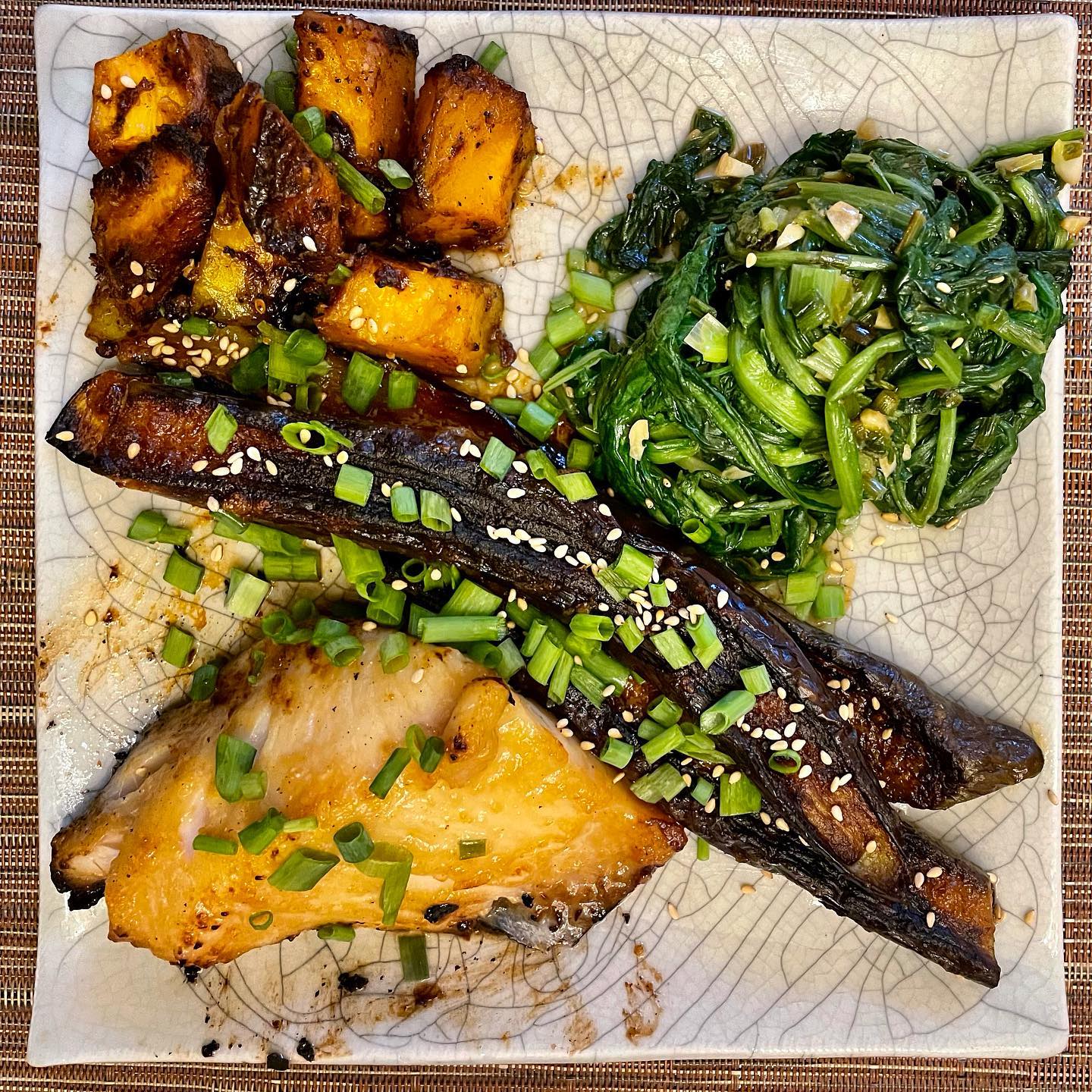
Shared Miso Marinade and Vegetable Glaze
One miso mixture seasons the buttery fish and caramelizes on both vegetables. Boiling the recovered marinade makes its reuse safe, while a little vinegar balances the sweetness.
Ingredients
- 1/4 cup sake
- 1/2 cup gluten-free white miso
- 3 tablespoons honey
- 2 tablespoons unseasoned rice vinegar
- 1/4 cup water, plus more as needed
Instructions
- Bring the sake to a simmer in a small saucepan and cook for 1 minute. Lower the heat and whisk in the miso, honey, vinegar and water until smooth. Cool completely before using on the fish.
- After the fish has marinated, scrape the marinade into a clean saucepan. Keep it refrigerated until ready to cook; treat it as raw fish until boiled.
- Add a splash of water if needed so the mixture can bubble freely. Bring to a full rolling boil, stirring constantly, and maintain the boil for at least 1 minute.
- Simmer briefly until glossy and brushable, adding water by the tablespoon if it becomes pasty. Transfer to a clean bowl and use clean utensils to glaze the eggplant and squash.
Notes
- Do not brush raw fish marinade directly onto cooked vegetables. If preferred, reserve half the cooled mixture before it touches the fish and use that clean portion as the glaze.
- Miso varies in saltiness; taste the cooked glaze before adding any extra seasoning to the vegetables.
Miso-Marinated Black Cod
Black cod's high fat content keeps it succulent through roasting and a brief broil. Removing excess marinade prevents the honey and miso from burning before the center cooks.
Ingredients
- 4 portions skin-on black cod (sablefish), 5–6 ounces each, pin bones removed
- 1 batch cooled shared miso marinade, prepared above
- 1 teaspoon avocado oil, for the baking surface
Instructions
- Pat the fish dry and coat with the cooled marinade in a snug nonreactive container. Cover and refrigerate for 12–24 hours.
- Heat the oven to 425°F. Lift the fish from the marinade and gently scrape off excess, leaving a thin coating. Transfer the recovered marinade to the saucepan for the glaze component.
- Set the fish skin-side down on a lightly oiled, foil-lined baking sheet. Roast for 10–14 minutes, depending on thickness.
- Broil for 1–3 minutes, watching constantly, until the top is golden with a few dark edges. Cook until the thickest part reaches 145°F and the flesh separates into moist flakes; if the surface browns first, finish on a lower rack with the broiler off.
- Rest for 2 minutes and lift carefully with a wide fish spatula.
Notes
- Black cod is sablefish, not ordinary cod; its richness is central to this dish.
- Avoid parchment under a hot broiler.
Miso-Glazed Eggplant — Nasu Dengaku
Roasting softens the eggplant all the way through before the glaze goes on. A final broil gives a lacquered surface without scorching the miso during the longer cooking stage.
Ingredients
- 4 medium Japanese eggplants, about 1 1/4 pounds total
- 2 tablespoons avocado oil
- 1/3 cup boiled shared miso glaze
Instructions
- Heat the oven to 425°F. Halve the eggplants lengthwise and score the cut flesh in a shallow crosshatch without cutting through the skin.
- Brush with avocado oil, working some into the scored flesh. Place cut-side down on a foil-lined baking sheet and roast for 18–25 minutes, until the flesh yields easily to a knife.
- Turn cut-side up and spread the boiled glaze over the flesh. Roast for 4–6 minutes, then broil for 1–3 minutes until bubbling and deeply browned in spots.
- Serve with the skin intact and the flesh soft enough to scoop with a fork.
Notes
- If using larger globe eggplants, cut into thick wedges and allow additional roasting time before glazing.
Roasted Miso-Glazed Kabocha
Kabocha's dense, chestnut-like flesh contrasts with the soft fish and eggplant. Roasting unglazed first develops browned edges while keeping the final miso coating from burning.
Ingredients
- 1 small kabocha squash, about 2 pounds
- 1 1/2 tablespoons avocado oil
- 1/3 cup boiled shared miso glaze
Instructions
- Heat the oven to 425°F. Scrub the squash, remove the seeds, and cut into roughly 1 1/2-inch chunks, leaving the edible skin on.
- Toss with the oil and spread on a foil-lined sheet pan with room between pieces.
- Roast for 25–32 minutes, turning once, until browned on two sides and almost tender through the center.
- Toss gently with the boiled glaze and roast for another 5–8 minutes, until glossy and tender but not collapsing.
Notes
- Use a sturdy knife and a stable cutting surface; kabocha skin is hard before cooking.
Garlicky Japanese Greens
Quick cooking keeps the stems juicy and the leaves vibrant. Garlic, a restrained amount of tamari and a little rice vinegar give the greens enough character to balance the sweet miso glaze.
Ingredients
- 1 1/2 pounds komatsuna or similar tender Japanese greens
- 1 tablespoon avocado oil
- 3 cloves garlic, chopped
- 2 tablespoons water
- 2 teaspoons gluten-free tamari
- 2 teaspoons unseasoned rice vinegar
- 1 teaspoon toasted sesame oil
Instructions
- Wash the greens thoroughly and drain well. Cut into 3-inch lengths, separating thicker stems from leaves.
- Heat the avocado oil in a wide skillet over medium-high heat. Add the stems and stir-fry for 1–2 minutes.
- Add the garlic and stir for 20–30 seconds, just until fragrant. Add the leaves and water, cover, and steam for 1–2 minutes.
- Uncover and toss until the leaves are wilted and the stems are crisp-tender. Add the tamari and let excess liquid evaporate.
- Remove from the heat and toss with the vinegar and sesame oil. Serve immediately.
Notes
- For mature mustard greens with tougher stems, add an extra minute or two of covered cooking before adding the leaves.
Scallion and Sesame Finish
Fresh scallions cut through the rich fish and sticky glaze, while toasted sesame adds a small, nutty crunch.
Ingredients
- 4 scallions, thinly sliced
- 1 tablespoon toasted white sesame seeds
Instructions
- Keep the sliced scallions dry and chilled until serving.
- Scatter the scallions and sesame over the finished fish and vegetables, concentrating them on the glazed eggplant and squash.
Overall Timing / Workflow
The vegetables roast first, leaving the last stretch for the delicate fish and quick-cooked greens. One oven can handle the meal with a short final broiling sequence.
Instructions
- The day before: prepare and cool the miso marinade, coat the fish, and refrigerate for 12–24 hours.
- 0:00 — Heat the oven to 425°F. Remove the fish from its marinade, recover and boil the marinade for the glaze, and prepare the squash and eggplant.
- 0:15 — Start roasting the squash. Add the eggplant on a separate tray about 5 minutes later.
- 0:35 — Check the vegetables. Glaze the squash when nearly tender and turn and glaze the softened eggplant. Prepare the greens and garnishes.
- 0:40 — Roast the fish on a separate tray. Remove the vegetables as they finish and keep loosely covered.
- 0:50 — Broil the eggplant and fish separately as needed, watching each closely. Cook the greens while the fish finishes.
- Serve as soon as the fish has rested briefly and the greens are ready.
Notes
- The clock is approximate; use tenderness for the vegetables and internal temperature for the fish.
Plating
Keeping the components distinct shows off their contrasting textures and prevents the greens' cooking juices from diluting the miso glaze.
Instructions
- Place one portion of black cod toward the front of each warm plate.
- Arrange two eggplant halves alongside it, with the glazed flesh facing up. Add a compact pile of kabocha and a separate mound of greens.
- Finish with scallions and sesame. Spoon any remaining clean, boiled glaze sparingly over the vegetables rather than flooding the plate.
Leftover Path
Gentle reheating protects the fish, while the glazed vegetables tolerate a hotter oven to revive their edges.
Instructions
- Refrigerate the fish, vegetables and greens in separate shallow containers within 2 hours. Use within 3 days.
- Reheat the squash and eggplant at 375°F until hot. Warm the fish covered in a 300°F oven with a splash of water until its center reaches 165°F, avoiding the broiler.
- Warm the greens briefly in a skillet, or chop them and fold into an omelet with leftover squash.
- Flake leftover fish into a bowl with the reheated vegetables and fresh scallions; white rice can be added for a different next-day meal.
Notes
- Discard any recovered raw-fish marinade that was not boiled during the original cooking session.