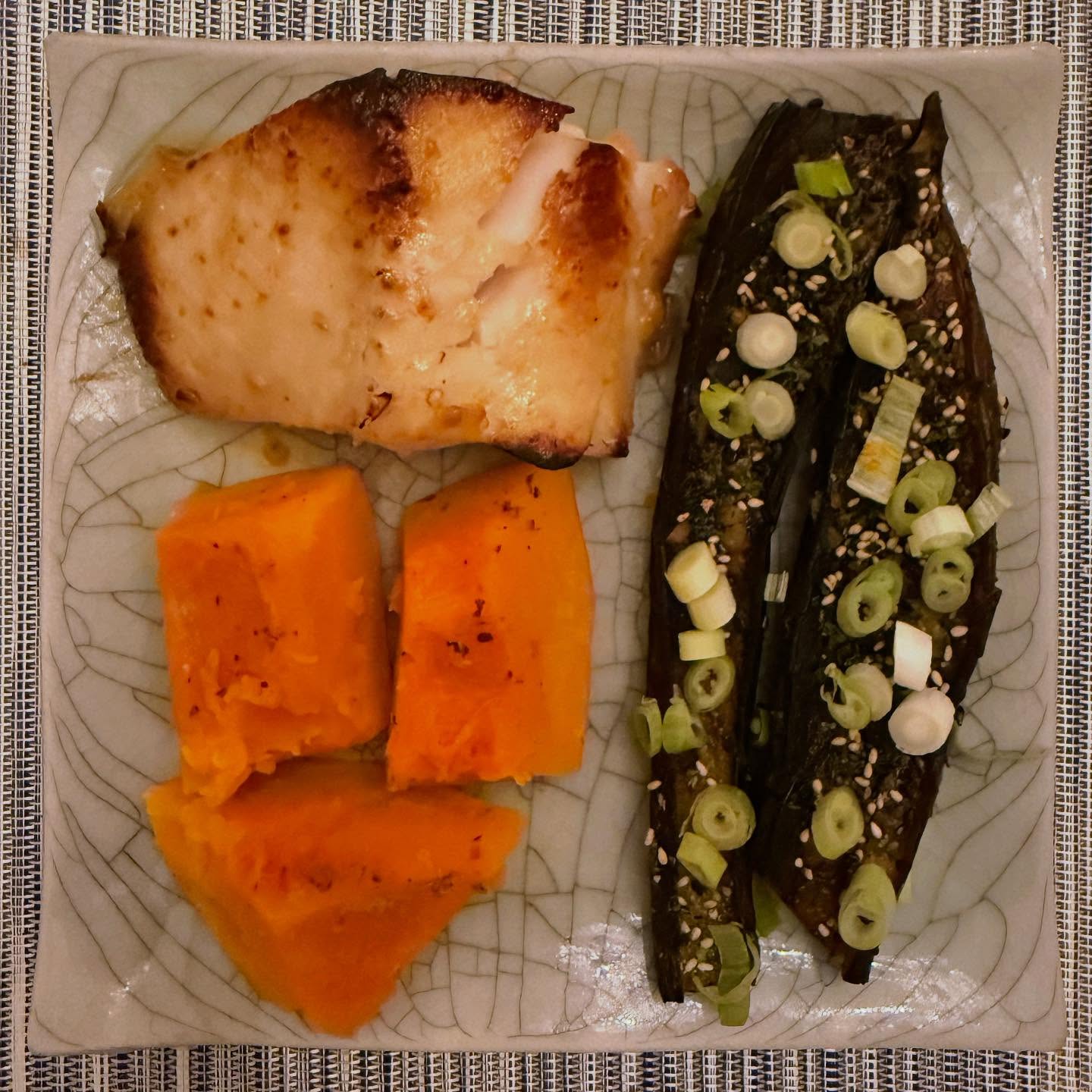
Trio-Miso Black Cod with Nasu Dengaku and Simmered Kabocha
Buttery black cod takes on a deeply savory miso glaze, with just enough caramelization around the edges. The same trio of misos coats silky eggplant, while gently simmered kabocha brings a clean, sweet counterpoint—a comforting Japanese-style dinner for a cool November evening.
By Jonathan Katzman · Cooked and photographed · Recipe updated
Serves: 4 servings
Tags: gluten-free, dairy-free, nut-free, pescatarian
Trio-Miso Marinade and Dengaku Glaze
A blend of mild and earthy misos gives both the fish and eggplant depth. Reserving a clean portion makes one preparation serve two purposes safely.
Ingredients
- 3 tablespoons gluten-free mushroom miso
- 3 tablespoons gluten-free corn miso
- 3 tablespoons gluten-free sweet taro miso
- 1/4 cup sake
- 1/4 cup water
- 3 tablespoons honey
- 1 tablespoon unseasoned rice vinegar
Instructions
- Bring the sake and water to a simmer in a small saucepan and simmer for 2 minutes.
- Lower the heat and whisk in the misos and honey until smooth. Heat gently for 1 minute, stirring, then remove from the heat and stir in the rice vinegar.
- Cool completely. Reserve about 1/2 cup in a separate covered container for the eggplant; use the remaining approximately 3/4 cup to marinate the fish.
- Taste the reserved eggplant glaze before using. If particularly salty or stiff, loosen with water, 1 teaspoon at a time, until easily spreadable.
Notes
- Miso saltiness varies substantially. Keep at least one mild, sweet miso in the blend and check labels for gluten-free status.
- Always separate the eggplant portion before the marinade touches raw fish.
Miso-Marinated Black Cod
Black cod's rich flesh stays succulent under high heat, while a thin coating of miso caramelizes without becoming a heavy sauce.
Ingredients
- 4 pieces skin-on black cod (sablefish), 5–6 ounces each, pin bones removed
- 3/4 cup prepared trio-miso marinade, cooled
- 1 teaspoon avocado oil, for the baking surface
Instructions
- Pat the fish dry and coat all over with the cooled marinade in a snug nonreactive container. Cover and refrigerate for 12–24 hours.
- Heat the oven to 425°F. Line a rimmed baking sheet with foil and lightly oil it.
- Wipe most of the marinade off the fish without rinsing, leaving only a thin film. Discard the used marinade. Arrange the fish skin-side down on the sheet.
- Roast for 10–13 minutes, depending on thickness, then check the center with an instant-read thermometer.
- If more color is needed, broil about 6 inches from the element for 1–3 minutes, watching constantly. The surface should be golden with a few darker edges, and the thickest part should reach 145°F. If it browns before the center is ready, finish in the oven rather than under the broiler.
- Rest for 2 minutes before moving with a wide spatula.
Notes
- Do not add salt before marinating; the miso supplies it.
- Use fish portions of similar thickness so they finish together.
Miso-Glazed Japanese Eggplant (Nasu Dengaku)
Roasting makes the flesh creamy before a short broil sets the savory glaze. Scallions and sesame give the soft eggplant a fresh, lightly crunchy finish.
Ingredients
- 4 medium Japanese eggplants, about 1 1/4 pounds total
- 2 tablespoons avocado oil
- 1/2 cup reserved trio-miso glaze that has not touched raw fish
- 3 scallions, thinly sliced
- 2 teaspoons toasted sesame seeds
Instructions
- Heat the oven to 425°F. Halve the eggplants lengthwise and score the flesh in a shallow crosshatch without cutting through the skin.
- Brush the cut faces with avocado oil. Arrange cut-side down on a lined baking sheet and roast for 18–25 minutes, until the flesh yields easily to a spoon.
- Turn cut-side up and spread each half with about 1 tablespoon of the reserved glaze.
- Roast for another 4–5 minutes, then broil for 1–3 minutes until the glaze bubbles and develops dark caramelized spots. Watch closely to prevent burning.
- Scatter with scallions and toasted sesame seeds immediately before serving.
Notes
- Thicker eggplants need longer to soften; do not apply the glaze until the flesh is fully tender.
- Keep the glaze in a thin layer so it seasons rather than overwhelms the eggplant.
Japanese Simmered Kabocha
A shallow, gentle simmer seasons the squash while preserving its shape. Kombu broth and a little tamari balance its natural sweetness without competing with the miso.
Ingredients
- 1 1/2 pounds kabocha squash, weighed after removing seeds
- 1 1/2 cups gluten-free kombu dashi
- 1 tablespoon sake
- 2 teaspoons gluten-free tamari
- 1 teaspoon honey
Instructions
- Scrub the squash, leave the skin on, and cut into roughly 2-inch chunks or short wedges. Trim any hard stem remnants.
- Arrange skin-side down in a snug saucepan in one layer. Add the dashi, sake, tamari, and honey; the liquid should reach about halfway to two-thirds up the squash.
- Bring just to a simmer. Cover with a parchment drop lid or a loose lid and simmer gently for 15–20 minutes, until a skewer slides through the flesh with little resistance.
- If excess liquid remains, remove the lid and simmer for another 3–5 minutes. Avoid stirring; gently shake the pan if necessary.
- Remove from the heat and let stand in the broth for 10 minutes. Lift out carefully with a wide spoon, leaving most of the broth behind.
Notes
- For simple kombu dashi, soak a 3-inch piece of kombu in 2 cups water for 30 minutes, then heat slowly and remove the kombu just before boiling. Measure out the amount needed.
- A gentle simmer keeps the edges intact; mature kabocha can become fragile once tender.
Overall Timing / Workflow
The fish marinates ahead, while the squash can rest off heat as the oven finishes the eggplant and cod.
Instructions
- The day before: make and cool the marinade, reserve the clean eggplant portion, and refrigerate the coated fish.
- 0:00 — Heat the oven to 425°F. Cut the squash and eggplants; start the kabocha simmering.
- 0:15 — Put the eggplant in the oven. Slice the scallions and prepare the fish on a separate baking sheet.
- 0:30 — Check the squash and let it rest off heat once tender. Check the eggplant and turn and glaze it when soft.
- 0:35 — Put the cod in the oven. Finish roasting the glazed eggplant, then remove it and keep loosely covered.
- 0:45 — Check the cod's temperature. Broil the eggplant and fish separately as needed, removing each as soon as its glaze is caramelized.
- 0:50 — Garnish the eggplant and plate with the cod and warm kabocha.
Notes
- Use tenderness and fish temperature rather than the clock as the final guide; oven capacity and portion thickness affect the schedule.
Plating
Keeping the components distinct highlights the pale fish, dark glazed eggplant, and bright orange squash.
Instructions
- Place one piece of black cod on each warmed plate, keeping its caramelized surface facing up.
- Arrange two eggplant halves alongside and finish them with their scallions and sesame.
- Add several pieces of kabocha in a separate cluster. Drain them briefly so the simmering broth does not dilute the glazes.
Leftover Path
Gentle reheating protects the delicate fish, while the eggplant and squash remain good warm or at room temperature.
Instructions
- Refrigerate leftovers in separate airtight containers within 2 hours. Use the fish within 2 days and the vegetables within 3 days.
- Reheat the fish covered at 275°F with a spoonful of water until it reaches 165°F; avoid a second broil, which can scorch the glaze.
- Warm the squash gently with a little of its reserved broth. Reheat eggplant covered in the oven, adding fresh scallions after warming.
- For a different meal, flake the warmed fish over steamed white rice with chopped eggplant and kabocha on the side.