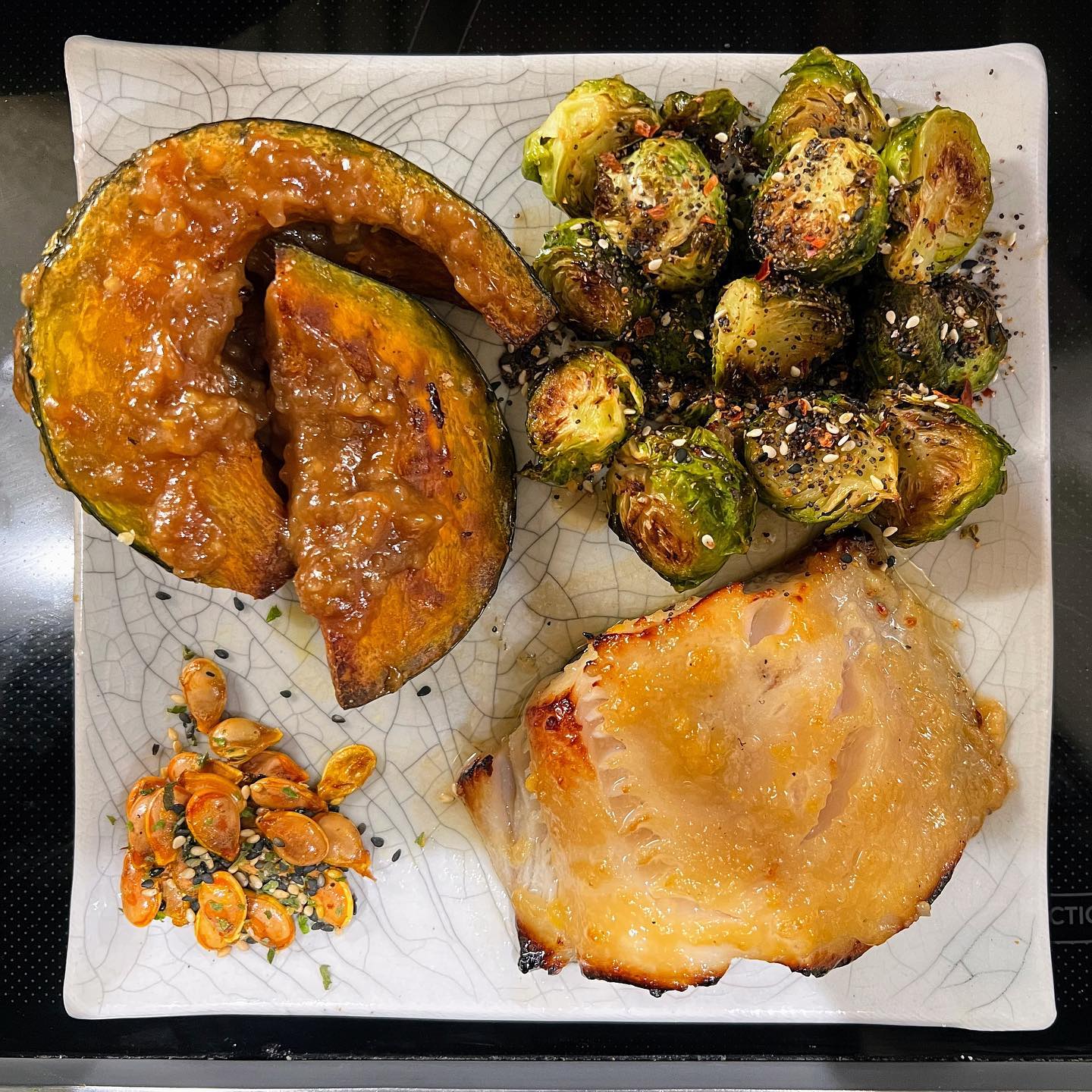
Miso-Marinated Black Cod with Shoyu Brussels Sprouts, Blue Hokkaido Squash and Furikake Seeds
Buttery black cod gets a lightly caramelized miso crust alongside sweet roasted squash brushed with the same savory glaze. Shoyu-seasoned Brussels sprouts bring browned edges and chile-citrus heat, while furikake squash seeds add a crisp, salty finish to this late-fall dinner.
By Jonathan Katzman · Cooked and photographed · Recipe updated
Serves: 4 servings
Tags: gluten-free, dairy-free, nut-free, pescatarian
Yellow Split Pea Miso Marinade and Glaze
Miso supplies deep savory flavor while mirin and a little honey encourage caramelization. Reserving some before adding the fish gives the squash its own clean glaze.
Ingredients
- 1/2 cup gluten-free yellow split pea miso, preferably Shared Cultures
- 1/4 cup gluten-free mirin
- 2 tablespoons sake
- 1 tablespoon honey
- 1 tablespoon unseasoned rice vinegar
Instructions
- Bring the mirin and sake to a simmer in a small saucepan and cook for 1 minute.
- Reduce the heat to low. Whisk in the miso and honey until combined, about 1 minute; keep any natural miso texture rather than straining it.
- Remove from the heat, stir in the rice vinegar and cool completely.
- Reserve half in a covered container for the squash. Use the remaining half to marinate the fish.
Notes
- If the reserved glaze is too thick to brush, loosen it with water a teaspoon at a time.
- Do not use marinade that has touched raw fish on the squash.
Miso-Marinated Black Cod
Black cod's rich flesh stays succulent under high heat. Wiping off excess marinade allows the surface to caramelize without burning a thick coating of miso.
Ingredients
- 4 fillets black cod (sablefish), 5–6 ounces each, preferably skin-on and pin bones removed
- 1/2 batch cooled yellow split pea miso marinade
- 1 teaspoon avocado oil, for the baking surface
Instructions
- Pat the fish dry. Coat with the marinade in a snug nonreactive container, cover and refrigerate for 12–24 hours.
- Heat the oven to 425°F. Line a small rimmed baking sheet with foil and lightly oil it.
- Lift the fish from the marinade and wipe away thick deposits, leaving a thin coating. Discard the used marinade. Arrange the fillets skin-side down.
- Roast for 10–14 minutes, depending on thickness, until the flesh begins to separate into moist flakes.
- If needed, broil 6 inches from the element for 1–3 minutes to develop golden patches and dark edges, watching constantly. The thickest part should reach 145°F; check early to avoid overcooking.
Notes
- The marinade is salty enough that the fish generally needs no additional salt.
Roasted Brussels Sprouts with Shoyu and Shichimi Togarashi
Roasting cut-side down creates deeply browned faces while preserving tender centers. Shoyu goes on near the end so it coats the sprouts without scorching.
Ingredients
- 1 1/2 pounds Brussels sprouts, trimmed and halved
- 2 tablespoons avocado oil
- 1 tablespoon gluten-free shoyu
- 1 teaspoon unseasoned rice vinegar
- 1–2 teaspoons gluten-free shichimi togarashi, to taste
- 1 teaspoon toasted sesame seeds
Instructions
- Heat the oven to 425°F. Dry the Brussels sprouts well and toss with the avocado oil.
- Arrange cut-side down on a roomy metal baking sheet. Roast for 20–25 minutes, until the undersides are deeply browned and the centers are just tender.
- Toss with the shoyu and return to the oven for 3–5 minutes.
- Finish with rice vinegar, shichimi togarashi and sesame seeds. Taste before adding any extra salt.
Notes
- Keep loose leaves on the tray for crisp edges, but remove any that darken before the sprouts are done.
Roasted Blue Hokkaido Squash with Miso Glaze
Thick crescents develop browned edges without collapsing. Adding the glaze late preserves its savory sweetness and prevents the miso from scorching.
Ingredients
- 1 small blue Hokkaido squash, about 2 1/2 pounds
- 1 1/2 tablespoons avocado oil
- 1/4 teaspoon kosher salt
- 1/2 batch reserved yellow split pea miso glaze, kept separate from raw fish
Instructions
- Heat the oven to 425°F. Scrub the squash, halve it and scoop out the seeds, reserving them for roasting.
- Cut the squash into approximately 1-inch-thick crescents. Leave the skin on.
- Toss with avocado oil and salt, then spread in one layer on a parchment-lined baking sheet.
- Roast for 25–30 minutes, turning once, until browned in spots and nearly tender.
- Brush the exposed flesh generously with the reserved miso glaze. Roast for another 8–12 minutes, until a knife slides easily through the flesh and the glaze is glossy with lightly caramelized edges.
Notes
- The skin can be eaten if tender; otherwise leave it on the plate.
Roasted Squash Seeds with Furikake
Thorough drying and moderate heat make the whole seeds crisp rather than leathery. Furikake adds seaweed and sesame flavor without needing a separate sauce.
Ingredients
- 1/3–1/2 cup whole seeds reserved from the squash
- 1 teaspoon avocado oil
- 1 pinch fine salt
- 2 teaspoons gluten-free nori-sesame furikake
Instructions
- Separate the seeds from the stringy pulp, rinse and dry thoroughly with a towel. Let air-dry while preparing the other ingredients.
- Heat the oven to 325°F. Toss the seeds with avocado oil and a small pinch of salt, then spread on a small baking sheet.
- Roast for 20–30 minutes, stirring every 10 minutes, until golden and crisp. Cool a seed briefly and taste it to check the texture.
- Toss with furikake while still warm, then cool uncovered.
Notes
- Seed yield varies by squash; season the amount you have rather than adding purchased seeds.
- Choose a furikake without wheat-containing soy sauce or bonito if a seaweed-and-sesame-only finish is preferred.
Overall Timing / Workflow
The fish marinates ahead, and the seeds roast before the oven temperature increases. The vegetables share the hot oven, with the fish added near the end.
Instructions
- The day before: make and cool the miso mixture, reserve half for the squash and refrigerate the fish in the other half.
- About 85 minutes before serving: cut the squash, clean and dry its seeds, and trim the Brussels sprouts.
- About 70 minutes before serving: roast the seeds at 325°F, then toss with furikake and set aside.
- Raise the oven to 425°F. Start roasting the squash, then add the Brussels sprouts about 10 minutes later on a separate tray.
- With about 15 minutes remaining: glaze the squash, wipe the fish clean of excess marinade and put it into the oven. Rotate trays as needed for even cooking.
- Finish the sprouts with shoyu, then vinegar and seasonings. Remove the vegetables when ready and broil the fish briefly if it needs more color.
Notes
- If oven space is tight, finish the vegetables first and keep them loosely covered while the fish cooks.
Plating
Keeping the components distinct preserves the sprouts' crisp edges and the seeds' crunch while showing off the glossy fish and squash.
Instructions
- Place a black cod fillet on each warm plate, caramelized side facing up.
- Arrange two squash crescents beside the fish and mound the Brussels sprouts alongside them.
- Add a small separate pile of furikake squash seeds so they stay crisp. Serve immediately.
Leftover Path
Gentle reheating protects the fish, while dry oven heat restores some texture to the vegetables. The seeds keep best away from moisture.
Instructions
- Refrigerate the fish and vegetables in separate airtight containers within 2 hours. Use the fish within 2 days and the vegetables within 3–4 days.
- Reheat fish covered in a 275°F oven until it reaches 165°F, checking early to minimize drying. Reheat vegetables separately at 400°F until hot.
- Alternatively, flake the chilled fish over a salad with chopped leftover squash and Brussels sprouts, adding a little rice vinegar for brightness.
- Store completely cooled squash seeds airtight at room temperature for up to 3 days. Re-crisp briefly in a 300°F oven if needed.