Miso-Marinated Yellowtail Jack Collar with Fried Japanese Sweet Potatoes and Black Trumpet Miso Romano Beans
Miso-marinated yellowtail collar roasts until juicy around the bone, then gets a brief broil for deeply browned edges. Crisp Japanese sweet potato rounds bring sweetness alongside late-summer Romano beans glossed with earthy black trumpet miso butter.
By Jonathan Katzman · Cooked and photographed · Recipe updated
Serves: 4 servings
Tags: gluten-free, nut-free, pescatarian
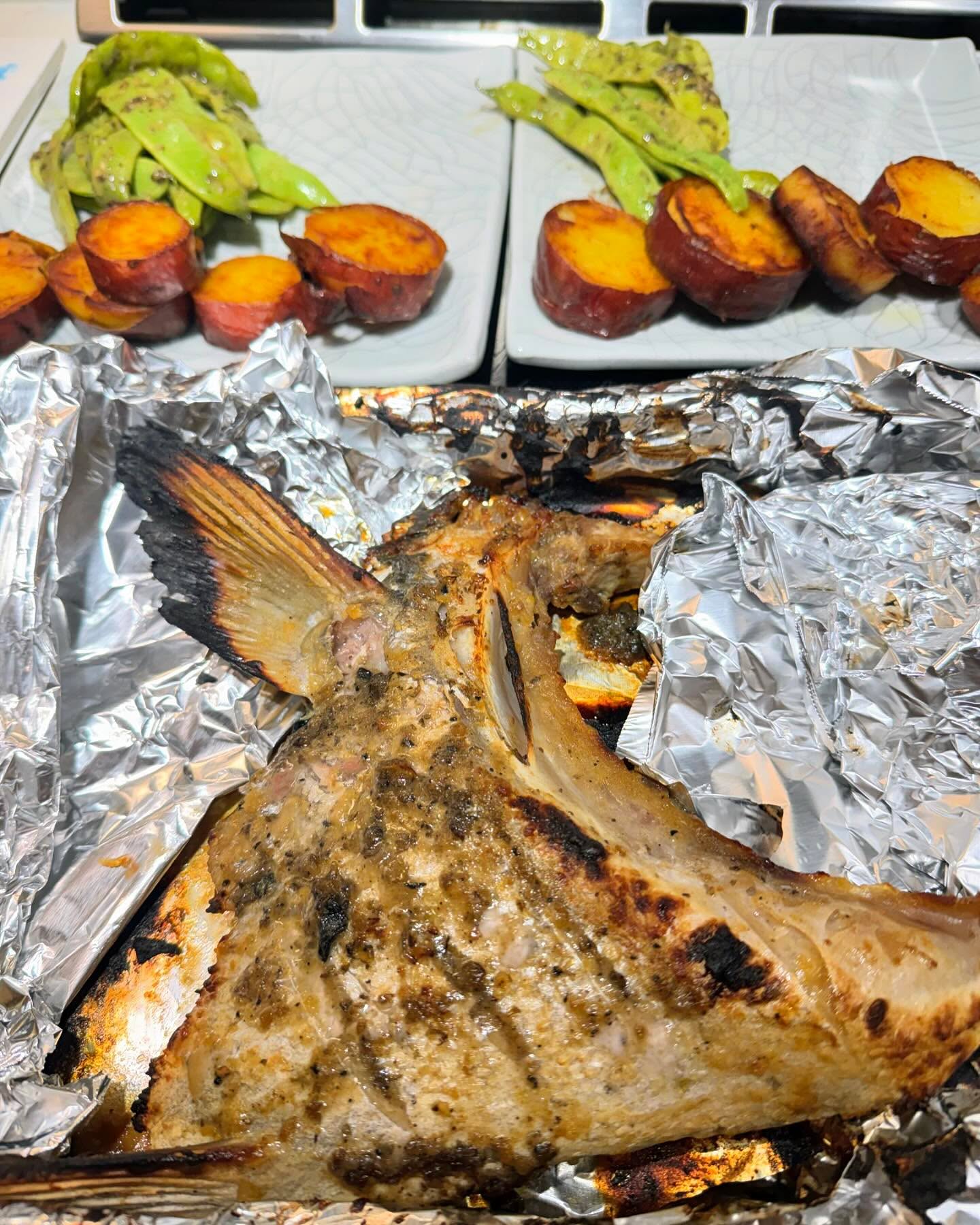
Miso-Marinated Yellowtail Jack Collar
Collars have rich meat and connective tissue that stay succulent during roasting. A thin coating of miso marinade browns quickly under the broiler without overwhelming the fish.
Ingredients
- 4 lb yellowtail jack collars, scaled and cleaned, cut into manageable sections by the fishmonger
- 1/3 cup gluten-free white miso
- 3 tablespoons sake
- 1 tablespoon honey
- 1 tablespoon unseasoned rice vinegar
- 1 teaspoon avocado oil, for the foil
Instructions
- Check the collars for loose scales and bone fragments, then pat thoroughly dry.
- Whisk the miso, sake, honey, and rice vinegar together. Coat the collars, place in a covered nonreactive container, and refrigerate for 12–24 hours.
- Heat the oven to 425°F. Line a rimmed sheet pan with foil and lightly coat it with avocado oil.
- Wipe off excess marinade, leaving only a thin film, and discard the used marinade. Arrange the collars in a single layer with their broad, meaty surfaces facing up.
- Roast for 20–30 minutes, checking smaller pieces early. Shield projecting fins with small pieces of foil if they begin to scorch.
- When the thickest meat is nearly cooked, switch to the broiler and brown for 2–4 minutes, watching continuously. The thickest flesh should reach 145°F, measured away from the bone, and separate easily into moist flakes.
- Rest for 3 minutes before serving, spooning any clear roasting juices over the meat.
Notes
- Collar thickness varies considerably; temperature and easy flaking near the bone are more reliable than a fixed cooking time.
- Use an unseasoned, unsweetened sake rather than a salted cooking wine.
Fried Japanese Sweet Potato Rounds
Steaming cooks the dense centers without overbrowning the natural sugars. Drying and shallow-frying the rounds produces crisp, caramelized faces while keeping the skins intact.
Ingredients
- 2 lb Japanese sweet potatoes, scrubbed, skin left on
- 1/3 cup avocado oil, plus more as needed for shallow-frying
- 1/2 teaspoon fine sea salt, plus more to taste
Instructions
- Cut the sweet potatoes crosswise into rounds about 3/4 inch thick.
- Steam over gently boiling water for 15–22 minutes, until a thin knife enters the centers with little resistance but the rounds still hold their shape.
- Transfer to a rack in a single layer. Let steam off and cool for at least 15 minutes, then blot any remaining surface moisture.
- Heat the avocado oil in a wide skillet over medium heat, using enough to coat the bottom generously. Add the rounds in a single layer, working in batches.
- Shallow-fry for 4–6 minutes per side, until the cut faces are deeply golden and crisp. Reduce the heat if the sugars darken before a crust develops.
- Drain briefly on a rack and season with salt while hot.
Notes
- The potatoes can be steamed a day ahead, cooled, and refrigerated. Pat dry before frying.
- Keep finished batches on a rack in a 225°F oven if cooking them before the fish.
Romano Beans with Black Trumpet Miso Butter
Brief blanching keeps the broad beans tender with a little bite. Butter carries the mushroom miso's earthy flavor, while a small splash of rice vinegar keeps the finish bright.
Ingredients
- 1 1/4 lb Romano beans, stem ends trimmed
- 3 tablespoons unsalted butter, softened
- 1 1/2 tablespoons gluten-free black trumpet mushroom miso, preferably Shared Cultures
- 1 teaspoon unseasoned rice vinegar
- 2 tablespoons reserved bean cooking water, as needed
- to taste salt, for the blanching water
Instructions
- Mash the softened butter and black trumpet miso together until evenly blended.
- Bring a large pot of lightly salted water to a boil. Leave small beans whole and cut very long beans crosswise into two or three pieces.
- Boil the beans for 4–7 minutes, until bright green and tender with a slight bite. Reserve a little cooking water, then drain well.
- Return the empty pot to low heat. Add 1 tablespoon of the reserved water and the miso butter, swirling just until melted.
- Add the hot beans and toss to coat. Remove from the heat and add the rice vinegar. Add a little more cooking water if needed to make the butter glossy rather than heavy.
- Taste before adding any extra salt; the miso may provide enough.
Notes
- If blanching ahead, chill the beans in ice water and drain thoroughly. Rewarm with a splash of water before adding the miso butter.
- Avoid boiling the finished butter sauce hard, which can make it separate.
Overall Timing / Workflow
Marinating ahead leaves a straightforward final cook. The potatoes can be fried while the fish roasts, with the beans finished just before serving.
Instructions
- The day before: clean and marinate the collars. Steam the potatoes ahead too, if convenient.
- 0:00 — Steam the sweet potato rounds, then spread them on a rack to dry. Mix the black trumpet miso butter and trim the beans.
- 0:20 — Heat the oven to 425°F. Wipe excess marinade off the fish and arrange on the prepared pan.
- 0:30 — Start roasting the collars. Heat the skillet and shallow-fry the potatoes in batches.
- 0:45 — Bring the bean water to a boil and blanch the beans. Check the fish temperature and adjust timing for collar thickness.
- 0:50–1:00 — Broil the fish briefly to brown, finish the beans in miso butter, and salt the last potato batch. Serve immediately after the fish rests.
Notes
- Use separate utensils and surfaces for the raw marinated fish and the cooked sides.
Plating
Serving the collar family-style makes its irregular shape an asset and lets everyone pick out the richest morsels. Keeping the potatoes away from the bean sauce preserves their crust.
Instructions
- Transfer the collars carefully to a warmed platter, browned side up. Alternatively, set the roasting pan on a heatproof trivet and fold back the foil for family-style serving.
- Arrange the sweet potato rounds in a loose row on each plate and mound the beans alongside, spooning their miso butter over the beans rather than the potatoes.
- Provide a serving fork and spoon for lifting fish from the bones, plus a small bowl for discarded bones and fins.
Notes
- Collars contain small bones and sharp fin spines; serve the meat carefully, especially for children.
Leftover Path
Picking the fish while it is still slightly warm makes bone removal easier. Storing each component separately allows gentle reheating for the fish and higher heat for the potatoes.
Instructions
- Remove leftover fish from the bones, checking carefully for small bones. Refrigerate the fish, beans, and potatoes in separate covered containers within 2 hours.
- Use the fish within 2 days and the sides within 3–4 days.
- Reheat fish covered with a spoonful of water in a low oven until it reaches 165°F. Re-crisp potatoes in a 400°F oven for 8–12 minutes.
- Warm the beans gently in a covered skillet with a splash of water, tossing to bring the miso butter back together.
- For a different lunch, flake the chilled fish over a cucumber salad and serve the reheated potatoes alongside.