Miso-Tamari Salmon Wings with Snow Peas and Roasted Kabocha
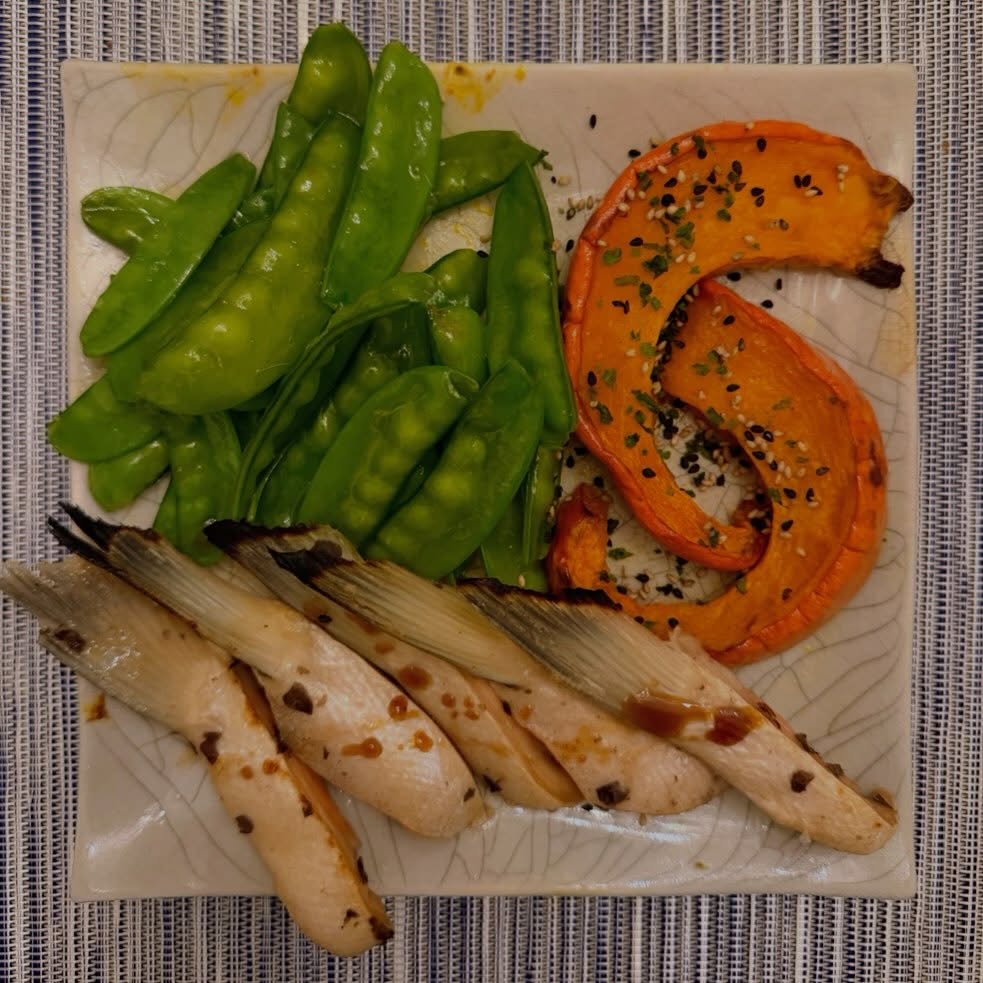
Fatty salmon wings turn tender under the broiler, with browned fin edges and a savory miso-tamari finish. Crisp snow peas and sweet roasted kabocha keep the plate balanced, with rice vinegar for brightness and sesame for a little crunch.
By Jonathan Katzman · Cooked and photographed · Recipe updated
Serves: 4 servings
Tags: gluten-free, dairy-free, nut-free, pescatarian
Miso-Tamari Dressing
Miso gives the dressing body while tamari adds concentrated savoriness. Rice vinegar cuts through the rich salmon and sweet squash without overwhelming either.
Ingredients
- 2 tablespoons gluten-free mellow miso, preferably Shared Cultures
- 1 tablespoon gluten-free tamari, preferably Shared Cultures
- 1 tablespoon unseasoned rice vinegar
- 2 tablespoons water, plus more as needed
- 1 teaspoon toasted sesame oil
Instructions
- Whisk the miso with the tamari, vinegar, water, and sesame oil until smooth and pourable.
- Set aside 3 tablespoons for the salmon, 2 tablespoons for the squash, and the remainder for the snow peas. Keep the salmon portion separate from the other portions.
Notes
- Miso and tamari vary in saltiness. If the dressing tastes aggressively salty, thin it with a little more water before dividing.
Broiled Salmon Wings
The fatty meat around the fins stays succulent under strong overhead heat. Adding miso near the end gives the fish a savory finish without burning the paste.
Ingredients
- 2–2½ lb salmon wings, pectoral-fin or collar-adjacent cuts, about 8 pieces
- 2 teaspoons avocado oil
- 3 tablespoons Miso-Tamari Dressing
Instructions
- Pat the wings very dry and remove any loose scales or bone fragments. Rub lightly with avocado oil; do not add salt yet.
- Heat the broiler to high with a rack about 6–8 inches below the element. Arrange the wings in a single layer on a foil-lined, broiler-safe sheet pan, with the thicker flesh facing upward.
- Broil for 6–9 minutes, until the surface begins to color. Turn carefully and cook for another 3–5 minutes, adjusting the pan position if the thin fin edges darken too quickly.
- Brush with 2 tablespoons of the reserved salmon dressing during the final 1–2 minutes. Cook until the thickest meat reaches 145°F, checking away from the bone; the flesh should separate easily and look moist and opaque.
- Rest for 3 minutes, then spoon over the remaining tablespoon of the salmon dressing using a clean spoon.
Notes
- Wing size varies considerably; start checking small pieces early and remove them individually as they finish.
- Serve with a bone bowl: the fin rays and bones are not edible.
Roasted Kabocha with Sesame
Roasting concentrates kabocha's chestnut-like sweetness and softens its edible skin. A light miso finish and sesame seeds add savory contrast without hiding the squash.
Ingredients
- 1½ lb kabocha squash, preferably orange-skinned, seeded and cut into ¾-inch crescents
- 1 tablespoon avocado oil
- 2 tablespoons Miso-Tamari Dressing
- 2 teaspoons toasted sesame seeds, mixed black and white if available
- 1 teaspoon finely snipped chives, optional
Instructions
- Heat the oven to 425°F. Scrub the squash skin well, then toss the crescents with avocado oil.
- Arrange in one layer on a parchment-lined sheet pan. Roast for 20 minutes, turn, and continue for 5–15 minutes, until tender through the skin with browned edges.
- Brush the hot squash with the dressing after removing it from the oven. Sprinkle with sesame seeds and optional chives.
Notes
- Green-skinned kabocha works equally well. Leave space between the wedges so they roast rather than steam.
Quick-Sautéed Snow Peas
A brief, hot sauté keeps the peas bright and crisp. The dressing goes in off heat so its acidity stays fresh and the miso does not scorch.
Ingredients
- 1 lb snow peas, stem ends and strings removed
- 1 tablespoon avocado oil
- 1 tablespoon water
- about 1⅓ tablespoons Miso-Tamari Dressing, the remaining vegetable portion
Instructions
- Dry the trimmed peas well. Heat a wide skillet or wok over medium-high heat and add the avocado oil.
- Add the peas and toss for 1–2 minutes, until glossy and bright green. Add the water and toss for another 30–60 seconds, just until the thicker pods lose their raw edge but still snap.
- Remove from the heat and toss with the dressing. Transfer promptly to a serving dish so the peas do not continue steaming.
Notes
- Cook in two batches if the pan is crowded; prolonged cooking will soften the pods and dull their color.
Overall Timing / Workflow
The squash takes the longest and tolerates a short hold. Cooking the fish next and the peas last brings everything to the table with the best texture.
Instructions
- 0:00 — Heat the oven to 425°F, cut the squash, and begin roasting.
- 0:10 — Whisk and divide the dressing. Trim the snow peas and dry the salmon wings.
- 0:25 — Check and turn the squash. Prepare the salmon on its broiler-safe pan.
- 0:35 — When the squash is tender, remove and dress it; keep loosely covered. Switch the oven to broil and cook the salmon.
- During the final few minutes of broiling, sauté the peas. Rest the fish briefly, then plate everything.
Notes
- Allow extra roasting time for dense squash, and adjust the timeline to the thickness of the salmon cuts.
Plating
Keeping the three elements distinct preserves the contrast between succulent fish, crisp peas, and soft squash.
Instructions
- Arrange the salmon wings across the lower half of each plate, with the fins pointing outward.
- Pile the snow peas alongside and overlap the squash crescents on the opposite side.
- Spoon any clean finishing dressing onto the fish rather than flooding the plate. Serve immediately with a small bowl for bones.
Leftover Path
Removing the bones while the fish is still easy to handle makes leftovers useful, and gentle reheating protects the rich meat from drying out.
Instructions
- Pick leftover salmon carefully from the bones and fin rays. Refrigerate the fish, squash, and peas separately in covered containers within 2 hours.
- Use the salmon within 3 days and the vegetables within 3–4 days. Reheat the fish covered with a splash of water until it reaches 165°F.
- Warm the squash in a 350°F oven. Briefly warm the peas in a skillet, or serve them chilled alongside the flaked salmon and squash.
Notes
- The peas will soften on reheating, so avoid prolonged cooking.