Mortar-and-Pestle Pesto Rigatoni with Summer Tomatoes and Basil
Hand-pounded basil pesto coats chickpea rigatoni with fragrant olive oil, pine nuts, and the savory depth of well-aged Parmigiano Reggiano. A platter of ripe summer tomatoes with whole basil leaves keeps the meal bright and juicy—simple August cooking that rewards good ingredients.
By Jonathan Katzman · Cooked and photographed · Recipe updated
Serves: 4 servings
Tags: gluten-free
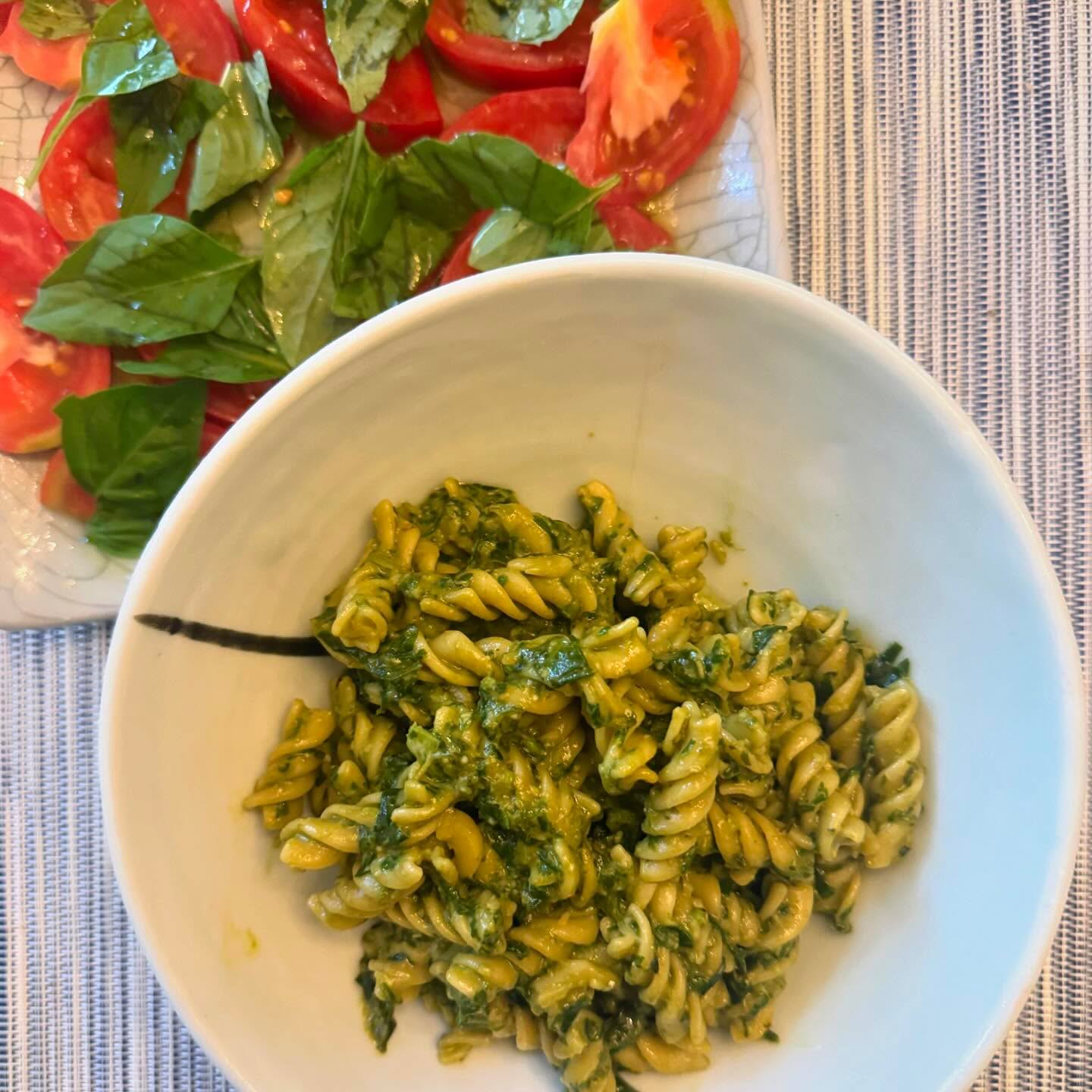
Mortar-and-Pestle Basil Pesto
Pounding releases the basil’s aromatic oils while leaving a little texture. Aged Parmigiano adds enough savory depth that the sauce needs little beyond good olive oil and careful seasoning.
Ingredients
- 3 cups loosely packed fresh basil leaves, preferably Fifth Crow Farm, washed and thoroughly dried
- 1 small clove garlic, peeled
- 1/4 teaspoon fine sea salt, plus more to taste
- 1/3 cup raw pine nuts
- 3/4 cup finely grated 36-month-aged Parmigiano Reggiano, about 60 g
- 1/2 cup extra-virgin olive oil
Instructions
- Pound the garlic and salt in a large mortar until smooth. Add the pine nuts and work them into a creamy, slightly textured paste.
- Add the basil a handful at a time, using firm circular grinding motions against the mortar walls. Incorporate each addition before adding more; aim for a cohesive green paste with some visible leaf texture.
- Work in the Parmigiano in two additions, then stir in the olive oil gradually with the pestle or a spoon. The pesto should be thick and spoonable rather than a loose pool of oil.
- Taste and adjust the salt lightly, remembering that the pasta water will also contribute seasoning. Keep covered until the pasta is ready.
Notes
- If the mortar is small, pound the garlic and pine nuts first, divide that paste, and process the basil in batches. Combine everything in a bowl before stirring in the cheese and oil.
- Keep the pesto away from direct heat to preserve its fragrance and green color.
Banza Rigatoni
The ridged tubes catch the coarse pesto. A little cooking water loosens the cheese and oil into a sauce that clings without becoming heavy.
Ingredients
- 12 oz Banza gluten-free chickpea rigatoni
- to taste salt for the cooking water
- 1 batch Mortar-and-Pestle Basil Pesto
Instructions
- Bring a large pot of water to a boil and salt it moderately. Add the rigatoni and cook according to the package directions, stirring gently and checking early. Stop when tender with a slight bite, before the tubes begin to split.
- Reserve 1 cup of cooking water, then drain the pasta well without rinsing.
- Put the pesto in a large mixing bowl and stir in 2 tablespoons of warm cooking water. Add the pasta and fold gently to coat, off the heat.
- Add more cooking water a tablespoon at a time until the pesto coats the pasta evenly and looks glossy, not watery. Taste and serve immediately.
Notes
- Chickpea pasta can soften quickly after cooking; have the pesto and tomato platter ready before draining it.
- Let boiling-hot reserved water cool briefly before adding it to the pesto.
Summer Tomatoes with Olive Oil and Basil
Ripe tomatoes supply the acidity and juiciness that balance the rich pesto. Large pieces and whole basil leaves keep the salad fresh and unfussy.
Ingredients
- 1 1/2 lb ripe summer tomatoes, at room temperature
- 2 tablespoons extra-virgin olive oil
- 1 cup loosely packed fresh basil leaves
- 1/4 teaspoon flaky sea salt, plus more to taste
Instructions
- Core the tomatoes and cut them into thick wedges and broad, bite-size pieces. Arrange on a shallow platter.
- Season with the salt and drizzle with the olive oil. Let stand for 5–10 minutes so a little juice collects on the platter.
- Scatter the basil generously over the tomatoes just before serving, leaving smaller leaves whole and tearing only the largest leaves. Spoon some of the tomato juices over the top.
Notes
- Use fully ripe, room-temperature tomatoes; their natural acidity is enough for this simple dressing.
Overall Timing / Workflow
Making the pesto first prevents the pasta from waiting. The tomatoes can release their juices while the rigatoni cooks.
Instructions
- 0:00 — Wash and thoroughly dry the basil, grate the Parmigiano, and begin making the pesto.
- 0:10 — Put the pasta water on to boil while finishing the pesto.
- 0:20 — Cut, salt, and oil the tomatoes. Add the pasta to the boiling water and cook according to the package directions.
- 0:30 — Reserve cooking water, drain the pasta, and toss with pesto off the heat. Finish the tomatoes with basil and serve immediately.
Plating
Separate serving dishes keep the juicy tomatoes from diluting the pesto and let the two textures remain distinct.
Instructions
- Divide the glossy pesto rigatoni among four shallow bowls, keeping the pasta loosely mounded rather than tightly packed.
- Set the tomato and basil platter alongside, with a spoon for the olive oil and tomato juices. Serve the tomatoes beside the pasta rather than mixed into it.
Leftover Path
Gentle reheating limits further softening of the chickpea pasta. Storing the tomatoes separately keeps their juices from soaking into the pasta.
Instructions
- Refrigerate leftover pasta and tomatoes in separate airtight containers within 2 hours. Use the pasta within 3 days and the dressed tomatoes within 1 day for best texture.
- Reheat the pasta gently in a covered pan over low heat with a small splash of water, folding only as needed. Remove as soon as warm; avoid simmering the pesto.
- Let refrigerated tomatoes lose their chill briefly before eating. Spoon them onto the side of the reheated pasta, or chop them and serve over freshly cooked pasta with their juices.