Mustard Black Cod with White Wine Pan Sauce, Braised Leeks, and Roasted Sunchokes
Buttery black cod gets a thin coat of Dijon and a bright white wine sauce full of soft shallots and parsley. Sweet, silky leeks catch the pan juices underneath, while deeply roasted sunchokes bring crisp edges and an earthy counterpoint—a good winter dinner with very little fuss at the table.
By Jonathan Katzman · Cooked and photographed · Recipe updated
Serves: 4 servings
Tags: gluten-free, nut-free, pescatarian
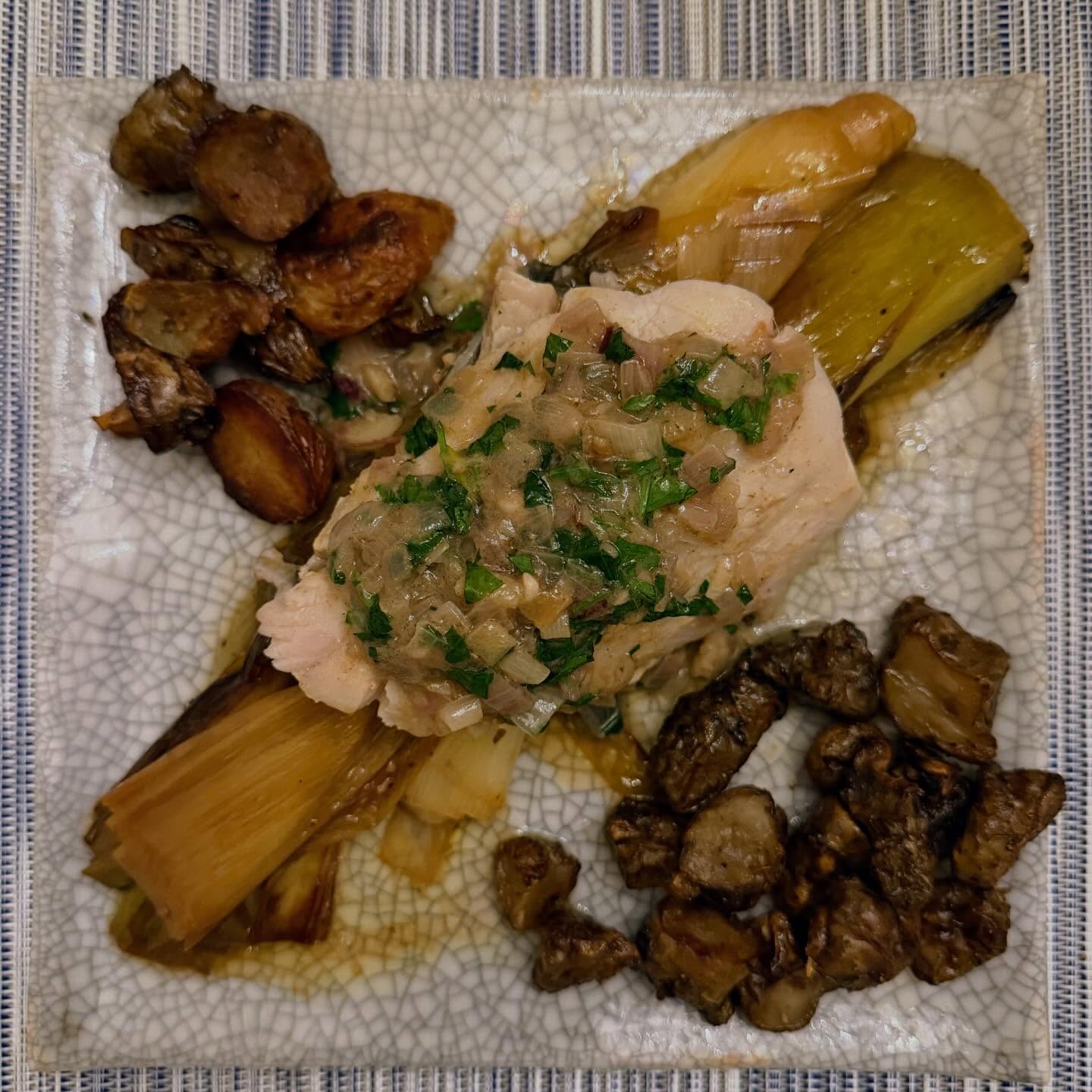
Mustard Black Cod
A thin mustard coating cuts through the richness of sablefish without overpowering it. Searing only the skin side before oven finishing preserves the pale, tender flakes.
Ingredients
- 4 portions skin-on black cod (sablefish), 6 ounces each, pin bones removed
- 1 tablespoon gluten-free Dijon mustard
- 1 tablespoon ghee
- 1/2 teaspoon kosher salt, plus more to taste
- 1/4 teaspoon freshly ground black pepper
Instructions
- Heat the oven to 400°F. Pat the fish thoroughly dry, especially the skin. Season with salt and pepper, then spread a thin layer of Dijon over the flesh side only.
- Heat the ghee in a large oven-safe skillet over medium-high heat. Add the fish skin-side down and press gently with a spatula for the first 20 seconds so the skin makes contact. Cook for 3–4 minutes without flipping.
- Transfer the skillet to the oven and roast for 8–12 minutes, depending on thickness. Check early; the flesh should separate into moist flakes and the thickest part should reach 145°F.
- Lift the fish carefully onto a warm plate. Keep the skillet and its juices for the white wine sauce; spoon off excess rendered fat, leaving about 1 tablespoon in the pan.
Notes
- Use a wide fish spatula: black cod becomes particularly delicate as it cooks.
- If the skillet cannot hold four portions without crowding, sear in batches and transfer skin-side down to a baking sheet. Make the sauce in the searing skillet.
White Wine, Shallot, and Parsley Pan Sauce
Reduced wine and lemon balance the fish's richness, while cold butter gives the sauce a light gloss rather than a heavy cream texture.
Ingredients
- 2 medium shallots, finely diced
- 1/2 cup dry white wine
- 1/3 cup water or unsalted gluten-free vegetable stock
- 3 tablespoons cold unsalted butter, cubed
- 1 teaspoon fresh lemon juice, plus more to taste
- 3 tablespoons chopped flat-leaf parsley
- to taste kosher salt and freshly ground black pepper
Instructions
- After removing the cooked fish, set its skillet over medium-low heat; remember that the handle is hot. Add the shallots to the reserved tablespoon of pan fat and cook for 2–3 minutes until softened, without browning.
- Add the white wine, scraping up the pale golden pan residue. Simmer until reduced by about half, 3–4 minutes.
- Add the water or stock and simmer for another 2 minutes, leaving a loose, spoonable sauce.
- Remove from the heat and swirl in the cold butter a few cubes at a time. Stir in the lemon juice and parsley, then taste for salt and pepper. Spoon over the fish immediately.
Notes
- If the sauce becomes oily or too concentrated, whisk in a tablespoon of cool water off heat. Do not boil after adding the butter.
- Use a dry, unoaked white wine such as Sauvignon Blanc or Pinot Grigio.
Braised Leeks
Browning the cut faces builds savory depth, then a shallow covered braise softens the layers without breaking their shape. A little lemon keeps the natural sweetness balanced.
Ingredients
- 4 large leeks, white and light-green parts only
- 1 tablespoon ghee
- 3/4 cup unsalted gluten-free vegetable stock or water
- 1 tablespoon unsalted butter
- 1 teaspoon fresh lemon juice
- 1/2 teaspoon kosher salt, plus more to taste
- to taste freshly ground black pepper
Instructions
- Trim the roots close to the base while leaving enough intact to hold the layers together. Halve the leeks lengthwise and rinse carefully between the layers to remove grit. Drain and pat the cut faces dry.
- Heat the ghee in a wide lidded skillet over medium-high heat. Lay the leeks cut-side down, working in batches if necessary, and cook for 4–5 minutes until well browned.
- Return all the leeks to the pan, cut-side up. Add the stock, salt, and butter. Bring to a simmer, cover, and reduce the heat to low.
- Braise gently for 20–25 minutes, until a small knife slides through the thickest part with almost no resistance. Add a splash of water if the pan dries before the leeks are tender.
- Uncover and simmer for 3–5 minutes to reduce the remaining liquid to a light glaze. Add lemon juice and pepper, taste for salt, and keep warm.
Notes
- Very long leeks can be cut crosswise into 5–6-inch lengths before browning. Keep the layers aligned when turning and serving.
Roasted Sunchokes
A hot pan and uncrowded roasting give the irregular pieces dark, crisp edges while their centers become creamy. Leaving the skins on adds texture and earthy flavor.
Ingredients
- 1 1/2 pounds sunchokes
- 2 tablespoons olive oil
- 3/4 teaspoon kosher salt
- 1/4 teaspoon freshly ground black pepper
Instructions
- Heat the oven to 400°F with a heavy rimmed baking sheet inside.
- Scrub the sunchokes thoroughly, trim any damaged spots, and dry well. Cut into roughly 1-inch pieces, halving smaller knobs and quartering larger ones.
- Toss with the olive oil, salt, and pepper. Carefully spread on the hot baking sheet in one layer, placing flat cut surfaces against the metal.
- Roast for 35–45 minutes, turning after about 25 minutes, until deeply browned at the edges and tender through the center. Leave space between pieces so they roast rather than steam.
- Taste and adjust the salt. Serve hot for the best contrast between crisp skins and soft centers.
Overall Timing / Workflow
The vegetables can finish before the fish without losing quality. Leaving the fish and pan sauce until last keeps the cod moist and the butter sauce emulsified.
Instructions
- 0:00 — Heat the oven and roasting sheet to 400°F. Scrub and cut the sunchokes, then wash and dry the leeks.
- 0:15 — Put the sunchokes in the oven. Brown the leeks and start their covered braise.
- 0:25 — Dice the shallots, chop the parsley, cube the sauce butter, and season and mustard-coat the fish.
- 0:40 — Turn the sunchokes and check the leeks. Begin searing the fish, then transfer it to the oven.
- 0:50 — Finish glazing the leeks. Remove the sunchokes when browned and tender; leave them uncovered so they do not steam.
- 0:55 — Check the fish for doneness and transfer it to a warm plate. Make the white wine pan sauce, then plate and serve at once. Allow a few extra minutes for particularly thick fish portions.
Plating
Long leeks form a supportive bed for the delicate fish. Keeping the sunchokes beside the sauce preserves their roasted edges.
Instructions
- Arrange two leek halves diagonally across each warm plate and spoon a little of their glaze underneath.
- Place one portion of black cod over the middle of the leeks.
- Spoon the shallot-parsley pan sauce over the fish, allowing a little to run onto the leeks.
- Cluster the roasted sunchokes alongside, keeping most of them out of the sauce.
Leftover Path
Gentle reheating protects the fish's soft flakes, while dry heat restores the sunchokes' edges. The leeks tolerate reheating well in their own juices.
Instructions
- Refrigerate leftovers within 2 hours in separate airtight containers where practical. Eat the fish and sauce within 2 days and the vegetables within 3–4 days.
- Reheat sunchokes on a baking sheet at 400°F for 10–15 minutes, until hot and crisp at the edges.
- Warm leeks in a covered skillet over low heat with a splash of water. Add the fish for the final few minutes, cover, and heat gently to 165°F without letting the pan boil dry.
- Warm the sauce separately over very low heat with a splash of water, whisking gently. It may separate slightly but will still taste good; spoon it over the reheated fish and leeks.