Mustard-Glazed Chicken Thighs with Plums, Pluots and Scallions, Roasted Ratatouille and Chicken-Fat Potatoes
Mustard-glazed chicken thighs roast until deeply golden, with plums and pluots turning soft and tart in the savory pan juices. Charred scallions, herb-flecked roasted ratatouille and crisp chicken-fat potatoes make this a generous late-summer Shabbat dinner.
By Jonathan Katzman · Cooked and photographed · Recipe updated
Serves: 4 servings
Tags: gluten-free, dairy-free, nut-free
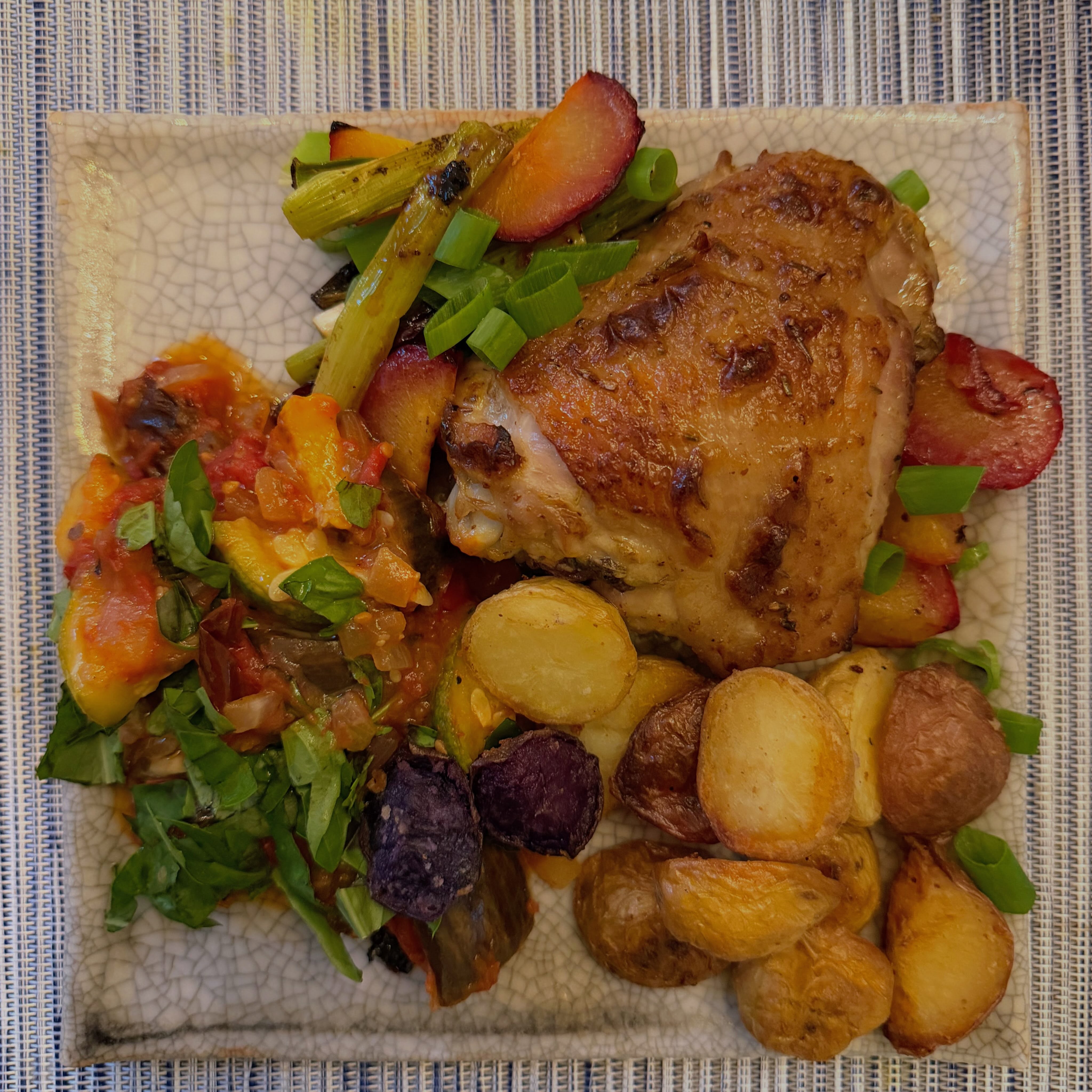
From the original post
Shabbat shalom! Mustard glazed roasted chicken thighs with plums, pluots and scallions Ratatouille of roasted veggies Chicken fat roasted potatoes
Mustard-Glazed Roasted Chicken Thighs with Plums, Pluots and Scallions
Starting the chicken before adding the glaze lets the skin render and brown. Late-added stone fruit softens into the savory juices without completely collapsing.
Ingredients
- 4 large bone-in, skin-on chicken thighs, about 2 1/2 lb total
- 1 1/2 tsp Diamond Crystal kosher salt, plus more to taste; use half as much fine salt
- 1/2 tsp freshly ground black pepper
- 3 tbsp gluten-free Dijon mustard
- 2 tsp honey
- 1 tbsp apple cider vinegar
- 1 tbsp extra-virgin olive oil, divided
- 2 cloves garlic, finely grated
- 1 tsp fresh thyme leaves
- 2 firm-ripe plums, pitted and quartered
- 2 firm-ripe pluots, pitted and quartered
- 1 bunch scallions, trimmed; whites and light greens cut into 3-inch lengths, dark greens sliced diagonally
- 2–4 tbsp water, as needed for the roasting pan
Instructions
- Pat the chicken very dry and season all over with salt and pepper. If time permits, refrigerate uncovered overnight; otherwise season while the oven heats.
- Heat the oven to 425°F. Arrange the chicken skin-side up in a shallow metal roasting pan, leaving room between the thighs. Roast for 20 minutes.
- Mix the Dijon, honey, vinegar, 2 teaspoons olive oil, garlic and thyme. Reserve 1 tablespoon in a clean bowl for finishing; use the remainder to brush the partly roasted chicken.
- Toss the fruit and scallion lengths with the remaining 1 teaspoon olive oil and a small pinch of salt. Arrange around, rather than over, the chicken, keeping the skin exposed. Add 2 tablespoons water if the pan juices are beginning to scorch.
- Roast for another 20–30 minutes, until the glaze is browned, the fruit is tender but still holds its shape, and the chicken registers 175–185°F in the thickest part without touching bone. Add a little more water if necessary to protect the juices.
- Transfer the chicken to a warm platter and rest uncovered for 10 minutes. Lift out the fruit and scallions. Spoon off excess fat from the pan, then stir the reserved glaze into the hot juices and bring to a simmer on the stovetop for 1–2 minutes, adding a splash of water if needed.
- Taste the juices for salt and acidity. Spoon around the chicken and fruit, and finish with the sliced scallion greens.
Notes
- Use fruit that gives only slightly when pressed; very ripe fruit may need only the final 10–15 minutes in the oven.
- If the glaze darkens before the chicken is done, loosely shield the skin with foil.
Roasted Summer Ratatouille
Roasting in uncrowded layers concentrates the tomatoes and browns the vegetables before they are folded together. Fresh herbs and a little vinegar keep the finished medley lively.
Ingredients
- 1 medium eggplant, about 12 oz, cut into 1-inch pieces
- 2 small zucchini or yellow summer squash, about 12 oz total, cut into thick half-moons
- 1 large yellow or orange bell pepper, cut into broad pieces
- 1 medium yellow onion, cut into 3/4-inch pieces
- 1 lb ripe tomatoes, cored and cut into large chunks
- 4 cloves garlic, thinly sliced
- 5 tbsp extra-virgin olive oil, divided
- 1 1/2 tsp Diamond Crystal kosher salt, plus more to taste
- 1/2 tsp freshly ground black pepper
- 1 tsp fresh thyme leaves
- 2 tsp red wine vinegar, plus more to taste
- 1/2 cup loosely packed basil leaves, torn
- 1/4 cup roughly chopped flat-leaf parsley
Instructions
- Heat the oven to 425°F. Toss the eggplant with 2 tablespoons olive oil and about one-third of the salt. Spread on one large rimmed sheet pan.
- Toss the squash, pepper and onion with 2 tablespoons olive oil and another third of the salt. Spread on a second sheet pan. Roast both pans for 15 minutes.
- Toss the tomatoes, garlic and thyme with the remaining tablespoon olive oil, remaining salt and black pepper. Add to the squash pan, turning the vegetables gently. Turn the eggplant on its own pan.
- Roast for another 20–30 minutes, rotating the pans as needed, until the eggplant is creamy inside, the peppers have browned edges and the tomatoes are slumped and jammy. Remove individual vegetables early if they are ready.
- Fold everything together in a serving bowl, including the tomato juices. Add the vinegar and taste for seasoning. Let stand for at least 10 minutes so the flavors mingle.
- Fold in the basil and parsley just before serving, reserving a few leaves for the top.
Notes
- Serve warm or at room temperature; this is a useful component to finish before the chicken goes into the oven.
- Avoid crowding the pans: the goal is browned vegetables with concentrated juices, not a watery stew.
Chicken-Fat Roasted Potatoes
A brief parboil gives the potatoes tender centers, while a hot pan and schmaltz create golden, savory cut surfaces.
Ingredients
- 1 3/4 lb small yellow, red and purple potatoes, halved lengthwise; quarter any large ones
- 3 tbsp rendered chicken fat (schmaltz)
- 1 tbsp kosher salt, for the boiling water
- 3/4 tsp Diamond Crystal kosher salt, plus more to finish
- 1/4 tsp freshly ground black pepper
Instructions
- Place the potatoes in a saucepan and cover with cold water by 1 inch. Add the tablespoon of salt. Bring to a boil, then simmer for 7–10 minutes, until the outside is tender but the centers still resist a knife slightly.
- Drain thoroughly and leave in the colander for 5 minutes to steam-dry. Shake gently to roughen the edges without breaking the potatoes.
- Heat the oven to 425°F. Put the schmaltz on a heavy rimmed sheet pan and heat for 3–4 minutes, just until melted and hot.
- Carefully add the dry potatoes, measured seasoning salt and pepper. Toss to coat and arrange mostly cut-side down in a single layer.
- Roast for 35–45 minutes, turning after about 25 minutes, until the cut surfaces are deeply golden and the centers are fully tender. Finish with salt to taste and serve promptly.
Notes
- Use plain rendered chicken fat, without onion pieces that could burn during roasting.
- A mixture of potato colors matches the platter, but all-yellow potatoes work equally well.
Overall Timing / Workflow
Making the ratatouille first frees the oven for the chicken and potatoes. The vegetables benefit from resting, while the crisp components finish close to serving.
Instructions
- Optional day before: season the chicken and refrigerate uncovered.
- 0:00 — Heat the oven to 425°F and prepare the ratatouille. Roast it on two sheet pans.
- 0:35 — Prepare the chicken glaze, cut the fruit and scallions, and start parboiling the potatoes.
- 0:55 — Remove the finished ratatouille and fold together with its vinegar, leaving the fresh herbs for serving. Put the chicken in the oven on the upper-middle rack.
- 1:00 — Heat the schmaltz on a clean sheet pan, then add the drained, steam-dried potatoes and roast on the lower-middle rack.
- 1:15 — Glaze the chicken and add the fruit and scallion lengths. Rotate pans if one side of the oven browns faster.
- 1:25 — Turn the potatoes and begin checking the chicken temperature.
- 1:35–1:45 — Remove the chicken when done and rest for 10 minutes. Finish the pan juices while the potatoes complete their roasting. Fold herbs into the ratatouille and plate.
Notes
- Use doneness rather than the clock as the final guide; thigh size and oven airflow can shift the finish by 10 minutes.
Plating
Keeping the potatoes out of the pan juices preserves their crisp edges, while placing the fruit beside the chicken makes it easy to eat them together.
Instructions
- Place a generous spoonful of ratatouille on one side of each warm plate and arrange the roasted potatoes alongside.
- Set a chicken thigh skin-side up beside the vegetables. Tuck the roasted plums, pluots and scallions around it.
- Spoon a little mustard-fruit pan juice around the chicken, avoiding the potatoes and most of the skin. Scatter the fresh scallion greens over the chicken and the reserved herbs over the ratatouille.
Leftover Path
Separate storage lets the chicken and potatoes reheat with dry heat while the fruit, juices and ratatouille retain their moisture.
Instructions
- Refrigerate within 2 hours, storing the chicken, fruit and pan juices, potatoes, and ratatouille in separate covered containers. Use within 3–4 days.
- Reheat chicken skin-side up at 375°F until its center reaches 165°F, generally 20–25 minutes. Warm the fruit and juices gently in a small saucepan.
- Re-crisp the potatoes on a preheated sheet pan at 425°F for 15–20 minutes. Warm the ratatouille gently or serve it at room temperature.
- For a second meal, shred the chicken into warm ratatouille, spoon over the mustard-fruit juices and serve the crisped potatoes alongside.