Mustard-Miso Black Cod with Artichoke-Caper Salsa and Autumn Roasted Vegetables
Buttery black cod gets a savory mustard-miso glaze and a generous spoonful of lemony artichoke-caper salsa. Deeply browned Brussels sprouts bring balsamic sharpness, while roasted sunchokes, delicata squash, and walnuts make this a generous autumn plate with plenty of texture.
By Jonathan Katzman · Cooked and photographed · Recipe updated
Serves: 4 servings
Tags: gluten-free, paleo, dairy-free, pescatarian
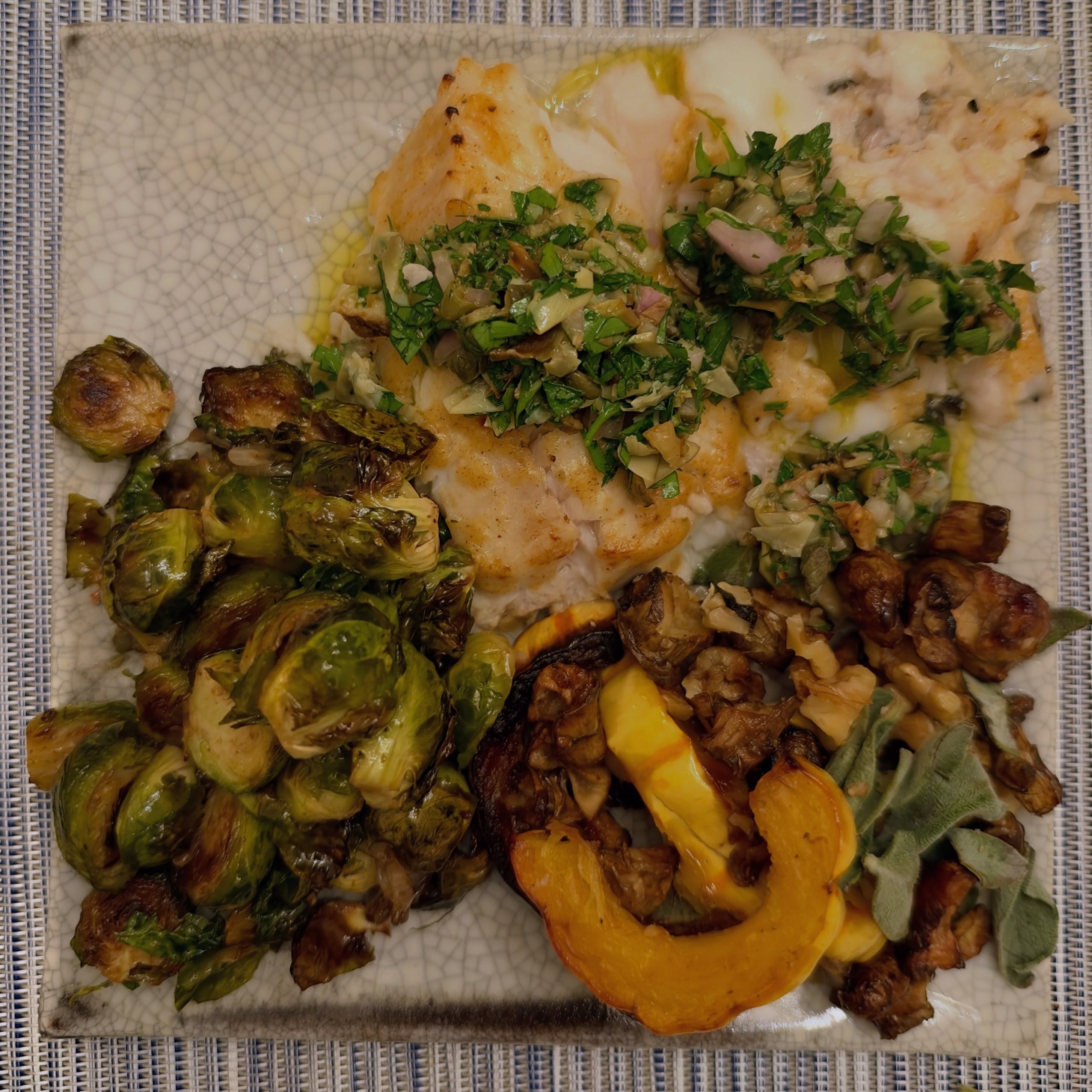
Mustard-Miso Glazed Black Cod
Black cod's rich flesh stays moist in the oven. A thin mustard-miso coating gives it savory depth without overwhelming the bright salsa.
Ingredients
- 4 6-ounce portions black cod (sablefish), pin bones removed
- 2 tablespoons gluten-free white miso
- 1 tablespoon Dijon mustard
- 2 teaspoons unseasoned rice vinegar
- 1 teaspoon honey
- 1 teaspoon olive oil, for the baking pan
Instructions
- Heat the oven to 425°F. Pat the fish dry and place skin-side down in a lightly oiled, foil-lined metal baking pan.
- Mix the miso, mustard, vinegar, and honey into a spreadable glaze. Brush a thin, even coating over the flesh; additional salt is generally unnecessary.
- Roast for 10–14 minutes, depending on thickness. Switch to the broiler and cook for 1–3 minutes, watching closely, until the glaze is lightly browned and the fish reaches 145°F in its thickest part.
- Let stand for 2 minutes before transferring carefully with a wide spatula. The flesh should separate into large, moist flakes.
Notes
- Keep the glaze thin so it browns rather than forming a salty crust. If it colors before the center is cooked, finish on a lower oven rack with the broiler off.
Baby Artichoke and Caper Salsa
Tender artichokes give this chunky salsa substance, while capers, lemon, and parsley cut through the richness of the cod.
Ingredients
- 8 baby artichokes, about 1 pound before trimming
- 1 lemon
- 2 tablespoons capers, drained and roughly chopped
- 1 small shallot, finely diced
- 1/2 cup roughly chopped flat-leaf parsley
- 1/4 cup extra-virgin olive oil
- to taste kosher salt and freshly ground black pepper
Instructions
- Finely zest the lemon and reserve the zest. Prepare a bowl of cold water with juice from half the lemon.
- Pull away the tough outer artichoke leaves until the pale, tender leaves remain. Cut off the top third, trim and peel the stems, and halve lengthwise. Remove any fuzzy choke, then place in the lemon water.
- Bring a saucepan of lightly salted water to a simmer. Add the trimmed artichokes and cook for 12–18 minutes, until a knife enters the hearts easily. Drain thoroughly, spread out to cool, and pat dry.
- Cut the artichokes into small, irregular pieces. Combine with the capers, shallot, parsley, olive oil, reserved zest, and 1 tablespoon juice from the remaining lemon half.
- Let stand for 10 minutes, then taste and adjust with pepper, salt, and additional lemon juice. The salsa should be spoonable and bright, not soupy.
Notes
- For a quicker version, use 1 cup drained plain cooked baby artichoke hearts. Avoid heavily marinated hearts, which can dominate the glaze.
Roasted Brussels Sprouts
A hot pan and uncrowded roasting produce dark cut faces and crisp leaves. Dressing the sprouts only at the end preserves their texture.
Ingredients
- 1 1/4 pounds Brussels sprouts, trimmed and halved
- 2 tablespoons olive oil
- 1/2 teaspoon kosher salt
- 1/4 teaspoon freshly ground black pepper
Instructions
- Heat the oven to 425°F with a heavy rimmed sheet pan inside.
- Toss the Brussels sprouts with the oil, salt, and pepper. Carefully spread them over the hot pan, cut-side down, leaving space between pieces.
- Roast for 25–30 minutes, until the cut faces are deeply browned and the centers are tender. Rotate the pan as needed; remove any loose leaves that brown early.
- Toss with enough shallot-balsamic dressing to lightly coat just before serving.
Shallot-Balsamic Dressing
Macerating the shallot in vinegar softens its bite. A small amount of Dijon holds the dressing together so it coats the sprouts rather than pooling underneath.
Ingredients
- 1 small shallot, finely minced
- 1 1/2 tablespoons balsamic vinegar without added sweetener
- 1/2 teaspoon Dijon mustard
- 2 tablespoons extra-virgin olive oil
- to taste kosher salt and freshly ground black pepper
Instructions
- Combine the shallot, balsamic vinegar, and a pinch of salt. Let stand for 10 minutes.
- Whisk in the mustard, then the olive oil. Season with pepper and taste for salt.
- Use about two-thirds to dress the hot sprouts, adding the remainder only if needed.
Notes
- If the balsamic is especially sharp, whisk in another teaspoon of olive oil rather than sweetening the dressing.
Roasted Sunchokes and Delicata Squash with Walnuts
Sunchokes become creamy inside their browned skins, while delicata brings sweetness and tender edible rind. Toasted walnuts add a dry crunch against both.
Ingredients
- 12 ounces sunchokes, scrubbed well
- 1 medium delicata squash, about 1 pound
- 2 1/2 tablespoons olive oil, divided
- 1/2 teaspoon kosher salt, plus more to taste
- 1/4 teaspoon freshly ground black pepper
- 1/3 cup walnut halves, coarsely broken
- 8 small sage leaves, optional
- 1 teaspoon lemon juice
Instructions
- Heat the oven to 425°F. Cut the sunchokes into roughly 3/4-inch pieces. Halve the squash lengthwise, scoop out the seeds, and cut crosswise into 1/2-inch crescents.
- Toss the sunchokes with 1 tablespoon olive oil and half the salt and pepper. Spread on a rimmed sheet pan and roast for 10 minutes.
- Toss the squash with 1 tablespoon olive oil and the remaining salt and pepper. Add to the pan in a single layer, turning the sunchokes at the same time.
- Roast for another 25–35 minutes, turning once, until the squash edges are caramelized and the sunchokes are completely tender. Remove squash pieces early if they finish first.
- Toast the walnuts on a small tray in the oven for 5–7 minutes, watching carefully. If using sage, coat the leaves with the remaining 1/2 tablespoon oil and add them to the vegetable pan for its final 3–5 minutes.
- Gently combine the roasted vegetables, walnuts, and sage. Sprinkle with lemon juice and adjust the salt.
Notes
- Use two pans if necessary; crowded vegetables steam instead of browning.
Overall Timing / Workflow
The vegetables share one oven temperature, and their roasting time leaves room to prepare the salsa and dressing. The fish cooks last so it reaches the table moist and hot.
Instructions
- 0:00 — Heat the oven to 425°F. Trim and simmer the artichokes while preparing the sunchokes, squash, and sprouts.
- 0:20 — Start roasting the sunchokes. Mix the shallot-balsamic dressing and let it stand.
- 0:30 — Add the squash to the sunchoke pan and put the Brussels sprouts on a separate hot pan. Rotate the trays midway through roasting.
- 0:35 — Drain, cool, and chop the artichokes; finish the salsa. Toast the walnuts and prepare the fish glaze.
- 0:55–1:05 — Remove the vegetables as they become tender and browned. Keep loosely covered in a warm spot; leave the sprouts uncovered to protect their crisp edges.
- Roast and briefly broil the fish. While it rests, finish the sunchoke-squash medley and toss the sprouts with dressing. Plate immediately.
Notes
- Allow about 75–85 minutes total, depending on artichoke trimming and fish thickness. Keep walnuts near the oven door so they are easy to monitor.
Plating
Keeping the two vegetable sides distinct preserves their textures, while the salsa links the rich fish to the brighter elements on the plate.
Instructions
- Place a portion of cod toward the top of each warm plate.
- Spoon the artichoke-caper salsa generously across the fish, leaving some browned glaze visible.
- Arrange the dressed Brussels sprouts alongside, then add a separate mound of sunchokes, delicata, and walnuts. Distribute the optional sage over the medley.
- Spoon a little of the salsa's olive oil around the fish rather than over the crisp sprouts.
Leftover Path
Separate storage keeps the salsa fresh and lets the vegetables regain some roasted texture without overcooking the delicate fish.
Instructions
- Refrigerate the fish, salsa, and vegetables in separate airtight containers within 2 hours. Use the fish and salsa within 2 days and the vegetables within 3–4 days.
- Reheat the vegetables on a sheet pan at 400°F for 10–15 minutes. Add any reserved walnuts near the end.
- Serve the fish cold or reheat covered in a 275°F oven until it reaches 165°F; gentle heat limits drying. Add the salsa after reheating.
- For another meal, flake the cold fish over dressed greens with the remaining salsa and serve the roasted vegetables alongside.