Omakase Nigiri Trio: Zuke Tuna, Hamachi, and Chutoro
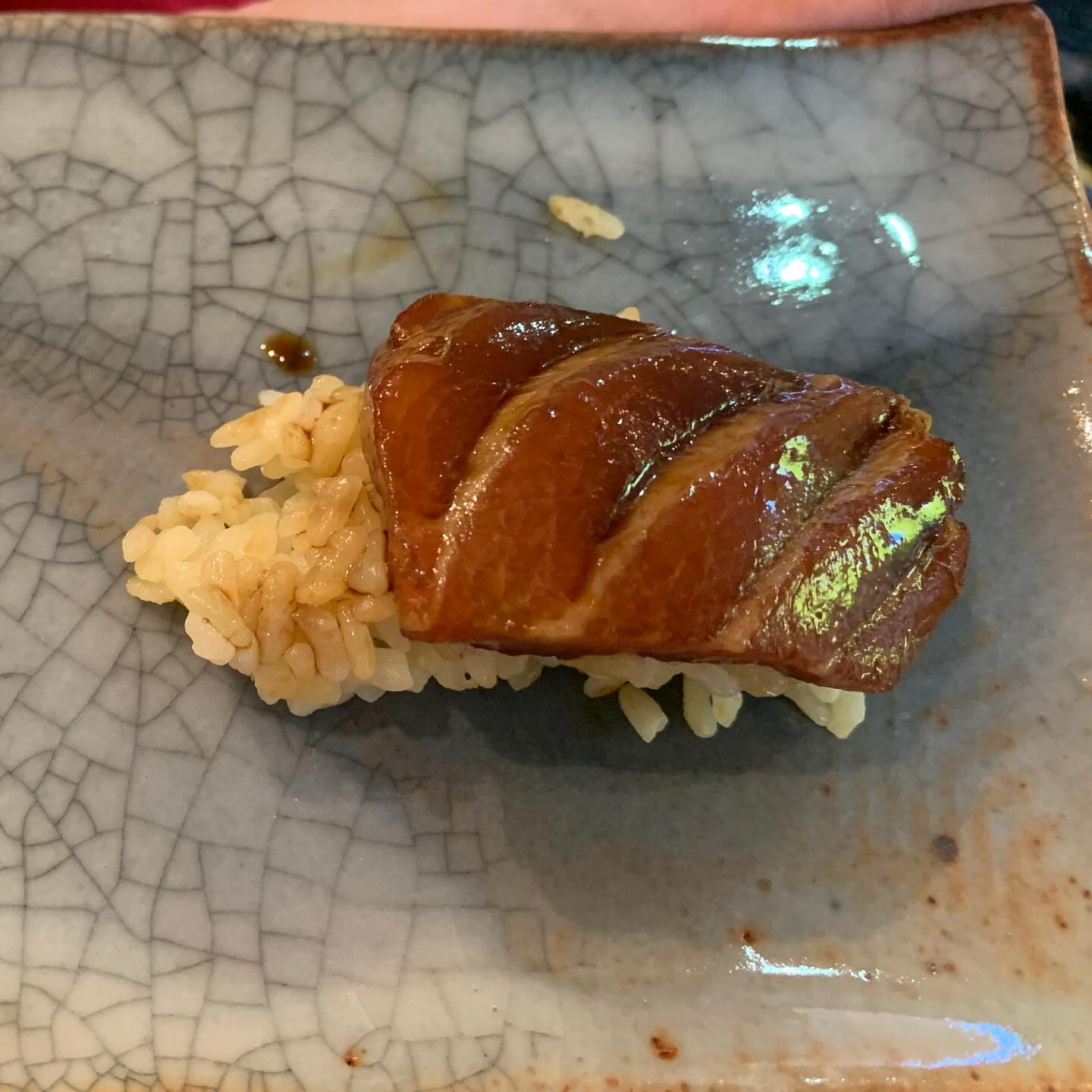
Three spare, generous bites of nigiri move from clean, buttery hamachi to savory marinated tuna and rich, crosshatched chutoro. Warm, lightly seasoned rice and a thin tamari glaze keep the focus on the fish—a relaxed omakase night made one small round at a time.
By Jonathan Katzman · Cooked and photographed · Recipe updated
Serves: 4 servings
Tags: gluten-free, dairy-free, nut-free, pescatarian
Lightly Seasoned Sushi Rice
Short-grain white rice holds together with gentle pressure while remaining tender. Mild vinegar seasoning balances the fatty fish without dominating it.
Ingredients
- 240 g Japanese short-grain white rice
- 285 ml water, or the amount specified by your rice cooker
- 3 tbsp unseasoned rice vinegar
- 2 tsp mild honey
- 1 tsp fine sea salt
Instructions
- Rinse the rice gently in several changes of cold water until the water is only lightly cloudy. Drain thoroughly.
- Combine with the measured cooking water and soak for 20 minutes. Cook using a rice cooker's white-rice setting. Alternatively, bring to a simmer in a covered heavy saucepan, reduce to very low heat for 15 minutes, then rest off heat, covered, for 10 minutes.
- Stir the vinegar, honey, and salt together until dissolved, warming gently if necessary.
- Transfer the hot rice to a wide nonreactive bowl. Sprinkle over the seasoning and fold with a slicing motion, fanning briefly until glossy and just warm, approximately body temperature.
- Cover with a clean, barely damp towel. Use about 22–25 g per nigiri, shaping only as each round is assembled.
Notes
- Do not mash or knead the rice; a good mound holds together but yields easily in the mouth.
- Prepare close to service and use within 2 hours at room temperature. Vinegar seasoning here is for flavor, not a validated preservation method.
Tamari Nikiri-Style Brushing Sauce
A brief simmer softens the sake and combines the seasoning into a thin, savory glaze. It should gloss the fish rather than coat it like a syrup.
Ingredients
- 3 tbsp gluten-free tamari
- 2 tbsp sake
- 2 tbsp water
- 1 tsp mild honey
Instructions
- Combine all ingredients in a small saucepan. Bring to a gentle simmer and cook for 3–5 minutes, leaving the sauce fluid rather than syrupy.
- Cool completely. Reserve 2 tablespoons in a separate clean container for brushing finished nigiri; refrigerate the remainder for the tuna marinade.
- Use a clean brush or spoon to transfer small amounts of the reserved sauce for each round, keeping the main supply free of raw-fish contact.
Notes
- If the sauce tastes aggressively salty or becomes sticky, dilute with water a teaspoon at a time.
- The sake is simmered for flavor; this method does not guarantee removal of all alcohol.
Zuke Tuna
A short, cold marinade gives lean tuna a dark sheen and concentrated savoriness without firming it excessively.
Ingredients
- 180 g trimmed lean tuna saku, sourced specifically for raw consumption
- 3 tbsp chilled tamari nikiri-style sauce, from the sauce component
Instructions
- Keep the tuna refrigerated at 40°F / 4°C or colder until ready to cut. Pat dry and, with a very sharp knife, cut across the grain into 8 broad slices approximately 6–8 mm thick.
- Make two or three shallow diagonal scores in the upper surface of each slice, without cutting through.
- Arrange in a small nonreactive container and coat with the chilled sauce. Refrigerate for 10–15 minutes, turning once.
- Lift out and blot the undersides lightly. Discard all used marinade. Keep the slices cold until assembling the tuna round.
Notes
- Buy from a trusted seafood supplier who can confirm suitability for raw consumption and appropriate parasite controls for the species; 'sushi-grade' alone is not a regulated safety guarantee.
- Marinating does not make raw fish safe. Pregnant, older, immunocompromised, and very young diners should be served fully cooked seafood instead.
Fresh Hamachi
Leaving the hamachi un-marinated preserves its delicate sweetness and supple texture, providing contrast to the darker zuke tuna.
Ingredients
- 180 g skinless, boneless hamachi loin, supplier-confirmed suitable for raw consumption with appropriate parasite controls
Instructions
- Keep the hamachi at 40°F / 4°C or colder. Pat dry and inspect carefully for bones and any remaining tough membrane.
- Using a long, sharp knife and a single drawing stroke, cut across the grain into 8 broad slices approximately 6–8 mm thick.
- Arrange on a clean covered tray and refrigerate until its serving round. Avoid stacking or pressing the slices.
Notes
- If the loin contains a firm bloodline, trim it away for a cleaner flavor.
- Do not assume a household freezer provides validated parasite treatment; arrange appropriate sourcing with the supplier.
Crosshatched Chutoro
Shallow scoring makes moderately fatty tuna easier to bite cleanly and catches a whisper of brushing sauce.
Ingredients
- 180 g trimmed chutoro tuna saku, sourced specifically for raw consumption
Instructions
- Keep the chutoro cold and pat dry. Remove any conspicuously tough connective tissue.
- Cut across the grain into 8 broad slices approximately 7–9 mm thick.
- With the tip of a very sharp knife, score a shallow crosshatch into the upper surface, approximately 1–2 mm deep, without separating the flesh.
- Keep covered and refrigerated until the final serving round.
Notes
- Use light knife pressure so the fatty flesh remains intact rather than tearing.
Wasabi and Shaping Water
A tiny amount of wasabi sharpens the fish's richness. Lightly vinegared water keeps rice from sticking without soaking the grains.
Ingredients
- 1–2 tsp freshly grated wasabi or gluten-free prepared wasabi
- 1 cup water
- 1 tbsp unseasoned rice vinegar
Instructions
- Mix the water and vinegar in a small bowl for moistening your hands.
- Set the wasabi nearby with a clean small spoon. Use only a rice-grain-sized dab under each slice of fish, adjusting to taste.
- Moisten your hands sparingly and shake off excess water before touching the rice.
Overall Timing / Workflow
Preparing the rice and sauce first keeps the fish cold until the last practical moment. Serving in rounds preserves the contrast between warm rice and cool fish.
Instructions
- 0:00 — Rinse and soak the rice. Make the brushing sauce and chill it promptly in a shallow container set over ice.
- 0:20 — Start cooking the rice. Set out clean plates, a sharp knife, a clean board, wasabi, and shaping water.
- 0:35 — Slice the lean tuna and begin its refrigerated marinade. Slice the hamachi and chutoro using clean equipment, covering and refrigerating each as finished.
- 0:50 — Season the cooked rice and let it cool to body temperature. Remove the tuna from its marinade and refrigerate.
- 1:00 — Shape and serve the hamachi round, followed by zuke tuna and then chutoro, making two pieces per person in each round.
- Keep fish refrigerated between rounds, and limit cumulative room-temperature exposure to less than 2 hours, or 1 hour if the room is above 90°F / 32°C.
Plating
Small, loosely formed rice mounds let the fish drape naturally. Minimal sauce and uncluttered plates keep each cut distinct.
Instructions
- With lightly moistened hands, form a 22–25 g portion of warm rice into a loose oval approximately 4–5 cm long.
- Place a fish slice in your opposite hand, spread a tiny dab of wasabi on its underside, and bring the rice to it. Turn fish-side up and press gently over the top and sides just enough to unite the two.
- For hamachi and chutoro, brush the upper surface very lightly with the clean reserved sauce. Leave the marinated tuna as is unless it needs a final trace of gloss.
- Place two pieces per person on small ceramic plates with space between them. Serve immediately and encourage eating each piece in one bite.
Notes
- Do not compress the rice into a dense block or flood the plate with sauce.
Leftover Path
Unassembled fish and rice store better separately, and cooking the remaining fish makes a more practical next-day meal than holding finished nigiri.
Instructions
- Refrigerate unused fish promptly in a covered container at 40°F / 4°C or colder, following the supplier's use-by guidance. Plan to cook it within 24 hours rather than serving it raw again.
- Cool leftover rice quickly in a shallow container and refrigerate within 2 hours of cooking. Use the next day, reheating until steaming hot throughout.
- Bake leftover fish at 400°F / 205°C until its center reaches 145°F / 63°C; timing will depend on thickness. Serve over the reheated rice with a little uncontaminated reserved sauce.
- Discard used marinade, sauce exposed to raw-fish utensils, and any nigiri or ingredients that exceeded safe room-temperature holding limits.