Otoro Sushi Night with Charred Brussels Sprouts, Japanese Sweet Potato, and Persimmon
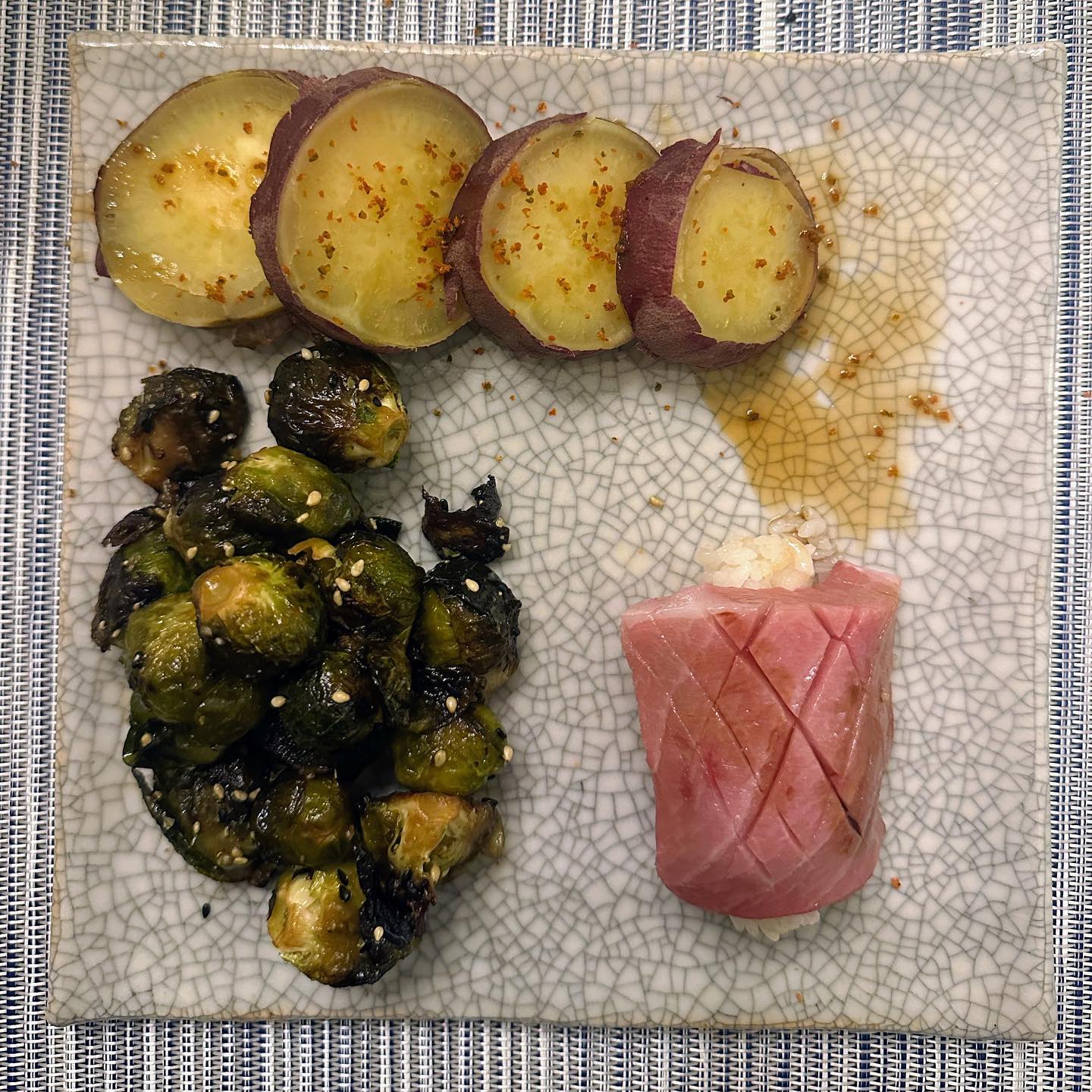
Rich otoro drapes over lightly seasoned sushi rice, with a final seared round that warms the fat and browns the edges. Charred Brussels sprouts bring salty acidity, while Japanese sweet potato adds mellow sweetness and a little yuzu-chile heat. Soft persimmon with coconut and cacao makes a simple late-fall finish.
By Jonathan Katzman · Cooked and photographed · Recipe updated
Serves: 4 servings
Tags: dairy-free, nut-free, pescatarian
Lightly Seasoned Sushi Rice
Short-grain rice holds together with gentle pressure. Vinegar and a restrained amount of sweetness balance the fatty tuna without overwhelming it.
Ingredients
- 1 cup Japanese short-grain white rice
- 1.1 cups water, or the amount recommended by your rice cooker
- 2 tablespoons unseasoned rice vinegar
- 2 teaspoons mild honey
- 1/2 teaspoon fine sea salt
Instructions
- Rinse the rice in several changes of cool water until the water is mostly clear. Drain thoroughly.
- Cook with the measured water in a rice cooker using its white-rice cycle. Alternatively, bring to a simmer in a small covered saucepan, reduce to very low heat, cook for 15 minutes, then rest off heat, covered, for 10 minutes.
- Stir the vinegar, honey, and salt together until dissolved, warming gently if necessary.
- Transfer the hot rice to a wide nonreactive bowl. Drizzle over the seasoning and fold with a cutting motion, separating clumps without crushing the grains.
- Fan briefly and cool to barely warm, approximately body temperature. Cover with a clean, barely damp towel while preparing the sushi.
Notes
- This makes roughly 3 cups cooked rice, enough for about 24 small nigiri with a little extra.
- Prepare close to serving; do not keep rice at room temperature for more than 2 hours total.
Raw and Seared Otoro Nigiri
A small rice mound keeps the focus on the tuna. Shallow scoring softens the bite, while a brief torching renders surface fat without cooking the center.
Ingredients
- 1 1/4 pounds otoro tuna block sold by a trusted fishmonger for raw consumption
- 24 small portions prepared sushi rice, about 18–20 g each
- 2 teaspoons gluten-free Shared Cultures tamari, plus a little more as needed
- 1 teaspoon Noma Projects Dashi RDX, for seasoning alternate pieces
- 1/2 cup cold water, for moistening hands
- 1 teaspoon rice vinegar, for the hand water
Instructions
- Keep the tuna refrigerated at 40°F or below until ready to slice. With a very sharp knife, cut across the grain into approximately 24 broad slices, about 1/4 inch thick; adjust the angle to make slices that drape over the rice.
- If the tuna has prominent connective tissue, make two or three very shallow diagonal scores across the surface without cutting through. Refrigerate the slices while setting up.
- Mix the hand water and vinegar. Lightly moisten your hands, then shape the rice into small, loose oblongs using minimal pressure.
- Drape a tuna slice over each rice mound and press gently to unite them. Work in small batches, keeping unused tuna cold.
- Brush the first rounds sparingly with either tamari or Dashi RDX, using separate brushes or spoons. Serve immediately rather than soaking the rice.
- For the final round, place unseasoned nigiri on a flameproof tray. Sweep a culinary torch continuously across the tuna in short passes, approximately 5–10 seconds per piece, until the surface turns pale gold in patches and the fat glistens. Keep the center pink and avoid scorching the rice.
- Brush the seared pieces lightly with tamari or Dashi RDX and serve at once.
Notes
- Use tuna with handling and any necessary parasite controls appropriate for raw service; a 'sushi-grade' label alone is not a safety guarantee. Brief torching does not make raw fish fully cooked.
- For anyone avoiding raw seafood, cook a separate portion of tuna to 145°F and serve over rice.
- Both seasonings are concentrated: start with a few drops per piece and increase only after tasting.
Charred Brussels Sprouts with Tamari, Fish Sauce, and Rice Vinegar
Deep browning gives the sprouts crisp edges and sweetness. A sharp, savory dressing added after roasting keeps the vinegar bright and the fermented seasonings from burning.
Ingredients
- 1 1/2 pounds Brussels sprouts, trimmed and halved
- 2 tablespoons avocado oil
- 1 tablespoon gluten-free tamari
- 1 teaspoon gluten-free fish sauce
- 1 tablespoon unseasoned rice vinegar
- 2 teaspoons toasted sesame seeds, white or a mixture of white and black
Instructions
- Heat the oven to 425°F. Dry the sprouts thoroughly, toss with avocado oil, and arrange cut-side down on a large sheet pan with space between pieces.
- Roast for 20 minutes without disturbing. Turn and roast for another 5–10 minutes, until the cut faces are deeply browned and the centers yield to a knife with a little resistance.
- Mix the tamari, fish sauce, and rice vinegar in a large bowl.
- Toss the hot sprouts with the dressing and sesame seeds immediately before serving. Include the crisp loose leaves, but discard any that have burned.
Notes
- The dressing supplies the salt; taste before adding any extra. If it tastes too concentrated, loosen with a teaspoon or two of water.
Japanese Sweet Potato with Tamari and Yuzukarararin
Steaming preserves the sweet potato's pale, chestnut-like flesh and clean sweetness. Tamari and a dry yuzu-chile seasoning add contrast without making a heavy sauce.
Ingredients
- 1 1/2 pounds purple-skinned Japanese sweet potatoes, scrubbed
- 2 teaspoons gluten-free tamari
- 2 teaspoons warm water
- 1/4 teaspoon yuzukarararin dry yuzu-chile seasoning, or to taste
Instructions
- Cut the sweet potatoes crosswise into 3/4-inch-thick rounds, leaving the skin on.
- Arrange in a steamer basket over simmering water. Cover and steam for 20–30 minutes, until a thin knife slides through the centers without resistance but the slices still hold their shape.
- Let surface moisture evaporate for 2 minutes. Mix the tamari with the warm water and brush lightly over the warm slices.
- Sprinkle with yuzukarararin just before serving, starting sparingly and adding more to taste.
Notes
- If your yuzu-chile seasoning is particularly salty or hot, reduce the tamari and use only a light dusting.
Soft Persimmon with Toasted Coconut and Cacao Nibs
Fully ripe persimmon provides its own pudding-like texture and sweetness. Coconut flakes and bitter cacao nibs add crunch and keep the finish balanced.
Ingredients
- 4 medium fully ripe, jelly-soft Hachiya persimmons
- 1/2 cup unsweetened coconut flakes
- 1/4 cup unsweetened cacao nibs
Instructions
- Toast the coconut flakes on a small tray in a 325°F oven for 4–6 minutes, stirring once, until lightly golden at the edges. Cool completely.
- Remove the persimmon calyxes, split the fruit, and scoop the flesh into a bowl, discarding skins and any seeds. Gently break up the pulp with a spoon, leaving some soft pieces intact.
- Divide among four small bowls. Add the toasted coconut and cacao nibs in separate clusters just before serving.
Notes
- Hachiya persimmons must be jelly-soft throughout; firm fruit is strongly astringent. No added sweetener should be necessary.
Overall Timing / Workflow
Finish the cooked sides before handling the raw tuna, then assemble sushi in rounds so the fish stays cold and the rice stays supple.
Instructions
- 0:00 — Heat the oven to 325°F and toast the coconut. Rinse and start the rice; mix its seasoning.
- 0:10 — Raise the oven to 425°F. Trim the sprouts, slice the sweet potatoes, and set up the steamer.
- 0:20 — Roast the sprouts and steam the potatoes. Scoop the persimmon into dessert bowls and refrigerate; keep the toppings dry.
- 0:35 — Season the cooked rice and let it cool to barely warm. Mix the Brussels sprout dressing and the sweet potato seasoning.
- 0:45 — Remove the cooked vegetables. Keep them warm, reserving the Brussels sprout dressing until serving. Clean the work surface and prepare the tuna.
- 0:55 — Shape and serve the first raw nigiri with the vegetables. Keep the remaining tuna refrigerated and make subsequent rounds as needed.
- For the last sushi round, torch the nigiri and season immediately. Top the persimmon bowls with coconut and cacao when ready for dessert.
Plating
Separate clusters preserve the contrast between delicate sushi, crisp sprouts, and soft sweet potato, while small sushi rounds keep the otoro at its best.
Instructions
- On each plate, fan three or four sweet potato rounds along one edge and place a compact mound of dressed Brussels sprouts beside them.
- Set two or three nigiri on a clean, dry section of the plate, away from the vegetable dressing. Serve further pieces in small rounds on a separate platter.
- Serve the seared nigiri immediately after torching, with just enough seasoning to gloss the fish rather than pool around the rice.
- Bring out the persimmon in small bowls after the sushi, keeping the coconut and cacao visibly distinct.
Leftover Path
Storing fish, rice, vegetables, and crunchy toppings separately protects their textures and makes the next meal straightforward.
Instructions
- Refrigerate all perishables within 2 hours of leaving temperature control. Cool rice promptly in a shallow container and refrigerate rather than leaving it under the damp towel.
- Keep any untouched tuna refrigerated at 40°F or below and cook within 24 hours, or sooner if advised by the fishmonger. Cook to 145°F and serve over reheated rice; do not plan to serve leftover assembled nigiri raw.
- Use refrigerated rice within 1 day, reheating until steaming hot throughout. Store the cooked vegetables for up to 3 days; re-crisp sprouts in a hot oven and steam or microwave the sweet potato gently.
- Refrigerate persimmon pulp for up to 2 days. Store coconut and cacao separately in airtight containers and add only when serving.