Golden Gnocchi with Butternut Squash, Sage and Brown Butter
Golden-edged gnocchi and roasted butternut squash catch a glossy coating of nutty brown butter and crisp sage. A little squash breaks down as everything comes together, giving this autumn supper a rich sauce without cream.
By Jonathan Katzman · Cooked and photographed · Recipe updated
Serves: 4 servings
Tags: vegetarian, gluten-free, nut-free
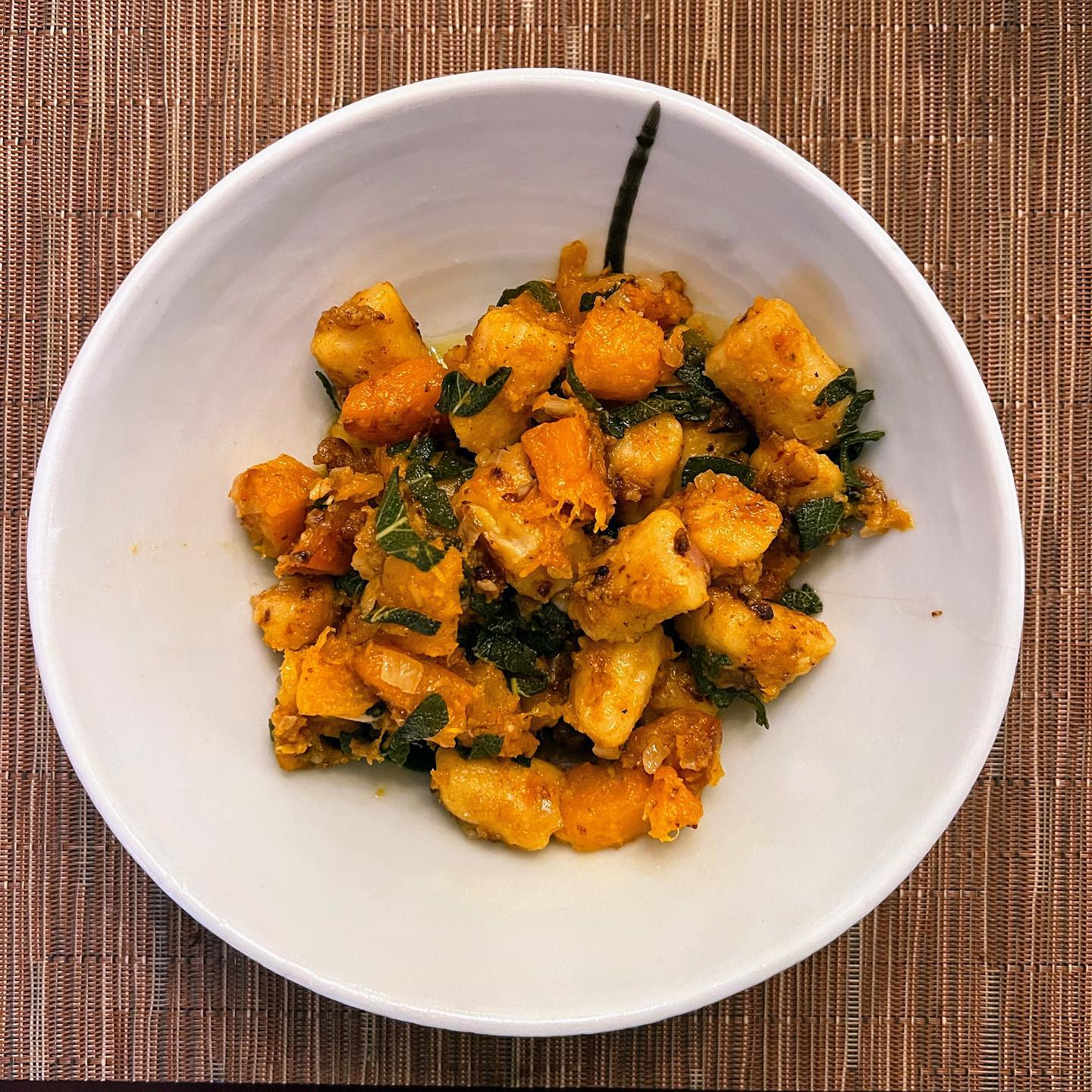
White Sweet Potato Gnocchi
Baked white sweet potatoes provide a relatively dry, mild base. Cassava flour gives the dumplings structure, while a little tapioca keeps them tender enough to contrast with their seared edges.
Ingredients
- 700 g white-fleshed sweet potatoes, such as Hannah
- 90 g cassava flour, plus up to 30 g more as needed and a little for dusting
- 40 g tapioca starch
- 1 large egg yolk
- 3/4 tsp fine sea salt, plus more for the cooking water
- 2 tbsp ghee
Instructions
- Heat the oven to 425°F. Pierce the sweet potatoes and bake on a tray until completely tender, about 45–60 minutes.
- Split immediately to release steam. Scoop out and weigh 450 g flesh, reserving any extra for another use. Mash or rice until smooth, then spread out and cool until barely warm.
- Mix the flesh with the egg yolk and salt. Fold in 90 g cassava flour and the tapioca just until a soft dough forms. If it smears rather than holding its shape, add extra cassava flour a tablespoon at a time; avoid kneading or making the dough stiff.
- Bring a wide pot of salted water to a gentle simmer. Cook a small test dumpling until it floats, then for another 60–90 seconds. It should hold together and have no chalky flour at its center. If it falls apart, work a little more cassava flour into the remaining dough.
- On a lightly cassava-floured surface, divide the dough into four pieces. Gently roll into 3/4-inch-thick ropes and cut into 1-inch pillows.
- Simmer in three or four batches without crowding, cooking for 60–90 seconds after they float. Lift out with a slotted spoon onto a parchment-lined tray and let steam-dry for 5–10 minutes. Reserve 1/2 cup cooking water.
- Heat the ghee in a wide nonstick or well-seasoned skillet over medium-high heat. Sear the gnocchi in two batches, leaving them undisturbed for 2–3 minutes before turning. Cook until golden on two sides, then transfer to a tray.
Notes
- Sweet potato moisture and cassava flour absorbency vary; the test dumpling is more reliable than adding all the extra flour automatically.
- Keep the water at a gentle simmer rather than a rolling boil to protect the tender gnocchi.
Roasted Butternut Squash
Roasting concentrates the squash's sweetness and browns its edges. Keeping most pieces intact while crushing a few creates both texture and a natural coating for the gnocchi.
Ingredients
- 700 g peeled and seeded butternut squash, cut into 3/4-inch cubes
- 1 1/2 tbsp olive oil
- 1/2 tsp fine sea salt
- 1/4 tsp freshly ground black pepper
Instructions
- Heat the oven to 425°F. Toss the squash with the olive oil, salt and pepper on a large rimmed baking sheet.
- Spread in a single layer with space between the pieces. Roast for 25–35 minutes, turning once, until browned underneath and tender all the way through.
- Gently crush about one-quarter of the squash with a fork, leaving the remaining pieces whole. Keep warm for assembly.
Sage Brown Butter
Toasted butter solids bring savory depth to the sweet squash, and sage adds an earthy, crisp contrast. A small amount of lemon keeps the finish from feeling heavy.
Ingredients
- 6 tbsp unsalted butter
- 24 sage leaves, thoroughly dried; large leaves torn
- 2 tsp fresh lemon juice, plus more to taste
- 2–4 tbsp reserved gnocchi cooking water, as needed
- to taste fine sea salt and freshly ground black pepper
Instructions
- Melt the butter in a large, light-colored skillet over medium heat. Add the sage when the butter begins to foam.
- Swirl frequently until the sage is crisp and the milk solids are golden brown with a toasted, nutty aroma, about 4–6 minutes. Lift out several sage leaves for finishing.
- Immediately take the pan off the heat. Let the vigorous bubbling subside, then carefully stir in the lemon juice and 2 tablespoons of cooking water; it may splutter.
- Add the warm squash, including the crushed portion, and the seared gnocchi. Return to low heat and fold gently until glossy and hot, adding a little more cooking water if needed to loosen the coating.
- Taste and adjust the salt, pepper and lemon. Finish with the reserved crisp sage.
Notes
- Brown butter goes from toasted to burnt quickly; remove it from the heat when the solids are golden, not dark brown.
- Add cooking water sparingly so the sauce coats the gnocchi rather than pooling beneath them.
Overall Timing / Workflow
Roasting the squash alongside the sweet potatoes makes efficient use of the oven. Drying and searing the gnocchi before making the butter sauce protects their texture.
Instructions
- 0:00 — Heat the oven and start baking the sweet potatoes.
- 0:15 — Peel and cube the squash, then roast it on a separate rack. Remove when tender and browned.
- 0:50–1:05 — Check the sweet potatoes, then scoop, weigh and cool the flesh. Make the dough while bringing a pot of water to a simmer.
- Shape and test the gnocchi, then simmer in batches and let them steam-dry.
- Sear the gnocchi in ghee. If necessary, briefly rewarm the squash in the oven while the gnocchi brown.
- Make the sage brown butter last, fold in the gnocchi and squash, and serve immediately.
Plating
Warm, shallow bowls keep the butter coating fluid and show off the browned gnocchi and orange squash.
Instructions
- Divide the gnocchi and squash among four warm shallow bowls, distributing the intact squash pieces throughout.
- Spoon over any remaining brown butter coating and scatter the reserved crisp sage across the top.
- Serve immediately while the gnocchi edges still have some crispness.
Leftover Path
Gentle reheating restores the butter coating without repeatedly stirring and breaking the tender dumplings.
Instructions
- Refrigerate leftovers in a shallow airtight container within 2 hours and use within 3 days.
- Reheat in a covered nonstick skillet over medium-low heat with a tablespoon or two of water, shaking the pan occasionally rather than stirring vigorously.
- Once hot throughout, uncover briefly to evaporate excess moisture. The sage will soften, but its flavor will remain.