Ancestral Beef Ragù with Banza Rotini and 72-Month Parmigiano Reggiano
Slow-simmered ancestral beef ragù settles into the spirals of chickpea rotini, with sweet soffritto and tomato rounding out its deep, savory flavor. A shower of 72-month Parmigiano Reggiano and fresh parsley gives this cool-weather bowl a sharp, fragrant finish.
By Jonathan Katzman · Cooked and photographed · Recipe updated
Serves: 4 servings
Tags: gluten-free, nut-free
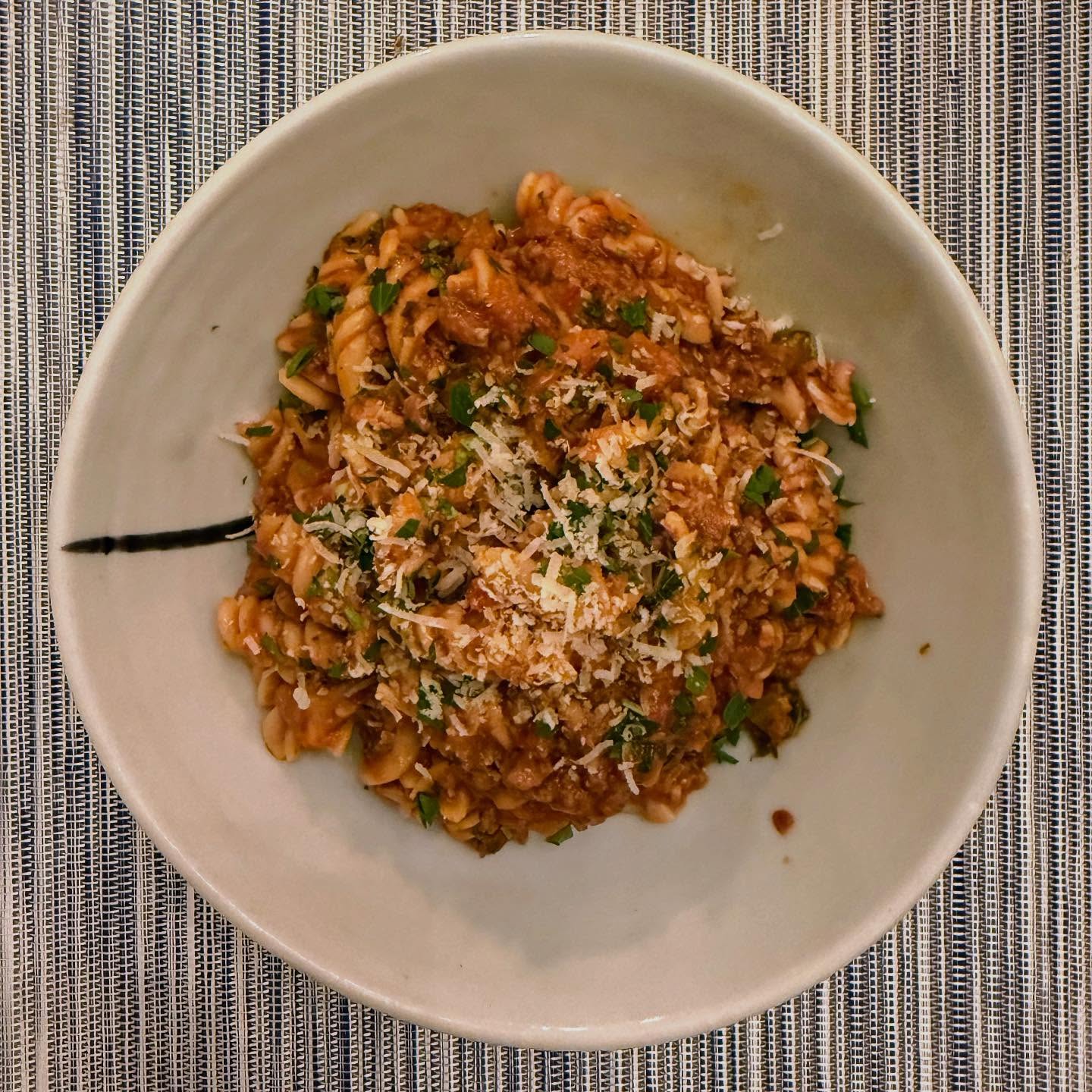
Ancestral Beef Ragù
Browning the ancestral blend builds savory depth, while finely chopped soffritto and a gentle simmer soften its mineral richness. Reducing the sauce before adding pasta keeps it clinging to the spirals rather than pooling underneath.
Ingredients
- 1 1/4 lb Stemple Creek ancestral ground beef blend
- 1 tablespoon ghee
- 1 medium yellow onion, finely chopped
- 1 medium carrot, finely chopped
- 1 stalk celery, finely chopped
- 2 cloves garlic, minced
- 2 tablespoons tomato paste
- 1/2 cup dry red wine
- 1 14-ounce can crushed tomatoes
- 1 cup unsalted gluten-free beef broth, plus more as needed
- 1 bay leaf
- 3/4 teaspoon kosher salt, plus more to taste
- 1/4 teaspoon freshly ground black pepper
Instructions
- Heat the ghee in a wide, heavy saucepan over medium-high heat. Add the ancestral blend in large pieces and let brown undisturbed for 3–4 minutes. Turn, break into small crumbles, and cook until no pink remains and the meat reaches at least 160°F. Transfer to a bowl, leaving the fat in the pan.
- Reduce the heat to medium-low. Add the onion, carrot, celery, and salt. Cook for 10–12 minutes, stirring and scraping up the browned bits, until softened and lightly golden. Add a splash of water if the fond threatens to burn.
- Add the garlic and cook for 30 seconds. Stir in the tomato paste and cook for 2 minutes, until brick red.
- Pour in the wine, scrape the pan, and simmer until reduced by about two-thirds. Return the meat and its juices, then add the tomatoes, broth, bay leaf, and pepper.
- Bring to a gentle simmer and partially cover. Cook over low heat for 75–90 minutes, stirring occasionally, until the meat is tender and the vegetables have largely melted into the sauce. Add small splashes of broth or water if it becomes dry before it is tender.
- Remove the bay leaf. Uncover and reduce as needed until thick but spoonable, with no watery rim. Taste and adjust the salt and pepper.
Notes
- Keep the simmer gentle; a hard boil can leave the leaner parts of an ancestral blend dry and grainy.
- If the finished sauce tastes sharply acidic, give it another 10–15 minutes of gentle cooking before adjusting the seasoning.
Banza Rotini
The rotini's ridges hold the finely textured ragù. Briefly finishing it in the sauce integrates the dish without overworking the more delicate chickpea pasta.
Ingredients
- 12 oz Banza chickpea rotini
- as needed water
- to taste kosher salt for the cooking water
Instructions
- Bring a large pot of water to a boil and salt it. Add the rotini and stir gently to separate.
- Cook according to the package directions, beginning to taste at the earliest recommended time. Drain when just tender but still holding its shape, reserving 1 cup of cooking water.
- Add the drained rotini to the hot ragù over low heat. Fold gently for 30–60 seconds, adding reserved cooking water a few tablespoons at a time until the sauce coats the spirals without becoming soupy. Avoid prolonged simmering.
Notes
- Chickpea pasta can foam considerably; use a roomy pot and lower the heat slightly if needed to prevent overflow.
Aged Parmigiano and Parsley Finish
Very mature Parmigiano adds concentrated umami and a crystalline, nutty finish. Parsley brings a fresh contrast to the slow-cooked sauce.
Ingredients
- 1 1/2 oz 72-month-aged Parmigiano Reggiano, freshly grated
- 3 tablespoons chopped flat-leaf parsley
Instructions
- Grate the Parmigiano finely and chop the parsley just before serving.
- Scatter both over the plated pasta, keeping most of the cheese on the surface so its aged flavor stays distinct.
Overall Timing / Workflow
The ragù takes nearly all the cooking time and can wait; the pasta should be cooked only when everything else is ready.
Instructions
- 0:00 — Chop the soffritto and begin browning the meat.
- 0:25 — Add the ragù liquids and begin the gentle simmer.
- 1:30 — Check the ragù's tenderness and consistency. Put the pasta water on to boil, grate the cheese, and chop the parsley.
- 1:45–2:00 — Once the ragù is ready, cook the rotini, fold it into the sauce, and serve immediately.
Plating
Shallow warm bowls keep the pasta hot and show off the generous sauce coating and contrasting cheese and herbs.
Instructions
- Divide the sauced rotini among four warm, shallow bowls, lifting gently rather than packing it down.
- Distribute any remaining ragù over the top. Finish with the grated Parmigiano and chopped parsley.
Leftover Path
The ragù improves overnight, but chickpea pasta softens with storage. Keeping them separate when possible preserves the best texture.
Instructions
- Refrigerate leftovers in shallow, airtight containers within 2 hours. Store ragù separately from pasta when possible and use within 3–4 days.
- Reheat ragù gently with a splash of water or broth until it reaches 165°F. Add leftover pasta near the end and fold only until hot; finish with freshly grated cheese and parsley.
- Freeze ragù without pasta or garnish for up to 3 months. Thaw overnight in the refrigerator and serve with freshly cooked rotini.