Crisp Herring Milt with Shiso Furikake, Plus Brined and Pickled Herring
Fresh herring milt fries up with delicate golden edges and a soft, creamy center. Shiso furikake adds a savory, herbal crunch—a simple winter seafood lunch, with the fillets saved for a bright vinegar pickle.
By Jonathan Katzman · Cooked and photographed · Recipe updated
Serves: 4 small servings, plus pickled herring for later
Tags: gluten-free, dairy-free, pescatarian
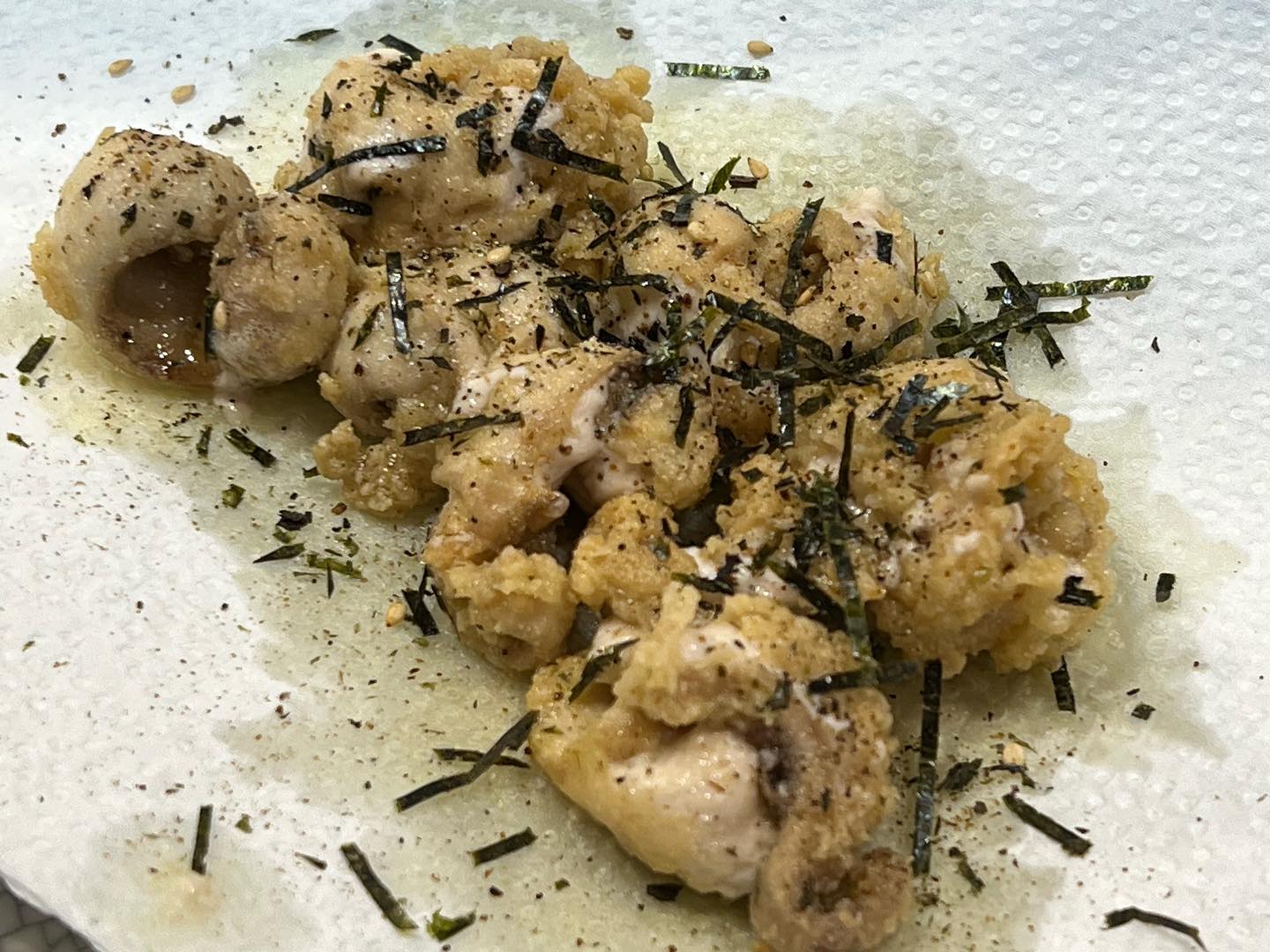
Crisp Herring Milt with Shiso Furikake
A light flour coating protects the delicate milt while developing crisp edges. Adding the furikake after frying preserves its aroma and keeps the seaweed from scorching.
Ingredients
- 1 lb very fresh herring milt sacs, cleaned by the fishmonger if possible
- 1/3 cup cassava flour
- 1/4 tsp fine sea salt, plus more only if needed
- 1/2 cup avocado oil, or enough for a 1/4-inch depth in the skillet
- 1 tbsp Shared Cultures shiso furikake, verified gluten-free, or a gluten-free shiso furikake with nori and sesame
Instructions
- Keep the milt refrigerated until ready to prepare. Gently remove any attached blood vessels or loose tissue without tearing the sacs. If rinsing is needed, use a brief rinse in cold water, then pat thoroughly dry.
- Leave small sacs whole; cut unusually large ones into roughly 2-inch pieces. Handle gently so the creamy interiors remain contained.
- Mix the cassava flour and salt in a shallow dish. Heat the avocado oil in a heavy skillet over medium-high heat to 350°F.
- Dredge only the first batch of milt in a very thin coating of flour, shaking off excess. Lower carefully into the oil, leaving space between pieces.
- Fry for approximately 2–3 minutes per side, turning gently with a thin spatula, until lightly golden and crisp. Adjust the heat to maintain 335–350°F. The thickest piece should reach 145°F in the center; check through the side with a thin-tip thermometer rather than judging by color alone.
- Transfer to a rack or briefly to paper towel to drain. Dredge and fry the remaining milt, allowing the oil to return to temperature between batches.
- Scatter the shiso furikake over the hot milt. Taste before adding any additional salt and serve immediately.
Notes
- Ask a fishmonger for milt intended for cooking and use it the day of purchase when possible.
- The coating should look delicate and patchy rather than like a thick batter. Drying the milt well is essential for both crispness and reduced splattering.
- Check the furikake label for gluten-containing seasonings; its salt level will determine how much additional seasoning is needed.
Brined Herring Fillets in a Mild Vinegar Pickle
A short cold brine seasons the fillets before gentle poaching. Chilling them in a lightly sweetened vinegar liquor gives a bright pickle without relying on acid alone to make raw fish safe.
Ingredients
- 1 lb fresh herring fillets, scaled, deboned, and checked for pin bones
- 2 cups cold water, for the brine
- 20 g fine sea salt, for the brine
- 1 cup white wine vinegar labeled 5% acidity
- 1 cup water, for the pickling liquor
- 2 tbsp honey
- 1/2 small yellow onion, thinly sliced
- 1 bay leaf
- 1/2 tsp black peppercorns
Instructions
- Dissolve the salt in the cold brine water. Add the fillets and refrigerate for 30 minutes, then drain and pat dry. Discard the brine.
- Combine the vinegar, pickling water, honey, onion, bay leaf, and peppercorns in a wide nonreactive saucepan. Simmer for 3–4 minutes to soften the onion slightly.
- Reduce the heat so the liquor barely simmers. Add the herring in a single layer, working in batches if necessary, and gently poach until the thickest part reaches 145°F, approximately 3–6 minutes depending on thickness.
- Transfer the fish and liquor to a shallow, heatproof nonreactive container. Set the container in an ice bath to cool promptly, then cover and refrigerate within 2 hours of cooking.
- Chill for at least 12 hours before serving cold with some of the onion and pickling liquor.
Notes
- This is a cooked refrigerator pickle, not a shelf-stable preserve or a raw cured-herring formula. Keep at 40°F or below and eat within 3–4 days of cooking.
- Brining and vinegar pickling alone do not reliably eliminate parasites in raw herring.
Overall Timing / Workflow
The fillets are a make-ahead project, while the milt needs to go directly from skillet to table.
Instructions
- 0:00 — Prepare the cold brine and refrigerate the herring fillets in it. Keep the milt separately refrigerated.
- 0:20 — Prepare the pickling liquor and ready a shallow container and ice bath.
- 0:30 — Drain the fillets, poach them in the liquor, and begin cooling them for refrigeration.
- Once the fillets are safely cooling, dry the milt, set out the flour and furikake, and heat the frying oil.
- Fry the milt in small batches and serve immediately. Leave the pickled fillets refrigerated until the following day.
Plating
A loose, shallow arrangement lets steam escape and keeps the delicate crust from softening.
Instructions
- Drain the fried milt briefly, then transfer to warm small plates or a shared platter in a loose single layer.
- Distribute the furikake over the milt rather than leaving it all on the plate. Serve while the edges are still crisp.
- Serve the pickled fillets separately the next day, chilled, with their pickled onions and a little liquor.
Leftover Path
The pickle is designed for cold eating, whereas fried milt benefits from dry heat if it must be reheated.
Instructions
- Refrigerate any fried milt within 2 hours in a shallow covered container and use within 1–2 days for best quality.
- Reheat milt on a rack in a 375°F oven until hot throughout, reaching 165°F, approximately 5–8 minutes depending on size. Add a little fresh furikake after reheating.
- Keep the pickled herring refrigerated in its liquor and use within 3–4 days of cooking. Lift portions out with a clean utensil.
Notes
- The milt is best freshly fried; reheating firms its delicate center.