Pan-Roasted Black Cod with Miso Béarnaise, Charred Asparagus, and Parsnip Fries
Buttery black cod and charred spring asparagus get a generous spoonful of miso béarnaise, with tarragon and vinegar keeping the richness in balance. Slender roasted parsnip fries bring sweet, browned edges and something to drag through the sauce.
By Jonathan Katzman · Cooked and photographed · Recipe updated
Serves: 4 servings
Tags: gluten-free, nut-free, pescatarian
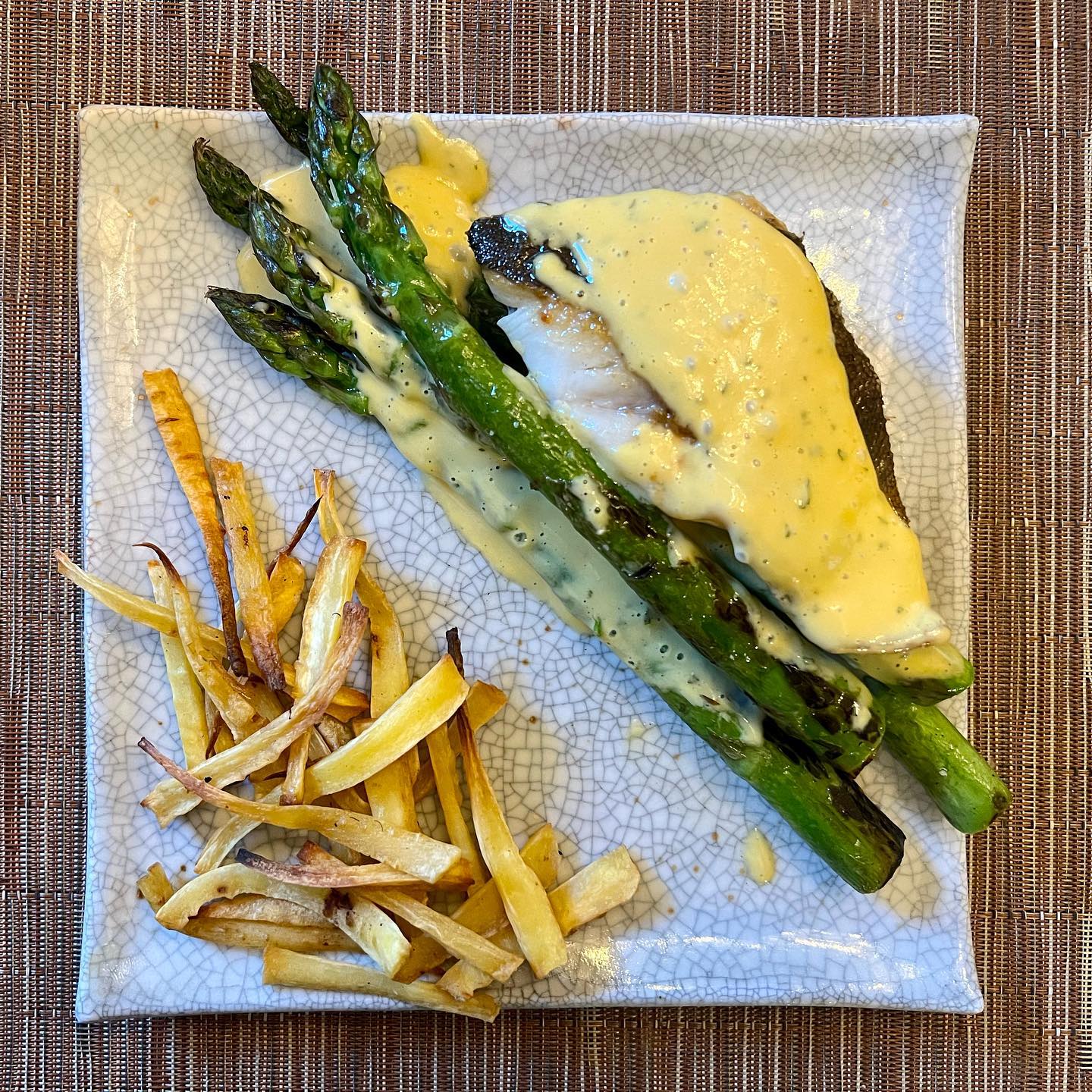
Pan-Roasted Black Cod
Black cod's rich flesh stays succulent while its skin crisps in a hot pan. A brief oven finish cooks thick portions evenly without excessive handling.
Ingredients
- 4 6-ounce portions skin-on black cod (sablefish), scaled and pin bones removed
- 1 tablespoon ghee
- 1/2 teaspoon fine sea salt, or to taste
- 1/4 teaspoon freshly ground black pepper
Instructions
- Heat the oven to 425°F. Pat the fish thoroughly dry, especially the skin, and season with salt and pepper just before cooking.
- Heat ghee in a large ovenproof skillet over medium-high heat until shimmering. Add the fish skin-side down, pressing gently with a fish spatula for the first 20–30 seconds so the skin lies flat.
- Cook undisturbed for 4–5 minutes, until the skin is browned and releases readily. Work in batches if the portions would crowd the pan.
- Turn the fish carefully and transfer the skillet to the oven for 3–7 minutes, depending on thickness. Check the thickest part with an instant-read thermometer; cook to 145°F. The flesh should be opaque and separate into moist, broad flakes.
- Transfer gently to warm plates and serve promptly with the béarnaise.
Notes
- Black cod is delicate; use a broad fish spatula and avoid repeatedly turning it.
Miso Béarnaise
White miso adds savory depth to a butter-and-yolk emulsion, while a concentrated vinegar reduction and fresh tarragon keep it bright enough for rich fish.
Ingredients
- 3 tablespoons white wine vinegar
- 3 tablespoons dry white wine
- 1 small shallot, finely sliced
- 2 sprigs fresh tarragon, plus 1 tablespoon finely chopped leaves for finishing
- 6 black peppercorns, lightly crushed
- 3 large egg yolks, preferably pasteurized
- 1 tablespoon gluten-free white miso
- 1 tablespoon water, plus more as needed
- 8 ounces unsalted butter
- 1–2 teaspoons fresh lemon juice, to taste
- to taste fine sea salt
Instructions
- Combine vinegar, wine, shallot, tarragon sprigs, and peppercorns in a small saucepan. Simmer until about 2 tablespoons of liquid remain, 5–8 minutes. Strain, pressing lightly on the solids, and let cool until warm.
- Melt the butter gently and keep it warm, not sizzling.
- Set a heatproof bowl over a saucepan of barely simmering water, keeping the bowl above the water. Add the yolks, strained reduction, miso, and 1 tablespoon water.
- Whisk constantly until pale, foamy, and thick enough that the whisk briefly leaves a trail, about 3–5 minutes. Lift the bowl off the heat periodically if the mixture heats too quickly; do not let the eggs scramble.
- Remove the bowl from the heat and whisk in the warm butter a few drops at a time initially, then in a thin stream as the emulsion develops. Whisk in warm water a teaspoon at a time if it becomes too thick.
- Fold in the chopped tarragon. Add lemon juice to taste and salt only after tasting the miso-seasoned sauce. Aim for a smooth, spoonable sauce with a distinct but balanced tang.
- Serve immediately, or hold off direct heat over lukewarm water for no more than 20–30 minutes, whisking occasionally. Keep it warm rather than hot.
Notes
- If the sauce begins to separate, whisk a teaspoon of warm water in a clean bowl, then slowly whisk the broken sauce into it.
- Use pasteurized yolks for diners at higher risk from undercooked eggs.
Charred Asparagus
A hot skillet blisters the exterior while leaving the thick spears juicy and distinctly green. Minimal seasoning lets the béarnaise supply the acidity and richness.
Ingredients
- 1 1/2 pounds thick asparagus, woody ends trimmed
- 1 tablespoon ghee
- 1/4 teaspoon fine sea salt
- 1 tablespoon water, only if needed
Instructions
- Dry the asparagus well. If the lower stalks have tough skins, peel the bottom third while leaving the tips intact.
- Heat a large cast-iron skillet over medium-high heat. Add the ghee, then the asparagus in a single layer, working in batches if necessary.
- Cook for 6–9 minutes, turning every couple of minutes, until the stalks have dark blistered patches and are just tender when pierced.
- If very thick spears char before becoming tender, add 1 tablespoon water, cover for 30–60 seconds, then uncover and let the water evaporate.
- Season lightly with salt and serve hot with the miso béarnaise.
Roasted Parsnip Fries
Thin batons roast quickly and develop caramelized edges. Spacing them generously prevents steaming and preserves their contrast with the soft fish and sauce.
Ingredients
- 1 1/2 pounds parsnips, peeled
- 2 tablespoons olive oil
- 1/2 teaspoon fine sea salt
- 1/4 teaspoon freshly ground black pepper
Instructions
- Heat the oven to 425°F with racks in the upper and lower thirds.
- Cut the parsnips into batons about 1/4 inch thick and 3–4 inches long. Remove any noticeably woody central cores from large parsnips.
- Toss with olive oil, salt, and pepper. Spread across two rimmed baking sheets in a single layer with space between the pieces.
- Roast for 25–35 minutes, turning the fries and rotating the pans after about 15 minutes. Remove smaller pieces as they become golden to prevent burning.
- Serve when tender inside with browned edges; these will be less uniformly crisp than deep-fried potato fries.
Notes
- Keep the fries away from the sauce until serving so their browned surfaces stay dry.
Overall Timing / Workflow
Start with the longest-roasting component and finish the fish last. Making the sauce shortly before searing keeps its holding time brief.
Instructions
- 0:00 — Heat the oven to 425°F. Peel and cut the parsnips, trim the asparagus, and check the fish for bones.
- 0:15 — Put the parsnip fries in the oven. Make and strain the béarnaise reduction, and melt the butter.
- 0:25 — Turn the fries and rotate their trays. Whisk and emulsify the béarnaise, then hold it briefly over lukewarm water.
- 0:35 — Start searing the fish. In a second skillet, begin charring the asparagus.
- 0:40 — Remove the fries as they brown and consolidate onto one tray if needed. Transfer the fish skillet to the oven to finish.
- 0:45–0:50 — Check the fish temperature, finish the asparagus, and loosen the béarnaise with a little warm water if needed. Plate on warm dishes and serve immediately.
Notes
- Actual timing depends on fish thickness and parsnip size; use doneness cues rather than the clock alone.
Plating
Grouping the fish and asparagus lets them share the sauce, while a separate pile of fries keeps the plate varied in texture.
Instructions
- Arrange a portion of asparagus diagonally across each warm plate and nestle a black cod fillet beside it.
- Spoon miso béarnaise generously over part of the fish and across the asparagus, leaving some browned fish surface and charred tips visible.
- Place the parsnip fries in a loose pile on the opposite side, clear of most of the sauce. Serve any remaining béarnaise alongside.
Leftover Path
Separate storage protects the vegetables from the sauce and allows the delicate fish to be warmed gently rather than cooked again.
Instructions
- Refrigerate fish, asparagus, and fries in separate airtight containers within 2 hours. Eat the fish within 2 days and the vegetables within 3 days.
- Reheat fries in a single layer at 425°F for 5–10 minutes. Add asparagus for the final few minutes.
- For hot leftovers, warm the fish covered in a 300°F oven with a small splash of water until it reaches 165°F; avoid prolonged heating. Alternatively, serve the refrigerated fish cold, flaked alongside the vegetables.
- Make only as much béarnaise as you expect to serve. It is best fresh; discard sauce that has sat warm for more than 2 hours, and do not rely on reheating to restore an unsafe sauce.