Halibut and Asparagus with Black Garlic Miso Béarnaise and Smashed Purple Potatoes
Tender halibut sits over roasted spring asparagus with a warm black garlic miso béarnaise running through the spears. Crisp-edged purple potatoes bring an earthy counterpoint to the buttery sauce, with tarragon and vinegar keeping the plate bright.
By Jonathan Katzman · Cooked and photographed · Recipe updated
Serves: 4 servings
Tags: gluten-free, nut-free, pescatarian
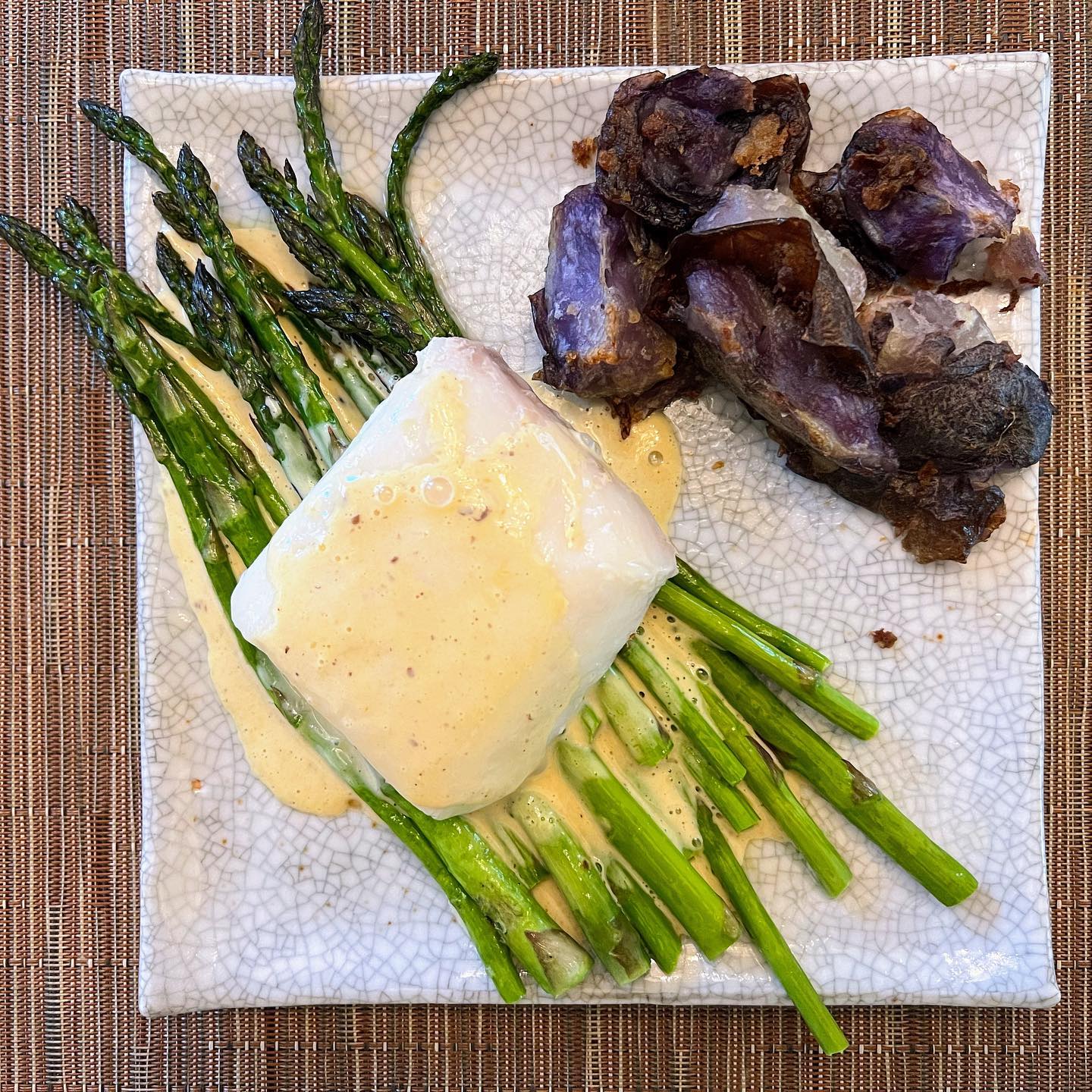
Gently Baked Halibut
A low oven keeps lean halibut moist and pearly without developing a crust, letting the miso béarnaise carry the richness.
Ingredients
- 4 fillets skinless halibut, 5–6 oz each and approximately 1–1½ inches thick
- 1 tbsp unsalted butter, softened
- 2 tbsp water
- ½ tsp fine sea salt, or to taste
Instructions
- Heat the oven to 275°F. Pat the fish dry and season with salt about 10 minutes before cooking.
- Butter a shallow baking dish with half the butter. Arrange the fillets in one layer, spread the remaining butter over them, and add the water around, not over, the fish.
- Cover the dish loosely with foil and bake for 18–28 minutes, checking early for thinner pieces. The flesh should turn opaque and separate into moist flakes under gentle pressure.
- For a fully cooked finish, bring the center to 145°F. You may remove it at 140–142°F only if you verify that carryover brings it to 145°F; otherwise return it briefly to the oven. Serve promptly.
Notes
- Thickness matters more than weight; check each fillet separately so smaller pieces do not overcook.
Roasted Spring Asparagus
Hot roasting browns the tips while leaving the stalks firm enough to support the fish. A little lemon balances the rich sauce.
Ingredients
- 1½ lb medium asparagus, woody ends trimmed
- 1½ tbsp olive oil
- ½ tsp fine sea salt
- ¼ tsp freshly ground black pepper
- 1 tsp fresh lemon juice
Instructions
- Heat the oven to 425°F. Dry the asparagus well, then toss with olive oil, salt, and pepper on a rimmed baking sheet.
- Spread in a single layer and roast for 9–13 minutes, turning once, until bright green with browned tips and just-tender stalks.
- Toss with the lemon juice just before serving.
Notes
- Start checking pencil-thin asparagus after 6 minutes.
Crisp Smashed Purple Potatoes
Boiling makes the centers creamy; smashing creates thin, irregular edges that turn crisp in the oven.
Ingredients
- 1½ lb small purple potatoes, approximately 1½–2 inches across
- 3 tbsp olive oil, divided
- 1 tbsp kosher salt, for the boiling water
- ½ tsp fine sea salt, plus more to finish
- ¼ tsp freshly ground black pepper
Instructions
- Place the potatoes in a saucepan, cover with cold water by an inch, and add the kosher salt. Bring to a boil, then simmer for 18–25 minutes, until a small knife slides through without resistance.
- Drain and let steam-dry for 5 minutes. Heat the oven to 425°F.
- Coat a large rimmed baking sheet with 1 tablespoon olive oil. Set the potatoes on it and gently flatten each with the bottom of a glass to about ½ inch thick, keeping each potato loosely intact.
- Drizzle with the remaining 2 tablespoons oil and season with fine salt and pepper. Roast for 30–40 minutes, carefully turning after about 20 minutes, until the exposed flesh and skins have deeply browned, crisp edges.
- Taste and add a final pinch of salt while hot.
Notes
- Leave space between the potatoes; crowding traps steam and softens the crust.
Black Garlic Miso Béarnaise
A classic tarragon-vinegar reduction cuts through the butter, while black garlic miso adds savory depth and mellow sweetness. Whisking produces a light sauce that coats both fish and asparagus.
Ingredients
- ¼ cup dry white wine
- 3 tbsp white wine vinegar
- 1 small shallot, thinly sliced
- 3 sprigs fresh tarragon
- 6 black peppercorns, lightly crushed
- 3 large egg yolks
- 12 tbsp unsalted butter
- 1 tbsp gluten-free black garlic miso, preferably Shared Cultures if confirmed gluten-free
- 1–3 tbsp warm water, as needed
- 1 tsp fresh lemon juice, to taste
- to taste fine sea salt
Instructions
- Combine the wine, vinegar, shallot, tarragon, and peppercorns in a small saucepan. Simmer until about 2 tablespoons liquid remain. Strain through a fine sieve, pressing lightly on the aromatics, and let cool until lukewarm.
- Melt the butter gently and keep it warm, not bubbling.
- Whisk the egg yolks, strained reduction, and 1 tablespoon water in a heatproof bowl. Set over a saucepan of barely simmering water, keeping the bowl above the water, and whisk continuously until pale, foamy, and thick enough to leave a brief ribbon.
- Remove the bowl from the heat. Slowly whisk in the warm butter, initially a few drops at a time, then in a thin stream. If the sauce becomes very thick, whisk in a teaspoon of warm water before adding more butter.
- Loosen the miso with a teaspoon of warm water, then whisk it into the sauce. Add lemon juice to taste and only add salt after tasting the miso-seasoned sauce.
- Adjust with warm water until the sauce pours in a broad ribbon rather than sitting in a stiff mound. Whisk briskly just before spooning over the fish.
Notes
- Make close to serving and keep gently warm, never hot; direct heat can scramble the yolks or split the emulsion.
- If the sauce splits, whisk a teaspoon of warm water in a clean bowl and slowly whisk the broken sauce into it.
- If black garlic miso is unavailable, blend 2 teaspoons gluten-free mild miso with 1 small peeled black garlic clove until smooth.
Overall Timing / Workflow
The high-heat vegetables cook first, followed by the delicate fish at a lower temperature. The béarnaise comes together at the end so it stays warm and fluid.
Instructions
- 0:00 — Start boiling the potatoes and heat the oven to 425°F. Trim the asparagus and prepare the béarnaise reduction while the potatoes cook.
- 0:25 — Drain and steam-dry the potatoes, then smash, oil, and roast them.
- 0:45 — Turn the potatoes. Put the asparagus in the oven on a separate tray for the final 9–13 minutes of potato cooking.
- 0:55–1:05 — Remove the browned potatoes and just-tender asparagus. Reduce the oven to 275°F, briefly opening the door to shed excess heat. Leave the potatoes uncovered to preserve their crust and loosely cover the asparagus.
- Once the oven reaches 275°F, bake the halibut. Melt the sauce butter, then whisk and finish the béarnaise during the fish's final 10 minutes.
- If needed, warm the vegetables in the low oven for the last few minutes of fish cooking. Check the halibut's temperature, adjust the sauce consistency, and plate immediately.
Plating
Laying the fish across the asparagus lets the sauce reach both while keeping the crisp potatoes separate.
Instructions
- Arrange a generous bed of asparagus diagonally across each warm plate, with the tips pointing in the same direction.
- Place a halibut fillet over the middle of the spears.
- Spoon the warm béarnaise over the fish and along the asparagus, allowing a little to pool underneath.
- Set the smashed potatoes alongside, leaving most of their crisp surfaces free of sauce.
Leftover Path
Separate storage protects the potatoes' texture and allows the fish to be warmed without overcooking. Béarnaise is best freshly made.
Instructions
- Refrigerate the fish, asparagus, and potatoes in separate shallow containers within 2 hours. Use the fish within 2 days and the vegetables within 3 days.
- Recrisp potatoes at 425°F for 10–15 minutes. Add the asparagus for only the last few minutes.
- Serve leftover halibut cold in large flakes, or reheat covered with a splash of water at 275°F until it reaches 165°F; gentle heat limits drying.
- Make only as much béarnaise as you plan to serve. Discard sauce that has sat out for more than 2 hours; for leftover fish and vegetables, a fresh squeeze of lemon is simpler than reheating the delicate emulsion.