Pan-Seared Coho Salmon with Almond Sauce Verte, Morel Miso Asparagus, and Celery Root–Cauliflower Mash
Crisp-skinned coho gets a bright, chunky almond sauce verte, with plenty of herbs and lemon to cut through the richness. Charred spring asparagus carries savory morel miso butter, while a silky celery root and cauliflower mash brings the plate together.
By Jonathan Katzman · Cooked and photographed · Recipe updated
Serves: 4 servings
Tags: gluten-free, pescatarian
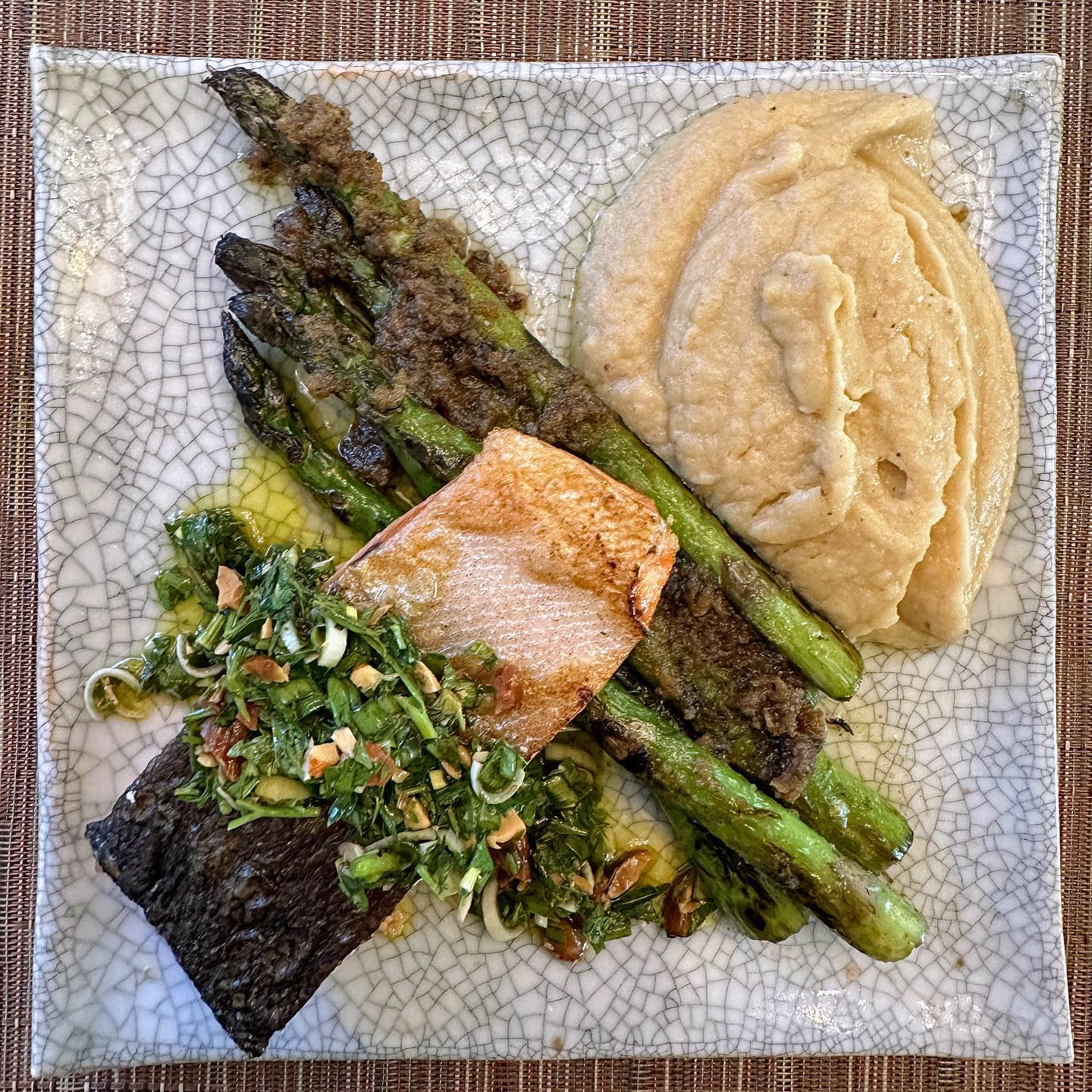
Pan-Seared Coho Salmon
A dry surface and a mostly skin-side cook give lean coho a crisp exterior without drying out the center.
Ingredients
- 4 6-ounce portions skin-on coho salmon, pin bones removed
- 1½ tablespoons ghee
- ¾ teaspoon kosher salt, plus more to taste
- ¼ teaspoon freshly ground black pepper
Instructions
- Pat the salmon very dry, especially the skin. Season with salt and pepper just before cooking.
- Heat a large heavy skillet over medium-high heat. Add the ghee, then place the salmon skin-side down, leaving space between portions. Press gently with a spatula for the first 20–30 seconds to keep the skin flat.
- Reduce to medium and cook for 5–7 minutes, until the skin is crisp, releases readily, and the flesh has turned opaque about two-thirds of the way up the sides.
- Flip and cook for 1–3 minutes more, checking the thickest part with an instant-read thermometer. For a moist medium center, pull at 125–130°F and rest for 3 minutes, skin-side up. For the USDA-recommended fully cooked endpoint, cook to 145°F.
Notes
- Use two skillets or cook in batches rather than crowding the fish.
- The lower-temperature endpoint carries more food-safety risk; use 145°F for pregnant, older, immunocompromised, or very young diners.
Almond Sauce Verte
Hand-chopped herbs and toasted almonds make a textured sauce rather than a purée. Lemon and scallion sharpen the rich fish and buttery vegetables.
Ingredients
- ⅓ cup raw almonds, coarsely chopped
- 1 cup loosely packed flat-leaf parsley leaves and tender stems
- ¼ cup loosely packed dill fronds
- 2 scallions, thinly sliced
- 1 teaspoon finely grated lemon zest
- 2 tablespoons fresh lemon juice, plus more to taste
- ⅓ cup extra-virgin olive oil
- ¼ teaspoon kosher salt, plus more to taste
- 1 pinch freshly ground black pepper
Instructions
- Toast the chopped almonds in a dry skillet over medium-low heat for 4–5 minutes, stirring often, until fragrant and lightly golden. Transfer to a plate and cool.
- Coarsely chop the parsley and dill. Combine with the scallions, lemon zest, lemon juice, olive oil, salt, and pepper.
- Fold in the cooled almonds shortly before serving. Taste and adjust the lemon and salt; the sauce should be bright, loose, and spoonable, with visible pieces of herbs and nuts.
Notes
- If making ahead, keep the almonds separate and add the lemon juice shortly before serving to preserve the herbs' color and the nuts' crunch.
Charred Asparagus
High heat blisters thick asparagus while leaving the stems juicy. Adding the miso butter afterward keeps its mushroom flavor distinct and prevents burning.
Ingredients
- 1½ pounds thick asparagus
- 1 tablespoon olive oil
- ¼ teaspoon kosher salt
- ⅛ teaspoon freshly ground black pepper
Instructions
- Position an oven rack about 4–6 inches below the broiler and preheat the broiler to high.
- Trim the woody asparagus ends. Peel the lower third of especially thick stalks, then dry thoroughly.
- Toss with olive oil, salt, and pepper. Spread in a single layer on a broiler-safe metal sheet pan.
- Broil for 7–10 minutes, turning once, until blistered in spots and just tender when pierced. Begin checking at 5 minutes, since broilers vary.
- Transfer to a warm platter and spoon the morel miso butter over the hot spears.
Notes
- Keep the seasoning light before broiling; the miso butter supplies most of the salt.
Morel Miso Butter
Morel miso gives the butter a concentrated woodland savoriness that complements both the asparagus char and the salmon.
Ingredients
- 3 tablespoons unsalted butter, softened
- 1½ tablespoons Shared Cultures morel miso, verified gluten-free
- 1 teaspoon fresh lemon juice
- 1–2 teaspoons warm water, as needed
Instructions
- Mash the softened butter and morel miso together until evenly combined.
- Warm gently in a small saucepan over low heat just until soft and spoonable; do not fry or brown it.
- Remove from the heat and stir in the lemon juice. Add warm water a teaspoon at a time if needed to loosen it, then spoon over the hot asparagus.
Notes
- Miso salinity varies. Start with 1 tablespoon if yours is particularly salty, then add more to taste.
Celery Root and Cauliflower Mash
Celery root provides earthy sweetness and body, while cauliflower keeps the mash light. Drying the cooked vegetables before blending prevents a watery purée.
Ingredients
- 1 pound peeled celery root, cut into ¾-inch cubes
- 1 pound cauliflower florets, cut into roughly 1-inch pieces
- 3 tablespoons unsalted butter
- ¼ cup heavy cream, warmed
- ½ teaspoon kosher salt, plus more for the cooking water
- ¼ teaspoon freshly ground black pepper
Instructions
- Place the celery root in a saucepan, cover with water by 1 inch, and salt the water lightly. Bring to a boil, then simmer for 10 minutes.
- Add the cauliflower and continue simmering for 10–15 minutes, until both vegetables are completely tender and crush easily with a fork.
- Drain thoroughly, then return the vegetables to the pot over low heat for 2–3 minutes, stirring to evaporate excess moisture.
- Transfer to a food processor. Add the butter, half the warm cream, salt, and pepper. Process until smooth, scraping down the bowl and adding the remaining cream only as needed for a thick, silky mash.
- Return to the saucepan and keep warm over very low heat, stirring occasionally. Taste and adjust the salt before serving.
Notes
- For an especially smooth texture, pass the purée through a fine-mesh sieve.
- If the mash is loose, stir over low heat to reduce it before plating.
Overall Timing / Workflow
The mash holds well, leaving the last few minutes for crisp salmon and freshly charred asparagus.
Instructions
- 0:00 — Peel and cut the celery root, prepare the cauliflower, and start cooking the celery root.
- 0:10 — Add the cauliflower. Toast the almonds, chop the sauce herbs, trim the asparagus, and mix the miso butter.
- 0:25 — Drain, dry, and blend the mash. Cover and hold over very low heat. Preheat the broiler.
- 0:35 — Dry and season the salmon. Heat the skillet and begin searing.
- 0:38 — Put the asparagus under the broiler. Turn it as needed while the salmon cooks.
- 0:45 — Finish the salmon and rest briefly. Warm the miso butter, finish the sauce verte with lemon and almonds, and dress the asparagus.
- 0:50 — Check the mash seasoning and plate everything on warm plates.
Plating
Keeping the mash and asparagus distinct preserves their textures, while a loose spoonful of sauce ties the salmon to the vegetables.
Instructions
- Spoon a generous oval of celery root–cauliflower mash onto one side of each warm plate.
- Arrange the asparagus diagonally alongside the mash and spoon over any morel miso butter remaining on the platter.
- Set the salmon beside or partly across the asparagus, leaving most of the crisp skin exposed.
- Spoon the almond sauce verte across one end of the fish and onto the plate, letting a little herb oil pool around it. Serve immediately.
Leftover Path
Storing the sauce separately keeps the herbs fresh and allows the salmon to be reused without aggressive reheating.
Instructions
- Refrigerate all components in separate covered containers within 2 hours. Use the salmon, asparagus, and mash within 3 days; use the herb sauce within 2 days for best quality.
- For a cold lunch, flake the salmon over chopped leftover asparagus and dress with the almond sauce verte.
- Reheat the mash gently in a saucepan with a splash of water or cream, stirring until hot. Warm the asparagus briefly in a hot oven.
- If reheating the salmon, cover loosely and warm in a 275°F oven until it reaches 165°F; expect a firmer texture than when freshly cooked.