Duck Sausage with Sauerkraut and Spring Bean Sauté
Browned duck sausage and tangy sauerkraut make a very low-effort dinner feel complete. Green beans and creamy cannellini beans, tossed with spring onion, green garlic, and a little lemon, keep the plate bright and firmly in spring.
By Jonathan Katzman · Cooked and photographed · Recipe updated
Serves: 4 servings
Tags: gluten-free, nut-free
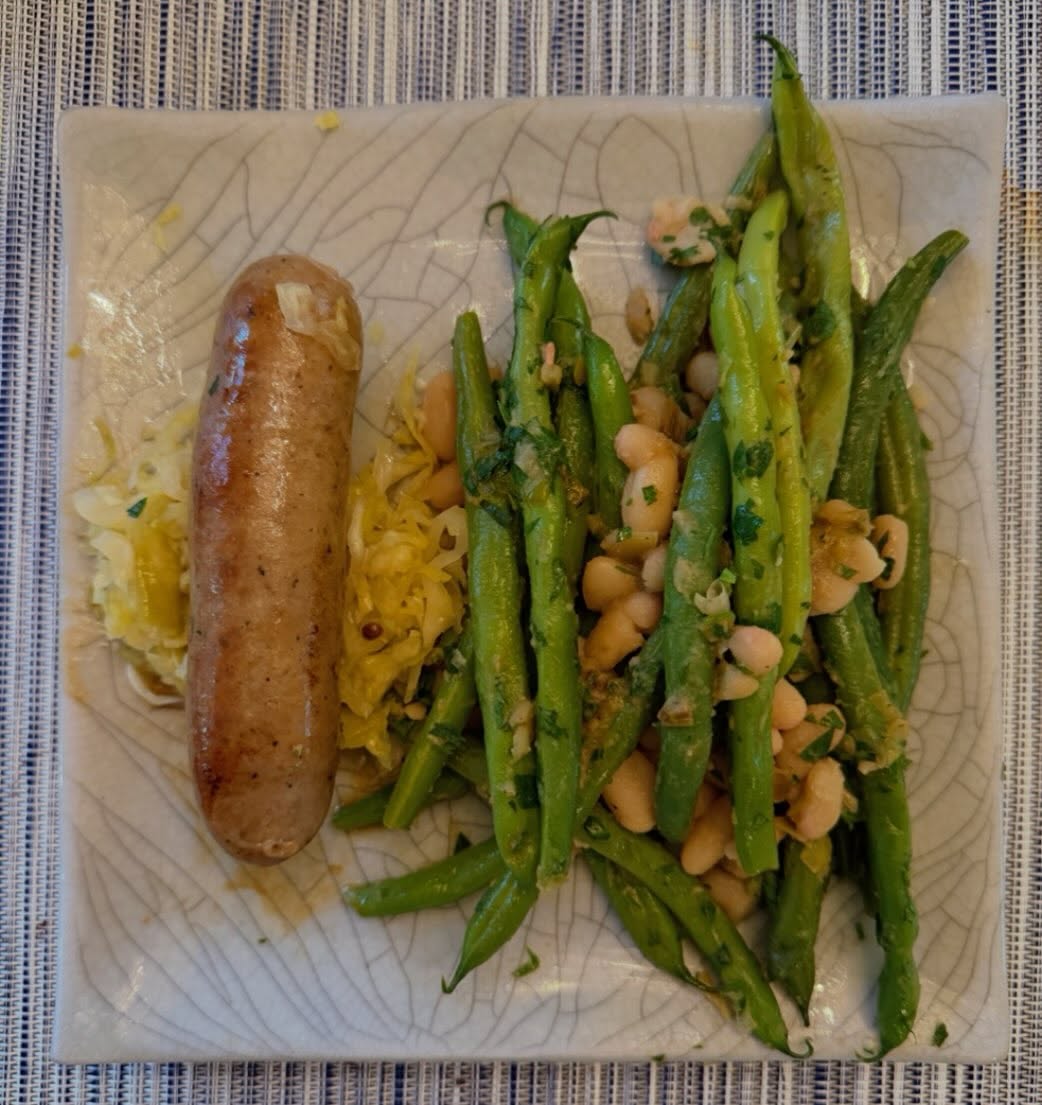
Pan-Browned Duck Sausages
A short covered cook heats the sausages gently before browning, keeping the duck juicy without splitting the casings.
Ingredients
- 4 large raw duck sausages, about 1¼–1½ pounds total, verified gluten-free
- 1 teaspoon ghee
- ⅓ cup water
Instructions
- Place the sausages, ghee, and water in a skillet just large enough to hold the sausages in one layer.
- Bring to a gentle simmer over medium heat. Cover, reduce the heat to medium-low, and cook for 10–12 minutes, turning once.
- Uncover and let the water evaporate. Brown the sausages in the ghee and rendered fat over medium heat, turning every few minutes, until golden on several sides and the centers reach 165°F, about 6–10 minutes more.
- Rest for 3 minutes before serving whole.
Notes
- If using fully cooked duck sausages, follow the package’s reheating instructions and shorten the covered cooking stage. Do not prick the casings.
Gently Warmed Sauerkraut
Gentle warming softens the cabbage without cooking away all its fermented bite. A little mustard seed complements the richness of the sausage.
Ingredients
- 2 cups sauerkraut, lightly drained, brine reserved
- 1 teaspoon ghee
- ½ teaspoon yellow mustard seeds
- 3 tablespoons water
Instructions
- Melt the ghee in a small saucepan over medium-low heat. Add the mustard seeds and warm for 30 seconds without browning.
- Add the sauerkraut and water. Cover and cook gently for 10–12 minutes, stirring occasionally, until hot and softened but still textured.
- Uncover briefly if watery. Taste and add a spoonful of reserved brine if it needs more acidity.
Notes
- If the sauerkraut is extremely salty or sour, rinse it briefly and drain before warming.
Green Beans and Cannellini with Spring Onion and Green Garlic
Tender-crisp green beans contrast with soft cannellini beans, while gently cooked spring alliums provide sweetness. Lemon and parsley brighten the buttery pan juices.
Ingredients
- 1¼ pounds green beans, stem ends trimmed, left long
- 2 15-ounce cans cannellini beans, drained and rinsed
- 2 spring onions, bulbs and tender greens thinly sliced and kept separate
- 2 stalks green garlic, tough outer leaves removed, tender white and pale-green parts thinly sliced
- 1 tablespoon ghee
- ¼ cup water, plus more as needed
- 1 tablespoon extra-virgin olive oil
- 1 tablespoon fresh lemon juice, plus more to taste
- 2 tablespoons chopped flat-leaf parsley
- to taste kosher salt and freshly ground black pepper
Instructions
- Bring a large saucepan of salted water to a boil. Add the green beans and cook for 3–5 minutes, until bright green and just shy of tender. Drain well.
- Meanwhile, melt the ghee in a wide skillet over medium-low heat. Add the spring onion bulbs and green garlic with a small pinch of salt. Cook for 3–4 minutes, stirring, until fragrant and softened without browning.
- Add the cannellini beans and ¼ cup water. Fold gently and simmer for 2–3 minutes, until warmed through.
- Add the green beans and spring onion greens. Toss gently over medium heat for 2 minutes, adding a splash of water if the pan becomes dry. The green beans should retain a little bite, and the cannellini should mostly remain whole.
- Remove from the heat and fold in the olive oil, lemon juice, and parsley. Season with salt and pepper; add more lemon only if needed, remembering that sauerkraut will supply additional acidity.
Notes
- For thicker green beans, extend the blanching time rather than cooking the assembled medley until the cannellini break down.
Overall Timing / Workflow
The sausages and sauerkraut cook mostly unattended while the bean medley comes together, keeping the meal comfortably within about 35 minutes.
Instructions
- 0:00 — Put a saucepan of salted water on to boil. Trim the green beans, slice the alliums, and drain the cannellini beans.
- 0:10 — Start the sausages in their covered skillet and the sauerkraut in a separate saucepan.
- 0:15 — Blanch and drain the green beans. Soften the spring onion bulbs and green garlic in the medley skillet.
- 0:20 — Add the cannellini beans and water to the aromatics. Uncover the sausages and begin browning them as the water evaporates.
- 0:25 — Finish the bean medley with the green beans, onion greens, lemon, olive oil, and parsley. Check that the sausages reach 165°F.
- 0:30–0:35 — Rest the sausages briefly, check seasoning, and plate everything warm.
Plating
Keeping the sauerkraut beneath the sausage lets its acidity meet the rich meat while preserving the bean medley’s distinct textures.
Instructions
- Make a compact bed of warm sauerkraut on one side of each plate and lay a whole duck sausage over it.
- Pile the green bean and cannellini medley alongside, arranging the long green beans loosely rather than packing them down.
- Spoon any light juices from the bean pan over the vegetables and serve immediately.
Leftover Path
Separate storage preserves the green beans’ texture and keeps the sauerkraut from making the entire meal sour.
Instructions
- Refrigerate the sausages, sauerkraut, and bean medley in separate airtight containers within 2 hours. Use within 3–4 days.
- Reheat sausages in a covered skillet with a splash of water until they reach 165°F. Warm the sauerkraut separately over low heat.
- Warm the bean medley gently with a spoonful of water, folding rather than stirring vigorously. Refresh with a little lemon after reheating.
- For a different meal, slice the sausage and warm it with the bean medley and enough broth to make a quick soup; spoon the sauerkraut on top at serving.