Crisp-Skinned Trout over Spring Fava and Corn Succotash
Crisp-skinned trout sits over sweet corn and tender favas, with spring onions and green garlic cooked down just enough to soften their bite. A little butter and lemon bring the fish and vegetables together without losing the bright, green character of a late-spring supper.
By Jonathan Katzman · Cooked and photographed · Recipe updated
Serves: 4 servings
Tags: gluten-free, nut-free, pescatarian
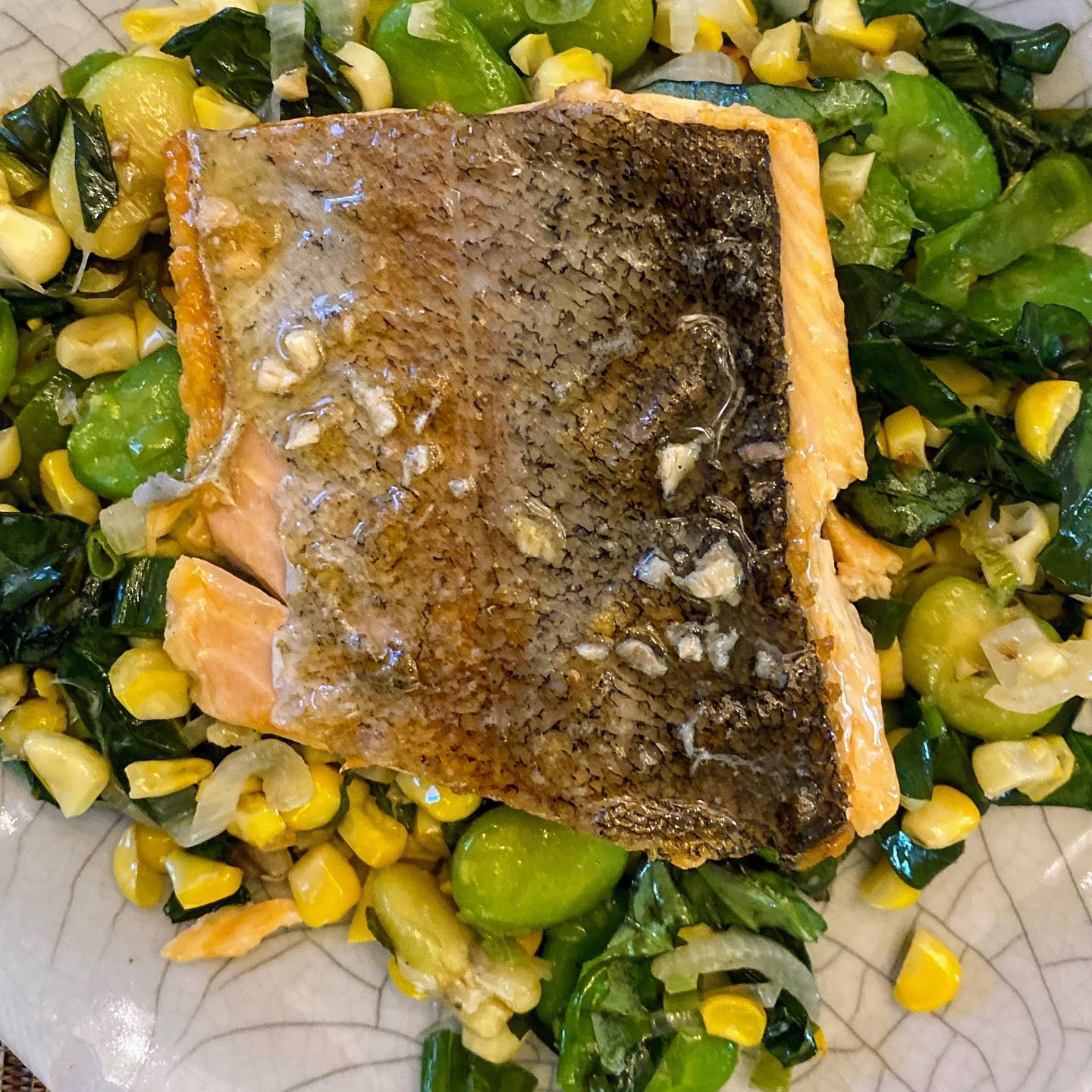
Crisp-Skinned Trout with Lemon Butter
Dry skin and steady contact with the pan give trout a crisp surface while protecting the delicate flesh. A brief butter finish adds richness without weighing down the vegetables.
Ingredients
- 4 portions skin-on McFarland Spring trout, about 6 ounces each, pin bones removed
- 1 tablespoon ghee
- 1 tablespoon unsalted butter
- 2 teaspoons fresh lemon juice
- 3/4 teaspoon kosher salt, or to taste
- 1/4 teaspoon freshly ground black pepper
Instructions
- Pat the trout very dry, especially the skin. Season with salt and pepper just before cooking.
- Heat a large skillet over medium-high heat. Add the ghee, then place the trout skin-side down, working in batches if necessary. Press gently with a fish spatula for the first 20–30 seconds so the skin lies flat.
- Reduce the heat to medium and cook undisturbed for 4–6 minutes, until the skin is browned and releases readily and the flesh has turned opaque most of the way up the sides.
- Turn the fish and cook for another 1–3 minutes, depending on thickness. Check the thickest part with an instant-read thermometer; the food-safe endpoint is 145°F.
- Transfer the trout to a warm plate, skin-side up. Lower the heat, add the butter to the skillet, and swirl until melted. Remove from the heat and stir in the lemon juice. Spoon the warm juices around the fish rather than over the crisp skin.
Notes
- If cooking in batches, divide the ghee between batches and make the lemon butter after the final batch.
- Skin-on steelhead or rainbow trout works well if McFarland Spring trout is unavailable.
Corn, Fava Bean, Spring Onion, and Green Garlic Succotash
Double-peeled favas stay tender and vivid green, while briefly cooked corn supplies sweetness and crunch. Using the tender allium tops adds the leafy texture of the finished dish without introducing another vegetable.
Ingredients
- 3 pounds fresh fava beans in their pods, yielding approximately 1 1/2–2 cups peeled beans
- 3 ears sweet corn, kernels cut from the cobs
- 4 spring onions, white and pale-green parts thinly sliced, tender green tops cut into 1-inch pieces
- 2 stalks green garlic, tough outer layers removed, tender white and green parts thinly sliced
- 2 tablespoons unsalted butter
- 3 tablespoons water, plus more as needed
- 2 teaspoons fresh lemon juice, plus more to taste
- to taste kosher salt and freshly ground black pepper
Instructions
- Shell the favas. Bring a saucepan of salted water to a boil and prepare a bowl of ice water. Blanch the beans for 1–2 minutes, then chill immediately. Slip off and discard the pale outer skins.
- Melt the butter in a wide sauté pan over medium-low heat. Add the white and pale-green spring onion slices, the white and pale-green green garlic slices, and a pinch of salt. Cook for 3–4 minutes, stirring, until translucent but not browned.
- Add the corn and water. Increase the heat to medium and cook for 3–5 minutes, stirring occasionally, until the kernels are juicy and just tender.
- Fold in the peeled favas and tender green tops. Cook for 1–2 minutes, just until the beans are hot and the greens have wilted. Add a splash of water if the pan becomes dry; the vegetables should look glossy, not soupy.
- Remove from the heat and add the lemon juice. Taste and adjust the salt, pepper, and acidity.
Notes
- Discard fibrous or yellowed green garlic tops; use only the tender leaves.
- Frozen corn is a practical option when fresh early-season corn lacks sweetness. Add it directly to the pan and allow an extra minute or two to heat through.
- People with G6PD deficiency should avoid fava beans.
Overall Timing / Workflow
Preparing the favas first removes the main bottleneck. Finishing the succotash while the trout sears gets both components to the table hot.
Instructions
- 0:00 — Put the blanching water on to boil, shell the favas, and prepare an ice bath.
- 0:10 — Blanch, chill, and peel the favas. Cut the corn and prepare the spring onions and green garlic.
- 0:30 — Pat the trout dry and check for pin bones. Set out warm serving plates.
- 0:35 — Begin softening the alliums for the succotash. Heat a separate skillet for the trout.
- 0:39 — Add the corn to the vegetables and start searing the trout.
- 0:44 — Fold the favas and green tops into the succotash. Finish with lemon and keep warm briefly while the trout finishes.
- 0:48 — Make the quick lemon-butter finish and plate immediately.
Notes
- Favas can be blanched and peeled a day ahead, then refrigerated in a covered container.
Plating
A broad bed of vegetables supports the trout while keeping its crisp skin exposed. The light pan juices season the succotash as well as the fish.
Instructions
- Divide the succotash among four warm plates, spreading it into a broad, shallow bed.
- Set one trout portion on each plate, skin-side up, leaving plenty of corn and favas visible around the edges.
- Spoon the lemon butter around the trout and serve immediately.
Leftover Path
Storing the fish separately prevents the vegetables from soaking its skin. Gentle reheating preserves the trout's moisture and the favas' texture.
Instructions
- Refrigerate the trout and succotash in separate airtight containers within 2 hours of cooking. Use within 2 days for best quality.
- Rewarm the succotash in a covered skillet over low heat with a small splash of water.
- Reheat the trout skin-side up in a 300°F oven until its center reaches 165°F, checking early to avoid drying it out. The skin will be softer than when freshly cooked.
- Alternatively, flake the chilled trout over the leftover succotash and finish with fresh lemon juice for a cold lunch.