Pan-Seared Pork Chops with Apples and Miso Butter, Roasted Koginut Squash, and Ryeso Brown Butter Beans
Golden pork chops get a savory miso-butter pan sauce with tender apples and sweet shallots. Roasted koginut squash, sage, and pepitas bring caramelized edges and crunch, while string beans in ryeso brown butter keep this autumn plate deeply savory and bright.
By Jonathan Katzman · Cooked and photographed · Recipe updated
Serves: 4 servings
Tags: nut-free
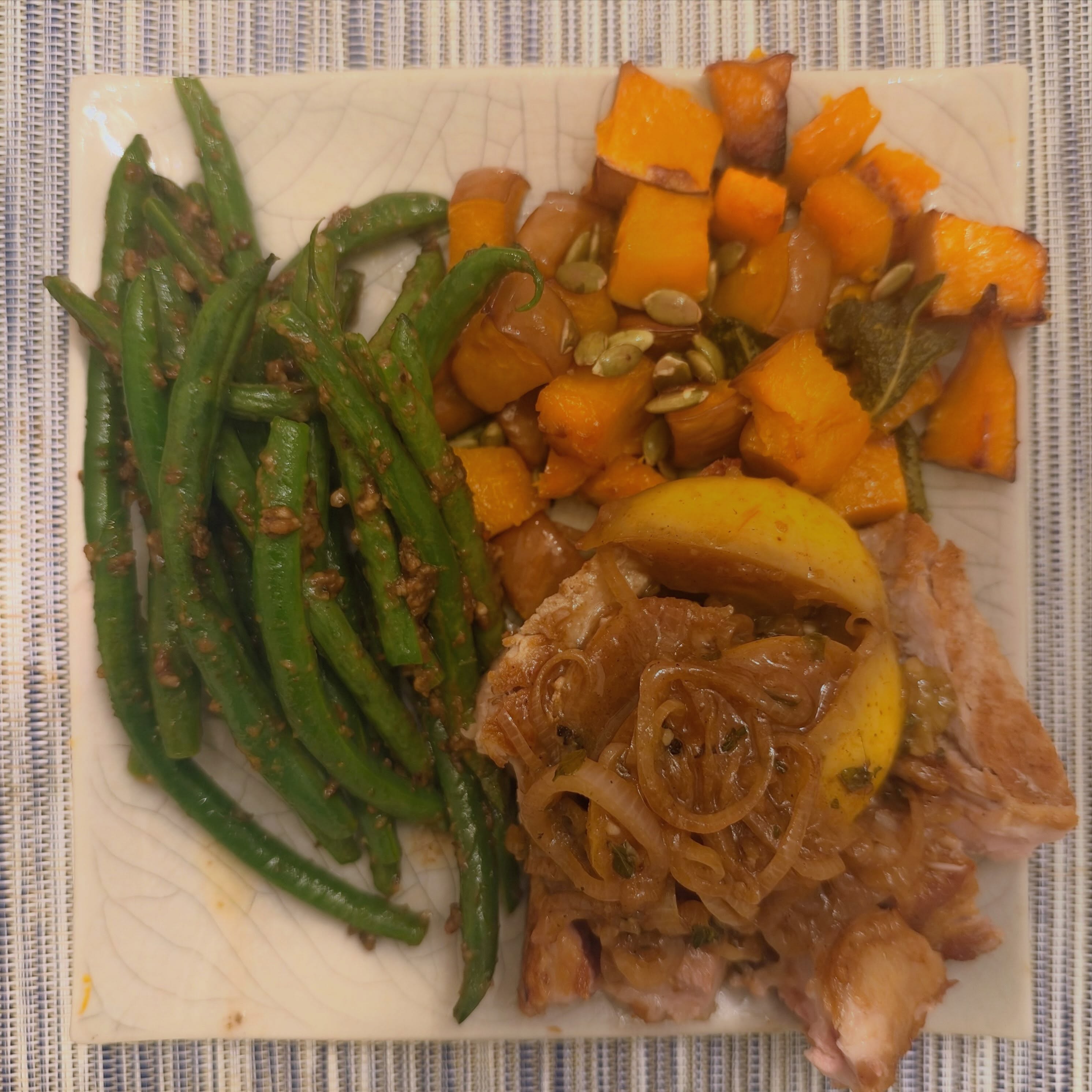
Pan-Seared Pork Chops
Dry surfaces and a hot pan build a browned crust without overcooking the center. Resting the chops before slicing keeps their juices in the meat.
Ingredients
- 4 boneless pork loin chops, about 8 ounces each and 1–1¼ inches thick
- 1½ tsp fine sea salt
- ½ tsp freshly ground black pepper
- 2 tbsp ghee
Instructions
- Season the chops with salt and refrigerate uncovered for at least 30 minutes or up to overnight. Pat thoroughly dry before cooking and season with pepper.
- Heat a large heavy skillet over medium-high heat. Add the ghee and, when shimmering, add the chops without crowding; use two batches if necessary.
- Sear for 3–4 minutes on the first side, until well browned. Turn and cook for 3 minutes, then reduce the heat to medium and turn every minute until the center reaches 145°F on an instant-read thermometer. Briefly hold any fatty edges against the pan with tongs to render them.
- Transfer to a warm plate and rest for 5–8 minutes. Reserve the skillet and its browned fond for the apples and miso butter; pour off excess fat, leaving about 1 teaspoon. Discard any blackened bits.
- Slice across the grain just before serving, reserving the resting juices for the sauce.
Notes
- Check temperature through the side of each chop into its center; thickness matters more than the clock.
Apples and Shallots with Miso Butter Pan Sauce
Tart apples and cider vinegar balance the richness of pork and butter. Miso is whisked in off heat to preserve its aroma and create a glossy sauce.
Ingredients
- 2 firm sweet-tart apples, such as Pink Lady, cored and cut into ½-inch skin-on wedges
- 2 large shallots, thinly sliced into rings
- 1 tbsp ghee
- ⅓ cup unsalted chicken stock
- 2 tsp apple cider vinegar, plus more to taste
- 3 tbsp cold unsalted butter, cubed
- 1½ tbsp gluten-free white miso
- to taste freshly ground black pepper
Instructions
- Set the reserved pork skillet over medium heat and add the ghee. Lay in the apple wedges and cook for 2–3 minutes per side, until golden but still holding their shape. Transfer to a plate.
- Add the shallots to the skillet and cook for 3–4 minutes, stirring, until softened and lightly golden. Add a splash of the measured stock if the fond begins to darken too much.
- Add the remaining stock and cider vinegar, scraping up the browned bits. Return the apples and simmer for 2–3 minutes, until just tender and the liquid has reduced slightly.
- Mix the miso with a spoonful of warm pan liquid. Remove the skillet from the heat, then gently stir in the miso mixture and cold butter until glossy. Add any pork resting juices.
- Taste and adjust with pepper and a few extra drops of vinegar. Keep warm over very low heat without boiling.
Notes
- If the sauce looks oily or becomes too thick, swirl in warm water a teaspoon at a time. Taste before adding salt; miso and pork juices may provide enough.
Roasted Koginut Squash with Sage and Pepitas
High heat concentrates koginut's sweetness and browns its cut surfaces. Sage and toasted pumpkin seeds add an earthy aroma and crisp contrast to the soft flesh.
Ingredients
- 1 medium koginut squash, about 2½ pounds
- 2½ tbsp extra-virgin olive oil, divided
- ¾ tsp fine sea salt
- ¼ tsp freshly ground black pepper
- 12 fresh sage leaves, dried thoroughly
- ¼ cup raw hulled pepitas
- 1 tsp apple cider vinegar
Instructions
- Heat the oven to 425°F. Halve and seed the squash, then cut into roughly 1¼-inch chunks. Leave tender skin on, trimming any hard or corky patches.
- Toss the squash with 2 tablespoons olive oil, salt, and pepper. Spread on a large rimmed baking sheet with space between the pieces and broad cut faces against the pan.
- Roast for 25 minutes, then turn the pieces. Continue roasting until browned at the edges and easily pierced with a knife, about 5–15 minutes more.
- During the final 5–7 minutes, toss the sage and pepitas with the remaining ½ tablespoon olive oil and add them to an open area of the baking sheet. Remove them early if the seeds are golden or the sage is crisp before the squash finishes.
- Sprinkle the squash with cider vinegar and gently toss. Scatter the crisp sage and pepitas over it immediately before serving.
Notes
- Use two sheet pans if necessary; crowded squash steams rather than browns.
Tender-Crisp String Beans
A brief blanch cooks the beans evenly while preserving their bite. Drying them well lets the brown butter cling rather than slide into a puddle.
Ingredients
- 1¼ lb string beans, stem ends trimmed
- as needed salt for blanching water
- as needed ice water, if blanching ahead
Instructions
- Bring a large pot of generously salted water to a boil. Add the beans and cook for 3–5 minutes, until bright green and tender with a little resistance when bitten.
- Drain thoroughly. If serving immediately, let steam-dry briefly, then toss with the warm ryeso brown butter.
- If preparing ahead, cool in ice water, drain, and dry well. Just before serving, warm in a wide pan with 1–2 tablespoons water, then let all the water evaporate before adding the sauce.
Notes
- Thin haricots verts may need only 2–3 minutes; thicker string beans take longer.
Noma Projects Ryeso Brown Butter
Brown butter's toasted milk solids echo the fermented rye's deep savoriness. A little water and lemon loosen the paste into a coating that seasons the beans evenly.
Ingredients
- 3 tbsp unsalted butter
- 1 tbsp Noma Projects ryeso
- 1 tbsp warm water, plus more as needed
- 2 tsp fresh lemon juice
- to taste fine sea salt
Instructions
- Melt the butter in a small light-colored saucepan over medium heat. Cook, swirling frequently, until the foam subsides and the milk solids turn hazelnut brown and smell toasted, about 4–6 minutes.
- Immediately remove from the heat. Let cool for 30 seconds, then carefully whisk in the warm water, followed by the ryeso and lemon juice.
- Toss with the hot, well-drained beans, scraping in all the browned milk solids. Add another teaspoon or two of warm water if needed to distribute the seasoning. Taste before adding salt.
Notes
- Ryeso contains rye; this sauce is not gluten-free. Keep the named seasoning for the original flavor.
- Do not fry the ryeso in hot browned butter; it can catch and turn bitter.
Overall Timing / Workflow
The squash roasts while the stovetop components are prepared. Blanching the beans ahead leaves only reheating and saucing for the final few minutes.
Instructions
- 0:00 — Salt the pork and refrigerate uncovered. Heat the oven to 425°F and cut the squash.
- 0:15 — Put the squash in the oven. Trim the beans, slice the apples and shallots, and measure the sauce ingredients.
- 0:25 — Blanch, chill, and dry the beans. Make the ryeso brown butter and set aside off heat.
- 0:35 — Pat the pork dry and begin searing. Turn the squash and add sage and pepitas during its final 5–7 minutes.
- 0:50 — Rest the pork and make the apple-shallot miso butter sauce in its skillet. Keep finished squash loosely covered on a warm platter.
- 1:00 — Rewarm the beans and gently warm the ryeso butter if needed; toss together off heat. Slice the pork, finish its sauce with resting juices, and plate.
- Allow an additional 10 minutes if the pork must be seared in batches.
Plating
Keeping the three main elements distinct preserves the beans' snap, the squash's crisp garnish, and the pork's glossy sauce.
Instructions
- Arrange sliced pork on one side of each warm plate. Spoon the apples, shallot rings, and miso butter over the meat.
- Mound the roasted squash alongside and scatter its sage and pepitas on top.
- Place the beans beside the pork and squash, spooning any remaining ryeso brown butter over the beans. Serve immediately.
Leftover Path
Gentle, separate reheating protects the pork from drying out and keeps the vegetables from becoming uniformly soft.
Instructions
- Refrigerate the pork and apple sauce, squash, and beans in separate airtight containers within 2 hours. Use within 3–4 days; store any reserved crisp sage and pepitas separately.
- Reheat pork with its apples, sauce, and a splash of water in a covered skillet over low heat until it reaches 165°F. Avoid a hard boil.
- Reheat squash in a 400°F oven for 10–15 minutes. Warm beans briefly in a covered pan with a splash of water, then uncover to evaporate excess moisture.
- Alternatively, chop the pork, apples, squash, and beans into a warm hash, folding in the pork near the end and loosening the sauces with water as needed.