Pan-Seared Swordfish Bellies with Fresh Tomato-Basil Sauce, Sage Koginut Squash, and Roasted Vegetables
Rich swordfish belly gets a quick sear and a generous spoonful of fresh tomato sauce, with garlic and torn basil keeping it bright. Sweet koginut squash, sage, and crunchy pepitas sit alongside deeply roasted vegetables—a good dinner for the stretch when San Francisco’s late tomatoes overlap with autumn squash.
By Jonathan Katzman · Cooked and photographed · Recipe updated
Serves: 4 servings
Tags: gluten-free, paleo, nut-free, pescatarian
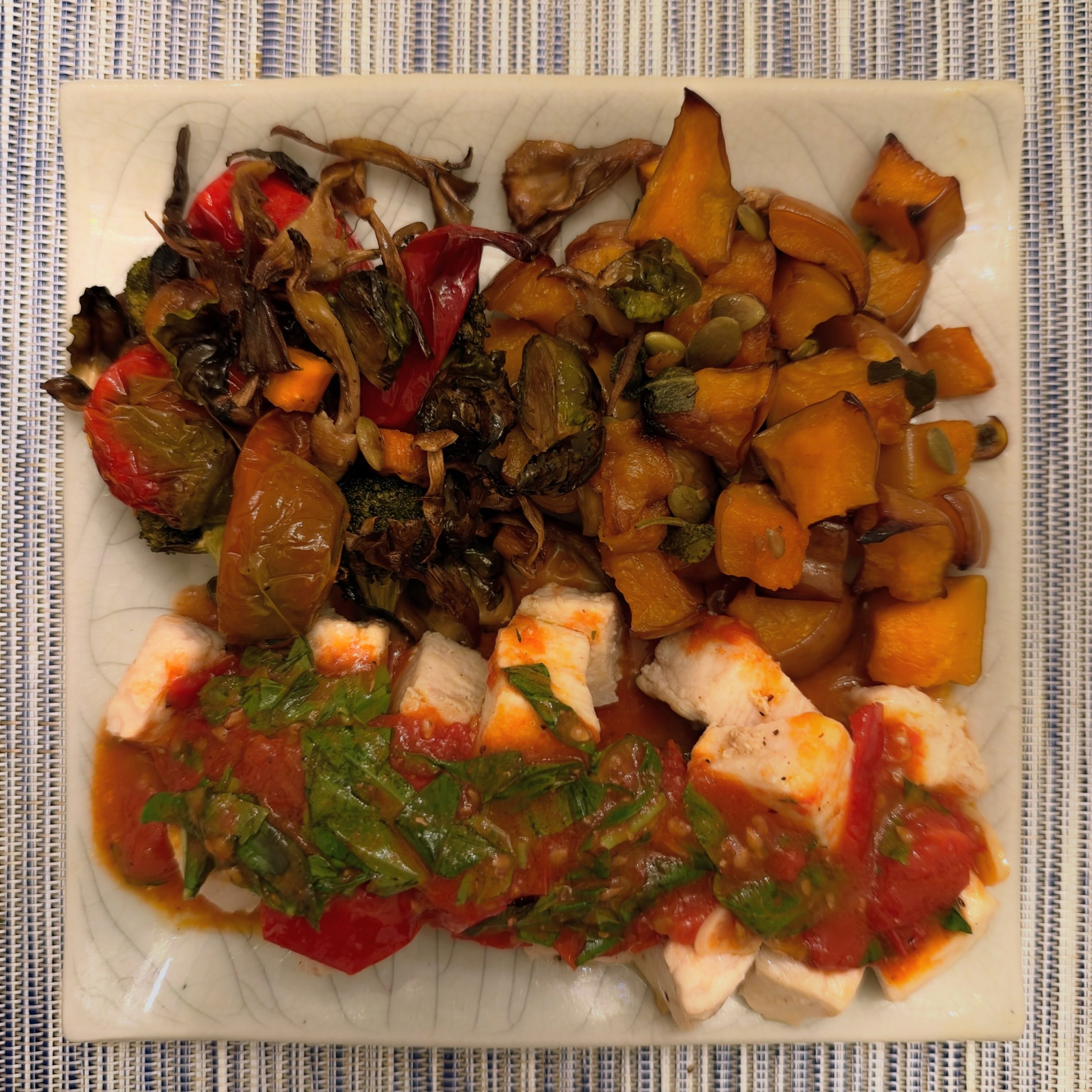
Pan-Seared Swordfish Bellies
Swordfish belly has enough richness to stay succulent through a quick sear. Dry surfaces and an uncrowded pan build light browning without prolonged cooking.
Ingredients
- 1.5 lb skinless swordfish belly, tough membranes and bloodline trimmed
- 1.5 tbsp ghee
- 0.75 tsp kosher salt, or to taste
- 0.25 tsp freshly ground black pepper
Instructions
- Pat the fish thoroughly dry. Cut into large pieces about 1½–2 inches across, keeping their thickness as even as possible. Season with salt and pepper just before cooking.
- Heat a large heavy skillet over medium-high heat. Add the ghee, then place the fish in a single layer with space between pieces; work in batches if necessary.
- Sear undisturbed for 2–3 minutes, until lightly golden and the fish releases readily. Turn and cook another 2–4 minutes, turning thicker pieces onto an additional side as needed.
- Check the thickest pieces with an instant-read thermometer and cook to 145°F. The centers should be opaque and moist, with flesh that separates under gentle pressure. Transfer promptly to a warm plate.
Notes
- Belly pieces vary in thickness; remove thinner pieces individually rather than waiting for the entire batch.
- Swordfish is a high-mercury fish and should be avoided by pregnant or breastfeeding people and young children.
Fresh Tomato, Garlic, and Basil Sauce
Briefly cooking ripe tomatoes produces a juicy, chunky sauce rather than a heavy reduction. Basil added off heat keeps its fragrance and balances the rich fish.
Ingredients
- 1.5 lb ripe fresh tomatoes, cored and cut into ¾-inch pieces, juices reserved
- 2 tbsp extra-virgin olive oil
- 4 cloves garlic, thinly sliced
- 0.5 tsp kosher salt, plus more to taste
- 0.25 tsp freshly ground black pepper
- 1 cup loosely packed fresh basil leaves, roughly torn
Instructions
- Warm the olive oil and garlic in a saucepan over medium-low heat for 1–2 minutes, until fragrant but not browned.
- Add the tomatoes with their juices, salt, and pepper. Raise the heat to medium and simmer uncovered for 10–13 minutes, stirring occasionally, until some tomatoes collapse but distinct pieces remain.
- Keep the sauce loose enough to spoon over and around the fish. If it becomes thick, loosen with a tablespoon or two of water; if watery, simmer a little longer.
- Remove from the heat and fold in the torn basil immediately before serving. Taste and adjust the salt.
Notes
- Use the best late-season tomatoes available; their acidity should provide the sauce's brightness without added sweetener.
Roasted Koginut Squash with Sage and Pepitas
High heat browns the squash while leaving its interior creamy. Sage and toasted pumpkin seeds add an earthy aroma and crisp contrast to the sweet flesh.
Ingredients
- 1 medium koginut squash, about 2 lb
- 2 tbsp extra-virgin olive oil, divided
- 0.75 tsp kosher salt, or to taste
- 0.25 tsp freshly ground black pepper
- 12 fresh sage leaves, large leaves torn
- 0.25 cup raw shelled pepitas
Instructions
- Heat the oven to 425°F with racks in the upper and lower thirds. Scrub the squash, halve it, and scoop out the seeds. Leave the skin on and cut into wedges or chunks roughly 1 inch thick.
- Toss with 1½ tablespoons olive oil, salt, and pepper. Spread on a rimmed sheet pan with broad cut surfaces against the pan.
- Roast for 20 minutes, then turn the pieces. Toss the sage with the remaining ½ tablespoon oil and scatter over the squash.
- Roast another 10–20 minutes, until the squash is tender through the skin and browned along the edges. Add the pepitas for the final 5–7 minutes, stirring them once and watching that they do not scorch.
- Transfer to a serving dish, including the sage and seeds from the pan.
Notes
- Cut away any unusually hard or blemished skin before roasting. The skin should be tender enough to eat when the squash is done.
Mixed Roasted Vegetables
A well-spaced pan gives brassicas charred edges, peppers soft sweetness, and mushrooms concentrated savoriness. A little lemon at the end lifts the roasted flavors.
Ingredients
- 6 oz broccoli, cut into medium florets with peeled stems sliced
- 6 oz Brussels sprouts, trimmed and halved
- 6 oz oyster mushrooms, torn into broad clusters
- 1 large red bell pepper, seeded and cut into broad pieces
- 1 small yellow onion, cut into ¾-inch wedges with root ends intact
- 2.5 tbsp extra-virgin olive oil
- 0.75 tsp kosher salt, or to taste
- 0.25 tsp freshly ground black pepper
- 2 tsp fresh lemon juice
Instructions
- Dry the vegetables well. Toss with the olive oil, salt, and pepper.
- Spread across a large rimmed sheet pan without crowding, placing Brussels sprouts cut-side down. Use another pan if the vegetables cannot fit in a single layer.
- Roast at 425°F for 25–35 minutes, turning after about 18 minutes. Rotate the pans between oven racks as needed for even browning.
- Remove individual vegetables as they finish: broccoli should have crisp tips, sprouts should be tender with browned cut faces, mushrooms should have golden edges, and peppers and onions should be soft and lightly blistered.
- Toss the warm vegetables with the lemon juice and adjust the seasoning.
Notes
- Keep the mushrooms in substantial clusters so they do not dry out before the other vegetables are ready.
Overall Timing / Workflow
The oven handles both sides while the sauce cooks on the stove. Searing the fish last keeps it moist and ready to serve immediately.
Instructions
- 0:00 — Heat the oven to 425°F. Cut and season the squash, then put it in the oven by about 0:15.
- 0:15 — Prepare the mixed vegetables and place them in the oven about 5–10 minutes after the squash.
- 0:25 — Chop the tomatoes and prepare the garlic and basil. Cook the tomato sauce while turning the roasting vegetables and rotating the pans.
- 0:35 — Add sage to the squash when turning it. Trim, dry, and portion the fish. Keep the sauce warm over very low heat without the basil.
- 0:40 — Check the vegetables and add the pepitas to the squash for its final 5–7 minutes. Begin searing the fish when the sides are nearly ready.
- 0:50–0:55 — Finish the vegetables with lemon, fold basil into the sauce, and plate the fish immediately.
Notes
- Allow about 55–65 minutes total, depending on oven recovery and squash thickness.
Plating
Keeping the two roasted sides distinct preserves their textures, while a generous spoonful of sauce ties the fish to the vegetables.
Instructions
- Arrange the mixed vegetables on one side of a warm platter or four warm plates, and the squash alongside, keeping its sage and pepitas visible.
- Place the swordfish toward the front, leaving a little space between the pieces.
- Spoon the chunky tomato-basil sauce over and around the fish, leaving some fish exposed. Serve immediately.
Leftover Path
Separate storage protects the roasted vegetables from the wet sauce. Gentle reheating helps keep already-cooked swordfish from becoming firm and dry.
Instructions
- Refrigerate the fish, sauce, and roasted sides in separate shallow airtight containers within 2 hours. Use the fish within 2 days and the sauce and vegetables within 3–4 days.
- Reheat squash and mixed vegetables at 400°F for 10–15 minutes, until hot. Loosely cover if they are already deeply browned.
- For hot fish leftovers, warm the tomato sauce with a splash of water, add the fish, and cover over low heat just until the fish reaches 165°F; do not boil.
- Alternatively, flake chilled fish over leftover roasted vegetables and spoon over a little tomato sauce for a cold lunch.