Petrale Sole with Lemon-Caper Butter, Miso Squash–Sweet Potato Mash, and Balsamic Brussels Sprouts
Delicate petrale sole gets a bright, briny lemon-caper butter sauce, with silky miso squash–sweet potato mash alongside. Deeply roasted Brussels sprouts and a finishing drizzle of aged balsamic bring crisp edges and mellow acidity to this late-fall plate.
By Jonathan Katzman · Cooked and photographed · Recipe updated
Serves: 4 servings
Tags: gluten-free, nut-free, pescatarian
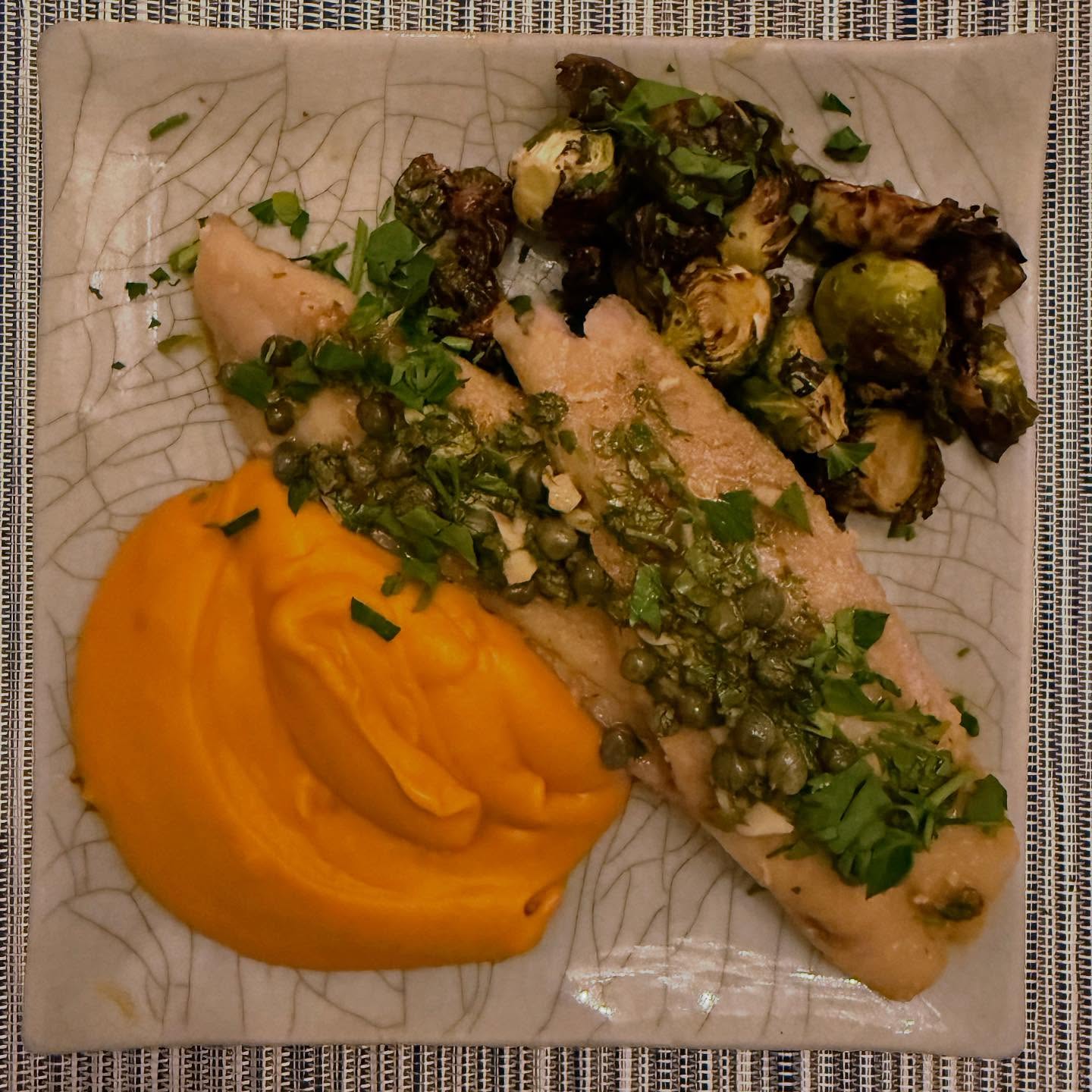
Pan-Seared Petrale Sole
A thin cassava coating helps the delicate fillets release cleanly and develop a light crust without overwhelming the fish.
Ingredients
- 1.5 lb skinless, boneless petrale sole fillets
- 0.25 cup cassava flour, for light dusting
- 2 tablespoons ghee, divided
- 0.5 teaspoon kosher salt, plus more to taste
- 0.25 teaspoon freshly ground black pepper
Instructions
- Check the fillets for bones and pat thoroughly dry. Season lightly with salt and pepper just before cooking.
- Dust both sides with cassava flour and shake off almost all excess; the coating should be barely visible.
- Heat a wide nonstick or well-seasoned skillet over medium-high heat. Add half the ghee, then enough fish to fit without crowding.
- Sear for 2–3 minutes on the first side, until lightly golden and releasing easily. Turn carefully with a fish spatula and cook for another 1–2 minutes, adjusting for thickness.
- Remove when the flesh is opaque and flakes gently, reaching 145°F in the thickest part. Transfer to a warm platter, loosely tent, and repeat with the remaining ghee and fish.
- Keep the skillet for the lemon-caper butter sauce, wiping out any scorched flour first.
Notes
- Thin tail pieces cook faster than thicker fillets; remove them individually rather than waiting for the entire batch.
Lemon-Caper Butter Sauce
Lemon and capers cut through the butter and sweet mash. Swirling in cold butter over low heat produces a glossy sauce rather than an oily topping.
Ingredients
- 6 tablespoons cold unsalted butter, cubed and divided
- 1 small clove garlic, thinly sliced
- 3 tablespoons drained capers, rinsed if very salty
- 3 tablespoons water
- 2 tablespoons fresh lemon juice, plus more to taste
- 1 teaspoon finely grated lemon zest
- 0.25 cup roughly chopped flat-leaf parsley, a little reserved for finishing
- to taste kosher salt and freshly ground black pepper
Instructions
- After cooking the fish, lower the skillet heat to medium-low. Add 1 tablespoon butter and the garlic; cook for 30–45 seconds, until fragrant but not browned.
- Add the capers, water, and lemon juice. Simmer for about 1 minute, scraping up any lightly browned bits.
- Reduce the heat to low. Swirl in the remaining cold butter a few cubes at a time, lifting the pan off the heat as needed so the sauce does not boil.
- Fold in the lemon zest and parsley, reserving a little parsley for plating. Taste before adding salt, then adjust with pepper and more lemon if needed.
- Spoon over the fish immediately.
Notes
- If the sauce looks oily or begins to separate, take it off the heat and whisk in 1–2 teaspoons cool water.
Butternut Squash and Sweet Potato Mash with Miso
Sweet potato gives the squash enough body for a smooth, spoonable purée. Miso adds savory depth without hiding the vegetables' sweetness.
Ingredients
- 1 lb peeled, seeded butternut squash, cut into 1-inch cubes
- 0.75 lb peeled orange-fleshed sweet potato, cut into 1-inch cubes
- 1.5 tablespoons mild gluten-free Shared Cultures miso, plus more to taste
- 2 tablespoons extra-virgin olive oil
- 2–4 tablespoons hot water, as needed
- to taste kosher salt
Instructions
- Set a steamer basket over simmering water. Add the squash and sweet potato, cover, and steam for 20–25 minutes, until both crush easily with a fork.
- Let the vegetables steam-dry uncovered for 2 minutes, then transfer to a food processor.
- Add the miso and olive oil. Process until very smooth, scraping down the bowl and adding hot water a tablespoon at a time only as needed.
- Taste and add more miso or a little salt. The mash should hold soft ridges when spooned onto a plate.
- Transfer to a covered saucepan and keep warm over very low heat, stirring occasionally without letting it catch.
Notes
- Miso salinity varies considerably; start with the listed amount and adjust after blending.
Roasted Brussels Sprouts with Aged Balsamic
A hot sheet pan browns the cut faces while leaving the centers tender. Adding the aged balsamic after roasting preserves its complexity and prevents scorching.
Ingredients
- 1.5 lb Brussels sprouts, trimmed and halved; large ones quartered
- 2 tablespoons extra-virgin olive oil
- 0.5 teaspoon kosher salt
- 0.25 teaspoon freshly ground black pepper
- 2 teaspoons 20-year-aged balsamic vinegar, plus more to taste
Instructions
- Heat the oven to 425°F with a heavy rimmed baking sheet inside.
- Dry the sprouts well, then toss with olive oil, salt, and pepper.
- Carefully spread them over the hot sheet pan, cut sides down, leaving space between pieces.
- Roast for 20 minutes, then check the undersides. Turn and roast another 5–10 minutes, until deeply browned with crisp outer leaves and tender centers. Remove any loose leaves early if they are getting too dark.
- Transfer to a serving bowl and drizzle with the aged balsamic while warm. Toss gently and taste before adding more.
Notes
- Use the aged vinegar as a finishing condiment; it does not need reducing.
Overall Timing / Workflow
The vegetables can hold briefly, leaving the delicate fish and butter sauce to be cooked immediately before serving.
Instructions
- 0:00 — Heat the oven and sheet pan to 425°F. Bring the steamer water to a simmer and begin preparing the vegetables.
- 0:10 — Put the sprouts in the oven and the squash and sweet potato in the steamer.
- 0:15 — Measure the sauce ingredients, chop the parsley, cube the butter, and dry the fish.
- 0:30 — Check the steamed vegetables and blend the mash when tender. Keep it covered and warm.
- 0:35 — Check the sprouts and finish roasting as needed. Warm the serving plates, then season and dust the fish.
- 0:35–0:50 — Sear the fish in batches. Finish the sprouts with balsamic and hold them uncovered so they stay crisp.
- As soon as the fish is cooked, make the butter sauce in the same skillet and plate everything immediately.
Plating
Keeping the mash and sprouts distinct preserves their contrasting textures while allowing the lemon butter to connect the plate.
Instructions
- Spoon a generous oval of mash onto one side of each warm plate and sweep the surface into soft ridges.
- Arrange the sole diagonally beside the mash, overlapping fillets if they are small.
- Nestle the Brussels sprouts at the top of the plate, keeping most of their crisp surfaces out of the sauce.
- Spoon the lemon-caper butter along the fish and finish with the reserved parsley.
Leftover Path
Separate storage lets you warm the fish gently while restoring some crispness to the sprouts.
Instructions
- Refrigerate leftovers in separate airtight containers within 2 hours. Eat the fish and sauce within 2 days; use the mash and sprouts within 3–4 days.
- Warm the mash in a covered saucepan over low heat with a splash of water, stirring until hot.
- Reheat sprouts in a 400°F oven for 8–12 minutes, checking to avoid burning the balsamic-coated edges.
- Warm fish covered in a low oven with a spoonful of water until heated through, avoiding prolonged cooking. Warm the sauce separately over very low heat, whisking in a little water if it separates.
- Alternatively, flake the cold fish over dressed greens and serve with reheated mash and sprouts.