Petrale Sole with Lemon-Caper Butter Sauce, Roasted Delicata Squash and Brussels Sprouts
Delicate petrale sole gets a generous spoonful of lemon-caper butter sauce, with softened shallots and plenty of parsley. Caramelized delicata squash and crisp-edged Brussels sprouts bring autumn sweetness and a little aged-balsamic tang to balance the briny sauce.
By Jonathan Katzman · Cooked and photographed · Recipe updated
Serves: 4 servings
Tags: gluten-free, nut-free, pescatarian
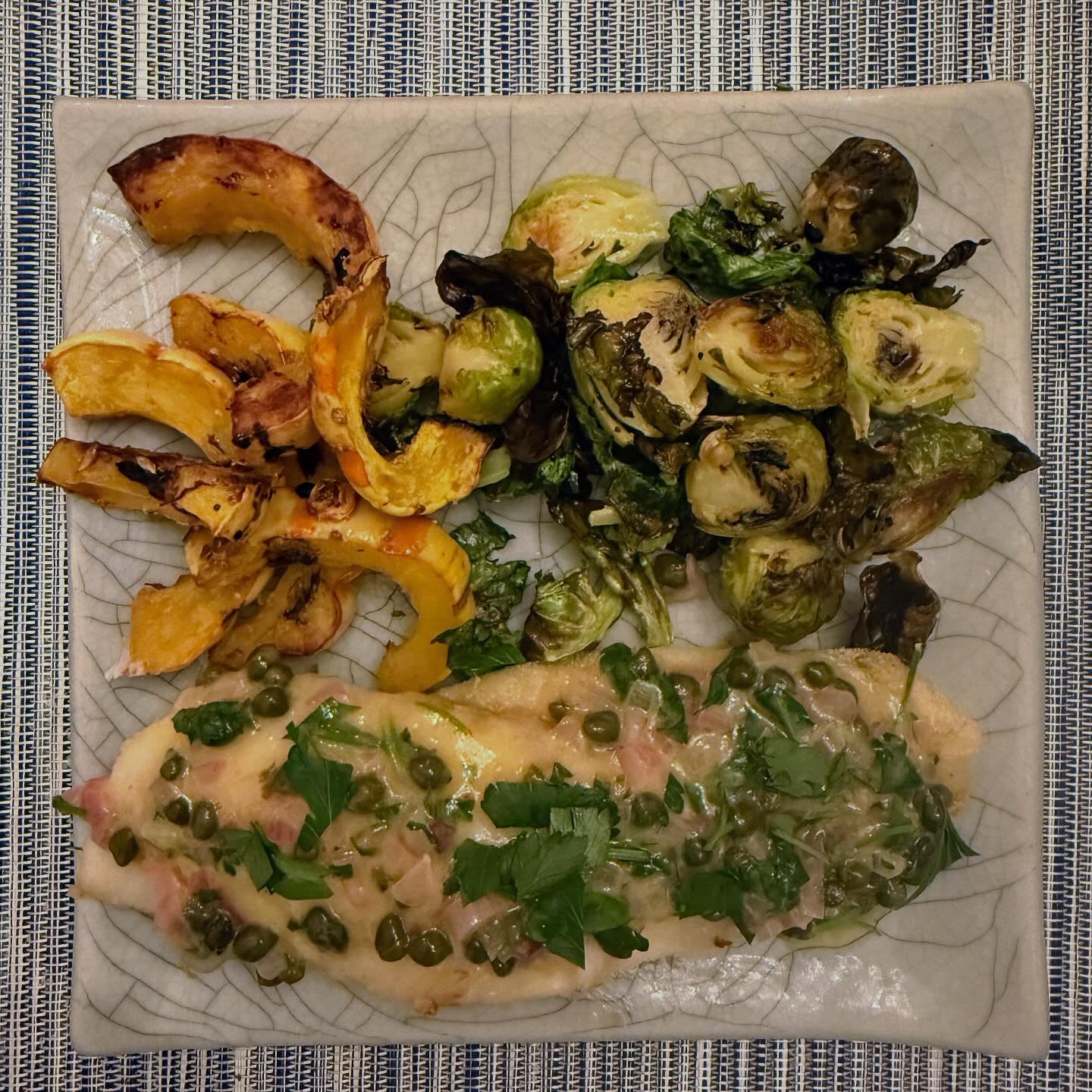
Pan-Seared Petrale Sole
A very light cassava coating protects the delicate fillets and gives the sauce something to cling to without creating a heavy crust.
Ingredients
- 1½ lb petrale sole fillets
- ¼ cup cassava flour, for a light dusting
- 2 tbsp ghee
- ½ tsp fine sea salt, or to taste
- ¼ tsp freshly ground black pepper
Instructions
- Pat the fillets thoroughly dry and check for pin bones. Season with salt and pepper just before cooking.
- Dust both sides lightly with cassava flour and shake off all excess; the fish should not have a thick white coating.
- Heat a large nonstick or well-seasoned skillet over medium-high heat. Add half the ghee and arrange half the fillets without crowding.
- Cook for about 2 minutes on the first side, until lightly golden and releasing easily. Turn carefully with a wide fish spatula and cook another 1–2 minutes, adjusting for thickness. The flesh should be opaque and separate into moist flakes; a thermometer inserted sideways into the thickest part should reach 145°F.
- Transfer to a warm platter. Repeat with the remaining ghee and fish, lowering the heat if the flour begins to darken. Keep the fish warm only briefly while making the sauce.
Notes
- Thin sole can tear easily; turn once and avoid moving it around in the pan.
- Wipe out any scorched flour before making the sauce, but retain light golden pan residue.
Lemon-Caper Butter Sauce
Cold butter emulsifies into the lemony pan liquid for a glossy sauce. Capers supply briny contrast, while softened shallot rounds out the acidity.
Ingredients
- 5 tbsp unsalted butter, divided, with 4 tablespoons kept cold and cubed
- 1 medium shallot, finely diced
- ⅓ cup water
- 1 large lemon, half thinly sliced and seeded, half juiced
- 3 tbsp drained capers, rinsed if very salty
- ¼ cup roughly chopped flat-leaf parsley
- to taste fine sea salt and freshly ground black pepper
Instructions
- After cooking the fish, reduce the skillet to medium-low. Add 1 tablespoon butter and the shallot; cook for 2–3 minutes until softened but not browned.
- Add the water, 1 tablespoon lemon juice, lemon slices and capers. Scrape up the light golden residue and simmer for 2 minutes, until slightly reduced and the lemon slices have softened.
- Turn the heat to its lowest setting, or take the pan off the heat if it is still very hot. Swirl in the cold butter a few cubes at a time until the sauce is glossy and lightly coats a spoon. Do not boil after adding the butter.
- Fold in the parsley, reserving a little for the finished plates. Taste and add more lemon juice, pepper or salt as needed. Spoon over the fish immediately.
Notes
- If the sauce becomes oily or too thick, take it off the heat and whisk in cool water a teaspoon at a time.
- Taste before salting; the capers may provide enough.
Roasted Delicata Squash with Aged Balsamic
Roasting skin-on crescents on a hot sheet pan develops caramelized faces while keeping the centers creamy. A restrained balsamic finish sharpens their natural sweetness.
Ingredients
- 2 small delicata squash, about 1½ pounds total
- 1½ tbsp extra-virgin olive oil
- ½ tsp fine sea salt
- ¼ tsp freshly ground black pepper
- 2 tsp aged balsamic vinegar, without added caramel coloring or sweeteners
Instructions
- Heat the oven to 425°F with racks in the upper and lower thirds.
- Scrub the squash, halve lengthwise and scoop out the seeds. Cut crosswise into ½-inch crescents, leaving the skin on.
- Toss with olive oil, salt and pepper. Spread on a large rimmed sheet pan in one layer with a cut face against the metal.
- Roast for 25–30 minutes, flipping after about 15 minutes, until both sides are browned and the flesh is tender. Rotate the pans if roasting alongside the Brussels sprouts.
- Drizzle with the aged balsamic just before serving and toss gently.
Notes
- Keep the squash in a single layer; crowding softens the edges instead of caramelizing them.
Roasted Brussels Sprouts with Aged Balsamic
Cut-side-down roasting gives the sprouts deeply browned faces and tender centers. Loose leaves become crisp, providing contrast to the soft fish and squash.
Ingredients
- 1¼ lb Brussels sprouts
- 2 tbsp extra-virgin olive oil
- ½ tsp fine sea salt
- ¼ tsp freshly ground black pepper
- 2 tsp aged balsamic vinegar, without added caramel coloring or sweeteners
Instructions
- Trim the Brussels sprouts and halve lengthwise; quarter unusually large ones. Save sound loose leaves.
- Toss the halved sprouts with olive oil, salt and pepper. Arrange cut-side down on a separate rimmed sheet pan.
- Roast at 425°F for 15 minutes without disturbing them. Rotate the pan, add the loose leaves and continue roasting for 7–13 minutes, until the cut faces are deeply browned and the centers yield to a knife. Remove loose leaves early if they become crisp before the sprouts are ready.
- Toss with aged balsamic immediately before serving, then scatter the crisp leaves over the top.
Notes
- Add the balsamic after roasting so it stays bright and does not scorch.
Overall Timing / Workflow
The vegetables roast while the fish and sauce ingredients are prepared. Cooking the sole last keeps it moist and lets the sauce go straight from pan to plate.
Instructions
- 0:00 — Heat the oven to 425°F. Wash and cut the squash and Brussels sprouts.
- 0:10 — Put the squash in the oven, followed by the sprouts on a separate pan as soon as they are ready.
- 0:15 — Prepare the shallot, lemon, capers and parsley. Cube and chill the sauce butter. Dry and check the sole.
- 0:25 — Flip the squash, rotate the vegetable pans and add the loose sprout leaves. Warm the serving plates.
- 0:30 — Begin searing the fish in batches. Remove each vegetable pan when browned and tender; leave uncovered so the edges do not steam.
- 0:40 — Make the lemon-caper butter sauce in the fish pan. Finish the vegetables with balsamic, plate and serve immediately.
Notes
- Allow about 45–50 minutes total, depending on oven preheating and how many fish batches your skillet requires.
Plating
Keeping the vegetables beside the fish preserves their roasted texture and lets the lemon-caper sauce remain the focus.
Instructions
- Lay the sole across the lower half of each warm plate, overlapping smaller fillets if needed.
- Arrange the delicata crescents and Brussels sprouts in separate loose piles above the fish.
- Spoon the warm sauce over the sole, distributing the capers, shallots and softened lemon slices evenly. Finish with the reserved parsley and serve at once.
Leftover Path
Gentle reheating protects the thin fish, while dry heat restores some crispness to the roasted vegetables.
Instructions
- Refrigerate leftovers within 2 hours, storing the fish and sauce separately from the vegetables when possible. Eat the fish within 2 days and the vegetables within 3–4 days.
- Reheat the vegetables on a sheet pan at 400°F for 8–12 minutes.
- Warm the fish and sauce in a covered skillet over low heat with a splash of water, just until the fish reaches 165°F. Avoid boiling the sauce; whisk in a little water if the butter separates.
- Alternatively, flake the chilled fish over a simple green salad with the leftover roasted vegetables and fresh lemon.