Pickled Herring with Wild Onions and Winter Greens
Silvery herring turns silky and tangy in a lemon-and-spice pickle with wild onions. Served cold over crisp winter greens, its rich flesh plays against a sharp vinaigrette and the sweet crunch of shaved vegetables.
By Jonathan Katzman · Cooked and photographed · Recipe updated
Serves: 4 servings
Tags: gluten-free, paleo, dairy-free, nut-free, pescatarian
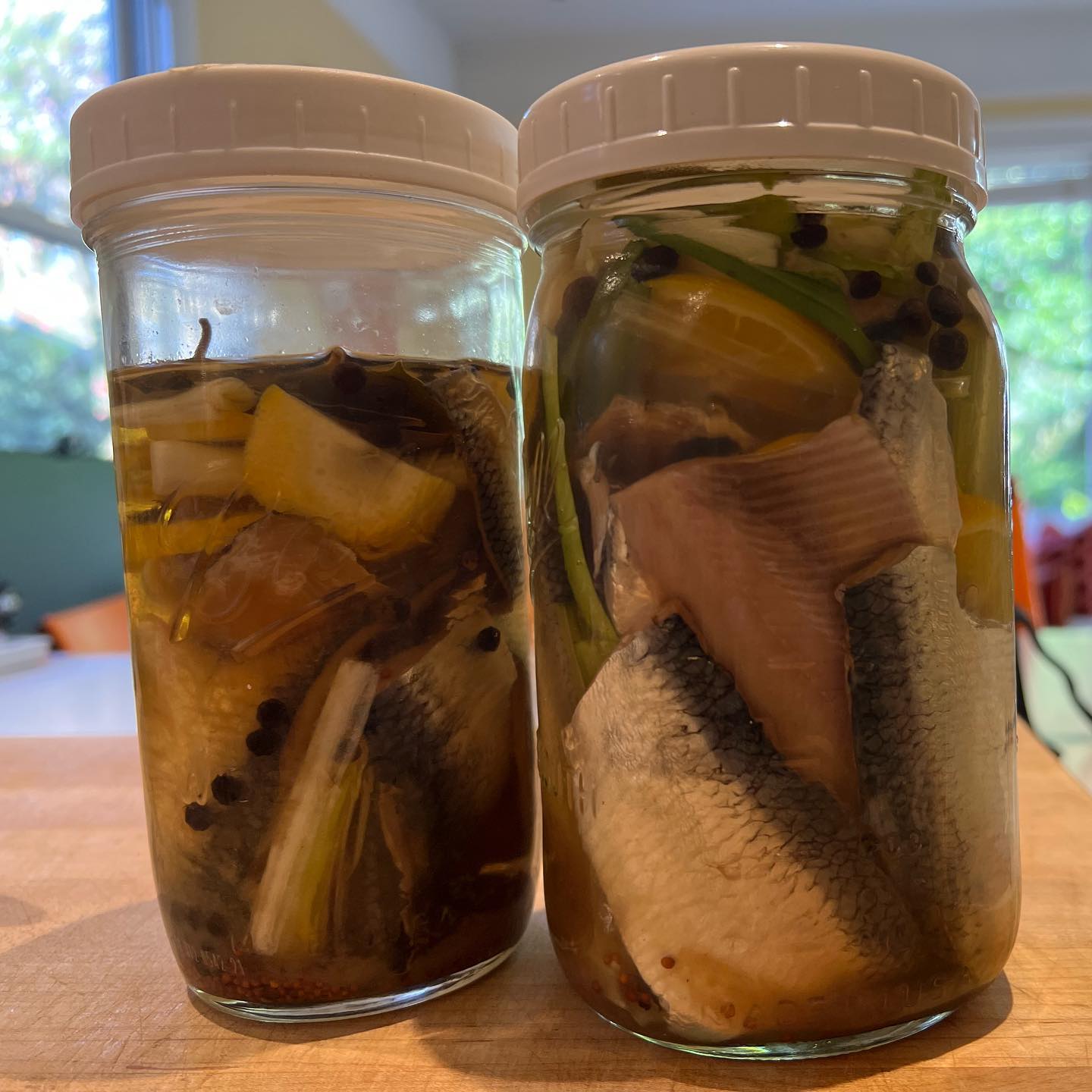
Refrigerator-Pickled Herring with Wild Onions
A preliminary salt brine firms the delicate fish before an acidic pickle flavors it. Lemon, wild onions, and whole spices give the oily herring brightness without obscuring its flavor.
Ingredients
- 1.25 lb cleaned, scaled, skin-on herring fillets, commercially frozen for raw consumption and thawed in the refrigerator
- 60 g kosher salt, for the initial brine
- 1 liter cold water, for the initial brine
- 2 cups white wine vinegar labeled 5% acidity
- 1 cup water, for the pickle
- 0.25 cup mild honey
- 1 teaspoon black peppercorns
- 1 teaspoon yellow mustard seeds
- 6 allspice berries
- 2 bay leaves
- 1 small lemon, scrubbed and thinly sliced, seeds removed
- 6 small wild onions from a reliable edible source, cleaned and cut into 2-inch lengths; use spring onions if unavailable
Instructions
- Use herring whose supplier confirms appropriate parasite-destruction freezing for raw consumption. Pickling and salt curing do not reliably kill parasites. If handling the freezing yourself, use equipment verified to maintain −4°F/−20°C or colder for at least 7 days; do not assume an ordinary refrigerator freezer can achieve this.
- Inspect the thawed fillets, remove remaining scales and accessible bones, and trim away fins or ragged edges. Leave small fillets whole; halve larger ones crosswise so they fit comfortably in the jars.
- Dissolve the salt in the cold brining water. Add the herring, cover, and refrigerate at 40°F/4°C or below for 8–12 hours.
- Combine the vinegar, pickling water, honey, peppercorns, mustard seeds, allspice, and bay leaves in a nonreactive saucepan. Bring just to a simmer, stirring to dissolve the honey, then remove from the heat. Cool promptly in an ice bath and refrigerate until completely cold.
- Drain the herring, rinse briefly with cold water, and pat dry. Layer loosely with the lemon and wild onions in clean glass jars.
- Pour the cold pickle and spices over the fish, keeping every piece submerged. Use a clean food-safe pickle weight if necessary. If more liquid is needed, prepare additional vinegar and water in the same 2:1 ratio, cool completely, and add.
- Cover and refrigerate for 48 hours before serving. The flesh should be firmer and more opaque, with a clean, tart flavor; these changes are texture cues, not proof of parasite destruction.
Notes
- This is a refrigerated preparation, not a shelf-stable canning recipe. Keep at 40°F/4°C or below throughout curing and storage.
- Use small spring onions rather than unidentified foraged plants.
- Fine herring bones may soften during pickling but do not necessarily disappear; check carefully when serving.
Winter Greens with Lemon-Mustard Vinaigrette
Dry, crisp greens hold a light dressing and balance the rich, acidic fish. A little honey rounds the vinaigrette without making the salad sweet.
Ingredients
- 6 cups mixed winter salad greens, such as little gem, baby lettuces, and arugula
- 1 small carrot, thinly sliced, optional
- 1 celery stalk, thinly sliced, optional
- 0.5 small fennel bulb, shaved, optional
- 3 tablespoons extra-virgin olive oil
- 1 tablespoon fresh lemon juice
- 1 teaspoon gluten-free Dijon mustard
- 0.5 teaspoon honey
- to taste kosher salt and freshly ground black pepper
Instructions
- Wash and thoroughly dry the greens. Tear larger leaves into bite-size pieces and combine with any of the optional shaved vegetables.
- Whisk the lemon juice, mustard, and honey together, then whisk in the olive oil. Season lightly with salt and pepper, remembering that the herring brings salt and acidity.
- Immediately before serving, toss the salad with just enough dressing to gloss the leaves. Reserve any extra dressing rather than letting it pool under the fish.
Notes
- For especially crisp shaved vegetables, soak them in ice water for 10 minutes, then drain and dry well before dressing.
Overall Timing / Workflow
All the fish preparation happens ahead, leaving only a fresh salad to assemble at serving time.
Instructions
- Before starting: confirm the herring's parasite-destruction freezing history and thaw it in the refrigerator.
- Evening, three days before serving: trim the fish and begin the refrigerated salt brine.
- Next morning: make and fully chill the pickling liquid. Drain and rinse the fish, pack with lemon and wild onions, and refrigerate in the pickle.
- After 48 hours of pickling: prepare the greens, shaved vegetables, and vinaigrette. Drain only the fish needed for the meal and dress the salad just before plating.
Plating
A loose mound of glossy fillets over crisp greens keeps the fish central while providing a fresh bite with every forkful.
Instructions
- Divide the dressed greens among four shallow bowls or plates.
- Lift the herring from the pickle and let excess liquid drain. Arrange the fillets loosely over the greens, showing both the pale flesh and silvery skin.
- Add a few drained pieces of pickled wild onion. Leave whole peppercorns, allspice, and bay leaves in the jar, and serve the fish cold.
Leftover Path
Keeping the fish submerged and the salad separate preserves both the pickle's texture and the greens' crunch.
Instructions
- Keep unserved herring submerged in its pickle in a covered container at 40°F/4°C or below. Use clean utensils and finish within 7 days of packing.
- Do not return plated fish or dressing to the pickling jar. Refrigerate any served fish promptly and eat the next day.
- Store undressed greens and vinaigrette separately. Use leftover herring and pickled onions over a fresh salad; dressed greens are best eaten the same day.
Notes
- Discard fish that develops mold, slime, gas, or an off odor, but do not rely on smell or appearance alone to establish safety.