Tomato-Butter Poached Halibut with Miso Corn, Roasted Japanese Eggplant and Jimmy Nardello Peppers
Gentle tomato poaching keeps halibut moist, while Early Girls, Sungolds and a little white wine make a bright, buttery sauce with a soft Espelette warmth. Sweet corn gets browned at the edges and finished with miso butter, with silky Japanese eggplant and roasted Jimmy Nardellos alongside—a late-August market dinner.
By Jonathan Katzman · Cooked and photographed · Recipe updated
Serves: 4 servings
Tags: gluten-free, nut-free, pescatarian
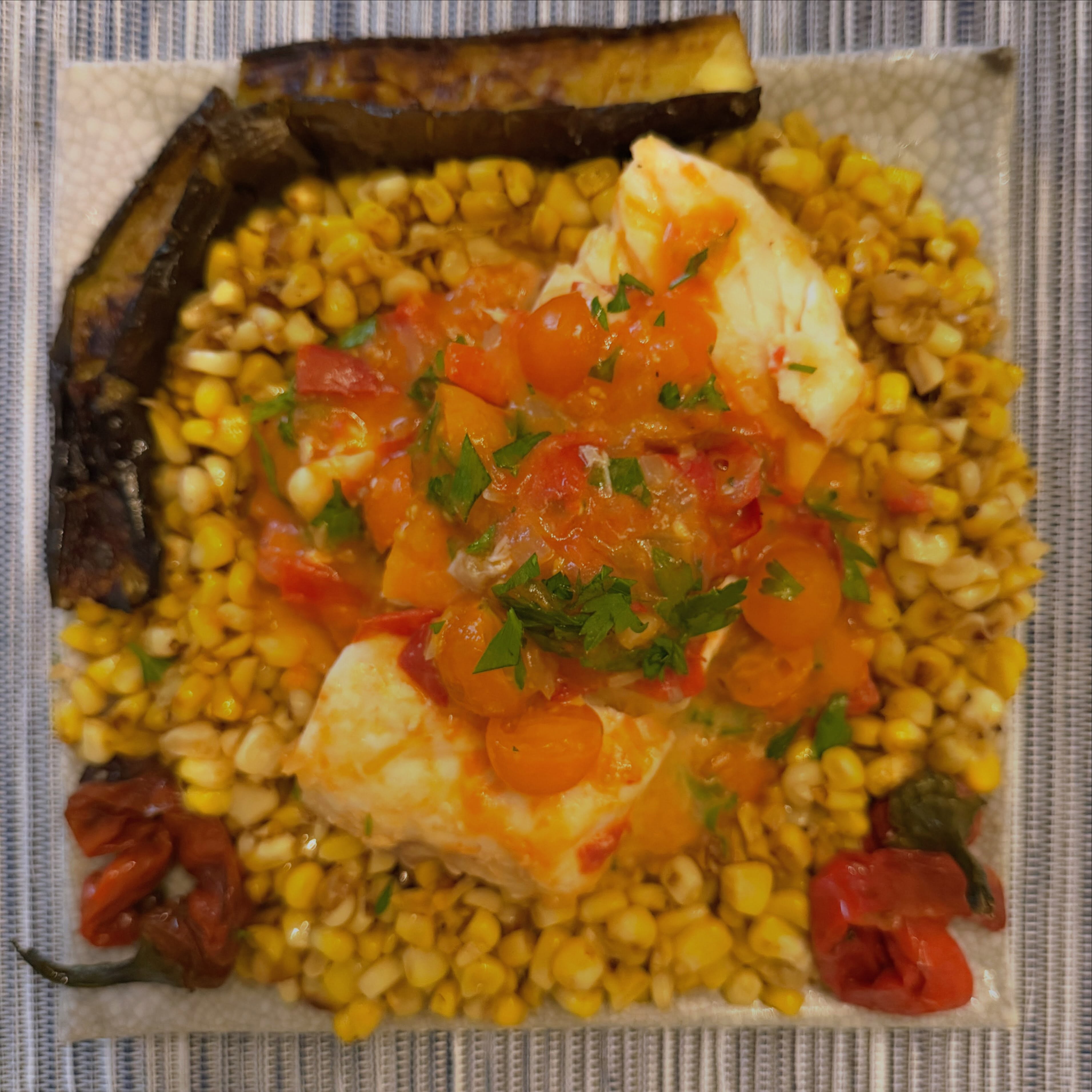
From the original post
Poached @seaforager halibut in an early girl and sungold tomato butter sauce (with some shallots, white wine and Espelette pepper). Pan roasted corn (with a touch of @sharedcultures miso butter) and some roasted Japanese eggplant and Jimmy Nardello peppers.
Early Girl and Sungold Tomato Butter Sauce
Early Girls provide acidity and body while Sungolds soften into sweet pockets. Reducing the wine before adding the tomatoes concentrates flavor without overcooking the fruit.
Ingredients
- 12 oz ripe Early Girl tomatoes, cored and cut into 3/4-inch pieces
- 8 oz Sungold tomatoes, halved
- 2 medium shallots, thinly sliced
- 1/2 cup dry white wine
- 5 tbsp unsalted butter, divided; keep 4 tablespoons cold and cubed
- 1/4 cup water, plus more as needed
- 1/2 tsp Espelette pepper, plus more to taste
- to taste kosher salt
- 1 tsp white wine vinegar, optional, only if needed
Instructions
- Melt 1 tablespoon butter in a wide, lidded sauté pan over medium-low heat. Add the shallots and a pinch of salt; sweat for 4–5 minutes until translucent without browning.
- Add the wine and simmer until reduced by about half, 3–4 minutes.
- Add both tomatoes, the Espelette and 1/4 cup water. Simmer gently for 6–8 minutes, stirring occasionally, until the Early Girls release their juices and some Sungolds collapse. Keep the sauce chunky and loose enough to spoon over fish.
- Use this tomato base to poach the halibut as directed in the next component. Reserve the cold butter until the fish is cooked and lifted out.
- After removing the fish, assess the consistency. If watery, simmer briefly to concentrate; if thick, add water by the tablespoon. Take the pan off the heat and swirl in the cold butter a few cubes at a time until glossy.
- Taste for salt and Espelette. Add the optional vinegar a few drops at a time only if the ripe tomatoes need more acidity. Spoon over the fish immediately.
Notes
- Do not boil the sauce after incorporating the finishing butter. If it begins to look oily, swirl in a tablespoon of cool water off the heat.
Gently Poached Halibut
Shallow poaching in the tomato juices cooks the fish gently and enriches the sauce. A lid supplies enough steam to cook the upper surface without turning fragile fillets.
Ingredients
- 4 6-oz portions skinless, boneless halibut, approximately 1–1 1/4 inches thick
- 1/2 tsp kosher salt, or to taste
- 1 batch tomato sauce base from the preceding component, before its final butter addition
Instructions
- Pat the halibut dry and season lightly with salt about 10 minutes before cooking.
- Bring the tomato sauce base to a bare simmer. Nestle the fish into the sauce in a single layer and spoon some tomatoes and juices over each portion. Add a splash of water if needed so liquid reaches roughly halfway up the fish.
- Cover and cook over low heat for 8–14 minutes, depending on thickness. Keep the liquid gently quivering rather than bubbling hard; begin checking the thickest portion after 7 minutes.
- Cook until the center reaches 145°F and the flesh is opaque and separates into moist flakes. Lift the portions carefully with a fish spatula onto a warm plate.
- Finish the tomato sauce with its reserved cold butter and serve promptly.
Notes
- Uneven portions may finish at different times; remove each as it reaches temperature rather than waiting for the thickest piece.
Pan-Roasted Corn with Miso Butter
A hot, uncrowded pan gives the corn browned edges while leaving the centers juicy. Adding miso butter off the heat preserves its aroma and prevents scorching.
Ingredients
- 4 large ears sweet corn, shucked, kernels cut off, about 4 cups
- 1 tbsp ghee
- 1 1/2 tbsp unsalted butter, softened
- 2 tsp mild gluten-free Shared Cultures miso or another mild gluten-free miso
- to taste kosher salt
Instructions
- Mash the softened butter and miso together until evenly combined.
- Heat a large heavy skillet over medium-high heat. Add the ghee, then the corn in a broad layer. Use two batches if the pan is crowded.
- Leave undisturbed for 2 minutes, then toss. Continue cooking for 5–7 minutes, stirring intermittently, until scattered kernels are golden brown and the corn is tender but still juicy.
- Remove from the heat and fold in the miso butter. Taste before adding salt; the miso may provide enough.
Notes
- For a particularly salty or assertive miso, start with 1 teaspoon and add more after tasting.
Roasted Japanese Eggplant
Lengthwise pieces offer plenty of cut surface for browning while the thin skin keeps the softened flesh intact.
Ingredients
- 4 medium Japanese eggplants, about 1 lb
- 2 tbsp olive oil
- 1/2 tsp kosher salt
Instructions
- Heat the oven to 425°F. Trim the eggplants and halve lengthwise; quarter unusually thick ones lengthwise.
- Toss with the olive oil and salt. Arrange cut-side down on a metal baking sheet with space between pieces.
- Roast for 22–28 minutes until the undersides are deeply golden and the flesh yields easily to a knife. Turn cut-side up for the last few minutes if the bottoms are browning faster than the interiors soften.
- Keep warm and serve with a little of the tomato sauce for acidity.
Roasted Jimmy Nardello Peppers
High heat softens these thin-walled sweet peppers and blisters their skins without drying them out.
Ingredients
- 12 oz Jimmy Nardello peppers
- 1 tbsp olive oil
- 1/4 tsp kosher salt
Instructions
- Halve the peppers lengthwise and remove the seeds, keeping the stems attached if desired.
- Toss with olive oil and salt, then spread on a baking sheet.
- Roast at 425°F for 15–20 minutes, turning once, until softened, lightly collapsed and blistered in spots. Roast alongside the eggplant, adding the peppers later so both finish together.
Overall Timing / Workflow
The roasted vegetables tolerate a short hold, while the corn and fish are best finished just before serving.
Instructions
- 0:00 — Heat the oven to 425°F. Prepare the eggplant, peppers, tomatoes and shallots; cut the corn from the cobs and mix the miso butter.
- 0:15 — Put the eggplant in the oven and begin the tomato sauce base.
- 0:23 — Add the peppers to the oven. Season the halibut.
- 0:32 — Nestle the halibut into the gently simmering tomato base and cover. Begin pan-roasting the corn in a separate skillet.
- 0:38 — Check the roasted vegetables and remove when tender. Warm the serving plates.
- 0:40–0:47 — Finish the corn with miso butter. Check the fish temperature and remove portions as ready, then finish the tomato sauce with cold butter.
- Serve as soon as the sauce is finished.
Notes
- Allow about 50–55 minutes overall; fish thickness and oven performance determine the final few minutes.
Plating
Corn makes a sweet, textured bed that catches the tomato butter, while keeping the roasted vegetables alongside preserves their browned surfaces.
Ingredients
- 2 tbsp roughly chopped flat-leaf parsley, optional
Instructions
- Spread the miso corn across the center of four warm plates.
- Set a halibut portion over each bed of corn and spoon the chunky tomato butter sauce over and around the fish.
- Arrange eggplant along one edge and nestle the roasted peppers alongside. Finish with the optional parsley.
Leftover Path
Keeping the fish separate allows the vegetables to reheat without subjecting the delicate halibut to prolonged heat.
Instructions
- Refrigerate leftovers in shallow, covered containers within 2 hours. Keep the fish and sauce separate from the corn and roasted vegetables when practical; use within 2 days for best quality.
- Reheat the vegetables in a skillet with a splash of water. Warm the fish gently, covered, in its sauce with another splash of water until it reaches 165°F; avoid a hard boil.
- Alternatively, serve the leftover vegetables at room temperature with chilled flakes of halibut and the tomato sauce loosened with a little water.