Poached Halibut with Spring Leeks, English Peas, Fava Beans and Roasted Sunchokes
Gently poached halibut rests on silky leeks, sweet English peas and tender favas, with a light lemon-butter broth tying everything together. Deeply roasted sunchokes bring crisp edges and earthy sweetness—a lovely contrast to the delicate fish and bright spring vegetables.
By Jonathan Katzman · Cooked and photographed · Recipe updated
Serves: 4 servings
Tags: gluten-free, nut-free, pescatarian
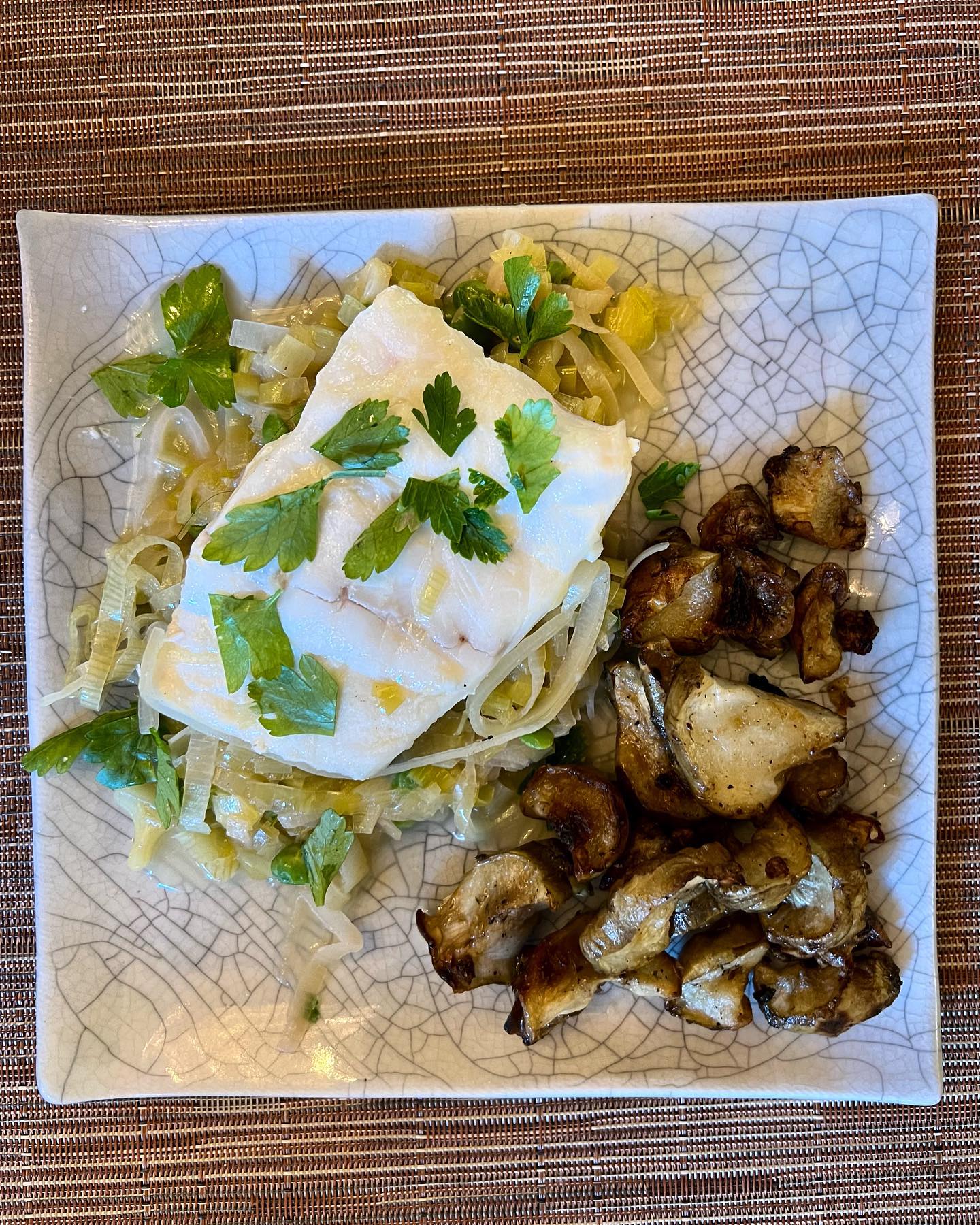
Gently Poached Halibut with Lemon-Butter Jus
A quiet, below-simmer poach cooks lean halibut evenly without toughening its edges. A small amount of butter gives the reduced poaching liquid enough body to coat the fish and vegetables.
Ingredients
- 4 6-ounce skinless halibut fillets, preferably about 1 inch thick
- 3 cups light, unsalted fish stock, gluten-free
- 3 stems flat-leaf parsley
- 2 strips lemon zest, without white pith
- 2 tablespoons cold unsalted butter, cubed
- 2 teaspoons fresh lemon juice, plus more to taste
- to taste kosher salt
Instructions
- Check the halibut for bones, pat dry and season lightly with salt. Refrigerate while preparing the vegetables.
- Combine the stock, parsley stems and lemon zest in a snug, wide sauté pan. Bring just to a simmer, then lower the heat until the liquid is steaming but not bubbling vigorously, about 170–180°F.
- Slide in the fillets in one layer. The liquid should reach at least halfway up their sides; add a little water if necessary. Cover and poach gently, checking after 8 minutes. Allow roughly 10–14 minutes for 1-inch-thick portions, adjusting for thickness.
- Cook until the thickest part reaches 145°F and the flesh is opaque and separates into moist flakes. Lift out carefully with a wide spatula and keep warm briefly.
- Strain 3/4 cup of the poaching liquid into a small saucepan. Boil until reduced to about 1/3 cup, then remove from the heat. Whisk in the cold butter a few cubes at a time, followed by the lemon juice. Taste before adding salt.
- Spoon the warm jus over the fish and vegetables immediately; do not boil after adding the butter.
Notes
- Use a light stock rather than a concentrated or strongly flavored broth so the halibut remains the focus.
- If the jus tastes too salty after reducing, loosen it with a little warm water before adding the butter.
Silky Leeks with English Peas and Fava Beans
Slowly softened leeks make a sweet, tender bed for the fish. Briefly blanched peas and peeled favas go in at the end so they stay green and retain their distinct textures.
Ingredients
- 3 medium leeks, white and light-green parts only
- 1 cup shelled English peas, from about 1 pound peas in pods
- 1 cup peeled fava beans, from approximately 1 1/2–2 pounds whole pods
- 2 tablespoons unsalted butter
- 1/2 cup water
- 1 teaspoon fresh lemon juice
- 2 tablespoons flat-leaf parsley leaves, roughly torn, plus a few leaves for finishing
- to taste kosher salt and freshly ground black pepper
Instructions
- Split the leeks lengthwise, rinse thoroughly between the layers and slice crosswise into 1/4-inch half-moons.
- Bring a saucepan of salted water to a boil and prepare a bowl of ice water. Blanch the shelled favas for 1–2 minutes, chill, then slip off their pale outer skins. Measure 1 cup of peeled beans.
- Blanch the peas in the same boiling water for 1–2 minutes, until bright green and just tender. Chill briefly and drain well.
- Melt the butter in a wide saucepan over medium-low heat. Add the leeks and a pinch of salt, stirring to coat without browning. Add the 1/2 cup water, cover and cook for 12–15 minutes, stirring occasionally, until silky and tender.
- Uncover and let excess water evaporate for 2–3 minutes, leaving the leeks moist rather than dry. Fold in the peas and favas and warm gently for 2–3 minutes, until the favas are tender.
- Finish with lemon juice, parsley, salt and a little pepper. Keep warm over very low heat only briefly while the fish finishes.
Notes
- Fava yields vary considerably; buy extra if the pods are large or sparsely filled.
- Do not simmer the finished medley for long—the peas will lose their sweetness and bright color.
Roasted Sunchokes
A hot oven and generous space on the pan produce browned edges while the centers turn creamy. Leaving the thin skins on adds texture and earthy flavor.
Ingredients
- 1 1/2 pounds sunchokes
- 2 tablespoons extra-virgin olive oil
- 1/2 teaspoon kosher salt, plus more to taste
- 1/4 teaspoon freshly ground black pepper
Instructions
- Heat the oven to 425°F. Scrub the sunchokes well, trim any damaged areas and dry thoroughly; leave the skins on.
- Cut into irregular 1/2- to 3/4-inch-thick slices or chunks, keeping the pieces similar in thickness.
- Toss with olive oil, salt and pepper. Spread on a rimmed sheet pan in a single layer, with broad cut faces against the pan.
- Roast for 30–40 minutes, turning after about 20 minutes, until deeply browned at the edges and easily pierced with a knife. Taste and adjust the salt.
- Serve promptly, keeping them away from the poaching liquid so their browned edges stay crisp.
Notes
- If the pan is crowded, use two pans; crowded sunchokes steam rather than brown.
Overall Timing / Workflow
The sunchokes roast while the spring vegetables are prepared, and the delicate fish is cooked last.
Instructions
- 0:00 — Heat the oven to 425°F. Scrub, cut and season the sunchokes.
- 0:10 — Put the sunchokes in the oven. Set a pot of water to boil, shell the peas and favas, and wash and slice the leeks.
- 0:20 — Blanch and peel the favas, blanch the peas, and begin softening the leeks. Turn the sunchokes as they brown.
- 0:35 — Heat the halibut poaching liquid. Check the sunchokes and keep roasting until tender and deeply browned.
- 0:40 — Begin poaching the fish. Fold the peas and favas into the leeks near the end of the fish's cooking time.
- 0:50 — Check the fish for doneness, reduce and finish the jus, and plate immediately. Allow extra time if shelling and peeling the beans takes longer.
Plating
A vegetable bed supports the delicate fillet, while keeping the roasted sunchokes to one side preserves their contrasting texture.
Instructions
- Divide the leek, pea and fava mixture among four warm plates, making a broad bed slightly off-center.
- Set a halibut fillet on each bed and spoon a little lemon-butter jus over and around it.
- Arrange the roasted sunchokes alongside, out of the pooled jus.
- Finish the fish with the reserved parsley leaves and serve immediately.
Leftover Path
Separate storage protects the fish from repeated cooking and lets the sunchokes regain some crispness.
Instructions
- Refrigerate the fish, spring vegetables and sunchokes separately in covered containers within 2 hours. Use the fish within 2 days and the vegetables within 3 days.
- Reheat sunchokes in a 400°F oven for 10–15 minutes until hot and browned again.
- Warm the leek mixture gently with a splash of water. For a hot leftover meal, nestle the fish into the vegetables, cover and heat gently until it reaches 165°F; avoid boiling.
- Alternatively, flake the chilled fish over a lemon-dressed herb salad and serve with the reheated sunchokes.