Gently Poached Lingcod over Spring Vegetable Vignole
Tender lingcod sits over a brothy stew of artichokes, asparagus, and creamy white beans. Olive oil gives the broth body, while lemon, parsley, and a little mint keep the whole bowl bright—a quiet, satisfying way to cook the first spring vegetables.
By Jonathan Katzman · Cooked and photographed · Recipe updated
Serves: 4 servings
Tags: gluten-free, dairy-free, nut-free, pescatarian
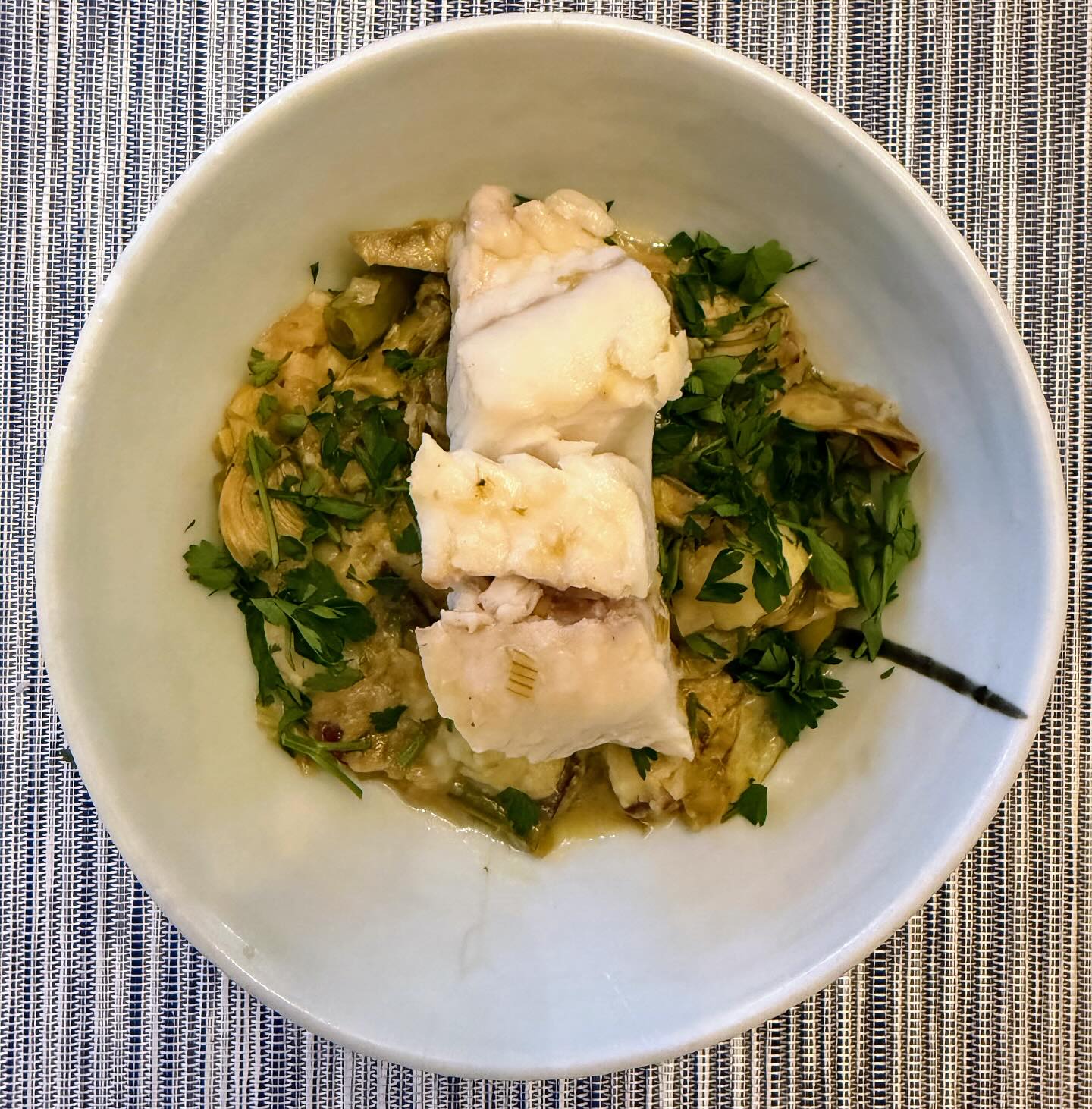
Spring Vegetable Vignole with White Beans
Artichokes gently braise until tender before the asparagus goes in, preserving its texture. White beans give the olive-oil broth enough body to support the fish without turning it into a heavy stew.
Ingredients
- 6 baby artichokes, about 1–1¼ lb total
- 2 tbsp lemon juice, divided, plus more to taste
- 3 tbsp extra-virgin olive oil
- 1 large leek, white and light-green parts thinly sliced and thoroughly washed
- 2 cloves garlic, thinly sliced
- ½ cup dry white wine
- 1½ cups gluten-free light vegetable stock, plus a little extra as needed
- 1 15-oz can cannellini beans, drained and rinsed
- ¾ lb asparagus, woody ends removed, stalks cut into 1½-inch lengths
- ½ cup loosely packed flat-leaf parsley, roughly chopped
- 1 tbsp fresh mint, thinly sliced
- ½ tsp finely grated lemon zest
- ½ tsp kosher salt, plus more to taste
- ¼ tsp freshly ground black pepper
Instructions
- Fill a bowl with cold water and add 1 tablespoon of the lemon juice. Pull the tough outer leaves from each artichoke until the remaining leaves are pale and tender. Cut off the upper third, trim and peel the stem and base, and halve or quarter lengthwise. Remove any fuzzy choke and place the trimmed pieces in the lemon water.
- Warm the olive oil in a wide, lidded saucepan over medium-low heat. Add the leek and salt; sweat for 5–7 minutes until soft without browning. Add the garlic and cook for 1 minute.
- Drain the artichokes and add them to the pan. Stir for 2 minutes, pour in the wine, and simmer uncovered for 2–3 minutes.
- Add the stock, cover, and simmer gently for 12–18 minutes, until a knife slides into the artichoke bases with only slight resistance.
- Fold in the beans and asparagus. Simmer partially covered for 4–6 minutes, until the asparagus is tender but still holds its shape and the beans are hot. Add a splash of stock if needed; the vegetables should sit in shallow broth rather than swim in it.
- Lightly crush a spoonful of beans against the side of the pan and stir them into the liquid to give it body. Fold in half the parsley, the mint, lemon zest, pepper, and the remaining tablespoon of lemon juice.
- Taste for salt and acidity. Reserve the remaining parsley for serving, and keep the stew warm over very low heat without continuing to boil.
Notes
- If using mature globe artichokes, use 3 large ones, trim down to the hearts and tender stems, remove the chokes, and cut into wedges. Allow extra braising time before adding the asparagus.
- The finished consistency should be glossy and lightly brothy, not thick like a bean purée.
Gently Poached Lingcod
A shallow, barely simmering poach keeps lean lingcod moist and preserves its large, delicate flakes. The mild cooking liquid lets the spring vegetables remain the main seasoning.
Ingredients
- 4 6-oz portions skinless lingcod fillet, pin bones removed
- ¾ cup gluten-free light vegetable stock
- 2 tbsp extra-virgin olive oil
- 2 strips lemon peel, without white pith
- ½ tsp kosher salt, adjusted for the saltiness of the stock
Instructions
- Pat the lingcod dry, check for bones, and season lightly with the salt. Fold any very thin tail ends under themselves to make the portions more even in thickness.
- Choose a skillet that holds the fish snugly in one layer. Add the stock, olive oil, and lemon peel, and bring just to a simmer.
- Lower the heat, add the fish, and cover. Keep the liquid barely trembling, never boiling vigorously. Cook for about 8–12 minutes for 1-inch-thick portions or 12–16 minutes for thicker pieces.
- Check the center of the thickest portion with an instant-read thermometer; cook to 145°F. The flesh should be opaque and separate into moist flakes under gentle pressure.
- Lift the fish out with a broad spatula and serve promptly. If desired, spoon a little of the poaching liquid into the stew, tasting first so the broth does not become too salty.
Notes
- Check thinner portions early and remove them individually as they finish; lingcod becomes dry if held at a simmer after it is cooked.
Overall Timing / Workflow
Start with the artichokes, then overlap the fish with the final vegetable cooking so both reach the bowl hot without overcooking.
Instructions
- 0:00 — Trim the artichokes into lemon water, wash and slice the leek, and prepare the remaining vegetables and herbs.
- 0:20 — Start sweating the leek, then add the garlic, artichokes, wine, and stock.
- 0:35 — Check the artichokes. When nearly tender, season the fish and start its shallow poach in a separate skillet.
- 0:40 — Add the beans and asparagus to the stew. Warm four shallow bowls.
- 0:45–0:55 — Finish the stew with lemon and herbs, check the fish temperature, and plate as soon as the fish is done.
Plating
A shallow bowl holds the small amount of broth while keeping the fish above the vegetables, where its delicate flakes remain intact.
Instructions
- Divide the stew among four warm shallow bowls, distributing the artichokes, asparagus, beans, and broth evenly.
- Lay a portion of lingcod lengthwise over each mound of vegetables. Handle gently and let any natural large flakes fall into place rather than breaking the fish apart.
- Scatter the reserved parsley around the fish and spoon a little broth over its surface. Serve immediately.
Leftover Path
Keeping the fish separate allows the vegetables to reheat fully without repeatedly cooking the delicate lingcod.
Instructions
- Refrigerate the fish and stew in separate airtight containers within 2 hours. Use within 2 days for best quality.
- Reheat the stew with a splash of water or stock until steaming throughout. Add the fish in large pieces, cover, and warm gently until it reaches 165°F, avoiding a hard boil.
- Alternatively, serve the leftover fish cold over the reheated vegetables with fresh parsley and a squeeze of lemon.
Notes
- The asparagus will soften on reheating, but the artichokes and beans make an excellent next-day soup base.