Porcini and Soft Scrambled Eggs with Garlicky Kale and Sauerkraut
Golden porcini and crisp-edged garlic sit over soft, buttery eggs, with garlicky kale tucked underneath. A little sauerkraut cuts through the richness and makes this a particularly good cold-weather brunch or simple supper.
By Jonathan Katzman · Cooked and photographed · Recipe updated
Serves: 4 servings
Tags: vegetarian, gluten-free, nut-free
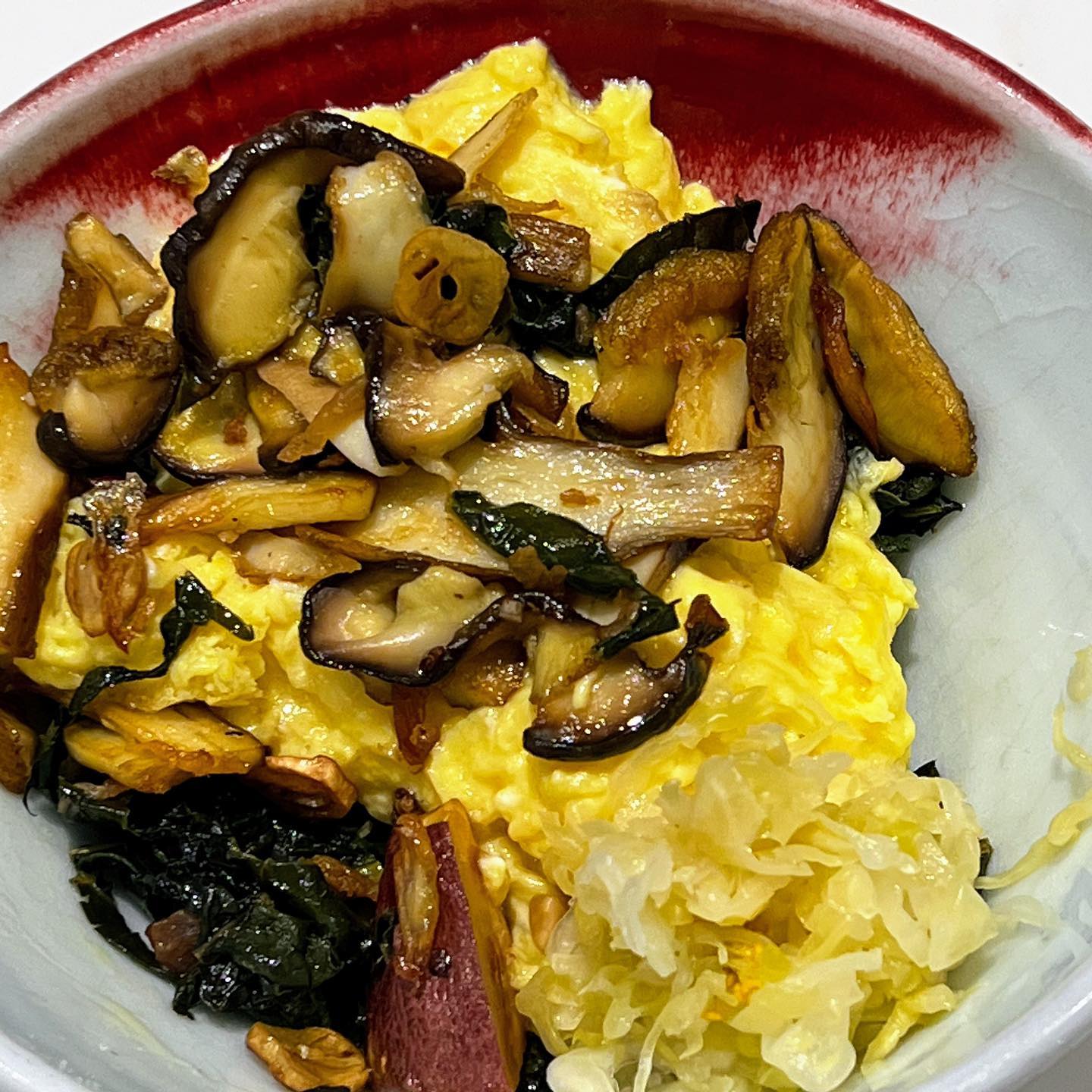
Golden Porcini with Sliced Garlic
Searing the mushrooms in uncrowded batches develops a golden crust without steaming them. Adding garlic toward the end keeps it sweet and crisp rather than bitter.
Ingredients
- 1¼ lb fresh porcini mushrooms
- 2 tbsp ghee, divided
- 4 cloves garlic, thinly sliced
- ½ tsp kosher salt, plus more to taste
- ¼ tsp freshly ground black pepper
Instructions
- Trim the porcini, brushing away dirt and wiping with a barely damp towel. Remove any soft or deteriorated sponge beneath the caps. Slice the caps and stems about ¼ inch thick.
- Heat a wide skillet over medium-high heat. Add 1 tablespoon ghee and half the mushrooms in a single layer. Leave undisturbed for 2–3 minutes, then turn and cook until golden and cooked through, another 3–5 minutes. Transfer to a plate.
- Repeat with the remaining ghee and mushrooms, reducing the heat if the pan begins to smoke.
- Return all the mushrooms to the skillet and lower the heat to medium-low. Add the garlic and toss gently for 2–3 minutes, until the slices are light gold and the mushrooms are tender throughout.
- Season with salt and pepper. Keep warm off the heat while finishing the eggs.
Notes
- Fresh porcini should smell pleasantly earthy and feel firm. Use only reliably identified edible mushrooms.
- If fresh porcini are unavailable, king trumpet mushrooms give a similar substantial bite; dried porcini alone will not reproduce this texture.
Garlicky Lacinato Kale
Tender, dark greens provide a savory foundation for the eggs without adding another rich element. A short covered steam softens the leaves while preserving some chew.
Ingredients
- 1 large bunch lacinato kale, about 10–12 ounces
- 1 tbsp ghee
- 1 clove garlic, thinly sliced
- 2 tbsp water, plus more as needed
- ¼ tsp kosher salt
Instructions
- Strip the tough stems from the kale. Wash the leaves and cut into wide ribbons.
- Heat the ghee in a skillet over medium heat. Add the garlic and stir for about 30 seconds, until fragrant but not browned.
- Add the kale, salt, and water. Toss, cover, and cook for 3–4 minutes.
- Uncover and cook for another 2–4 minutes, stirring occasionally, until tender and the excess water has evaporated. Add another splash of water if the leaves are still tough. Keep warm.
Soft Butter-Scrambled Eggs
Gentle heat and broad folding produce tender, generous curds that support the mushrooms. Butter adds richness without needing cream.
Ingredients
- 12 large eggs
- 2 tbsp unsalted butter
- ½ tsp kosher salt
- to taste freshly ground black pepper
Instructions
- Whisk the eggs with the salt until the whites and yolks are completely combined.
- Melt the butter in a large nonstick skillet over medium-low heat without browning it. Add the eggs.
- Let a thin layer begin to set, then use a silicone spatula to draw broad folds across the pan. Continue slowly folding, pausing between strokes to allow soft curds to form.
- Remove from the heat when the eggs are softly set and glossy, with no loose liquid pooling in the pan. Transfer promptly to warm plates so carryover heat does not dry them out. Finish with pepper.
Notes
- For diners at higher risk of foodborne illness, use pasteurized eggs for a soft scramble or cook the eggs to 160°F.
Sauerkraut Garnish
Cool, tangy cabbage balances the buttery eggs and earthy mushrooms while adding a crisp contrast.
Ingredients
- 1 cup plain sauerkraut, lightly drained
Instructions
- Drain away excess brine without squeezing the cabbage dry.
- Let stand at room temperature while cooking the other components, then serve in small mounds beside the eggs.
Notes
- If the sauerkraut is especially sharp or salty, use a smaller portion rather than letting its brine flood the eggs.
Overall Timing / Workflow
Mushrooms and greens can wait briefly; scrambled eggs cannot. Cooking the eggs last keeps the entire plate warm without sacrificing their texture.
Instructions
- 0:00 — Clean and slice the mushrooms, prepare the kale and garlic, and drain the sauerkraut.
- 0:15 — Begin searing the mushrooms in batches.
- 0:22 — Cook the kale in a second skillet while the mushrooms finish.
- 0:30 — Keep the mushrooms and kale warm, warm four plates, and whisk the eggs.
- 0:32 — Scramble the eggs gently, then plate everything immediately.
Plating
Layering the warm components keeps the porcini prominent, while placing the sauerkraut alongside preserves its crunch and keeps the eggs from becoming watery.
Instructions
- Divide the kale among four warm shallow bowls or plates, leaving some visible around the edges.
- Spoon the scrambled eggs over and beside the greens.
- Distribute the porcini and golden garlic over the eggs, including any small amount of buttery mushroom juices.
- Place a small mound of sauerkraut to one side and serve immediately.
Leftover Path
Storing the cabbage separately preserves its texture, and gentle reheating prevents the mushrooms and eggs from becoming tough.
Instructions
- Refrigerate the cooked mushrooms, greens, and eggs within 2 hours, keeping the sauerkraut in its own container. Use cooked leftovers within 3–4 days.
- Reheat mushrooms and kale in a covered skillet with a splash of water until hot. For the best texture, make fresh eggs to serve with them.
- If reheating leftover eggs, use low heat and warm to 165°F; expect firmer curds. Add the sauerkraut only after reheating.