Pork Chop with Rhubarb Compote, Pumpkin-Bushi Parsnips and Fava Greens
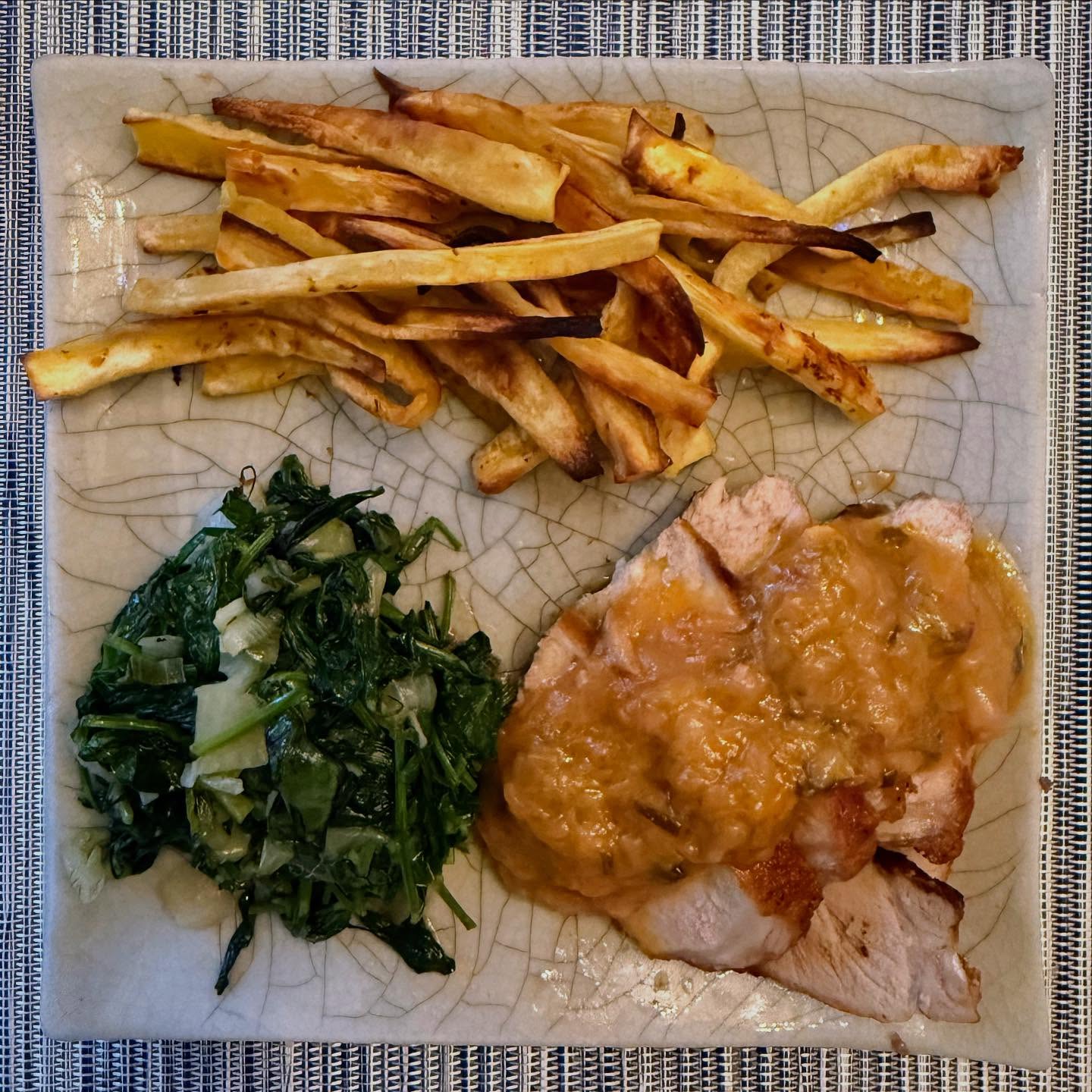
Juicy sliced pork gets a generous spoonful of tart rhubarb compote, with just enough sweetness to round out the fruit. Deeply roasted parsnips carry a savory finish of pumpkin bushi, while fava greens and tender spring onions bring the plate firmly into spring.
By Jonathan Katzman · Cooked and photographed · Recipe updated
Serves: 4 servings
Tags: gluten-free, nut-free
Pan-Roasted Pork Chops
A hard sear develops a savory crust, while a brief oven finish cooks thick chops evenly. Resting before slicing keeps the meat juicy beneath the tart compote.
Ingredients
- 4 boneless pork loin chops, 1¼–1½ inches thick, about 8 ounces each
- 1½ tsp fine sea salt
- ½ tsp freshly ground black pepper
- 1½ tbsp ghee
Instructions
- Salt the chops on all sides and refrigerate uncovered for at least 30 minutes or up to overnight. Pat thoroughly dry and season with pepper before cooking.
- Heat the oven to 425°F. Heat a large ovenproof skillet over medium-high heat, then add the ghee.
- Sear the chops for 2–3 minutes per broad side until well browned, working in batches if necessary. Hold the fatty edges against the pan briefly to render and brown them.
- Transfer the skillet to the oven and cook for about 5–10 minutes, checking early with an instant-read thermometer. Cook until the center reaches 145°F.
- Rest on a warm plate for 5–8 minutes, then slice across the grain into ½-inch-thick pieces. Reserve any resting juices for the compote.
Notes
- Thickness matters more than weight; thinner chops may finish entirely on the stovetop.
- If cooking in batches, sear all the chops first, then finish them together on a rimmed baking sheet.
Savory Rhubarb Compote
Rhubarb supplies the acidity that a rich pork chop needs. Shallot and a restrained amount of honey make it savory and rounded rather than jammy.
Ingredients
- 12 oz rhubarb stalks, leaves discarded, cut into ½-inch pieces
- 1 small shallot, finely diced
- 1 tbsp olive oil
- 1½ tbsp honey
- ⅓ cup water, plus more as needed
- 1 tsp apple cider vinegar, plus more to taste
- ¼ tsp fine sea salt, plus more to taste
- to taste freshly ground black pepper
Instructions
- Warm the olive oil in a small saucepan over medium-low heat. Add the shallot and cook for 3–4 minutes until translucent without browning.
- Add the rhubarb, honey, water and salt. Bring to a gentle simmer, cover partially and cook for 8–12 minutes, stirring occasionally, until the rhubarb collapses.
- Uncover and simmer for another 2–4 minutes if needed. Stir and lightly crush the fruit to make a thick, softly textured compote that falls readily from a spoon.
- Stir in the vinegar and pepper. Taste before adding more honey or vinegar; retain a clear tart edge. Add a splash of water if it becomes stiff.
- Keep warm over very low heat. Just before serving, stir in the pork's resting juices and adjust the salt.
Notes
- Rhubarb varies considerably in acidity and color. Adjust sweetness in small increments rather than trying to make it taste like a dessert preserve.
Roasted Parsnips with Pumpkin Bushi
Long batons develop caramelized edges while retaining soft centers. Pumpkin bushi adds a concentrated savory finish without obscuring the parsnips' sweetness.
Ingredients
- 1½ lb parsnips, peeled
- 2 tbsp olive oil
- ½ tsp fine sea salt, plus more to taste
- ¼ tsp freshly ground black pepper
- 2 tbsp loosely packed, finely shaved pumpkin bushi, verified gluten-free, or to taste
Instructions
- Heat the oven to 425°F. Cut the parsnips lengthwise into long batons roughly ½ inch thick at their widest point. Cut out any tough, woody cores.
- Toss with olive oil, salt and pepper. Spread in a single layer on a large rimmed baking sheet, leaving space between pieces.
- Roast for 30–40 minutes, turning after about 20 minutes, until tender through the center with deeply golden edges. Remove thin pieces early if they darken faster.
- Transfer to a warm serving dish and scatter with pumpkin bushi while hot. Taste before adding more salt.
Notes
- Use prepared pumpkin bushi from a specialty producer; it is a cured, dried seasoning, not ordinary pumpkin flakes. If supplied as a hard piece, shave or finely grate it just before serving.
- Start with less if your pumpkin bushi is particularly salty or concentrated.
Fava Greens with Spring Onions
Sweet, softened spring onions balance the green, slightly earthy flavor of fava leaves. A short sauté and a little lemon keep the side lively beside the pork and roasted roots.
Ingredients
- 12 oz tender fava leaves and shoot tips, tough stems discarded
- 3 spring onions, bulbs and tender greens sliced
- 1½ tbsp ghee
- 2 tbsp water, as needed
- 1 tsp fresh lemon juice, plus more to taste
- ¼ tsp fine sea salt, plus more to taste
- to taste freshly ground black pepper
Instructions
- Wash the fava greens thoroughly and drain. Cut longer tender stems into bite-size lengths; keep the leaves whole.
- Heat the ghee in a wide skillet over medium heat. Add the spring onion bulbs and salt, and cook for 3–4 minutes until softened without much browning.
- Add the fava greens in batches, turning as they wilt. Add the spring onion greens and a splash of water if the pan is dry.
- Cover for 1–2 minutes to soften the stems, then uncover and toss until the leaves are tender and excess moisture has evaporated, about 2–3 minutes more.
- Remove from the heat and season with lemon juice, pepper and additional salt as needed.
Notes
- Use young, tender fava greens rather than mature fibrous stems.
- People with G6PD deficiency should avoid fava plants; use spinach in their portion instead.
Overall Timing / Workflow
The parsnips take the longest and share the pork's oven temperature. Making the compote ahead leaves only the quick-cooking greens for the final minutes.
Instructions
- At least 30 minutes before cooking, salt the pork. Heat the oven to 425°F and prepare the parsnips, rhubarb and greens.
- 0:00 — Put the parsnips in the oven and start the rhubarb compote.
- 0:20 — Turn the parsnips. Finish the compote and hold it warm.
- 0:22 — Sear the pork, then transfer it to the oven to finish. Check the parsnips and remove them when browned and tender.
- 0:35 — Rest the cooked pork and sauté the fava greens with spring onions. Toss the hot parsnips with pumpkin bushi.
- 0:43 — Stir the resting juices into the compote, slice the pork and plate.
Notes
- The timeline is approximate; use the pork's internal temperature and the parsnips' tenderness rather than the clock.
Plating
Separate piles preserve the roasted parsnips' texture and keep the compote focused on the pork.
Instructions
- Arrange the sliced pork in a slightly overlapping fan on each warm plate.
- Spoon a generous ribbon of warm rhubarb compote over the pork, leaving some browned edges visible.
- Pile the roasted parsnips alongside and place the fava greens with spring onions in a separate compact mound. Serve immediately.
Leftover Path
Storing the components separately allows gentle reheating for the pork and greens while the parsnips regain their roasted edges.
Instructions
- Refrigerate the components separately in covered containers within 2 hours. Use within 3–4 days.
- Reheat parsnips on a baking sheet at 400°F for 8–12 minutes. Warm the greens in a covered pan with a splash of water.
- For hot leftovers, warm the pork covered with a little water and compote until it reaches 165°F; avoid prolonged cooking. Alternatively, serve thinly sliced pork cold with the compote alongside.
- Use remaining compote as a tart accompaniment to another roast or spoon it over reheated parsnips and greens.