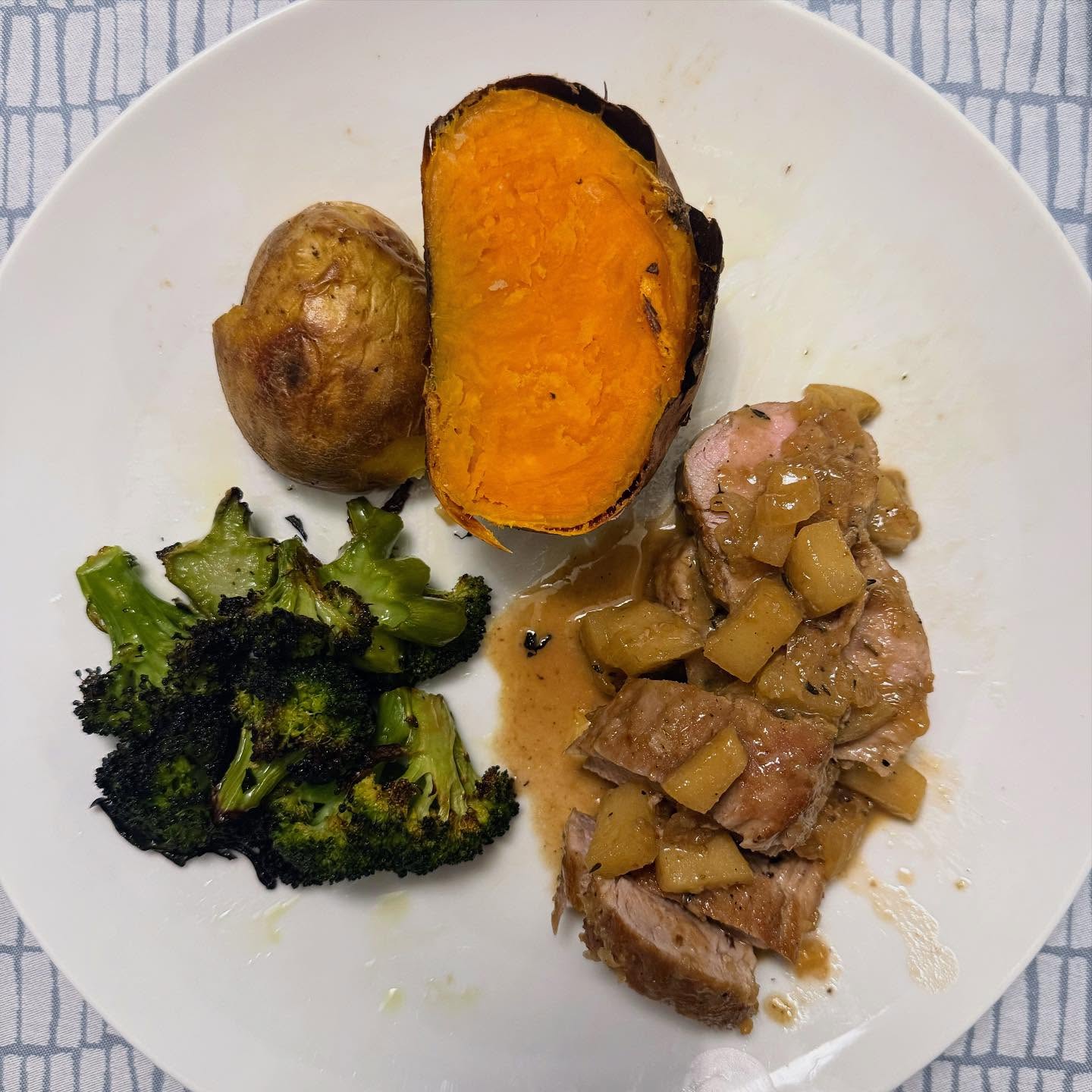
Pork Tenderloin with Apple Pan Sauce, Roasted Broccoli, and White and Sweet Potatoes
Juicy pork tenderloin gets a savory apple pan sauce with soft fruit, thyme, and a little cider-vinegar brightness. Deeply browned broccoli and simply roasted white and sweet potatoes make this an easy early-fall family dinner, with plenty of sauce for the plate.
By Jonathan Katzman · Cooked and photographed · Recipe updated
Serves: 4 servings
Tags: gluten-free, nut-free
Seared and Roasted Pork Tenderloin
A quick sear builds a browned crust and flavorful pan drippings; a short oven finish keeps the lean center juicy.
Ingredients
- 2 lb pork tenderloin, preferably 2 similarly sized tenderloins
- 1 tbsp ghee
- 1½ tsp Diamond Crystal kosher salt, or about half as much fine salt
- ½ tsp freshly ground black pepper
Instructions
- Heat the oven to 425°F. Trim the pork's silver skin, pat thoroughly dry, and season with salt and pepper. Fold any very thin tail underneath and secure with kitchen twine for even cooking.
- Heat ghee in a large ovenproof skillet over medium-high heat. Sear the tenderloins, turning to brown all sides, for 6–8 minutes total. Work in batches if needed to avoid crowding.
- Transfer the skillet to the oven and roast for approximately 10–16 minutes, checking early with an instant-read thermometer. Cook until the thickest part reaches 145°F.
- Transfer the pork to a board and rest for 8 minutes, loosely tented. Reserve the skillet and its browned drippings for the apple sauce; use an oven mitt on the hot handle.
- Slice across the grain into ½- to ¾-inch-thick medallions just before serving. Add any accumulated resting juices to the sauce.
Notes
- Use temperature rather than interior color to judge doneness; pork cooked to 145°F with at least a 3-minute rest can remain slightly pink.
Apple–Thyme Pan Sauce
Apple softens in the pork drippings while reduced stock provides savory depth. Cider vinegar keeps the fruit from making the sauce taste sweet or heavy.
Ingredients
- 2 medium firm sweet-tart apples, such as Honeycrisp or Braeburn
- 1 small shallot, finely diced
- 1 tbsp ghee
- 1 tsp fresh thyme leaves
- 1 cup gluten-free low-sodium chicken stock
- 2 tsp apple cider vinegar, plus more to taste
- to taste kosher salt and freshly ground black pepper
Instructions
- Peel and core the apples, then cut into ½-inch dice.
- After removing the pork, pour off excess fat from its skillet, leaving the browned drippings. If any patches are black rather than brown, wipe those out.
- Set the skillet over medium heat and add the ghee, apples, and shallot. Cook for 5–7 minutes, stirring occasionally, until the shallot is soft and the apples are beginning to turn golden.
- Add the thyme, stock, and cider vinegar. Scrape up the browned bits and simmer for 5–8 minutes, until the apples are tender but hold their shape and the liquid lightly coats a spoon.
- Stir in the pork's resting juices. Taste for salt, pepper, and acidity, then spoon over the sliced pork.
Notes
- If the sauce reduces before the apples soften, add a splash of water and continue simmering. If it is too thin, briefly lift out the apples and reduce the liquid further.
Deeply Roasted Broccoli
Dry florets and generous spacing produce crisp, browned edges while leaving the stems tender. A restrained squeeze of lemon lifts the roasted flavor.
Ingredients
- 1½ lb broccoli
- 2 tbsp olive oil
- ¾ tsp Diamond Crystal kosher salt
- ¼ tsp freshly ground black pepper
- 1–2 tsp fresh lemon juice
Instructions
- Cut the broccoli into generous florets, splitting thick pieces to create flat surfaces. Peel the tough exterior from the stems and cut the tender centers into ½-inch-thick pieces. Dry thoroughly.
- Toss with olive oil, salt, and pepper. Spread on a large rimmed sheet pan in one uncrowded layer, with flat surfaces against the metal.
- Roast at 425°F for 20–25 minutes, turning once after about 15 minutes, until the edges are deeply browned and the stems are just tender.
- Finish with lemon juice immediately before serving.
Notes
- Use a second pan if needed; crowded broccoli steams instead of browning.
Roasted Whole White and Sweet Potatoes
Roasting in their skins keeps the interiors moist and concentrates their flavor. The white potatoes become fluffy while the sweet potatoes turn soft and richly sweet.
Ingredients
- 4 small white potatoes, about 5–6 oz each
- 2 medium orange-fleshed sweet potatoes, about 10–12 oz each
- 1 tbsp olive oil
- ¾ tsp Diamond Crystal kosher salt
Instructions
- Scrub the potatoes and dry well. Prick each several times with a fork, rub lightly with olive oil, and sprinkle with salt.
- Arrange on a rimmed sheet pan and roast at 425°F. Begin checking the white potatoes after 45 minutes and the sweet potatoes after 50 minutes; larger ones may need up to 70 minutes.
- Remove each potato when a thin knife slides easily into its center. The skins should look browned and lightly blistered, and the sweet potatoes should yield readily when gently squeezed with an oven mitt.
- Split the sweet potatoes lengthwise into four halves. Serve one white potato and half a sweet potato per person, opening the white potatoes slightly to release steam.
Notes
- Choose relatively small white potatoes and medium sweet potatoes so they finish in roughly the same window. Leave finished potatoes uncovered to preserve their skins.
Overall Timing / Workflow
The potatoes take the longest and can wait briefly, leaving the final stretch for the pork, broccoli, and pan sauce.
Instructions
- 0:00 — Heat the oven to 425°F. Scrub, season, and start roasting the potatoes.
- 0:10 — Trim and season the pork. Cut and dry the broccoli, then prepare the apples, shallot, and thyme.
- 0:35 — Check the potatoes' progress. Begin searing the pork when the potatoes appear to have roughly 25–30 minutes remaining.
- 0:45 — Put the seared pork and broccoli in the oven on separate racks, allowing room for air circulation. Check the pork early and remove it as soon as it reaches 145°F.
- While the pork rests, make the apple sauce in its skillet. Turn and finish the broccoli, and remove the potatoes individually as they become tender.
- Slice the pork, add its resting juices to the sauce, and plate everything while hot.
Notes
- If oven space is tight, finish the potatoes first and hold them loosely covered while the pork and broccoli cook.
Plating
Keeping the vegetables beside the sauced pork preserves their roasted textures and makes a generous, straightforward family plate.
Instructions
- Arrange several overlapping pork medallions along one side of each warmed plate.
- Spoon the apple pieces and pan sauce over and around the pork.
- Add a mound of roasted broccoli alongside one white potato and half a sweet potato, cut side up.
- Keep most of the sauce off the broccoli so its browned edges stay crisp.
Leftover Path
Gentle reheating protects the lean pork, while a hot oven restores some texture to the vegetables and potatoes.
Instructions
- Refrigerate leftovers within 2 hours in shallow, airtight containers. Store the pork with its sauce and keep the roasted vegetables separate; use within 3–4 days.
- Reheat covered pork and sauce over low heat with a splash of water or stock until the pork reaches 165°F. Avoid a hard boil.
- Halve or quarter the leftover potatoes and reheat with the broccoli on a sheet pan at 400°F, removing the broccoli as soon as hot and letting the potatoes continue until their edges crisp.
- Alternatively, serve thinly sliced leftover pork cold with diced apple and roasted potatoes in a simple lemon-and-olive-oil-dressed salad.