Ginger-Scallion Scrambled Eggs with Kabocha, Braised Greens, Chili-Crunch Avocado and Kimchi
Soft ginger-scallion eggs meet sweet, tender kabocha and savory winter greens in this substantial breakfast bowl. Chili-crunch avocado adds richness and crisp heat, while cold kimchi keeps every bite bright.
By Jonathan Katzman · Cooked and photographed · Recipe updated
Serves: 4 servings
Tags: dairy-free
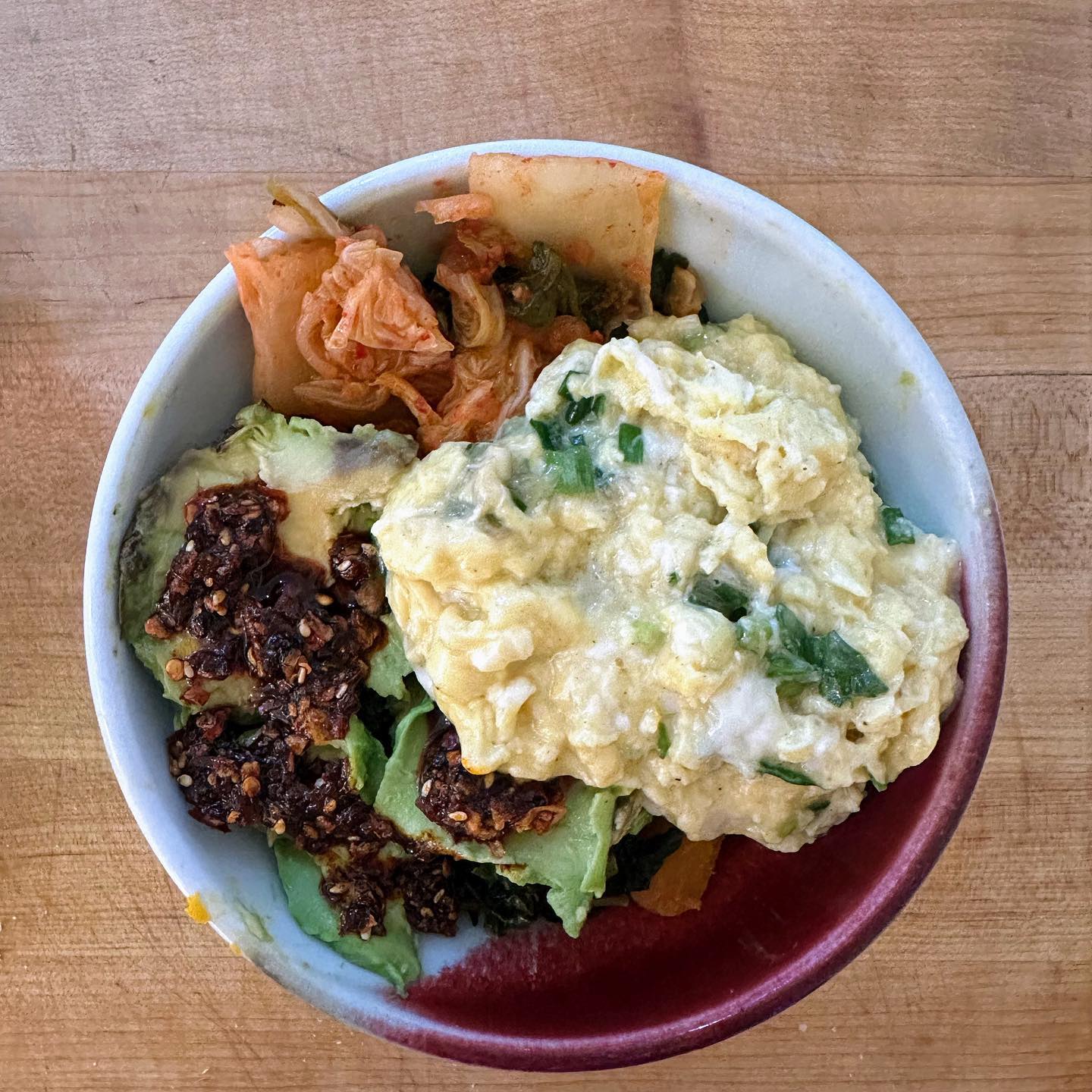
Beef-Fat Scrambled Eggs with Ginger Scallion Sauce
Beef fat gives the eggs savory depth, while gentle cooking keeps the curds soft. Adding the ginger scallion sauce near the end preserves its aromatic bite.
Ingredients
- 12 large eggs
- 1 1/2 tablespoons rendered beef fat
- 3 tablespoons Momofuku ginger scallion sauce
- to taste kosher salt
Instructions
- Beat the eggs until the whites and yolks are mostly combined, leaving a few streaks if desired.
- Melt the beef fat in a large nonstick skillet over medium-low heat. Add the eggs and let a thin layer just begin to set.
- Use a flexible spatula to draw broad folds from the edges toward the center, tilting the pan so uncooked egg flows into the gaps. Continue gently folding without browning the eggs.
- When the eggs are mostly set but still glossy, fold in the ginger scallion sauce. Remove from the heat when no liquid egg remains but the curds are still moist. Taste before adding salt and serve immediately.
Notes
- If your skillet is small, cook in two batches so the eggs form broad, tender curds rather than steaming in a deep layer.
- For diners at higher risk of foodborne illness, use pasteurized eggs and cook to 160°F.
Gently Simmered Kabocha
A shallow, restrained simmer seasons the squash without obscuring its sweetness. Leaving the skin on helps the pieces hold together.
Ingredients
- 1 1/2 lb kabocha squash, seeds removed, cut into 1 1/2-inch pieces
- 1 1/2 cups water
- 1 tablespoon gluten-free tamari
- 3 thin slices fresh ginger
Instructions
- Arrange the squash skin-side down in a snug saucepan or deep skillet. Add the water, tamari and ginger; the liquid should reach roughly halfway up the squash.
- Bring to a gentle simmer, cover and cook over low heat for 15–20 minutes, until a skewer slides easily through the flesh and skin.
- Uncover for the final few minutes if there is excess liquid. Lift the pieces out carefully and discard the ginger; do not stir vigorously or the squash will break apart.
Notes
- Keep the simmer gentle and stop while the pieces still hold their shape. Add a splash of water if the pan becomes dry before the squash is tender.
Ginger-Braised Winter Greens
Tender, slightly bitter greens balance the squash and avocado. A small splash of rice vinegar lifts the braise without competing with the kimchi.
Ingredients
- 2 bunches lacinato kale, about 1 lb, tough stems removed and leaves roughly chopped
- 1 tablespoon avocado oil
- 2 teaspoons finely grated fresh ginger
- 1/2 cup water
- 2 teaspoons gluten-free tamari
- 1 teaspoon unseasoned rice vinegar
Instructions
- Heat the avocado oil in a wide saucepan over medium heat. Add the ginger and stir for about 20 seconds, just until fragrant.
- Add the kale in handfuls, turning until slightly wilted. Add the water and tamari, cover and reduce the heat to medium-low.
- Braise for 10–12 minutes, turning once or twice, until the leaves are tender but not mushy.
- Uncover and let excess liquid evaporate. Stir in the rice vinegar and keep warm.
Notes
- Chard also works; cook its chopped stems first and reduce the covered cooking time for the leaves to about 5–7 minutes.
Avocado with Chili Crunch
Creamy avocado carries the chile oil, while the crunchy solids add contrast to the soft eggs and squash.
Ingredients
- 2 large ripe avocados
- 4 teaspoons Momofuku chili crunch, plus more to taste
Instructions
- Halve and pit the avocados. Scoop the flesh into large pieces or cut into thick slices.
- Divide among the bowls just before serving.
- Stir the chili crunch to redistribute its solids, then spoon over the avocado, including both crisp bits and a little oil.
Notes
- Start with 1 teaspoon of chili crunch per bowl and offer more at the table.
Kimchi
Cold, tangy kimchi cuts through the richness of the beef-fat eggs and avocado.
Ingredients
- 1 cup Volcano Kimchi napa cabbage kimchi
Instructions
- Cut any long cabbage pieces into easy-to-eat lengths.
- Lift the kimchi from its brine and portion beside the warm components, keeping a little juice clinging to the leaves.
Overall Timing / Workflow
The squash and greens can hold briefly, allowing the eggs to be cooked last and served at their softest.
Instructions
- 0:00 — Cut the kabocha and start its simmer.
- 0:10 — Wash and chop the greens, then begin their braise.
- 0:20 — Portion the kimchi and beat the eggs. Check the squash and greens; keep them warm once tender.
- 0:25 — Cut the avocado and begin scrambling the eggs.
- 0:30–0:35 — Assemble the bowls, spoon chili crunch over the avocado and serve immediately.
Plating
A vegetable base supports the eggs while separate pockets of avocado and kimchi keep the contrasts distinct.
Instructions
- Divide the warm greens and drained kabocha among four shallow bowls.
- Nestle the avocado along one side and the kimchi along another.
- Spoon the soft scrambled eggs over the center, leaving some vegetables visible. Finish the avocado with chili crunch and serve.
Leftover Path
Keeping the warm vegetables separate from the cold accompaniments preserves their textures and makes another breakfast easy.
Instructions
- Refrigerate cooked eggs, squash and greens in separate airtight containers within 2 hours. Use within 3–4 days; keep kimchi refrigerated according to its label.
- Reheat squash and greens covered with a splash of water until steaming. Reheat leftover eggs gently until they reach 165°F, recognizing that the curds will become firmer.
- For the best texture, make fresh scrambled eggs to accompany leftover vegetables. Cut fresh avocado and add chili crunch and cold kimchi just before serving.
Notes
- If storing a cut avocado, press food-safe wrap directly against its surface and refrigerate; use the next day.