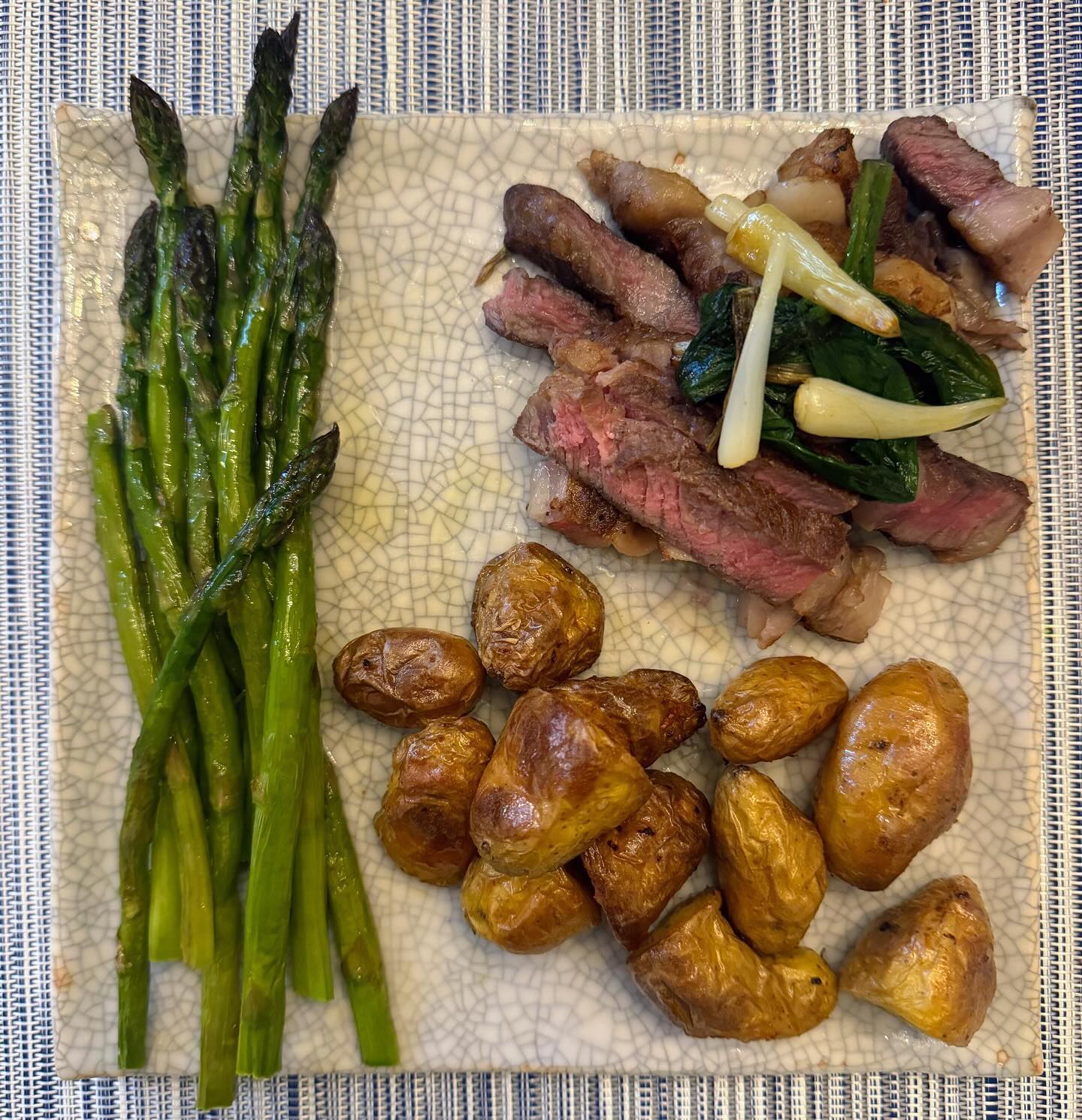
Rib Eye with Ramps and Beef Garum Jus, Beef-Fat Fingerlings, and Roasted Asparagus with Koji Sauce
Thick slices of rib eye get a savory beef-garum jus and a tangle of sweet, wilted ramps. Beef-fat fingerlings bring crisp edges, while roasted asparagus and a light barley-koji, shoyu, and mushroom-garum sauce keep this spring Shabbat dinner green and deeply savory.
By Jonathan Katzman · Cooked and photographed · Recipe updated
Serves: 4 servings
Tags: nut-free
Pan-Seared Rib Eye
A hard sear gives the rib eye a browned crust, while a thermometer-controlled finish keeps the center pink. Resting supplies flavorful juices for the sauce.
Ingredients
- 2 boneless rib eye steaks, about 1 lb each and 1½ inches thick
- 2 tsp Diamond Crystal kosher salt, or an equivalent amount by weight
- 1 tbsp ghee
- ½ tsp freshly ground black pepper
Instructions
- Salt the steaks evenly and refrigerate uncovered for at least 45 minutes or overnight. Pat thoroughly dry before cooking.
- Heat the oven to 425°F. Heat a large ovenproof skillet over medium-high heat, then add the ghee.
- Sear the steaks without crowding, working in batches if necessary, for 2–3 minutes per side until deeply browned. Hold the fatty edges against the pan for 30–60 seconds to render them.
- Transfer the skillet to the oven and cook until the centers reach 125–128°F for a medium-rare finish after resting, checking after 4 minutes; thickness and starting temperature will determine the remaining time.
- Transfer to a board, season with pepper, and rest for 10 minutes. Reserve the skillet and any resting juices for the jus. Slice across the grain into thick pieces just before serving.
Notes
- Medium-rare is the reconstruction shown here. For USDA guidance, cook whole beef steaks to 145°F and rest at least 3 minutes.
- If the skillet has blackened rather than brown fond, wipe away the burnt areas before making the jus.
Sautéed Ramps
Cooking the bulbs before the leaves gives lightly caramelized allium sweetness without overcooking the delicate greens.
Ingredients
- 1 bunch ramps, about 4 oz
- 2 tsp ghee
- 1 tbsp water
- 1 tsp lemon juice
- to taste kosher salt
Instructions
- Wash the ramps carefully, trim the roots, and dry well. Separate the bulbs and stems from the leaves; halve any thick bulbs lengthwise.
- Heat the ghee in a skillet over medium heat. Add the bulbs and stems with a small pinch of salt and cook for 2–3 minutes, turning until lightly golden.
- Add the water, cover briefly, and cook until the bulbs are just tender, about 1 minute.
- Add the leaves and toss for 30–60 seconds, just until wilted and glossy. Finish with lemon juice and keep warm.
Notes
- If ramps are unavailable, use slender spring onions with a little green garlic, cooking the bulbs before the greens.
Beef Garum Jus
Reduced stock and steak fond provide body, while beef garum supplies concentrated savory depth. A small splash of vinegar prevents the sauce from tasting heavy.
Ingredients
- 1 cup unsalted beef stock, preferably gelatin-rich
- 1–2 tsp beef garum
- ½–1 tsp red wine vinegar
- reserved steak resting juices
Instructions
- Pour excess fat from the steak skillet, leaving the browned fond and roughly 1 teaspoon of fat. Set over medium heat.
- Add the stock and scrape up the fond. Simmer until reduced to about ⅓ cup and lightly glossy, 6–9 minutes.
- Add the steak resting juices and 1 teaspoon beef garum. Simmer briefly, then taste before adding more garum.
- Add vinegar a little at a time until the jus tastes rounded and lively. Keep warm without reducing further.
Notes
- Garum salinity varies; season with it only after reducing the stock.
- If the jus becomes too salty or concentrated, loosen it with water rather than more stock.
Beef-Fat Roasted Fingerling Potatoes
Beef fat reinforces the flavor of the steak, while a hot tray and uncrowded roasting give the potatoes browned surfaces and creamy centers.
Ingredients
- 1½ lb fingerling potatoes, scrubbed and thoroughly dried
- 3 tbsp rendered beef fat
- 1 tsp Diamond Crystal kosher salt, plus more to taste
- ¼ tsp freshly ground black pepper
Instructions
- Heat the oven to 425°F with a heavy rimmed sheet pan inside.
- Leave very small potatoes whole and cut larger ones into roughly 1½-inch pieces. Warm the beef fat just until liquid and toss with the potatoes, salt, and pepper.
- Carefully spread the potatoes on the hot tray, placing cut surfaces down and leaving space between them.
- Roast for 40–50 minutes, turning after about 25 minutes, until deeply golden, lightly wrinkled, and completely tender when pierced.
- Taste and adjust the salt. Hold uncovered so the surfaces stay crisp.
Roasted Asparagus
A short, hot roast produces browned tips while keeping the stalks bright and juicy. The fermented sauce is added afterward so it does not scorch.
Ingredients
- 1½ lb medium-thick asparagus
- 1 tbsp olive oil
- 1 small pinch kosher salt
Instructions
- Trim the woody ends from the asparagus. Peel the lower third of especially thick stalks.
- Toss with olive oil and a small pinch of salt, then spread in a single layer on a separate sheet pan.
- Roast at 425°F for 10–14 minutes, turning once, until the tips are browned and the stalks are just tender.
- Transfer to a warm platter and lightly coat with the barley-koji sauce immediately before serving.
Notes
- Keep the initial salt light because the shoyu and garum sauce supplies most of the seasoning.
Barley-Koji, Nordic Shoyu, and Mushroom Garum Sauce
Cooked barley koji gives the sauce a gently sweet, rounded base. Shoyu and mushroom garum deepen the asparagus flavor, balanced by a little vinegar and olive oil.
Ingredients
- 2 tbsp barley koji
- ¾ cup water, plus more as needed
- 2 tsp Nordic shoyu
- 1 tsp mushroom garum
- 1–2 tsp unseasoned rice vinegar
- 1 tbsp olive oil
Instructions
- Combine the barley koji and water in a small saucepan and soak for 20 minutes.
- Bring to a gentle simmer, cover partially, and cook for 15–20 minutes, until the grains are soft. Add water as needed to keep them submerged.
- Blend thoroughly, then press through a fine sieve, discarding any coarse solids. Aim for about ⅓ cup of smooth, lightly thickened liquid, adding water if needed.
- Whisk in the Nordic shoyu, mushroom garum, 1 teaspoon rice vinegar, and olive oil.
- Taste and add the remaining vinegar if needed. The sauce should be pourable and savory, not thick or aggressively salty; thin with warm water as necessary.
Notes
- Use a small blender jar for this quantity, or double the sauce for easier blending.
- Barley koji contains gluten; retain it for this version rather than treating the sauce as gluten-free.
Overall Timing / Workflow
The potatoes set the pace. Making the asparagus sauce ahead leaves only the steak, ramps, and quick jus to manage near serving.
Instructions
- At least 45 minutes ahead, salt the steaks; overnight is also suitable.
- 0:00 — Heat the oven and potato tray to 425°F. Start soaking the barley koji, then prepare the potatoes.
- 0:10 — Put the potatoes in the oven. Wash the ramps, trim the asparagus, and measure both sauces' ingredients.
- 0:20 — Simmer, blend, and finish the barley-koji sauce. Keep warm over very low heat.
- 0:35 — Pat the steaks dry and begin searing. Finish in the oven as needed, monitoring their temperature.
- 0:45–0:50 — Rest the steaks and roast the asparagus. Make the jus in the steak skillet and sauté the ramps in a second pan.
- 0:55–1:05 — Check that the potatoes are tender and crisp. Slice the steaks, finish the asparagus with sauce, and plate everything hot.
Notes
- Use the steak temperature and the potatoes' tenderness rather than the clock to determine the final serving time.
Plating
Keeping the three main elements distinct preserves crisp potatoes and lets the two savory sauces complement rather than muddle each other.
Instructions
- Arrange the asparagus in a loose parallel bundle along one side of each warm plate and spoon a little koji sauce over the stalks.
- Fan thick slices of rib eye on the opposite side. Spoon the beef-garum jus around and lightly over the meat.
- Pile the wilted ramp leaves and golden bulbs on the steak.
- Add the fingerlings in a separate cluster, keeping them out of pooled sauce so their browned surfaces stay crisp.
Leftover Path
Separate storage protects texture and allows gentle reheating of the steak without sacrificing the potatoes' crispness.
Instructions
- Refrigerate leftovers within 2 hours in separate airtight containers. Use the steak, vegetables, and sauces within 3–4 days.
- Recrisp potatoes in a 425°F oven for 10–15 minutes.
- For reheated steak, warm it gently in a covered skillet with a splash of water and a little jus; for conservative leftover safety, heat to 165°F, recognizing that this will cook the meat beyond its original doneness.
- Alternatively, serve the steak cold and thinly sliced with chopped asparagus and ramps, using a little reserved koji sauce as a dressing.
- Warm the sauces separately, thinning with water as needed.