Rice-Crusted Trout with Garum Brown Butter and Winter Citrus, plus Coconut-Almond Noodle Soup with Duck Confit
A fine rice crust gives trout a delicate crunch against nutty garum brown butter, juicy mandarins and sweet roasted kabocha. Cashews and cilantro keep the plate lively, while a small bowl of coconut-almond rice noodles with duck confit and dark, savory XO sauce makes this a generous winter supper.
By Jonathan Katzman · Cooked and photographed · Recipe updated
Serves: 4 servings
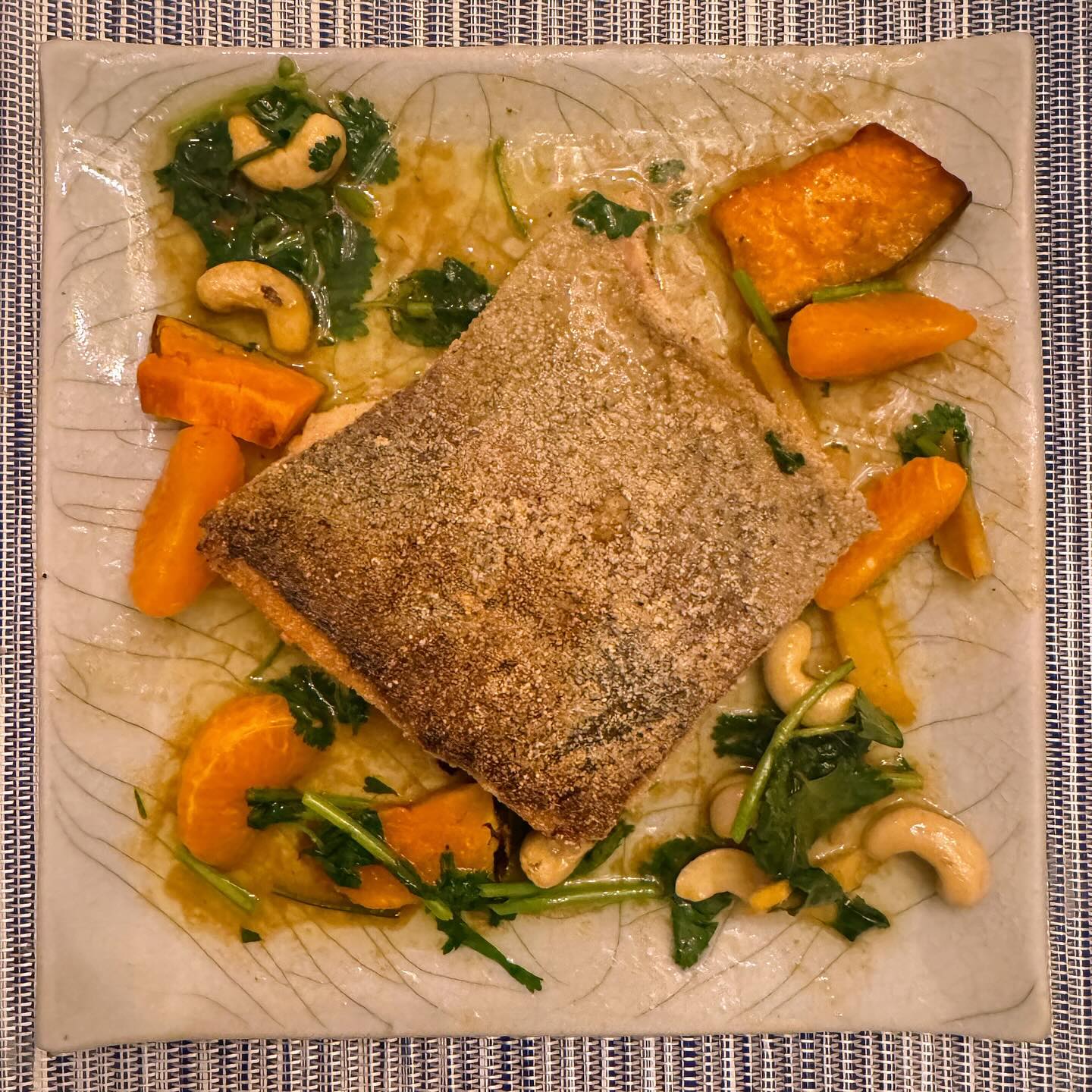
Rice-Crusted Trout
A thin layer of finely ground rice reinforces the crisp skin without turning the fish into a heavily breaded fillet. Most of the cooking happens skin-side down, leaving the flesh moist.
Ingredients
- 4 fillets skin-on trout, 5–6 ounces each, scaled and pin bones removed
- 1/3 cup uncooked white rice
- 3/4 teaspoon kosher salt, or to taste
- 2 tablespoons ghee
Instructions
- Grind the rice in a spice grinder to a fine, sandy meal. Sift out any pieces larger than coarse sand; they will stay hard during the short cooking time.
- Pat the trout thoroughly dry, especially the skin. Season lightly with salt, allowing for the salty sauce.
- Spread the ground rice on a plate. Press only the skin side of each fillet into it, then shake off loose grains. Aim for a thin, even coating rather than a thick crust.
- Heat the ghee in a wide nonstick or well-seasoned skillet over medium heat. Add the trout skin-side down, working in batches if necessary, and press gently with a spatula for the first 30 seconds to keep the skin flat.
- Cook for 5–7 minutes, adjusting the heat so the rice turns golden without burning. When the flesh is opaque about three-quarters of the way up the sides, turn carefully and cook for another 1–3 minutes.
- Check the thickest part with an instant-read thermometer; 145°F is the fully cooked food-safety target. Transfer to a rack skin-side up and serve promptly.
Notes
- Fine white rice flour is a practical alternative to grinding rice; it produces a smoother crust.
- Do not cover the cooked fish or spoon sauce over its crust.
Garum Brown Butter
Browned milk solids echo the toasted rice and cashews, while garum adds concentrated savory depth. Mandarin and lemon juice loosen the butter and keep it from tasting heavy.
Ingredients
- 6 tablespoons unsalted butter
- 2 teaspoons beef garum, plus more to taste
- 2 tablespoons fresh mandarin juice
- 1 tablespoon fresh lemon juice
- 1–2 tablespoons warm water
Instructions
- Melt the butter in a small, light-colored saucepan over medium heat. Swirl frequently until the milk solids are hazelnut-brown and smell toasted, about 4–6 minutes.
- Remove from the heat. Let the bubbling subside briefly, then carefully whisk in the mandarin juice, lemon juice and 1 tablespoon warm water; the butter may sputter.
- Whisk in the garum. Taste before adding more, since its salt concentration varies.
- Keep just warm, whisking before serving. Add the remaining water if needed for a loose, spoonable sauce.
Notes
- This is a loose brown-butter sauce, not a thick cream sauce; a little separation on the plate is welcome.
- If it tastes too salty, add a little water and unsalted butter rather than more citrus alone.
Roasted Kabocha
Roasting concentrates kabocha's sweetness and gives the edges enough caramelization to stand up to the garum butter. Small skin-on wedges match the composed plate and cook quickly.
Ingredients
- 1 pound seeded kabocha squash, cut into 3/4-inch-thick wedges or bite-size pieces
- 1 tablespoon olive oil
- 1/2 teaspoon kosher salt
Instructions
- Heat the oven to 425°F. Scrub the squash skin and trim away any corky areas.
- Toss the squash with olive oil and salt. Spread on a sheet pan with a cut face against the pan and space between pieces.
- Roast for 25–30 minutes, turning once, until browned at the edges and easily pierced with a knife but still holding its shape.
Mandarins, Toasted Cashews and Cilantro
Fresh mandarin segments cut through the butter, cashews add a second kind of crunch, and cilantro brings a fresh green finish.
Ingredients
- 3 mandarins, peeled and separated into segments
- 1/3 cup raw whole cashews
- 1/2 cup cilantro leaves and tender stems
Instructions
- Toast the cashews in a dry skillet over medium-low heat for 5–7 minutes, shaking often, until lightly golden. Transfer to a plate.
- Remove loose strings and thick pith from the mandarin segments, keeping them intact.
- Wash and thoroughly dry the cilantro. Keep all three garnishes separate until plating.
Coconut-Almond Soup with Cabbage
Almond butter gives coconut broth body and a gently roasted flavor without a long simmer. Briefly cooked cabbage adds sweetness and texture, while lime balances the rich duck and XO finish.
Ingredients
- 1 tablespoon avocado oil
- 1 tablespoon finely grated ginger
- 2 cloves garlic, finely grated
- 3 cups unsalted chicken or duck stock
- 1 13.5-ounce can full-fat coconut milk
- 3 tablespoons smooth unsweetened almond butter
- 2 cups thinly sliced napa cabbage
- 2 teaspoons gluten-free tamari, plus more to taste
- 1–2 tablespoons fresh lime juice
- 2 scallions, sliced
- 1 small green chile, thinly sliced, optional
- 2 tablespoons chopped cilantro
- 4 teaspoons Noma Projects vegan XO sauce, or to taste
Instructions
- Heat the avocado oil in a saucepan over medium-low heat. Add ginger and garlic and stir for 30–45 seconds, until fragrant but not browned.
- Add the stock and coconut milk and bring to a gentle simmer.
- Whisk the almond butter with a ladleful of hot broth in a small bowl until smooth, then whisk it back into the saucepan.
- Add the cabbage and simmer gently for 3–5 minutes, until the thicker pieces are tender but retain a little bite.
- Add the tamari, then turn the heat low while the duck and noodles finish. Thin with a splash of water or stock if the broth is too thick to flow easily around noodles.
- Just before serving, stir in 1 tablespoon lime juice, the scallions and cilantro. Taste and add more lime or tamari as needed, keeping the seasoning slightly restrained because the duck and XO are salty.
- Ladle over the prepared rice noodles and duck. Finish each bowl with a teaspoon of vegan XO sauce and optional sliced chile.
Notes
- If starting with leftover coconut-almond broth, use about 4 1/2 cups and adjust its thickness and seasoning before adding fresh cabbage.
- Keep the simmer gentle after adding coconut milk and almond butter; a hard boil can make the broth oily.
Reheated Duck Confit
Fully cooked confit makes the soup practical as a leftover dish. Reheating the legs before shredding restores the meat's tenderness and provides a little crisp skin for contrast.
Ingredients
- 2 fully cooked duck confit legs, refrigerated and excess fat removed
- 1 teaspoon avocado oil
- 2 tablespoons water
Instructions
- Place the confit legs skin-side down in a skillet with the avocado oil over medium-low heat. Cook for 6–8 minutes, until the skin starts to crisp and some fat renders.
- Turn the legs, add the water to a bare area of the skillet and cover. Reduce the heat to low and warm for another 6–10 minutes, until the meat reaches 165°F.
- Uncover briefly to evaporate the water. Lift the legs out and pull the warm meat from the bones in generous shreds, reserving crisp skin separately.
- Divide the meat among the soup bowls, adding any crisp skin just before serving.
Notes
- For already shredded leftover duck, skip the skillet and heat the meat directly in the soup to 165°F.
Rice Noodles
Cooking the noodles separately keeps the coconut-almond broth from becoming overly starchy and lets each small bowl retain distinct strands.
Ingredients
- 4 ounces dried flat rice noodles, certified gluten-free if needed
- as needed water
Instructions
- Soak or cook the noodles according to the package directions, stopping when just tender; they will soften a little more in the hot soup.
- Drain and rinse briefly with warm water to remove excess surface starch.
- Divide immediately among four small soup bowls. Add the hot duck and broth when ready to serve.
Notes
- If using leftover cooked noodles, use about 2 cups and loosen them briefly in hot water before dividing among bowls.
Overall Timing / Workflow
The squash and duck can cook while the soup base comes together. Leaving the trout until the final minutes protects its crisp crust.
Instructions
- 0:00 — Heat the oven to 425°F. Cut and season the squash, then put it in the oven.
- 0:10 — Toast the cashews, prepare mandarins and cilantro, grind the rice and dry the trout. Set out plates and small soup bowls.
- 0:15 — Start the duck confit in its skillet and build the coconut-almond soup in a saucepan.
- 0:25 — Brown the butter and finish the garum sauce. Keep it warm off direct heat. Check the squash and remove it once tender.
- 0:30 — Start cooking the trout. Cook the rice noodles, shred the hot duck and finish the soup with lime and herbs.
- 0:40 — Fill the soup bowls and plate the trout as soon as it is cooked. Serve both immediately, or serve the soup first and sear the trout while the bowls are being cleared.
Notes
- Allow an extra 8–10 minutes if the trout needs two batches; use two skillets when possible rather than holding the first batch for long.
Plating
Keeping the butter beneath and around the trout preserves the crust. A separate small bowl gives the rich soup its own identity rather than crowding the fish plate.
Instructions
- Spoon a little warm garum brown butter onto each broad plate. Arrange roasted kabocha and mandarin segments around the perimeter.
- Set a trout fillet in the center, crust-side up. Scatter cashews and cilantro around it, then spoon the remaining sauce around—not over—the fish.
- For the soup, place noodles and shredded duck in each bowl and ladle the coconut-almond broth and cabbage around them.
- Finish each soup bowl with a distinct spoonful of vegan XO sauce, optional chile and any reserved crisp duck skin.
Leftover Path
Separating noodles, broth and crisp components prevents sogginess and makes the next serving easier to balance.
Instructions
- Refrigerate leftovers within 2 hours in shallow, covered containers. Store fish, squash, sauce, garnishes, broth, noodles and duck separately where practical.
- Use cooked trout within 3 days. Reheat crust-side up in a 350°F oven until it reaches 165°F; the crust will soften somewhat. Alternatively, serve it cold in a citrus-herb salad.
- Reheat squash in a 400°F oven until hot. Warm the brown-butter sauce gently, whisking in a splash of water if needed.
- Use soup and duck within 3–4 days of their original cooking, not 3–4 days from this reheating. If the broth or confit was already near the end of that window, eat it promptly.
- Reheat only the needed amount of broth and duck to 165°F, then add noodles briefly to warm through. Refresh with lime, herbs and XO after heating.
- Freeze surplus broth without noodles for up to 2 months; thaw in the refrigerator and whisk gently while reheating.