Black Cod Collars with Miso-Butter Broccoli and Sake-Glazed Buttercup Squash
Rich black cod collars turn golden under the broiler, with juicy meat tucked around the bones and crisp edges worth picking clean. Charred broccoli melts a knob of miso butter, while sake-roasted buttercup squash brings sweet, savory depth and a scattering of sesame and scallions—a generous autumn plate.
By Jonathan Katzman · Cooked and photographed · Recipe updated
Serves: 4 servings
Tags: gluten-free, nut-free, pescatarian
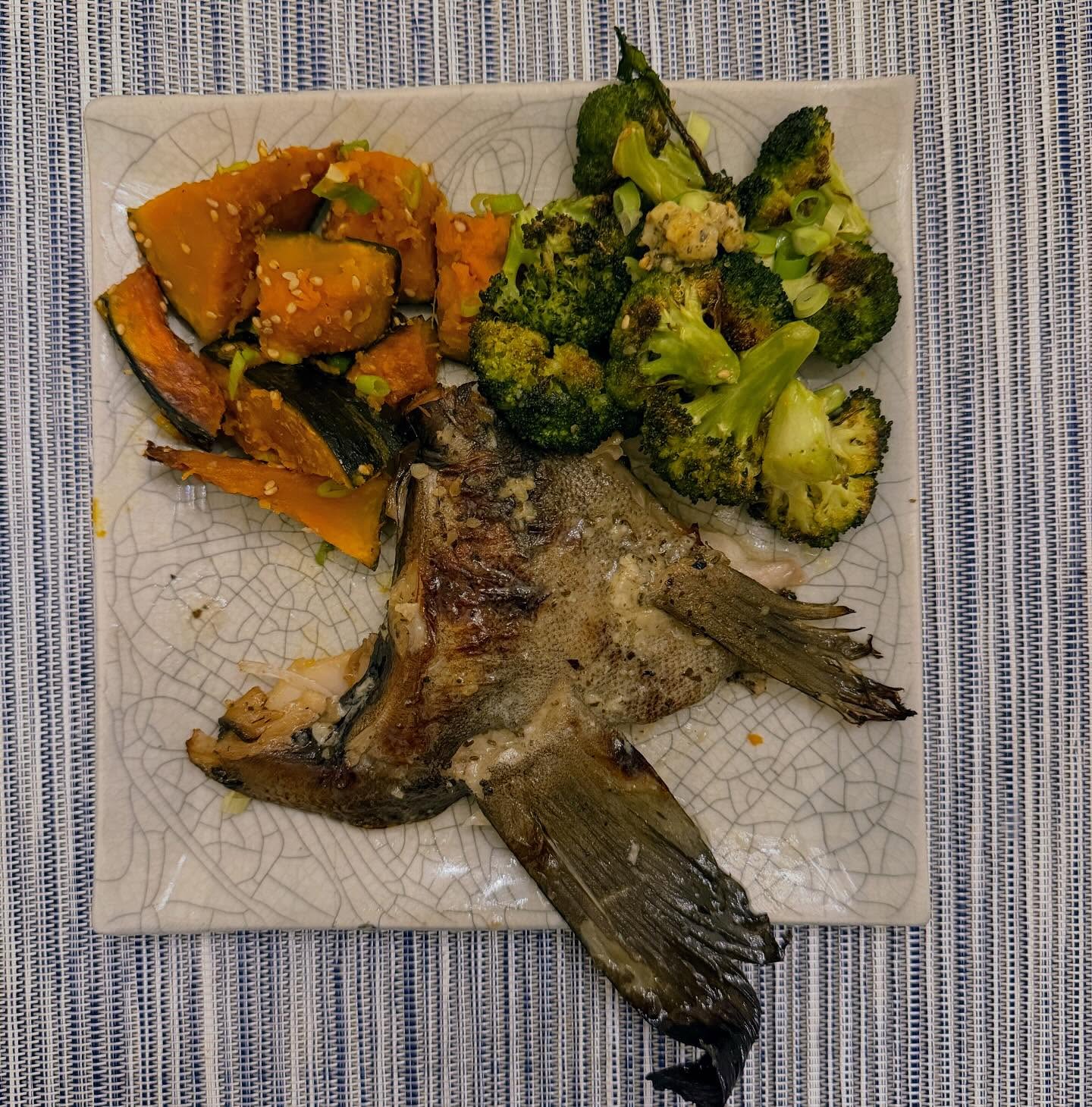
Broiled Black Cod Collars
Black cod's abundant fat keeps the irregular collar meat succulent under high heat. Light seasoning lets the fish stand apart from the miso-rich vegetables.
Ingredients
- 4 large black cod collars, about 2½–3 lb total, cleaned
- 1 tsp fine sea salt, or about 0.7% of the collars' weight
- 2 tsp avocado oil
Instructions
- Check the collars for loose scales, blood along the bone, and bone fragments; wipe clean and pat very dry. Season with salt and refrigerate for 20 minutes.
- Set a rack about 6–8 inches below the broiler and heat the broiler to high. Line a rimmed metal sheet pan with foil, not parchment.
- Blot away surface moisture and lightly brush the collars with avocado oil. Arrange with the fleshier surfaces facing up.
- Broil for 6–8 minutes, then turn carefully and broil for another 6–10 minutes, until the skin is browned and the thickest flesh reaches 145°F without the thermometer touching bone. Move the pan farther from the element if the fins darken before the meat cooks.
- Rest for 3 minutes. The meat should be opaque, moist, and easy to ease away from the collar bones.
Notes
- Collars vary considerably in size; use temperature and the flesh near the central bone rather than time alone.
- Serve with a small bowl for bones and fins.
Roasted Broccoli with Shared Cultures Miso Butter
A hot, uncrowded pan gives broccoli deeply browned edges while keeping the stems lively. Adding the miso butter after roasting preserves its fermented aroma and prevents scorching.
Ingredients
- 1½ lb broccoli
- 1½ tbsp avocado oil
- ¼ tsp fine sea salt, adjusted to the miso's saltiness
- 3 tbsp unsalted butter, softened
- 1 tbsp gluten-free Shared Cultures miso
- 1 tsp unseasoned rice vinegar
- 1 scallion, thinly sliced
Instructions
- Heat the oven to 425°F. Cut the broccoli into generous florets with flat cut surfaces; peel and slice the tender stalk.
- Mash the softened butter with the miso and rice vinegar until evenly blended. Keep at cool room temperature.
- Toss the broccoli with avocado oil and salt. Spread on a large sheet pan with the cut sides down and space between the pieces.
- Roast for 20–25 minutes, turning once, until the edges are dark brown and the stems are tender with a little resistance.
- Toss the hot broccoli with half the miso butter. Divide the remaining butter into small knobs to place on top at serving, then scatter with scallion.
Notes
- Use a gluten-free miso and start with less if it is especially salty. Let the butter soften rather than melting it before mixing.
Buttercup Squash with Sake and Honeynut Miso Tamari
A short covered roast steams the dense squash with sake before an uncovered finish concentrates the seasoning. The tamari supplies savory depth without obscuring the squash's chestnut-like sweetness.
Ingredients
- 1 medium buttercup squash, about 2½ lb
- 1 tbsp avocado oil
- ¼ cup dry sake, gluten-free and without added salt
- 2 tbsp water
- 1½ tbsp Shared Cultures honeynut miso tamari, verified gluten-free
- 1 tsp unseasoned rice vinegar
- 2 tsp toasted sesame seeds
- 1 scallion, thinly sliced
Instructions
- Heat the oven to 425°F. Scrub the squash, halve it, and remove the seeds. Cut into roughly 1½-inch wedges or chunks, leaving the skin on where it is sound and tender enough to eat.
- Arrange in a shallow baking dish in one layer and toss with the avocado oil. Pour the sake and water around the squash, then cover tightly with foil.
- Roast for 20 minutes. Carefully uncover, turning the foil away from your face, and test with a thin knife; the squash should be beginning to soften.
- Drizzle with the honeynut miso tamari and gently turn the pieces. Roast uncovered for another 15–25 minutes, until completely tender with a few browned edges and only a little concentrated liquid remaining.
- Sprinkle with rice vinegar and gently turn once more. Spoon the pan juices over the squash and finish with sesame seeds and scallion.
Notes
- Check early if the squash is very dry or starchy; add a tablespoon or two of water if the pan dries before it becomes tender.
- If the specialty tamari is unavailable, use gluten-free tamari to taste, starting with 2 teaspoons; the result will be less squash-forward.
- Remove the skin at the table if it remains tough.
Overall Timing / Workflow
The vegetables share one oven temperature, and the fish cooks last so it reaches the table hot and juicy.
Instructions
- 0:00 — Heat the oven to 425°F. Cut the squash and begin its covered roast.
- 0:15 — Salt the collars and refrigerate. Cut the broccoli and mix the miso butter.
- 0:20 — Uncover and season the squash. Put the broccoli on a second oven rack, rotating the pans as needed for even browning.
- 0:40 — Check both vegetables. Remove when done and tent the squash loosely; leave the broccoli uncovered to preserve its edges. Wait to add the miso butter.
- 0:45 — Switch the oven to broil and cook the collars, checking their temperature before removing.
- During the fish's rest, toss the still-warm broccoli with miso butter and finish the squash with vinegar, sesame, and scallion. Plate immediately.
Plating
Keeping the three components distinct preserves the fish's browned skin and lets the two different miso seasonings remain clear.
Instructions
- Set a collar on the lower half of each warm plate, with its browned skin and fins visible.
- Arrange the squash to one side and the broccoli beside it, rather than covering the fish.
- Place a small knob of the reserved miso butter on each portion of broccoli. Spoon any remaining squash juices only over the squash.
- Provide a bone bowl and encourage diners to pick the tender pockets of meat around the collar.
Leftover Path
Picking the fish while it is still easy to handle makes the leftovers much more useful. Gentle reheating protects the delicate meat from drying out.
Instructions
- Once cool enough to handle, carefully pick the remaining fish from the collars, checking for small bones. Refrigerate the fish and vegetables in separate covered containers within 2 hours.
- Use the fish within 2 days and the vegetables within 3–4 days.
- Reheat covered portions gently with a splash of water until they reach 165°F, avoiding prolonged cooking.
- For a different meal, flake the fish over a bowl of hot white rice with chopped leftover broccoli, squash, and a splash of gluten-free tamari.