Roasted Monkeyface Eel with Spring Hodgepodge and Sous Vide Corn
Gently roasted monkeyface eel stays moist and flaky beneath lemon and softened scallions. A buttery hodgepodge of favas, peas, asparagus, and snap peas brings spring crunch, while sous vide corn delivers the first sweet taste of summer.
By Jonathan Katzman · Cooked and photographed · Recipe updated
Serves: 4 servings
Tags: gluten-free, nut-free, pescatarian
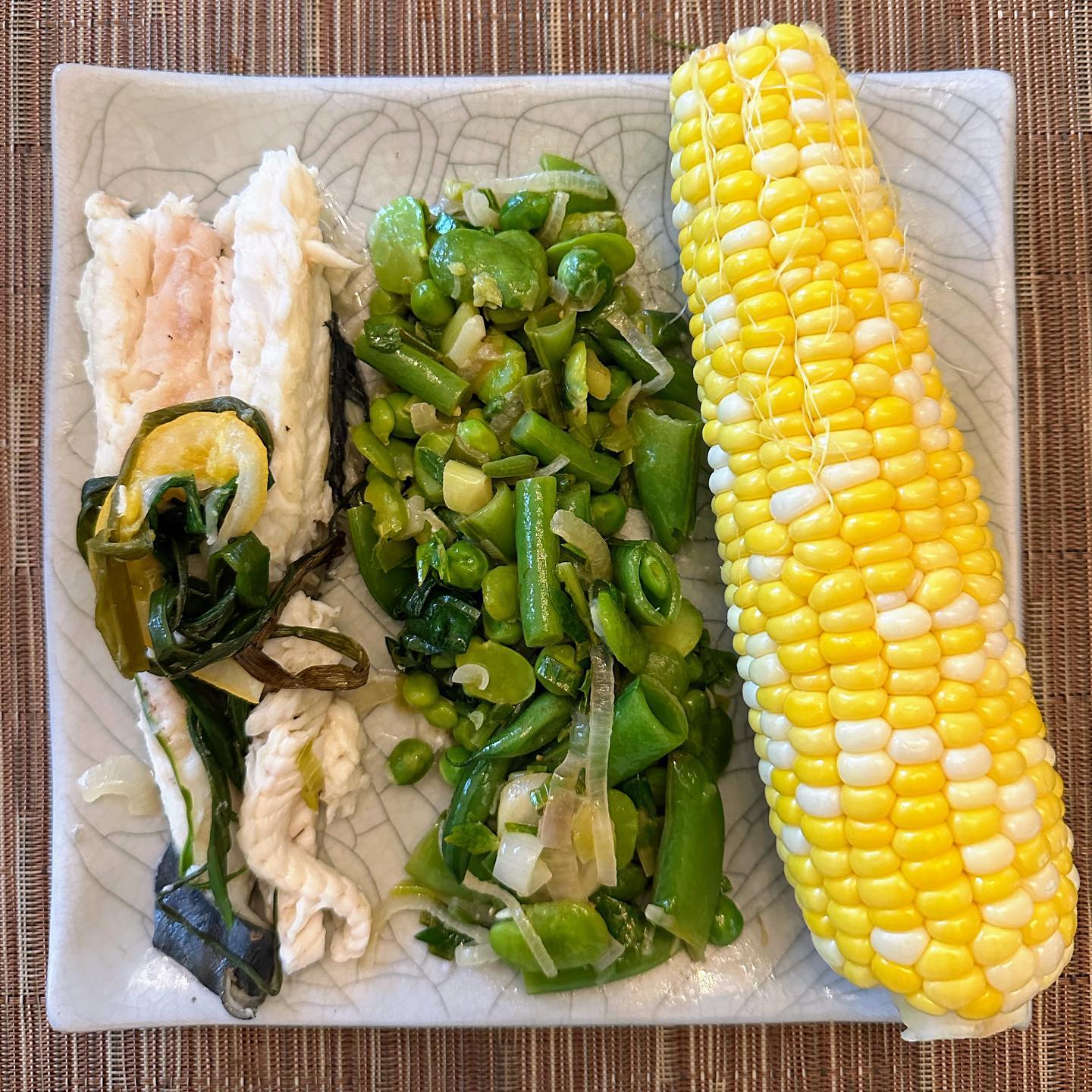
Roasted Monkeyface Eel with Lemon and Scallions
Roasting the fish on the bone protects its delicate flesh. Lemon, scallions, and a little butter provide aromatic pan juices without overwhelming its mild flavor.
Ingredients
- 3–4 lb whole monkeyface eel, gutted and cleaned by the fishmonger
- 1 lemon, thinly sliced and seeds removed
- 6 scallions, trimmed
- 2 tbsp unsalted butter, softened
- 1 tbsp olive oil
- 3 tbsp water
- 1 tsp kosher salt, plus more to taste
- 1/4 tsp freshly ground black pepper
Instructions
- Heat the oven to 400°F. Pat the cleaned fish dry, including the cavity. If necessary, curve it to fit a lightly oiled roasting dish.
- Season the fish inside and out with salt and pepper. Rub with the butter and olive oil. Tuck half the lemon and scallions into the cavity and arrange the remainder beneath and over the fish.
- Add the water to the dish and roast, beginning to check after 20 minutes. Allow approximately 25–40 minutes depending on thickness; the flesh should turn opaque and separate easily from the backbone, and the thickest portion should reach 145°F without the thermometer touching bone.
- Rest for 5 minutes. Lift the flesh from the backbone in large pieces, checking carefully for small bones. Retain some tender skin if desired.
- Spoon the light roasting juices over the fish and reserve the softened lemon and scallions for plating.
Notes
- Ask the fishmonger to clean this unusually shaped fish and advise on its bone structure. If using bone-in sections rather than a whole fish, begin checking doneness earlier.
- Avoid chasing a browned crust: the goal is moist, pale flesh rather than heavily caramelized fish.
Spring Hodgepodge
Brief blanching keeps the favas and peas bright, while a quick sauté brings the other vegetables together. Lemon and a small butter finish balance their sweetness without creating a heavy sauce.
Ingredients
- 3/4 cup double-peeled fava beans, from approximately 1 1/2 lb whole pods
- 3/4 cup shelled English peas
- 8 oz sugar snap peas, strings removed and pods cut diagonally in half
- 8 oz asparagus, woody ends removed and stalks cut into 1-inch pieces
- 2 shallots, thinly sliced
- 3 scallions, sliced, whites and greens separated
- 1 tbsp ghee
- 1 tbsp unsalted butter
- 2 tbsp water, plus more as needed
- 2 tsp fresh lemon juice
- 1/2 tsp finely grated lemon zest
- to taste kosher salt and freshly ground black pepper
Instructions
- If preparing favas from whole pods, shell them, blanch the beans in boiling salted water for 1 minute, cool in ice water, and slip off the pale outer skins. Measure 3/4 cup peeled beans.
- Blanch the English peas in boiling salted water for 1–2 minutes, until bright and just tender. Drain and cool briefly in ice water, then drain thoroughly.
- Heat the ghee in a wide skillet over medium heat. Add the shallots and scallion whites with a pinch of salt; cook for 3–4 minutes until softened without browning.
- Add the asparagus and water. Cover and cook for 2 minutes, then add the snap peas and cook uncovered for 2–3 minutes, stirring, until crisp-tender. Add a splash of water if the pan dries out.
- Fold in the favas, English peas, and scallion greens. Cook for 1–2 minutes, just until hot.
- Lower the heat and stir in the butter, lemon juice, and zest. Toss until lightly glossy, then season with salt and pepper. Serve promptly.
Notes
- The vegetables should be tender enough to eat comfortably but retain distinct textures; older fava beans may need an additional minute or two of cooking.
- Fava beans are unsuitable for people with G6PD deficiency; replace them with additional peas if needed.
Butter-Poached Sous Vide Corn
A sealed bag keeps the corn's sweetness and juices close to the kernels. A hot water bath cooks the ears evenly without washing away their flavor.
Ingredients
- 4 ears fresh sweet corn, husks and silk removed
- 2 tbsp unsalted butter
- 1/2 tsp kosher salt, plus more to taste
Instructions
- Heat a sous vide bath to 185°F / 85°C.
- Arrange the corn in a single layer in one or two heat-rated sous vide bags. Divide the butter and salt among the bags and seal.
- Submerge the bags completely, securing them with a rack or suitable sous vide weight because corn tends to float. Cook for 30 minutes once the bath returns to temperature.
- Open the bags carefully, turning the ears in their buttery juices. Taste and add salt if needed; serve whole.
Notes
- For a short delay, leave the sealed bags in the bath for up to 15 additional minutes. Keep the corn uncharred to preserve its juicy texture.
Overall Timing / Workflow
Preparing the favas while the appliances heat leaves only a short vegetable sauté at the end. The fish can rest while the hodgepodge finishes.
Instructions
- 0:00 — Heat the sous vide bath to 185°F / 85°C and the oven to 400°F. Put a pot of salted water on for the favas and peas.
- 0:05 — Shell, blanch, and peel the favas; blanch the peas. Trim the remaining vegetables and husk the corn.
- 0:25 — Bag the corn and place it in the hot bath. Prepare the fish with lemon and scallions.
- 0:30 — Put the fish in the oven. Begin checking it after 20 minutes and use its thickness and internal temperature to determine when it is ready.
- 0:50 — Begin the hodgepodge. Remove the corn after its 30-minute cook, or hold it briefly in the bath while the fish finishes.
- 1:00–1:10 — Rest and debone the fish, finish the vegetables with butter and lemon, and plate everything hot.
Notes
- Allow extra preparation time if shelling a large quantity of fresh favas for the first time.
Plating
Three simple bands keep the fish, bright vegetables, and corn distinct. The roasting juices add moisture without flooding the plate.
Instructions
- Arrange large flakes of deboned fish along one side of each warmed plate, including a little skin if desired.
- Top the fish with softened lemon and scallion strands and spoon over a little roasting juice.
- Place a generous strip of spring hodgepodge beside the fish and a whole ear of corn along the opposite side.
- Spoon any remaining corn butter over the ears and serve immediately.
Leftover Path
Storing the components separately protects the vegetables from overcooking and makes the fish easy to rewarm gently.
Instructions
- Refrigerate the fish with its juices, the vegetables, and the corn in separate shallow containers within 2 hours. Use within 3 days.
- Reheat fish covered with a splash of water in a low oven until it reaches 165°F; avoid prolonged heating, which will dry it out.
- Warm the vegetables briefly in a skillet with a splash of water. Cut leftover corn from the cob and fold it in near the end.
- Alternatively, serve the chilled, carefully deboned fish with the vegetables and corn kernels as a lemon-dressed lunch salad.