Roasted Salmon Collars with Summer Ratatouille and Duck Fat Potatoes
Rich salmon collars sit over chunky late-summer ratatouille, where roasted eggplant, yellow squash, and tomatoes soften into their own savory juices. Torn basil keeps everything fresh, while duck fat potatoes bring crisp golden edges and a little thyme.
By Jonathan Katzman · Cooked and photographed · Recipe updated
Serves: 4 servings
Tags: gluten-free, dairy-free, nut-free
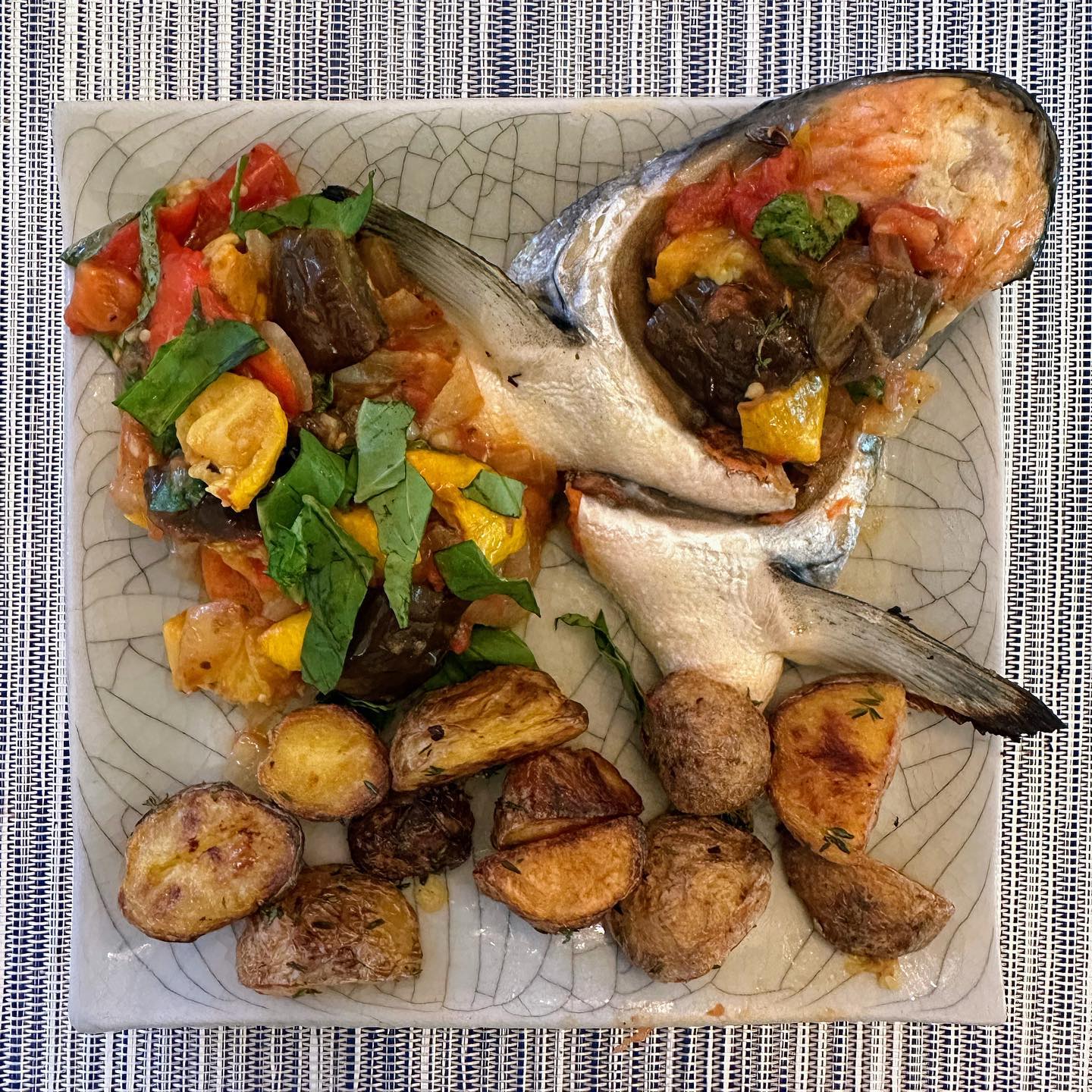
Roasted Salmon Collars
Collars have enough fat and connective tissue to stay succulent in a hot oven. Simple seasoning lets the salmon and the tomato-rich vegetables carry the dish.
Ingredients
- 4 large salmon collars, about 3–4 pounds total, cleaned and scaled
- 1 tablespoon olive oil
- 1 teaspoon fine sea salt, plus more as needed
- 1/2 teaspoon freshly ground black pepper
Instructions
- Heat the oven to 425°F. Check the collars for remaining scales, blood along the bone, and loose bone fragments; wipe clean and pat very dry.
- Season all over with salt and let stand in the refrigerator for 20 minutes while preparing the sides. Blot away any surface moisture, then rub with olive oil and pepper.
- Arrange on a lightly oiled, foil-lined rimmed baking sheet with the exposed flesh facing upward as much as their shape allows.
- Roast for 15–22 minutes, depending on thickness, until the flesh releases easily from the bone and the thickest edible portion reaches 145°F, measured without touching bone.
- If more browning is wanted, switch to the broiler for the final 1–2 minutes of cooking, watching closely. Rest for 3 minutes before serving.
Notes
- Collar size varies considerably. Allow roughly 12–16 ounces bone-in per person, using more than one collar if they are small.
- Collars contain numerous bones; serve with a small bone bowl and eat carefully.
Roasted Summer Vegetable Ratatouille
Roasting the vegetables in a shallow layer develops browned edges without turning the squash to mush. Briefly folding them into roasted tomatoes gives the dish enough juices to catch beneath the salmon.
Ingredients
- 1 medium globe eggplant, about 1 pound, cut into 1-inch chunks
- 2 medium yellow summer squash, cut into thick half-moons or 1-inch chunks
- 1 red bell pepper, cut into 1-inch pieces
- 1 medium yellow onion, cut into thick petals
- 1 pound ripe tomatoes, cored and cut into large chunks
- 4 cloves garlic, thinly sliced
- 5 tablespoons olive oil, divided
- 1 teaspoon fresh thyme leaves
- 1 teaspoon fine sea salt, divided, plus more to taste
- 1/4 teaspoon freshly ground black pepper
- 1–2 teaspoons red wine vinegar, to taste
- 1/2 cup loosely packed fresh basil leaves, roughly torn
Instructions
- Heat the oven to 425°F. Toss the eggplant, squash, pepper, and onion with 4 tablespoons olive oil, 3/4 teaspoon salt, and the black pepper. Spread across a large rimmed baking sheet, using a second sheet if needed to avoid crowding.
- In a shallow baking dish, combine the tomatoes, garlic, remaining tablespoon olive oil, remaining 1/4 teaspoon salt, and thyme.
- Roast both preparations for 30–40 minutes, turning the mixed vegetables after about 20 minutes. The eggplant should be creamy inside, the squash tender but intact, and the tomatoes collapsed and juicy. Remove individual trays as they finish.
- Fold the roasted vegetables into the tomatoes and their juices. Return to the oven for 5 minutes if needed to bring everything together.
- Add 1 teaspoon vinegar, taste, and add more vinegar or salt as needed. Fold in half the basil just before serving and reserve the rest for the plates.
Notes
- Keep the vegetables chunky rather than stirring them into a purée. If the tomatoes release excessive liquid, spoon the liquid into a small pan and reduce briefly before returning it to the vegetables.
Duck Fat Roasted Potatoes with Thyme
Parboiling creates tender centers and lightly roughened surfaces that crisp in hot duck fat. Keeping the skins on matches the rustic, deeply browned potatoes on the plate.
Ingredients
- 2 pounds small Yukon Gold or mixed baby potatoes, halved or quartered into 1 1/2-inch pieces
- 4 tablespoons duck fat
- 2 teaspoons fresh thyme leaves, divided
- 1 tablespoon kosher salt, for the boiling water
- 1/2 teaspoon fine sea salt, plus more to taste
- 1/4 teaspoon freshly ground black pepper
Instructions
- Heat the oven to 425°F. Put the potatoes in a saucepan, cover with cold water by 1 inch, and add the kosher salt. Bring to a boil, then simmer for 8–10 minutes, until the outside is tender but the centers still offer resistance.
- Drain thoroughly and let steam-dry for 5 minutes. Shake gently in the dry saucepan to roughen the cut surfaces without breaking the potatoes apart.
- Warm the duck fat on a rimmed metal baking sheet in the oven for 3 minutes. Carefully add the dry potatoes, turn to coat, and season with the fine salt and pepper. Arrange cut-side down with space between pieces.
- Roast for 35–45 minutes, turning after 25 minutes, until deeply golden, crisp outside, and completely tender inside. Add 1 teaspoon thyme during the final 10 minutes.
- Finish with the remaining thyme and adjust the salt. Keep uncovered until serving so the crust stays crisp.
Notes
- Use a metal sheet rather than a glass dish for stronger browning. If sharing the oven with the vegetables, rotate the trays and allow extra time as needed.
Overall Timing / Workflow
All three components use the same oven temperature. Cooking the vegetables first frees oven space for the collars while the potatoes finish crisping.
Instructions
- 0:00 — Heat the oven to 425°F. Cut the potatoes and start them in salted water. Chop the ratatouille vegetables while the water heats.
- 0:15 — Drain and steam-dry the potatoes. Prepare the vegetable trays and tomato dish.
- 0:20 — Begin roasting the potatoes, mixed vegetables, and tomatoes. Use separate shallow pans, leave room for air circulation, and rotate racks during cooking.
- 0:35 — Salt the salmon collars and refrigerate. Turn the vegetables and check their browning.
- 0:55 — Remove the tender vegetables and tomatoes, combine them, and return briefly to the oven if needed. Cover loosely and keep warm. Blot and oil the collars, then put them in the oven.
- 1:00 onward — Check the potatoes; remove once crisp and fully tender. If they finish well before the fish, leave uncovered and recrisp for 3–5 minutes near serving time.
- 1:15–1:25 — Check the salmon for 145°F doneness, broil briefly if desired, and rest. Finish the ratatouille with vinegar and basil, then plate.
Notes
- For a small oven, roast the ratatouille first and hold it warm, then cook the potatoes and salmon. Avoid stacking crowded pans, which traps steam and weakens browning.
Plating
Putting the collars partly over the vegetables brings their juices together while keeping the potatoes away from moisture.
Instructions
- Spoon a broad mound of warm ratatouille onto each plate, including a little of its tomato juices.
- Set a salmon collar partly over the vegetables, keeping the accessible flesh facing upward. Spoon a few vegetables into the curve of the collar.
- Arrange the duck fat potatoes alongside in a separate cluster so they stay crisp.
- Scatter the reserved torn basil over the ratatouille and serve immediately with a dish for bones.
Leftover Path
Separating the fish, vegetables, and potatoes prevents the crisp elements from becoming soggy and makes careful bone removal easier.
Instructions
- Once the collars are cool enough to handle, pick the remaining salmon from the bones, checking carefully for small bones. Refrigerate the fish, ratatouille, and potatoes in separate covered containers within 2 hours of cooking.
- Use the salmon within 2 days and the vegetables and potatoes within 3–4 days.
- Reheat potatoes on a preheated sheet in a 425°F oven for 10–15 minutes. Warm the ratatouille in a saucepan over medium-low heat.
- For a hot second meal, gently heat the salmon with the ratatouille, covered, until leftovers reach 165°F. Alternatively, serve the chilled salmon over cold ratatouille with the potatoes reheated separately.