Roasted Salmon Collars with Walnut-Anchovy Vegetables and Squash-Miso Mash
Salmon collars roast until the flesh slips easily from the bones, alongside browned cauliflower and cabbage dressed with a chunky walnut-anchovy herb sauce. Sweet butternut squash mashed with squash miso brings everything together—a good late-winter dinner with plenty of savory depth and a bright lemon finish.
By Jonathan Katzman · Cooked and photographed · Recipe updated
Serves: 4 servings
Tags: gluten-free, paleo, dairy-free, pescatarian
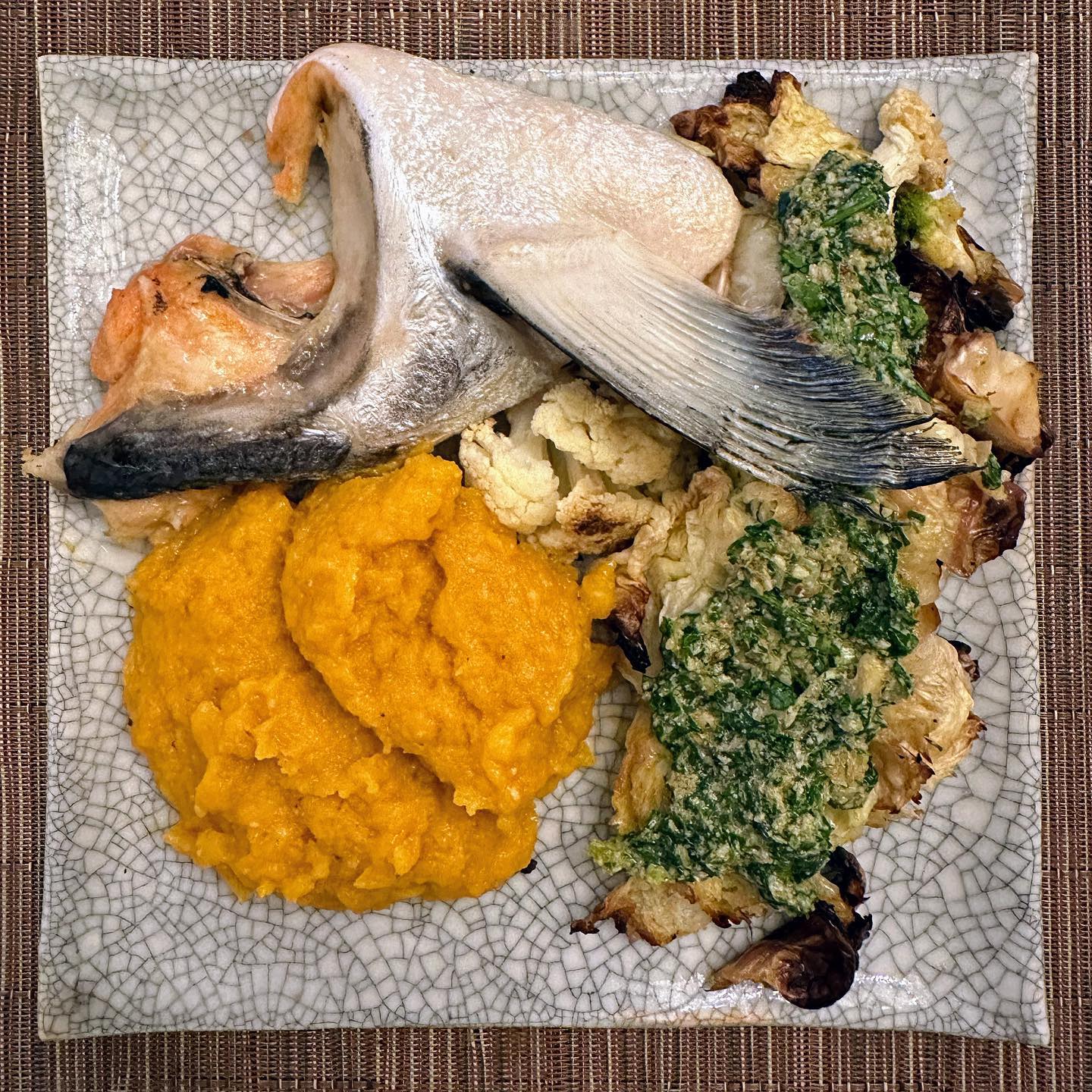
Roasted Salmon Collars
Collars have enough fat and connective tissue to stay succulent in a hot oven. Simple seasoning lets their rich flesh play against the sharper vegetable sauce.
Ingredients
- 4 large salmon collars, about 3–4 lb total, cleaned and fully thawed
- 1 tbsp olive oil
- 1 tsp kosher salt, or to taste
- 1/4 tsp freshly ground black pepper
- 1 lemon, cut into wedges
Instructions
- If frozen, thaw the collars in the refrigerator on a tray, allowing 24–36 hours for thick pieces. Remove any remaining gill tissue or scales, then pat very dry.
- Heat the oven to 425°F. Line a rimmed sheet pan with foil and lightly oil it.
- Rub the collars with olive oil, salt, and pepper. Arrange in a single layer with the thickest exposed flesh facing upward.
- Roast for 15–25 minutes, depending on size, until the flesh is opaque, flakes readily near the bone, and reaches 145°F in the thickest fleshy section without touching bone.
- Rest for 3 minutes and serve with lemon wedges.
Notes
- Collar yield varies considerably; buy by both size and weight, allowing one substantial collar per person.
- The fins and bones help hold the collar together during cooking but are not eaten.
Roasted Cauliflower and Cabbage
Widely spaced vegetables brown rather than steam. Cauliflower stays nutty and firm while cabbage develops sweet, crisp edges that catch the coarse sauce.
Ingredients
- 1 medium head cauliflower, about 1½ lb, cut into 1½–2-inch florets
- 1/2 small head green cabbage, about 12 oz, cut into 1½-inch wedges with a little core attached
- 3 tbsp olive oil
- 3/4 tsp kosher salt
- 1/4 tsp freshly ground black pepper
Instructions
- Heat the oven to 425°F. Toss the cauliflower and cabbage with olive oil, salt, and pepper.
- Spread across one large or two smaller sheet pans without crowding, placing cut surfaces against the metal.
- Roast for 25–35 minutes, turning once, until the cauliflower is tender with browned edges and the cabbage is tender through its thickest leaves. Remove individual pieces as they finish.
- Keep the vegetables uncovered until serving so their browned edges do not steam. Spoon the walnut-anchovy sauce over them just before eating.
Walnut-Anchovy Herb Sauce
Walnuts give the sauce body without making it smooth, while anchovies supply salt and savory depth. Parsley and lemon keep it lively against the roasted vegetables and rich fish.
Ingredients
- 1/2 cup walnut halves
- 1 packed cup flat-leaf parsley leaves and tender stems
- 4 oil-packed anchovy fillets, drained
- 1 small clove garlic, roughly chopped
- 1 tsp finely grated lemon zest
- 2 tbsp fresh lemon juice
- 1/3 cup extra-virgin olive oil
- 1–3 tbsp water, as needed
- to taste kosher salt and freshly ground black pepper
Instructions
- Toast the walnuts in a 350°F oven for 5–7 minutes, until fragrant and lightly golden. Let cool; this can be done before raising the oven temperature for the meal.
- Pulse the walnuts, parsley, anchovies, garlic, and lemon zest in a food processor until finely chopped but still visibly textured.
- Pulse in the lemon juice and olive oil just until combined. Add water a tablespoon at a time to make a thick, spoonable sauce.
- Taste before adding salt, then adjust with pepper and a little more lemon juice if needed.
Notes
- Avoid processing to a smooth paste; the small walnut pieces are part of the texture.
- If the sauce tastes too salty or sharp, loosen it with water and a little additional olive oil.
Butternut Squash Mash with Honeynut Squash Miso
Roasting concentrates the squash's sweetness without watering down the mash. Stirring miso in after cooking adds fermented depth while keeping its aroma distinct.
Ingredients
- 1 large butternut squash, about 3 lb, halved lengthwise and seeded
- 2 tbsp olive oil, divided
- 2 tbsp gluten-free Shared Cultures honeynut squash miso, or another gluten-free squash miso
- 2–4 tbsp hot water, only as needed
- to taste kosher salt
Instructions
- Heat the oven to 425°F. Rub the squash's cut surfaces with 1 tablespoon olive oil and place cut-side down on a lined sheet pan.
- Roast for 45–60 minutes, until a knife passes through the neck without resistance and the flesh is completely soft.
- Scoop the flesh into a bowl or saucepan, leaving the skin behind. Mash thoroughly with the remaining tablespoon olive oil.
- Let the mash stop bubbling before stirring in the miso. Add hot water only if necessary to achieve a thick, soft mash that holds a spooned mound.
- Taste and add salt only if needed. Keep warm over very low heat, stirring occasionally without boiling.
Notes
- Miso salt levels vary; start with 1 tablespoon if yours is especially salty, then add more to taste.
- For a finer texture, use a food processor briefly rather than adding extra liquid.
Overall Timing / Workflow
The squash takes longest and holds well, leaving the final oven window for fish and vegetables. Making the sauce early keeps the last few minutes simple.
Instructions
- The day before: move frozen collars to the refrigerator to thaw on a tray.
- 0:00 — Heat the oven to 350°F and toast the walnuts. Prepare the squash while they toast, then raise the oven to 425°F and put the squash in.
- 0:15 — Make the walnut-anchovy sauce, cut the vegetables, and dry and season the collars.
- 0:35 — Put the vegetables in the oven on a separate rack, allowing airflow around both pans.
- 0:55 — Check the squash and vegetables. Remove each when tender and browned; mash the squash with olive oil and miso.
- Once the squash comes out, roast the collars for 15–25 minutes. If oven space is limited, finish the vegetables first and return them to the oven briefly while the fish rests.
- Finish the mash's seasoning, loosen the sauce if needed, and plate immediately after the collars rest.
Notes
- Use the doneness cues rather than the timeline if the squash or collars are especially large.
Plating
Keeping the sauce mainly on the vegetables preserves the distinct flavors and lets the collar remain the centerpiece.
Instructions
- Spoon a generous mound of squash mash onto one side of each warm plate.
- Arrange the roasted vegetables alongside and spoon the chunky walnut-anchovy sauce over them.
- Set a salmon collar across the upper portion of the plate, keeping most of the mash and vegetables visible.
- Serve with lemon wedges and a small dish for bones and fins.
Leftover Path
Picking the fish while it is easy to handle makes leftovers useful, and storing the herb sauce separately preserves its freshness.
Instructions
- Pick leftover salmon from the bones, checking carefully for small bones. Refrigerate the fish, mash, vegetables, and sauce in separate covered containers within 2 hours.
- Use the salmon within 3 days and the other components within 3–4 days.
- Reheat the mash gently with a splash of water and re-crisp the vegetables in a 400°F oven. Warm the fish covered just until it reaches 165°F, or serve it cold.
- For another meal, fold cold flaked salmon into a lemony green salad with the roasted vegetables and a spoonful of walnut-anchovy sauce; serve the warm squash mash alongside.