Duck Fennel Sausage with Winter Vegetable Mash, Garum-Roasted Vegetables and Sunchoke Miso Bisque
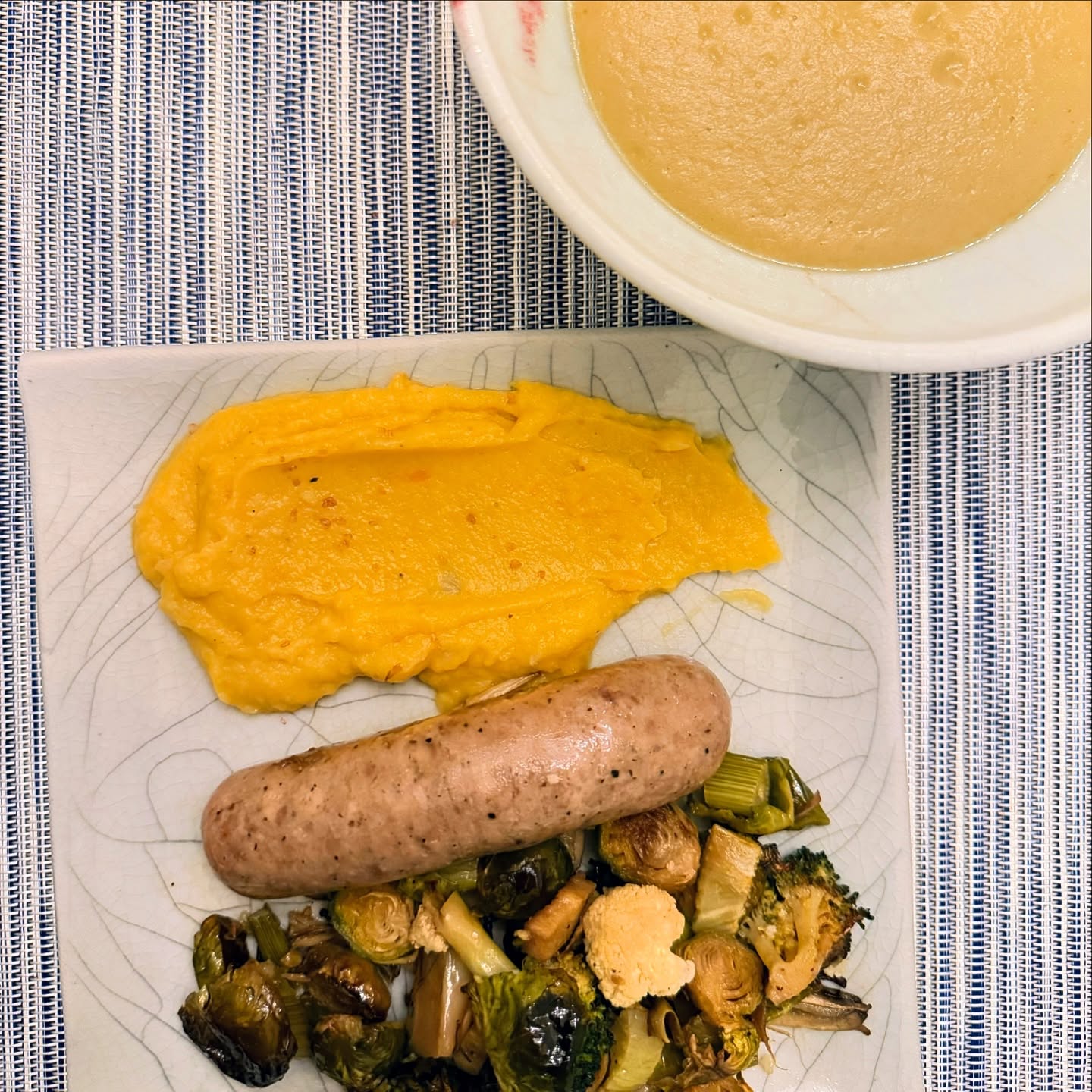
Duck fennel sausage sits alongside a silky, carrot-bright winter mash and deeply browned vegetables finished with mushroom garum and barley koji oil. A small bowl of roasted sunchoke bisque, rounded out with sunchoke miso, brings earthy sweetness and a savory finish to this winter supper.
By Jonathan Katzman · Cooked and photographed · Recipe updated
Serves: 4 servings
Tags: nut-free
Roasted Sunchoke and Sunchoke Miso Bisque
Roasting concentrates the sunchokes’ sweetness, while miso adds depth without obscuring their earthy flavor. A little cream rounds out the soup without making it heavy.
Ingredients
- 1 lb sunchokes, scrubbed and cut into 1-inch pieces
- 1 tablespoon olive oil
- 1 tablespoon unsalted butter
- 1 large shallot, thinly sliced
- 1 clove garlic, thinly sliced
- 3 cups low-sodium vegetable stock, plus more as needed
- 1/4 cup heavy cream
- 2 tablespoons Shared Cultures sunchoke miso, plus more to taste
- 1 teaspoon lemon juice, plus more to taste
- to taste kosher salt and freshly ground black pepper
Instructions
- Heat the oven to 425°F. Toss the sunchokes with olive oil and a light pinch of salt. Spread on a sheet pan and roast for 25–35 minutes, turning once, until tender with golden edges rather than a dark crust.
- Melt the butter in a saucepan over medium-low heat. Add the shallot and cook for 5–7 minutes until soft without browning. Add the garlic and cook for 30 seconds.
- Add the roasted sunchokes and stock. Simmer gently for 10 minutes, until the sunchokes crush easily against the side of the pan.
- Blend with the cream until very smooth, venting the blender lid carefully when blending hot soup. Add stock as needed for a pourable bisque; pass through a fine sieve if desired.
- Remove from the heat. Dissolve the miso in a ladleful of soup, then stir it back into the pot. Add lemon juice and adjust salt and pepper. Warm gently without boiling.
Notes
- Sunchoke miso varies in saltiness; begin with the measured amount and adjust only after blending.
- For a particularly smooth soup, peel the sunchokes before roasting.
Carrot, Celery Root and Cauliflower Mash
Carrots provide the orange color and sweetness, celery root adds savory depth, and cauliflower keeps the mash light. Thorough draining makes it thick enough to hold a broad swipe on the plate.
Ingredients
- 1 lb carrots, peeled and cut into 1/2-inch pieces
- 10 oz peeled celery root, cut into 1/2-inch cubes
- 8 oz cauliflower florets
- 3 tablespoons unsalted butter
- 2–4 tablespoons hot vegetable cooking water, as needed
- 1 teaspoon lemon juice
- to taste kosher salt and freshly ground black pepper
Instructions
- Bring a pot of lightly salted water to a boil. Add the carrots and celery root and simmer for 10 minutes.
- Add the cauliflower and simmer for another 10–12 minutes, until all the vegetables are completely tender.
- Reserve a little cooking water, then drain thoroughly. Return the vegetables to the warm pot over low heat for 2–3 minutes, stirring, to evaporate excess moisture.
- Transfer to a food processor with the butter and lemon juice. Process until smooth, adding hot cooking water a tablespoon at a time only if needed. Season with salt and pepper.
- Keep covered over very low heat or in a bowl over barely simmering water, stirring occasionally.
Notes
- Keep the mash thick rather than loose; the cauliflower will release more moisture as it is processed.
Duck Fennel Sausage
Gentle covered heating keeps the sausage juicy, followed by a brief sear for a lightly browned casing. Its fennel seasoning complements the sweet roots and savory roasted vegetables.
Ingredients
- 4 links Brooklyn Cured duck fennel sausage, approximately 12–16 oz total
- 1 tablespoon ghee
- 1/3 cup water
Instructions
- Check the package to confirm whether the sausages are fully cooked. Place fully cooked links in a skillet with the water, cover and heat over medium-low heat for 6–8 minutes, turning once, until hot throughout.
- Uncover and let the water evaporate. Add the ghee and raise the heat to medium.
- Roll the sausages in the hot ghee for 3–5 minutes, until lightly golden in spots and glossy. Avoid piercing the casings or cooking so aggressively that they split.
- Serve whole, one link per person.
Notes
- Follow the package’s reheating instructions when provided. If using raw duck sausage, extend the covered cooking stage and cook to an internal temperature of 165°F before the final browning.
Roasted Winter Vegetables with Mushroom Garum and Barley Koji Oil
A hot oven creates browned edges while leaving the vegetables distinct. Adding the garum near the end limits scorching, and finishing with barley koji oil preserves its aroma.
Ingredients
- 12 oz Brussels sprouts, trimmed and halved
- 8 oz broccoli, cut into large florets with sliced tender stems
- 8 oz cauliflower, cut into large florets
- 2 stalks celery, cut into 1-inch pieces
- 2 tablespoons olive oil
- 1 tablespoon Noma Projects mushroom garum, plus more to taste
- 2 teaspoons prepared barley koji oil
- 2 teaspoons lemon juice
- to taste kosher salt and freshly ground black pepper
Instructions
- Heat the oven to 425°F. Dry the vegetables thoroughly and toss with the olive oil, pepper and only a small pinch of salt.
- Spread across a large sheet pan, using a second pan if needed to avoid crowding. Place Brussels sprouts cut-side down.
- Roast for 20 minutes. Turn the vegetables and continue roasting for 5–10 minutes, until the sprouts are tender and the broccoli and cauliflower have browned edges.
- Drizzle with mushroom garum, toss, and return to the oven for 2–3 minutes.
- Transfer to a warm bowl and toss with the barley koji oil and lemon juice. Taste before adding more salt or garum.
Notes
- Remove smaller florets early if they brown before the Brussels sprouts are tender.
- Use a prepared, food-safe barley koji oil and follow its storage instructions.
Overall Timing / Workflow
The soup and roasted vegetables share one oven temperature, while the mash and sausages cook on the stovetop. The soup and mash can wait gently so the sausage and roasted vegetables reach the table hot.
Instructions
- 0:00 — Heat the oven to 425°F. Prepare the sunchokes and start roasting them.
- 0:10 — Prepare the soup aromatics and mash vegetables. Start the shallot base for the soup and bring the mash water to a boil.
- 0:20 — Begin cooking the carrots and celery root. Prepare and season the roasting vegetables.
- 0:30 — Transfer the tender roasted sunchokes to the soup pot with stock. Put the vegetable medley in the oven. Add cauliflower to the mash pot.
- 0:40 — Blend and finish the soup with cream, miso and lemon; hold below a simmer. Drain, dry and purée the mash, then keep warm.
- 0:45 — Begin heating the sausages. Turn the roasting vegetables and check their tenderness.
- 0:55 — Finish the vegetables with garum, then koji oil and lemon. Brown the sausages in ghee and warm the serving dishes.
- 1:00–1:10 — Adjust the soup’s consistency and seasoning, then plate and serve.
Notes
- If oven space is tight, roast the sunchokes first; the finished soup holds well while the vegetable medley roasts.
Plating
Separate soup bowls preserve the bisque’s clean texture, while a broad swipe of mash balances the rustic sausage and charred vegetables.
Instructions
- Spoon the hot mash onto one side of each warm dinner plate and spread it into a broad, thick swipe.
- Arrange the roasted vegetables beside the mash, keeping browned surfaces visible.
- Place one sausage across the edge of the vegetable pile without burying the mash.
- Ladle the bisque into four small warm bowls and serve alongside the plates.
Leftover Path
Separate storage keeps the roasted vegetables from softening in the mash and lets the miso soup reheat gently.
Instructions
- Refrigerate the soup, mash, sausages and roasted vegetables in separate airtight containers within 2 hours. Use within 3–4 days.
- Reheat the soup gently with a splash of water or stock, stirring frequently and avoiding a hard boil. Warm the mash separately with a little water.
- Reheat the vegetables in a 400°F oven until hot and browned at the edges. Reheat leftover sausage to 165°F.
- For a second meal, slice the sausage and serve it over reheated mash with the roasted vegetables; keep the bisque as a separate starter.
Notes
- The bisque and mash can be frozen for up to 2 months. Thaw in the refrigerator, then reheat and whisk or blend briefly to restore their texture.