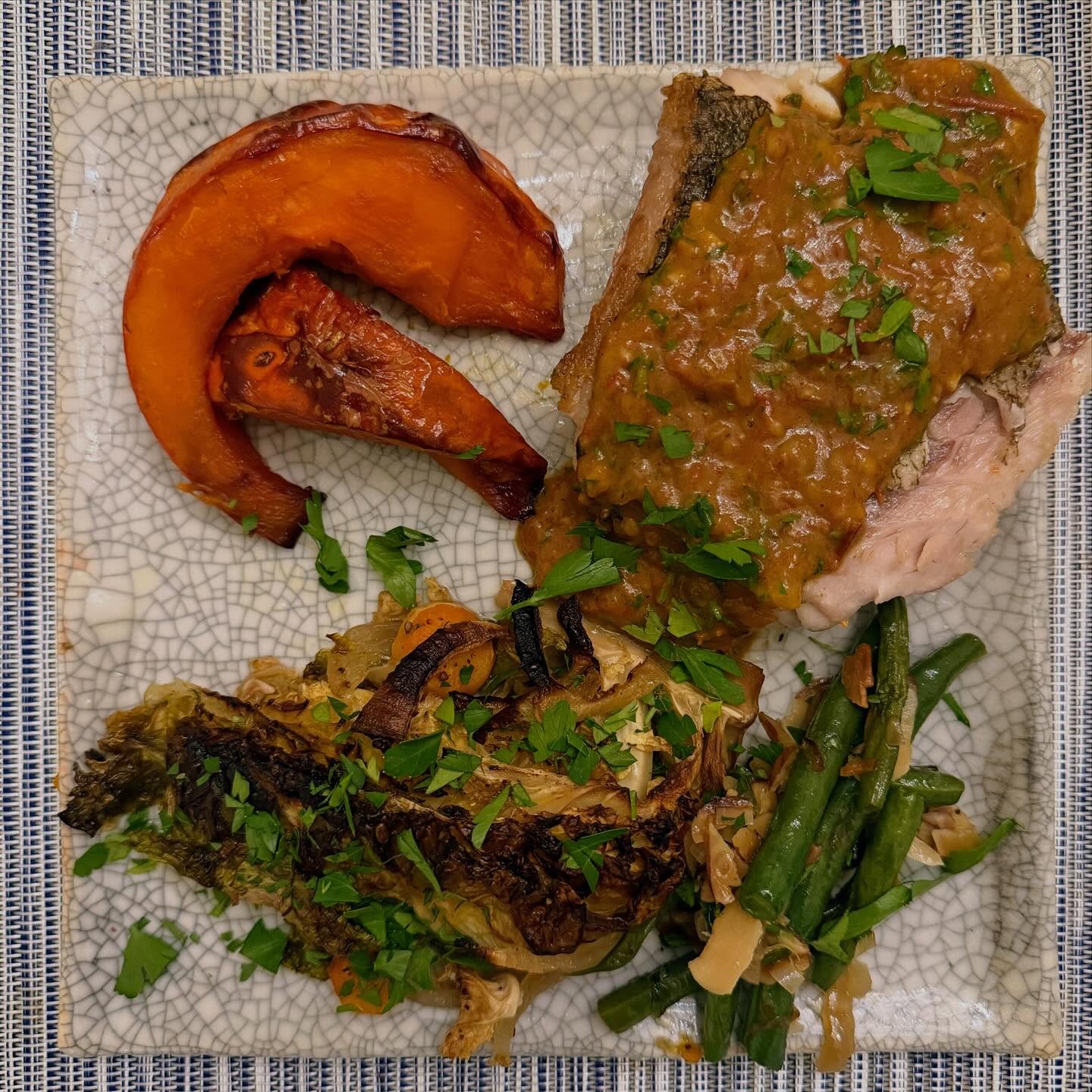
Rockfish with Tomato Miso Sauce, Roasted Cabbage, String Beans, and Kabocha
Tender rockfish gets a generous spoonful of tomato sauce deepened with tomato miso and brightened with lemon. Charred cabbage, garlicky string beans, and caramelized kabocha bring crisp edges and autumn sweetness to the plate.
By Jonathan Katzman · Cooked and photographed · Recipe updated
Serves: 4 servings
Tags: gluten-free, nut-free, pescatarian
Pan-Seared Rockfish
A dry surface and a hot pan give delicate rockfish a browned exterior while keeping the flesh moist. Adding the sauce at plating preserves the crust.
Ingredients
- 1.5 lb skin-on rockfish fillets, scaled, pin bones removed, cut into 4 portions
- 0.75 tsp kosher salt, plus more to taste
- 0.25 tsp freshly ground black pepper
- 2 tbsp ghee
Instructions
- Pat the fish thoroughly dry, especially the skin. Season with salt and pepper just before cooking.
- Heat a large skillet over medium-high heat. Add the ghee, then lay the fish skin-side down in a single layer, working in batches if necessary. Press gently with a spatula for the first 20 seconds to keep the skin flat.
- Cook for 4–6 minutes, until the skin is browned and releases readily. Reduce the heat if the skin darkens before the flesh begins turning opaque around the edges.
- Turn carefully and cook for another 1–4 minutes, depending on thickness, until the thickest part reaches 145°F and the flesh separates into moist flakes. Transfer directly to warm plates.
Notes
- Thin fillets may cook in less time; check early with an instant-read thermometer.
Tomato Miso Sauce
Tomato miso adds fermented depth to a gently reduced tomato sauce. Stirring it in near the end preserves its character and makes the salt level easier to control.
Ingredients
- 1 tbsp extra-virgin olive oil
- 1 medium shallot, finely diced
- 2 cloves garlic, minced
- 1 14-ounce can whole peeled tomatoes with their juices, crushed by hand
- 2 tbsp Shared Cultures tomato miso, verified gluten-free
- 0.25 cup water, plus more as needed
- 1–2 tsp fresh lemon juice
- to taste kosher salt and freshly ground black pepper
Instructions
- Warm the olive oil in a small saucepan over medium heat. Add the shallot and cook for 4–5 minutes until soft without much browning. Add the garlic and stir for 30 seconds.
- Add the tomatoes and their juices. Simmer uncovered for 15–20 minutes, stirring and breaking up the tomatoes, until thick but still spoonable.
- Mash lightly with a potato masher for a cohesive sauce that retains some texture.
- Whisk the tomato miso with the water, lower the heat, and stir it into the sauce. Warm gently for 1–2 minutes.
- Add lemon juice to taste and season with pepper. Taste before adding salt. Adjust with a little water if the sauce is too thick to drape over the fish.
Notes
- Tomato miso varies in saltiness; start with 1 tablespoon if yours is particularly concentrated, then add more to taste.
Deeply Roasted Cabbage
Keeping a little core attached holds the wedges together while their cut faces brown. Lemon balances the cabbage’s concentrated sweetness.
Ingredients
- 1 small head green or Savoy cabbage, about 1.5 pounds
- 2 tbsp extra-virgin olive oil
- 0.75 tsp kosher salt
- 0.25 tsp freshly ground black pepper
- 2 tsp fresh lemon juice
Instructions
- Heat the oven to 425°F. Cut the cabbage into 8 wedges, leaving enough core attached to hold each wedge together.
- Coat with olive oil, salt, and pepper, working a little oil between the outer leaves. Arrange on a metal sheet pan with a cut face down.
- Roast for 20 minutes, then turn onto the other cut face. Roast for another 10–20 minutes, until the core is tender and the edges are deeply browned. Remove any loose leaves early if they are becoming black rather than brown.
- Drizzle with lemon juice just before serving.
Roasted String Beans with Shallot and Garlic
A short, hot roast blisters the beans without making them limp. Adding the garlic partway through keeps the thin slices from burning.
Ingredients
- 12 oz string beans, trimmed and dried
- 1 medium shallot, thinly sliced
- 3 cloves garlic, thinly sliced
- 1.5 tbsp extra-virgin olive oil, divided
- 0.5 tsp kosher salt
- 1 tsp fresh lemon juice
Instructions
- Toss the beans and shallot with 1 tablespoon olive oil and the salt. Spread in a single layer on a sheet pan.
- Roast at 425°F for 8 minutes. Toss the garlic with the remaining olive oil, add it to the beans, and turn everything together.
- Roast for another 7–10 minutes, until the beans are lightly blistered and tender with a little bite, and the garlic is pale golden.
- Finish with lemon juice and adjust the seasoning.
Caramelized Kabocha Wedges
Kabocha’s dense flesh becomes creamy inside while its broad cut surfaces caramelize. Leaving the edible skin on helps the wedges keep their shape.
Ingredients
- 1 small kabocha squash, about 2 pounds
- 1.5 tbsp extra-virgin olive oil
- 0.5 tsp kosher salt
- 0.25 tsp freshly ground black pepper
Instructions
- Scrub the squash, halve it, and scoop out the seeds. Cut into wedges about 1 inch thick at their widest point.
- Toss with olive oil, salt, and pepper. Arrange on a sheet pan with a broad cut side down.
- Roast at 425°F for 20–25 minutes. Turn and continue roasting for 15–20 minutes, until browned at the edges and completely tender when pierced.
Notes
- Use a stable board and a sharp, heavy knife; trim a thin slice from the base if needed to keep the squash steady.
Overall Timing / Workflow
Start the dense vegetables first, make the sauce while they roast, and cook the fish last. Everything reaches the plate hot without holding the fish.
Instructions
- 0:00 — Heat the oven to 425°F. Cut and season the squash and cabbage; start the squash roasting.
- 0:10 — Add the cabbage on a separate pan. Begin the tomato sauce on the stovetop.
- 0:25 — Turn the squash and check the cabbage. Prepare the beans and aromatics, and dry the fish.
- 0:30 — Put the beans in the oven, keeping them in a single layer. Turn the cabbage as needed and rotate the pans for even browning.
- 0:38 — Add garlic to the beans. Finish the sauce with miso and lemon, then keep it warm over very low heat.
- 0:40 — Start searing the fish. Remove vegetables as they become tender and browned; hold loosely covered in a warm spot.
- 0:50–1:00 — Finish the vegetables with lemon, check the fish for doneness, and plate immediately.
Notes
- Use two oven racks and rotate pans. The beans can share a pan with the cabbage if there is ample open space; otherwise use a third pan.
Plating
Keeping the vegetables in distinct groups shows off their different textures, while a generous ribbon of sauce ties the plate together.
Ingredients
- 0.25 cup roughly chopped flat-leaf parsley
Instructions
- Place a portion of rockfish on each warm plate, skin-side up. Spoon warm tomato miso sauce over part of the fish, leaving some browned skin exposed.
- Arrange kabocha wedges beside the fish and group the cabbage and string beans along the remaining side of the plate.
- Scatter parsley over the fish and vegetables and serve immediately.
Leftover Path
Separate storage prevents the vegetables from soaking in sauce and lets the fish reheat gently without drying out.
Instructions
- Refrigerate the fish, sauce, and vegetables in separate airtight containers within 2 hours of cooking. Use the fish within 2 days and the vegetables and sauce within 3–4 days.
- Reheat vegetables at 400°F until hot and their edges regain some crispness, about 10–15 minutes.
- Warm the sauce in a covered skillet with a splash of water. Add the fish, cover, and heat gently until it reaches 165°F, avoiding a hard simmer.
- For a different meal, chop the cabbage and squash, warm them with the beans and sauce, and fold in flakes of fish at the end.