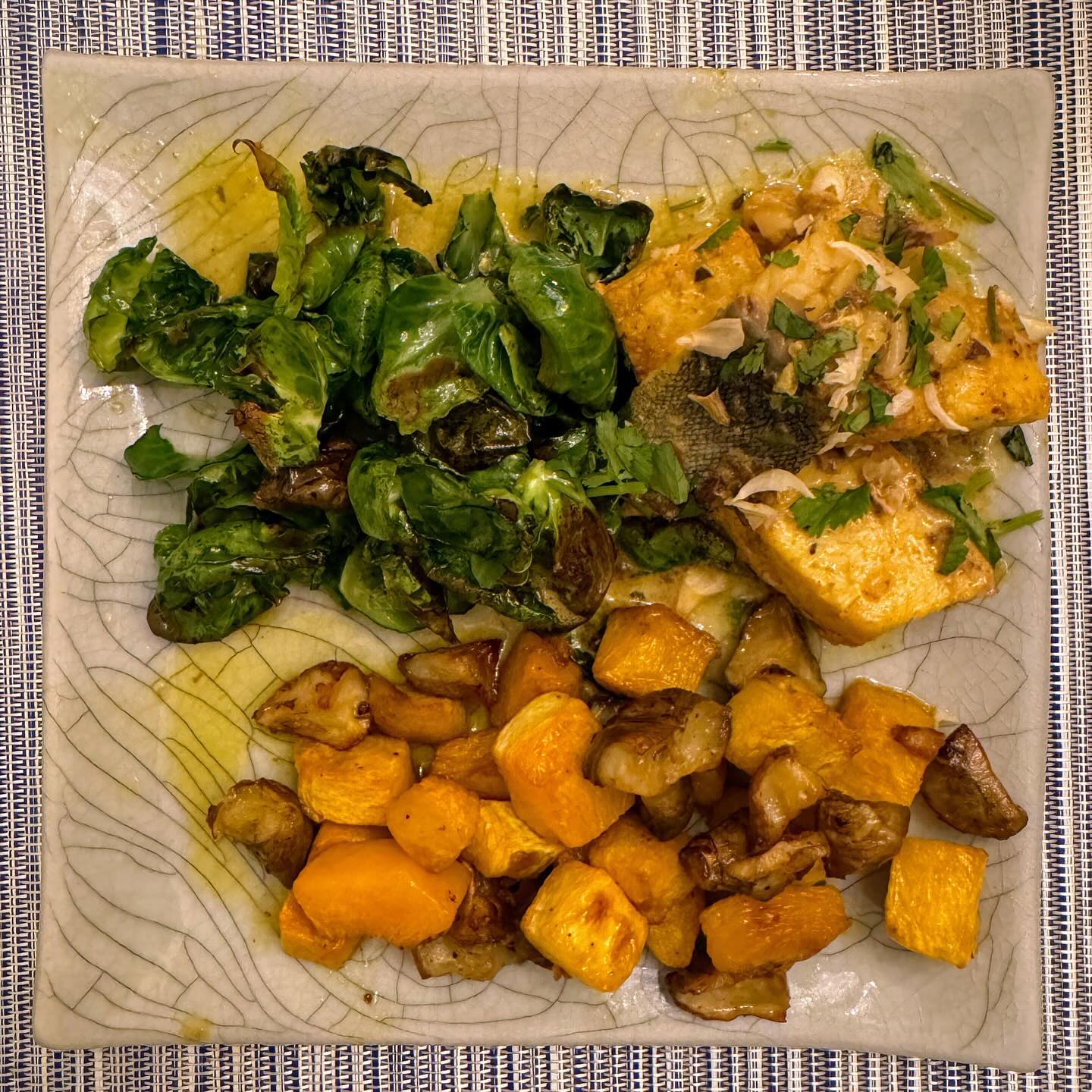
Sablefish and Swordfish Belly with Coconut Vadouvan Sauce, Brussels Chips, and Roasted Winter Vegetables
Rich sablefish and swordfish belly sit in a golden coconut-vadouvan sauce, with lime keeping the warm spices bright. Crisp Brussels leaves and browned sunchokes bring savory edges against sweet butternut squash—a winter dinner that comes together quickly with a little prep ahead.
By Jonathan Katzman · Cooked and photographed · Recipe updated
Serves: 6 servings
Tags: gluten-free, paleo, nut-free, pescatarian
Pan-Seared Sablefish
Sablefish's rich flesh stays succulent beneath a well-browned surface. Cooking it separately from the swordfish lets each fish reach the right doneness.
Ingredients
- 18 oz skin-on sablefish fillet, pin bones removed, cut into 6 small portions
- 1 tbsp ghee
- 1/2 tsp kosher salt, or to taste
- 1/4 tsp freshly ground black pepper
Instructions
- Pat the fish very dry and season with salt and pepper just before cooking.
- Heat the ghee in a large nonstick or well-seasoned skillet over medium-high heat. Add the fish skin-side down, pressing gently for the first 20 seconds to keep the skin flat.
- Reduce to medium and cook for 5–7 minutes, until the skin is browned and the flesh is becoming opaque up the sides.
- Turn carefully with a fish spatula and cook for another 2–4 minutes, depending on thickness. The center should reach 145°F and separate into moist flakes. Lift out promptly rather than leaving it in the hot pan.
Notes
- Sablefish is delicate; leave space between portions and avoid moving them until the skin releases.
Pan-Seared Swordfish Belly
The fatty belly cut browns beautifully with a quick sear. Pulling it as soon as it is cooked preserves its tender texture.
Ingredients
- 18 oz trimmed swordfish belly, cut into 6 portions about 3/4–1 inch thick
- 1 tbsp ghee
- 1/2 tsp kosher salt, or to taste
- 1/4 tsp freshly ground black pepper
Instructions
- Remove any tough skin or membrane, check for bones, and pat the portions dry. Season with salt and pepper.
- Heat the ghee in a second large skillet over medium-high heat. Add the belly pieces without crowding and sear for 3–4 minutes, until golden.
- Turn, reduce the heat to medium, and cook for another 2–5 minutes, checking thinner pieces first. Remove when the center reaches 145°F; the flesh should be opaque but still moist.
Notes
- Swordfish is a high-mercury fish and is not appropriate for pregnant or breastfeeding people or young children; serve them an appropriate lower-mercury fish instead.
Coconut Vadouvan Sauce
Blooming vadouvan in fat opens up its toasted allium and spice flavors. Coconut milk provides body, while lime keeps the sauce from feeling heavy beside the rich fish.
Ingredients
- 1 tbsp ghee
- 1 small shallot, finely minced
- 1 clove garlic, finely grated
- 1 tbsp gluten-free vadouvan spice blend without added sugar
- 1 13.5-oz can full-fat unsweetened coconut milk
- 1/4 cup water, plus more as needed
- 1 tbsp fresh lime juice, plus more to taste
- 1/2 tsp kosher salt, or to taste
- 1/4 cup roughly chopped cilantro leaves and tender stems, for finishing
- 2 tbsp unsweetened toasted coconut flakes, optional finishing garnish
Instructions
- Melt the ghee in a saucepan over medium heat. Add the shallot and cook for 3–4 minutes, until soft but not deeply browned.
- Add the garlic and vadouvan and stir for 30–45 seconds, until fragrant.
- Stir in the coconut milk and water. Simmer gently for 6–8 minutes, stirring occasionally, until lightly thickened but still pourable.
- Remove from the heat and stir in the lime juice and salt. Taste for a balance of warm spice, coconut sweetness, salt, and acidity.
- Reserve the cilantro and optional coconut flakes to scatter over the fish at serving.
Notes
- Vadouvan blends vary in salt and intensity; begin with 2 teaspoons if yours is particularly strong, then add more after simmering.
- Thin an over-reduced sauce with warm water. Reheat gently and add a fresh squeeze of lime just before serving.
Brussels Sprout Leaf Chips
Separated leaves blister much faster than whole sprouts. A single uncrowded layer gives crisp brown edges while keeping some green color.
Ingredients
- 1 1/2 lb Brussels sprouts, large outer leaves separated; reserve tight centers for another meal
- 1 1/2 tbsp olive oil
- 1/2 tsp kosher salt, or to taste
- 1 tsp fresh lime juice
Instructions
- Heat the oven to 450°F, preferably convection. Wash the separated leaves if needed and dry thoroughly; aim for about 6–8 loosely packed cups.
- Toss the leaves with the olive oil and salt. Spread across two sheet pans in a loose single layer.
- Roast for 6–10 minutes, rotating the pans and checking after 5 minutes. Remove crisp leaves as they finish; they should have dark, curled edges without becoming black throughout.
- Add a very light sprinkle of lime juice immediately before serving, keeping most of the leaves dry so they stay crisp.
Notes
- Separate and dry the leaves ahead of time, but roast them just before eating.
Roasted Sunchokes and Butternut Squash
Nutty, skin-on sunchokes balance the squash's sweetness. Similar-sized pieces roast evenly and develop browned surfaces without needing a heavy glaze.
Ingredients
- 1 lb sunchokes, scrubbed well and cut into 3/4-inch pieces
- 1 1/2 lb peeled and seeded butternut squash, cut into 3/4-inch pieces
- 3 tbsp olive oil
- 1 tsp kosher salt, or to taste
- 1/4 tsp freshly ground black pepper
- 2 tsp fresh lemon juice
Instructions
- Heat the oven to 425°F. Dry the sunchokes well after scrubbing.
- Toss the sunchokes and squash with the olive oil, salt, and pepper. Spread on a large sheet pan without crowding, using a second pan if necessary.
- Roast for 25–35 minutes, turning after about 15 minutes, until browned at the edges and tender when pierced. Remove any smaller pieces that finish early.
- Toss with the lemon juice, taste for salt, and serve hot.
Notes
- For a late-night dinner, roast these ahead, cool promptly, and refrigerate. Reheat on a sheet pan at 450°F for 10–15 minutes.
- Sunchokes can cause digestive discomfort; the modest portion here is intentional.
Overall Timing / Workflow
Advance roasting and sauce preparation make the final service fast without sacrificing crisp leaves or freshly cooked fish.
Instructions
- Earlier in the day, roast the sunchoke–squash medley, make the sauce, and separate and dry the Brussels leaves. Cool and refrigerate the cooked components promptly; keep the leaves dry and chilled separately.
- Before the final cooking window, preheat the oven to 450°F and have the fish portioned, checked for bones, and patted dry. Allow additional time if starting with a cold oven.
- 0:00 — Put the roasted vegetables in the oven to reheat. Warm the sauce gently on the stove and heat two fish skillets.
- 0:03 — Begin searing both fish, using separate pans so each can be removed when ready.
- 0:06 — Put the Brussels leaves into the oven on separate trays. Rotate trays as needed and begin checking the leaves after 5 minutes.
- 0:12–0:17 — Finish checking fish temperatures, remove crisp leaves, and check that the vegetables are hot throughout. Refresh the sauce with lime.
- 0:17–0:20 — Plate immediately. Cooking everything from scratch, rather than using the advance preparation, takes about 50–60 minutes.
Notes
- The fast finish assumes sufficient oven space and two large fish skillets; avoid crowding to force the timing.
Plating
Keeping the sauce beneath the fish and away from most of the Brussels leaves preserves the contrast between rich, tender fish and crisp greens.
Instructions
- Spoon a shallow pool of warm coconut vadouvan sauce onto one side of each warmed plate.
- Set one portion of sablefish and one portion of swordfish belly on the sauce, leaving browned surfaces and sablefish skin facing up.
- Arrange the squash and sunchokes alongside, then add a loose mound of Brussels chips away from the sauce.
- Finish the fish with cilantro and the optional toasted coconut flakes.
Leftover Path
Gentle reheating protects the fish, while separate storage keeps the vegetables from soaking in sauce.
Instructions
- Refrigerate fish, sauce, and vegetables in separate shallow containers within 2 hours. Use the fish within 2 days and the sauce and roasted vegetables within 3–4 days.
- Warm leftover fish gently in the sauce over low heat, covered, until it reaches 165°F; avoid prolonged simmering.
- Reheat the roasted vegetables at 425°F until hot and browned again. Briefly recrisp the Brussels leaves in the oven, watching closely because their edges burn quickly.
- Alternatively, flake the fish into the sauce with a splash of water to make a quick coconut fish stew, adding the roasted vegetables at the end.
Notes
- Brussels chips are best fresh and will soften during storage.