Salmon Burgers with Avocado, Early Girl Tomatoes, Fried Japanese Sweet Potatoes and Roasted Arrowhead Cabbage
A crisp-edged salmon burger gets juicy Early Girl tomato, creamy avocado, and a scattering of cilantro—no bun needed. Golden Japanese sweet potato rounds, tender roasted cabbage, and crackly Brussels sprout leaves make this a generous early-fall plate.
By Jonathan Katzman · Cooked and photographed · Recipe updated
Serves: 4 servings
Tags: gluten-free, paleo, nut-free, pescatarian
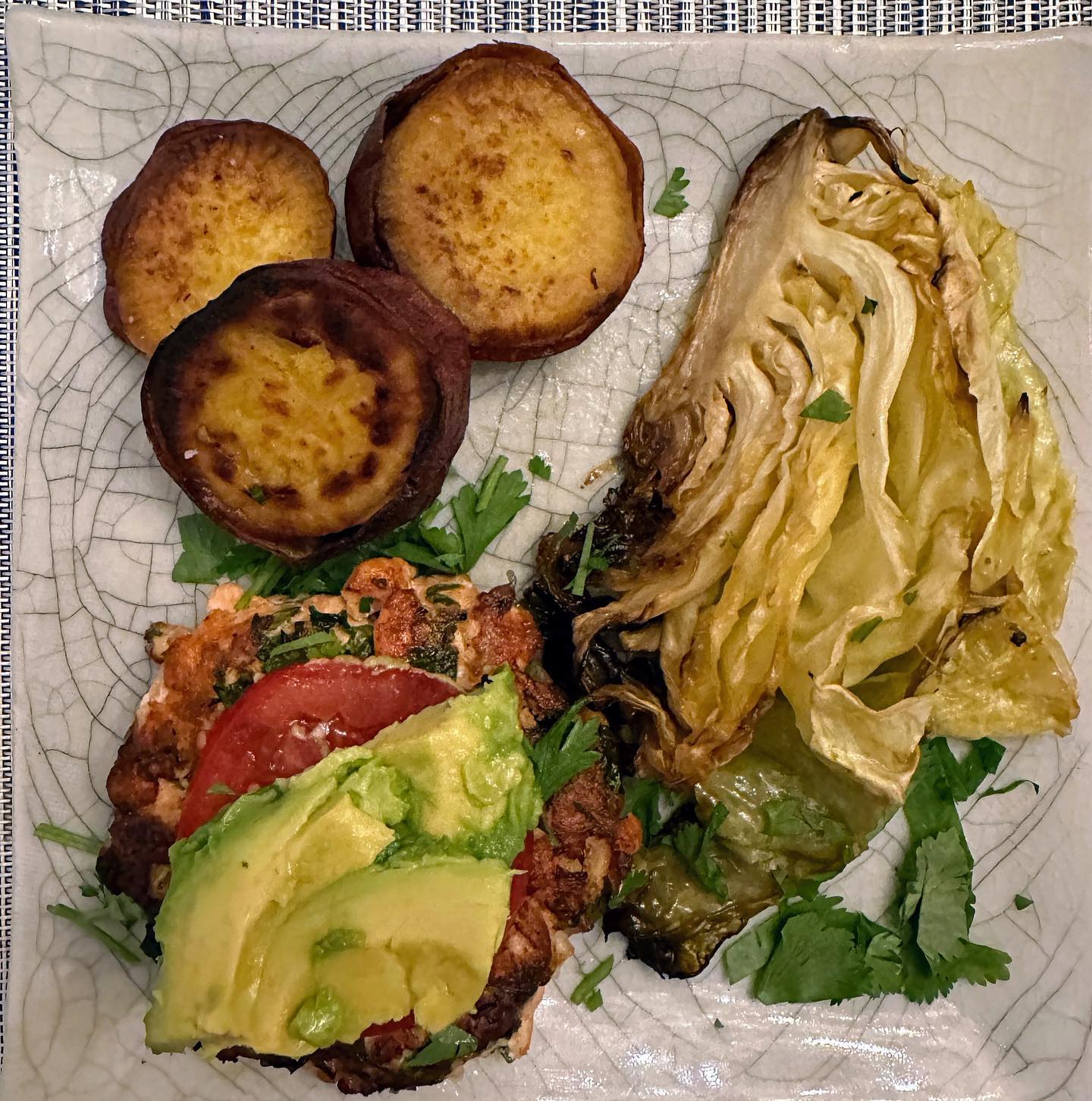
Herbed Salmon Burgers
Finely processing a little of the salmon binds the hand-chopped fish while preserving a chunky texture. A short chill helps the patties hold together and develop a browned crust.
Ingredients
- 1 1/2 lb skinless, boneless salmon, kept cold
- 1/4 cup finely chopped cilantro
- 2 tablespoons finely minced shallot
- 1 teaspoon finely grated lemon zest
- 3/4 teaspoon fine sea salt
- 1/4 teaspoon freshly ground black pepper
- 2 tablespoons ghee
Instructions
- Check the salmon carefully for pin bones. Cut one-quarter of it into chunks and pulse in a small food processor until tacky and paste-like. Hand-chop the remaining salmon into roughly 1/4-inch pieces.
- Mix the salmon paste with the chopped fish, cilantro, shallot, lemon zest, salt, and pepper just until cohesive.
- With damp hands, form four patties about 3/4 inch thick. Set on parchment and refrigerate for 20 minutes.
- Heat the ghee in a large skillet over medium-high heat. Add the patties without crowding and cook undisturbed for 3–4 minutes, until a firm golden crust forms.
- Turn carefully with a wide spatula, reduce the heat to medium, and cook another 3–5 minutes. The centers should reach 145°F on an instant-read thermometer. Transfer directly to warm plates.
Notes
- Keep the fish cold throughout shaping. If a patty cracks at the edges, press it together before cooking rather than adding flour.
Avocado, Early Girl Tomato and Cilantro Topping
Tomato provides acidity and moisture against the browned salmon, while avocado adds richness without a separate sauce.
Ingredients
- 2 ripe avocados
- 3–4 Early Girl tomatoes
- 1/3 cup cilantro leaves and tender stems
- 1 lemon, cut into wedges
- to taste flaky sea salt
Instructions
- Slice the tomatoes about 1/4 inch thick. Halve, pit, and slice the avocados just before serving.
- Layer tomato and avocado over the cooked salmon burgers. Season lightly with flaky salt and a squeeze of lemon.
- Scatter cilantro over the burgers and around the plate. Serve the remaining lemon wedges alongside.
Fried Japanese Sweet Potato Rounds
Steaming first cooks the dense centers evenly. Drying and shallow-frying the rounds then produces caramelized faces without burning them before the interiors soften.
Ingredients
- 1 1/2 lb Japanese sweet potatoes, scrubbed, skins left on
- 4 tablespoons ghee, divided
- 1/2 teaspoon fine sea salt, plus more to taste
Instructions
- Cut the sweet potatoes crosswise into 1/2-inch-thick rounds.
- Steam over simmering water for 12–16 minutes, until a skewer enters the centers with only slight resistance. Keep the rounds intact rather than cooking them until crumbly.
- Spread on a tray and let steam-dry for 10 minutes. Blot away any remaining surface moisture.
- Heat 2 tablespoons ghee in a wide skillet over medium heat. Fry half the rounds in a single layer for 4–6 minutes per side, until golden brown with darker caramelized patches.
- Repeat with the remaining ghee and potatoes. Season with salt while hot.
Notes
- Hold the first batch on a rack in a 200°F oven if needed; avoid stacking, which softens the crust.
Roasted Arrowhead Cabbage
Keeping a little core attached holds the wedges together. High heat browns the cut faces while the layered interior becomes tender and sweet.
Ingredients
- 1 large head arrowhead cabbage, about 2 lb
- 3 tablespoons extra-virgin olive oil
- 3/4 teaspoon fine sea salt
- 1/4 teaspoon freshly ground black pepper
- 1 tablespoon fresh lemon juice
Instructions
- Heat the oven to 425°F. Remove any damaged outer cabbage leaves and cut the head lengthwise into four wedges, leaving enough core to hold each wedge together.
- Coat the wedges with olive oil, salt, and pepper, working a little oil between the outer leaves. Arrange on a heavy sheet pan with one cut side down.
- Roast for 20 minutes, then turn onto the other cut side and roast another 10–20 minutes. The edges should be deeply browned and a knife should slide easily through the thickest part.
- Spoon any pan juices over the wedges and finish with lemon juice.
Notes
- If the edges darken before the core is tender, loosely cover the wedges with foil for the remaining cooking time.
Brussels Sprout Chips
Separated leaves roast into light, crisp chips. Thorough drying and a sparse layer of oil keep them from steaming.
Ingredients
- 3/4 lb large Brussels sprouts
- 1 tablespoon extra-virgin olive oil
- 1/4 teaspoon fine sea salt
Instructions
- Trim the Brussels sprout bases and peel away the larger leaves, trimming the bases again as needed to release more leaves. Reserve the tight centers for another meal.
- Wash the leaves if needed and dry very thoroughly. Toss with just enough olive oil to coat lightly, then spread in a single layer on a sheet pan.
- Roast at 425°F for 8–14 minutes, checking after 6 minutes. Remove individual leaves as they become crisp and browned at the edges; smaller leaves finish first.
- Season with salt and leave uncovered until serving.
Notes
- Use two trays if necessary. Crowded leaves soften rather than crisp.
Overall Timing / Workflow
The oven handles the cabbage and chips while the stovetop finishes the sweet potatoes and salmon. Cooking the burgers last keeps the fish juicy and the toppings fresh.
Instructions
- 0:00 — Heat the oven to 425°F. Cut and season the cabbage, then start roasting it.
- 0:10 — Slice and steam the sweet potatoes. Mix and shape the salmon patties, then refrigerate them.
- 0:25 — Spread the steamed potatoes out to dry. Separate and dry the Brussels sprout leaves. Turn the cabbage.
- 0:35 — Start frying the sweet potatoes. Roast the Brussels sprout leaves on a separate oven rack, checking frequently and removing crisp leaves as they finish.
- 0:45 — Remove the tender cabbage and keep warm. Finish the potatoes, then cook the salmon in a separate skillet or the wiped-out potato skillet.
- 0:50 — Slice the tomatoes and avocados while the salmon cooks. Assemble and serve everything at about 60 minutes.
Notes
- Actual timing depends on cabbage size and skillet capacity. If cooking runs long, hold the cabbage and potatoes in a low oven after the chips are finished.
Plating
Keeping the moist toppings on the burger and the crisp sides alongside preserves the plate's contrasting textures.
Instructions
- Place one salmon burger on each warm plate and top with tomato, avocado, and cilantro.
- Set a roasted cabbage wedge alongside and spoon its juices over the cabbage rather than the burger crust.
- Arrange the sweet potato rounds in a loose overlapping row. Serve the Brussels sprout chips in a separate bowl or add them at the last moment.
- Offer lemon wedges at the table.
Leftover Path
Separate storage keeps tomato juices from soaking the fish and gives the roasted and fried vegetables a better chance of crisping again.
Instructions
- Refrigerate cooked salmon, cabbage, and sweet potatoes in separate shallow containers within 2 hours. Use within 3 days. Store cut tomato and avocado separately and use the next day for best quality.
- Reheat cabbage and sweet potatoes at 375°F for 10–15 minutes. Warm salmon gently in a covered skillet over low heat with a splash of water until it reaches 165°F, or serve it cold, flaked over a salad.
- Keep fully cooled Brussels sprout chips airtight and use within a day. Recrisp at 300°F for 3–5 minutes, watching closely.
- Roast the reserved Brussels sprout centers, thinly slice them for a sauté, or add them to a vegetable hash.