Salmon Ssam, Spring Banchan & Kimchi Jjigae Pozole
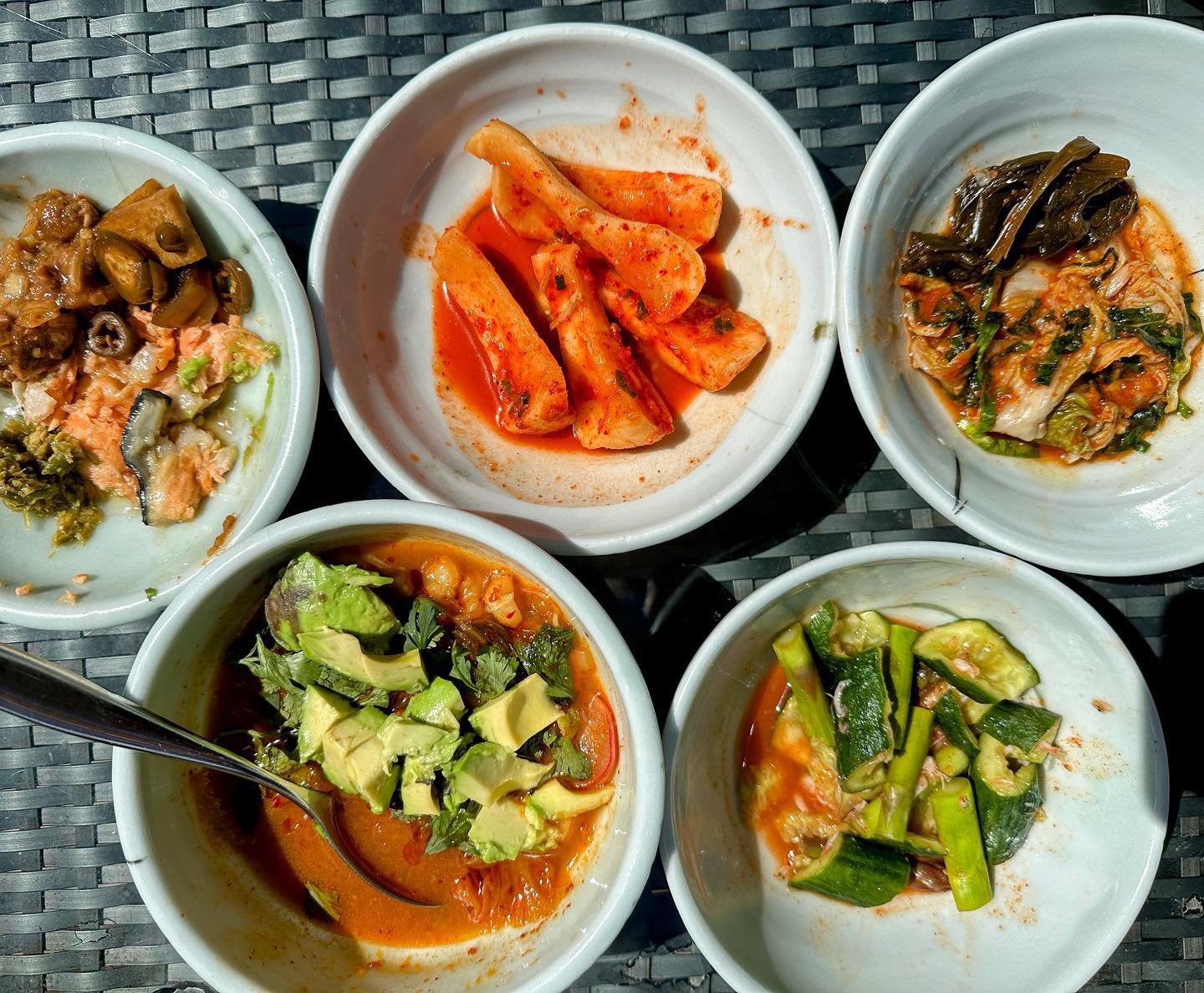
Flaky salmon, ginger-scallion sauce, and savory ssamjang make lettuce wraps worth assembling bite by bite, with sharp soy pickles and two kinds of kimchi alongside. Spring asparagus and smashed cucumber keep things crisp, while kimchi jjigae pozole brings a warming bowl of hominy, pork, avocado, and cilantro to the table.
By Jonathan Katzman · Cooked and photographed · Recipe updated
Serves: 4 servings
Tags: gluten-free, dairy-free, nut-free
Roasted Salmon & Lettuce for Ssam
Gently roasted salmon stays moist enough to flake into wraps, leaving the fermented sauces and pickles to provide most of the seasoning.
Ingredients
- 1 1/4 lb skin-on salmon fillet
- 2 tsp avocado oil
- 1/2 tsp kosher salt
- 2 heads little gem or butter lettuce, leaves separated, washed, and dried
Instructions
- Heat the oven to 400°F. Line a rimmed baking sheet with parchment.
- Pat the salmon dry, rub with avocado oil, and season with salt. Set it skin-side down on the baking sheet.
- Roast for 12–18 minutes, depending on thickness, until the thickest part reaches 145°F. Check early to avoid overcooking.
- Rest briefly, then separate into large flakes. Serve with the lettuce leaves; include the skin if desired.
Notes
- Previously cooked salmon works well here. Serve chilled or rewarm gently, covered, rather than roasting it again.
Ginger-Scallion Sauce
Hot oil softens the raw bite of ginger and scallions while preserving their fragrance. A little rice vinegar cuts through the salmon's richness.
Ingredients
- 6 scallions, finely chopped
- 2 tbsp finely minced peeled ginger
- 3 tbsp avocado oil
- 1 tsp toasted sesame oil
- 2 tsp unseasoned rice vinegar
- 1/2 tsp kosher salt, plus more to taste
Instructions
- Combine the scallions, ginger, and salt in a heatproof bowl.
- Heat the avocado oil in a small saucepan until shimmering but not smoking. Carefully pour over the scallion mixture and stir.
- Cool for 5 minutes, then add the sesame oil and rice vinegar. Taste and adjust the salt.
Ssamjang
Doenjang supplies deep fermented savoriness, while gochujang adds gentle heat and sweetness. Keep it thick enough to dab into a lettuce wrap.
Ingredients
- 3 tbsp gluten-free doenjang
- 1 tbsp gluten-free gochujang
- 1 small garlic clove, finely grated
- 1 tsp toasted sesame oil
- 1 tsp honey
- 1 tsp toasted sesame seeds
- 1–2 tsp water, as needed
Instructions
- Stir the doenjang, gochujang, garlic, sesame oil, honey, and sesame seeds together.
- Add only enough water to make a soft, spoonable paste. Taste before adding any extra seasoning; the fermented pastes supply plenty of salt.
Notes
- Prepared gluten-free ssamjang can replace this component.
Quick Soy-Pickled Onion, Jalapeño & Mushrooms
A hot tamari-vinegar brine seasons the mushrooms and lightly softens the onion, making a sharp, savory counterpoint to the salmon.
Ingredients
- 1/2 medium yellow onion, cut into 3/4-inch pieces
- 1 jalapeño, sliced into rings
- 4 oz small cremini mushrooms, quartered
- 1/3 cup gluten-free tamari
- 1/3 cup unseasoned rice vinegar
- 1/2 cup water
- 2 tbsp honey
Instructions
- Place the onion and jalapeño in a clean heatproof container.
- Bring the tamari, vinegar, water, and honey to a simmer. Add the mushrooms and simmer for 3 minutes.
- Pour the mushrooms and hot brine over the onion and jalapeño. Keep the vegetables submerged with a small clean weight if needed.
- Cool briefly, then refrigerate for at least 2 hours, preferably overnight. Drain the portion being served.
Notes
- These are refrigerator pickles, not shelf-stable preserves. Prepared gluten-free jangajji is equally appropriate for this spread.
Chonggak Radish Kimchi
Crunchy fermented radish brings a different texture from the cabbage kimchi and refreshes the palate between rich bites.
Ingredients
- 8 oz prepared gluten-free chonggak kimchi, with some brine
Instructions
- Cut large radishes lengthwise into manageable wedges, preserving any attached greens.
- Arrange in a shallow bowl and spoon a little kimchi brine around them. Serve cool.
Notes
- Check prepared kimchi for wheat-containing seasonings.
Baechu Kimchi & Soy-Marinated Ramps
Soft napa cabbage kimchi provides juicy acidity, while preserved ramps add a concentrated allium bite.
Ingredients
- 8 oz prepared gluten-free baechu kimchi
- 4–8 prepared gluten-free soy-marinated ramps
Instructions
- Cut the cabbage kimchi across the leaves into bite-size pieces, keeping small stacks together where possible.
- Arrange in a shallow dish with a little of its brine. Lay the drained ramps alongside.
Notes
- Use prepared preserved ramps; they need not be freshly harvested for this late-March meal.
Cucumber & Asparagus Muchim
Briefly blanched asparagus stays vivid and crisp, while smashed cucumber catches the spicy, tangy dressing in its irregular edges.
Ingredients
- 3 Persian cucumbers
- 8 oz asparagus, woody ends removed
- 1/2 tsp kosher salt, plus more for blanching water
- 1 tbsp unseasoned rice vinegar
- 2 tsp gluten-free tamari
- 1–2 tsp gochugaru
- 1 tsp toasted sesame oil
- 1 tsp honey
- 1 small garlic clove, finely grated
- 1 small shallot, thinly sliced
- 1 tsp toasted sesame seeds
Instructions
- Lightly smash the cucumbers with the flat side of a knife and cut into roughly 1-inch pieces. Toss with 1/2 teaspoon salt and drain in a colander for 10 minutes.
- Cut the asparagus into 2-inch lengths. Blanch in boiling salted water for 1–3 minutes, until bright green and just crisp-tender. Transfer to ice water, then drain and dry thoroughly.
- Whisk together the vinegar, tamari, gochugaru, sesame oil, honey, and garlic.
- Pat the cucumbers dry. Toss with the asparagus, shallot, dressing, and sesame seeds just before serving.
Notes
- If the salad releases water, lift the vegetables into the serving bowl and add only as much dressing as needed.
Kimchi Jjigae Pozole
Sour kimchi and pork create a savory jjigae-style broth, while hominy gives it pozole's distinctive chew. Avocado and cilantro soften and brighten the chile-rich soup.
Ingredients
- 1 tbsp avocado oil
- 1/2 medium yellow onion, thinly sliced
- 2 garlic cloves, minced
- 1 1/2 cups well-fermented gluten-free napa cabbage kimchi, chopped
- 1/4 cup kimchi brine
- 1 tbsp gluten-free gochujang
- 1 tsp gochugaru, or to taste
- 3 cups unsalted pork stock
- 1 15-ounce can white hominy, drained and rinsed
- 8 oz cooked pork shoulder, shredded
- 1–2 tsp gluten-free tamari, as needed
- 1 large avocado, diced just before serving
- 1/2 cup cilantro leaves and tender stems
Instructions
- Heat the avocado oil in a saucepan over medium heat. Add the onion and cook for 4–5 minutes, until softened. Add the garlic and stir for 30 seconds.
- Add the chopped kimchi and cook for 5–7 minutes, stirring, until softened and fragrant. Stir in the gochujang and gochugaru.
- Add the stock, kimchi brine, hominy, and cooked pork. Bring to a simmer and cook gently for 20 minutes, until the flavors meld and the hominy is tender.
- Taste before adding tamari. Add a splash of water if the broth is too salty or concentrated; simmer uncovered briefly if it tastes thin.
- Divide among four small bowls and finish with diced avocado and cilantro.
Notes
- Use fully cooked pork here; the short simmer is not sufficient to tenderize raw shoulder.
- The broth should be tangy and savory, not simply hot. Start with the lower amount of chile if the kimchi is already fiery.
Overall Timing / Workflow
Prepared ferments keep the workload manageable. The soup can wait at a gentle simmer while the salmon and fresh vegetables are finished.
Instructions
- The day before or at least 2 hours ahead: make the jangajji and refrigerate. Confirm that the pork is already cooked and the prepared ferments are ready.
- 0:00 — Heat the oven, start the soup, and wash and dry the lettuce.
- 0:10 — Make the ginger-scallion sauce and ssamjang while the soup simmers.
- 0:20 — Salt the cucumbers, blanch and chill the asparagus, and put the salmon in the oven.
- 0:30 — Arrange both kimchis, ramps, and drained pickles in serving bowls. Mix the muchim dressing.
- 0:35–0:40 — Check the salmon for doneness, dress the muchim, and taste the soup. Cut the avocado and assemble the spread.
Plating
Separate shallow dishes preserve each banchan's texture and let everyone build balanced lettuce wraps.
Instructions
- Place the salmon on a platter with the ginger-scallion sauce, ssamjang, and drained jangajji in separate small dishes. Set the lettuce alongside.
- Arrange the radish kimchi, cabbage kimchi with ramps, and cucumber-asparagus muchim in individual shallow bowls.
- Serve the pozole hot in small bowls, with the avocado and cilantro added at the last moment.
- Build wraps with salmon, a little of each sauce, and a pickle; enjoy the kimchis and muchim between bites.
Leftover Path
Keeping the soup garnishes and wrap components separate prevents soggy vegetables and makes a second lunch easy to assemble.
Instructions
- Refrigerate cooked salmon and soup in separate shallow containers within 2 hours. Use within 3–4 days, counting from their original cooking date rather than from when this meal was assembled.
- Keep lettuce dry, sauces covered, and fermented vegetables in their own containers. Use the ginger-scallion sauce within 3 days and the quick refrigerator pickles within 1 week.
- Eat dressed muchim by the next day for the best texture. Store avocado separately and cut fresh avocado for subsequent servings when possible.
- Reheat the soup to 165°F, adding a little water if needed. Serve the salmon cold in fresh lettuce wraps, or gently reheat it to 165°F.
- Freeze the soup without avocado or cilantro for up to 2 months.