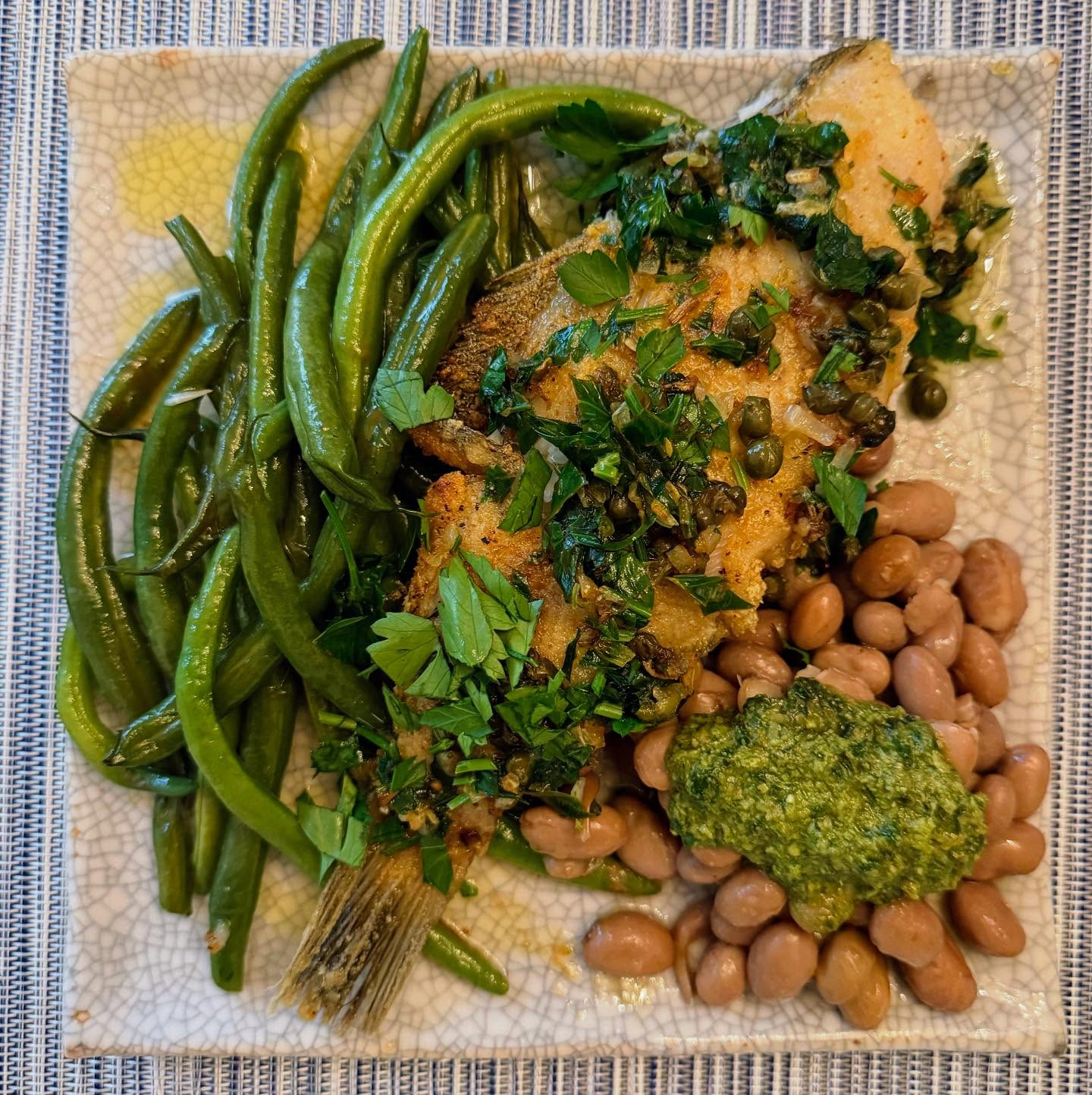
Sand Dabs with Lemon-Caper Brown Butter, Glazed Green Beans, and Shelling Beans with Pesto
Delicate sand dabs get a crisp golden crust and a spoonful of nutty brown butter sharpened with lemon, capers, and plenty of parsley. Glossy green beans and creamy summer shelling beans with basil pesto make this a generous coastal supper without weighing down the fish.
By Jonathan Katzman · Cooked and photographed · Recipe updated
Serves: 4 servings
Tags: gluten-free, pescatarian
Pan-Seared Sand Dabs
A thin cassava-flour coating protects the delicate flesh and forms a crisp surface. Cooking the small fish on the bone keeps them moist.
Ingredients
- 2–2½ lb whole dressed sand dabs, heads and guts removed, scaled and fins trimmed, tails left intact
- ½ cup cassava flour, for a light dredge
- 3 tablespoons ghee, divided
- ¾ teaspoon kosher salt, plus more to taste
- ¼ teaspoon freshly ground black pepper
Instructions
- Pat the fish very dry, including the cavities. Season with salt and pepper just before cooking.
- Spread the cassava flour on a plate. Lightly coat each fish and shake off all excess; the coating should be thin, not cakey.
- Heat a large heavy skillet over medium-high heat. Add enough ghee to coat the bottom, then lay in the fish without crowding. Cook in batches, adding the remaining ghee as needed.
- Sear for 3–4 minutes on the first side until golden and releasing easily. Turn gently with a fish spatula and cook for another 2–4 minutes, depending on thickness. The flesh should be opaque and lift readily from the backbone; the thickest part should reach 145°F without the thermometer touching bone.
- Transfer to a rack set over a baking sheet. Keep the first batch briefly in a 200°F oven while finishing the remaining fish; leave uncovered to protect the crust.
Notes
- Allow one large or two small sand dabs per person, depending on their size.
- Serve bone-in and remind diners to lift the flesh from the central skeleton and watch for small bones.
Lemon-Caper Brown Butter with Parsley
Browned milk solids give the mild fish a toasted richness, while lemon and capers keep the finish bright. Parsley adds freshness and texture.
Ingredients
- 6 tablespoons unsalted butter
- 3 tablespoons capers, drained and patted dry
- 1 teaspoon finely grated lemon zest
- 2 tablespoons fresh lemon juice
- 1 tablespoon water, plus more as needed
- ½ cup roughly chopped flat-leaf parsley, loosely packed
- to taste kosher salt and freshly ground black pepper
Instructions
- Melt the butter in a small light-colored saucepan over medium heat. Cook, swirling frequently, until the foam subsides and the milk solids turn hazelnut brown, about 3–5 minutes.
- Add the dry capers carefully and let them sizzle for 30–45 seconds. Remove the pan from the heat before the butter darkens further.
- Let the bubbling settle briefly, then carefully stir in the lemon juice and water; they will sputter. Add the zest and half the parsley.
- Taste before adding salt, since the capers are salty. Spoon over the fish just before serving and scatter with the remaining parsley.
Notes
- If the sauce tastes too sharp or concentrated, stir in another teaspoon or two of warm water. Discard and restart if the milk solids turn black or smell acrid.
Glazed Green Beans
A shallow steam cooks the beans evenly, then the reduced liquid and butter form a light glaze rather than a heavy sauce.
Ingredients
- 1 lb green beans, stem ends trimmed
- ⅓ cup water
- 1½ tablespoons unsalted butter
- ¼ teaspoon kosher salt, plus more to taste
- 1 teaspoon fresh lemon juice
Instructions
- Place the beans, water, butter, and salt in a wide skillet. Bring to a simmer, cover, and cook for 4–6 minutes, until bright green and nearly tender.
- Uncover and cook for another 2–5 minutes, tossing frequently, until the beans are tender with a little bite and the liquid has reduced to a glossy coating.
- If the pan dries before the beans are tender, add water a tablespoon at a time. Finish with the lemon juice and adjust the salt.
Notes
- Use a wide pan so the cooking liquid can evaporate quickly without overcooking the beans.
Tender Summer Shelling Beans
Gentle simmering keeps fresh shelling beans intact and creamy. A little cooking broth keeps them supple beneath the pesto.
Ingredients
- 3 cups fresh shelled cranberry or borlotti beans, from approximately 2½–3 lb in their pods
- 2 cloves garlic, lightly crushed
- 1 bay leaf
- 1 teaspoon kosher salt, plus more to taste
- 1 tablespoon extra-virgin olive oil
- as needed water to cover the beans by 1 inch
Instructions
- Rinse the shelled beans and place in a saucepan with the garlic and bay leaf. Cover with water by 1 inch and add the salt.
- Bring just to a boil, then immediately reduce to a gentle simmer. Cook partially covered for 25–40 minutes, until creamy all the way through but still holding their shape. Start tasting at 20 minutes; fresh beans vary considerably.
- Keep the beans submerged during cooking, adding hot water as needed. Remove the bay leaf and garlic when tender.
- Drain off excess broth, reserving it, and toss the beans with the olive oil and 2–3 tablespoons of their cooking liquid. Adjust the salt and keep warm for serving.
Notes
- If fresh shelling beans are unavailable, use 3 cups drained cooked cranberry or cannellini beans and warm gently with the garlic, bay leaf, and a little water for 10 minutes.
Basil Pesto
A thick basil pesto gives the mild shelling beans concentrated herbal flavor. Parmesan and pine nuts supply savory depth and body.
Ingredients
- 2 cups fresh basil leaves, loosely packed
- ¼ cup pine nuts
- 1 small clove garlic, roughly chopped
- ⅓ cup finely grated Parmigiano Reggiano
- ⅓ cup extra-virgin olive oil
- 1 teaspoon fresh lemon juice
- to taste kosher salt
Instructions
- Pulse the pine nuts and garlic in a small food processor until finely chopped.
- Add the basil and Parmesan. Pulse while gradually adding the olive oil, stopping while the pesto still has a little texture.
- Stir in the lemon juice and salt to taste. Keep thick enough to sit on top of the beans; loosen with a spoonful of warm bean broth at serving if needed.
Notes
- Keep covered until serving and avoid boiling the pesto, which dulls its fresh basil flavor.
Overall Timing / Workflow
The shelling beans set the pace and can wait in their broth. Cooking the fish last preserves its delicate texture and crisp coating.
Instructions
- 0:00 — Shell the beans and start them simmering with the garlic and bay leaf.
- 0:20 — Make the pesto, trim the green beans, chop the parsley, and measure the lemon and capers. Heat the oven to 200°F if cooking the fish in batches.
- 0:30 — Check the shelling beans. Once tender, leave them warm in their broth. Dry and season the fish, then dredge just before searing.
- 0:35 — Begin searing the fish. Start the green beans in a separate skillet, timing them to finish with the final batch of fish.
- 0:45 — Brown the butter and finish the lemon-caper sauce. Drain and dress the shelling beans, reserving a little broth.
- 0:50–1:00 — Finish the fish, glaze the green beans, and plate everything while hot.
Notes
- Allow extra simmering time if the shelling beans are more mature; hold off on cooking the fish until the beans are tender.
Plating
Keeping the pesto on the shelling beans and spooning the butter directly over the fish preserves the distinct flavors and textures of the three dishes.
Instructions
- Arrange the glazed green beans along one side of each warm plate.
- Spoon the shelling beans alongside, leaving most of their broth in the pan, and top each portion with a generous spoonful of pesto.
- Set the sand dabs across the center, slightly overlapping the beans if needed. Spoon the lemon-caper brown butter and parsley over the fish, leaving some golden crust exposed.
- Serve immediately with a small side plate for fish bones.
Leftover Path
Separating the fish, vegetables, and pesto prevents soggy crust and allows gentle reheating without dulling the herbs.
Instructions
- Refrigerate leftovers within 2 hours. Store the fish, green beans, shelling beans with a little broth, pesto, and any remaining butter sauce separately.
- Eat the fish within 1–2 days. Remove the flesh carefully from the bones and warm gently, covered, in a skillet with a splash of water; spoon warmed butter sauce over it after heating. The crust will soften.
- Use the beans and green beans within 3–4 days. Warm shelling beans in their broth, then add pesto off heat; reheat green beans briefly so they do not become mushy.
- Use refrigerated pesto within 3–4 days or freeze it in small portions. Leftover shelling beans, pesto, and boneless fish also make a good room-temperature lunch with a squeeze of lemon.