Dungeness Crab Feast with Wine-Steamed Clams, Miso Snap Peas and Crab Carbonara
Cracked Dungeness crab comes to the table glossy with garlic butter, alongside clams in a wine broth full of green garlic and tender shallots. Sweet potato fries bring crisp edges and sweetness, morel-miso butter coats snappy green peas, and a small bowl of silky crab carbonara rounds out a winter seafood feast.
By Jonathan Katzman · Cooked and photographed · Recipe updated
Serves: 4 servings
Tags: gluten-free, nut-free, pescatarian
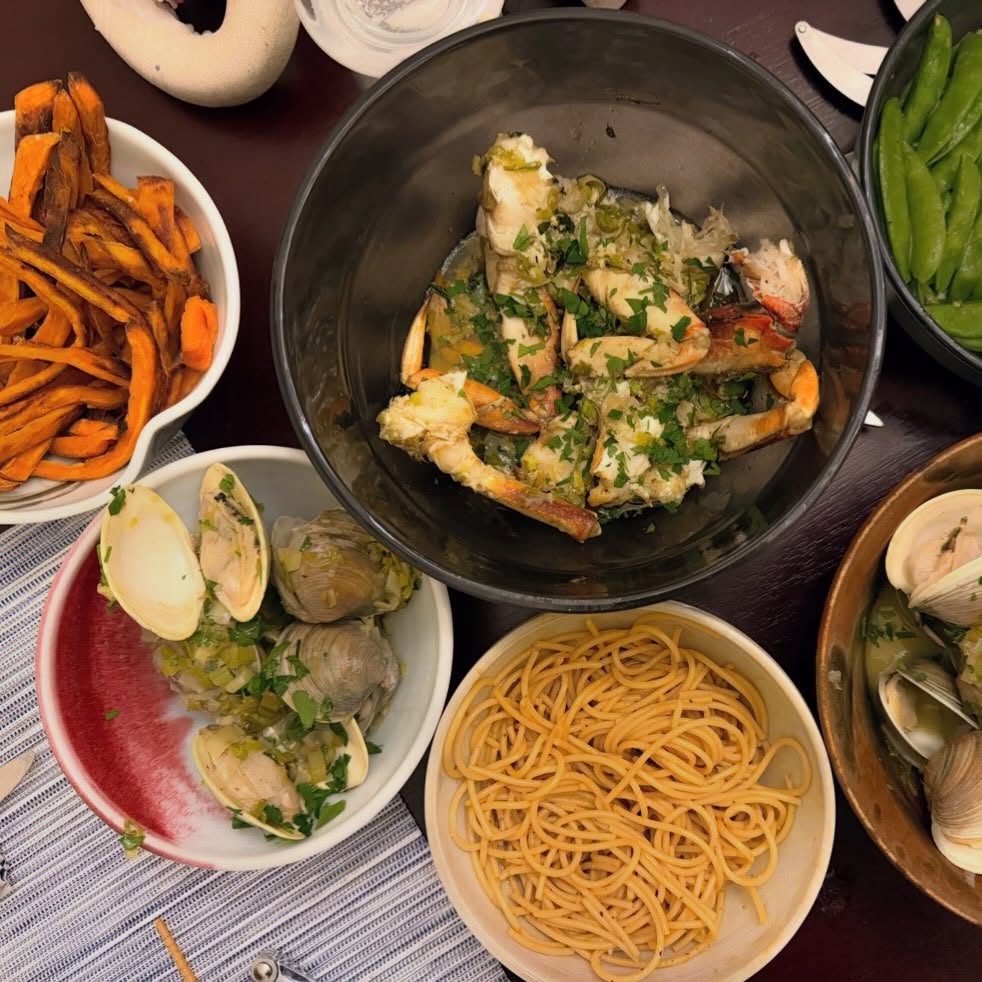
Garlic-Butter Roasted Dungeness Crab
Roasting cracked, cooked crab briefly warms the meat while garlic butter works into the shell openings. Lemon and parsley keep the rich shellfish bright.
Ingredients
- 2 whole cooked Dungeness crabs, about 4–5 pounds total before cleaning, chilled and cleaned with viscera and gills discarded
- 4 tablespoons unsalted butter
- 1 tablespoon olive oil
- 5 cloves garlic, finely chopped
- 2 tablespoons dry white wine
- 1 tablespoon lemon juice, plus wedges for serving
- 3 tablespoons chopped flat-leaf parsley
- to taste kosher salt and freshly ground black pepper
Instructions
- Heat the oven to 425°F. Reserve 3 ounces of picked body meat for the carbonara, keeping it refrigerated. Divide the remaining crab into leg clusters and body sections; crack the thick shells without crushing them.
- Melt the butter with the olive oil in a small saucepan over medium-low heat. Add the garlic and cook for 1–2 minutes until fragrant but not browned. Stir in the wine and remove from the heat.
- Arrange the crab snugly in a roasting pan. Spoon the garlic butter into the cracked shells and over the body sections.
- Cover tightly and roast for 8 minutes. Uncover, baste, and roast for another 4–7 minutes, until the meat is steaming hot throughout; avoid prolonged roasting, which dries cooked crab.
- Toss with lemon juice and parsley. Taste the pan juices before adding salt, then finish with black pepper and serve with lemon wedges.
Notes
- Buy from a reputable supplier and follow current California crab advisories. Ask for crab cooked without viscera when available; do not save viscera or whole-crab cooking liquid for the pasta.
- This method starts with fully cooked crab, not raw crab.
Clams with White Wine, Green Garlic and Spring Shallots
Gentle sweating brings sweetness out of the young alliums. The clams supply their own briny stock, so the broth needs little more than wine, butter and herbs.
Ingredients
- 2 pounds live Manila or littleneck clams
- 1 tablespoon olive oil
- 3 stalks green garlic, cleaned and thinly sliced, tough tops discarded
- 3 small spring shallots, white and tender green parts finely chopped
- 3/4 cup dry white wine
- 1/4 cup water
- 2 tablespoons unsalted butter
- 2 tablespoons chopped flat-leaf parsley
- 1 teaspoon lemon juice, plus more to taste
- to taste freshly ground black pepper
Instructions
- Scrub the clams under cold running water. Discard cracked clams and any open ones that do not close when tapped. If sandy, purge according to your fishmonger's instructions, then rinse well.
- Heat the olive oil in a wide covered pot over medium-low heat. Add the green garlic and spring shallots and sweat for 4–5 minutes until soft, without browning.
- Add the wine, bring to a boil, and simmer uncovered for 2 minutes. Add the water and clams, then cover.
- Steam over medium-high heat, shaking the pot occasionally, until the clams open, usually 5–9 minutes depending on size. Transfer opened clams to a warm bowl as they finish; discard any that remain closed after cooking.
- Remove the pot from the heat. Swirl the butter into the broth, then add parsley, lemon juice and black pepper. Taste before adding any salt. Pour the broth over the clams, leaving behind any grit at the bottom.
Notes
- If mature shallots are all that is available, use 2 medium shallots in place of the spring shallots.
Roasted Sweet Potato Fries
A hot oven and uncrowded pans give the sweet potatoes browned edges without a coating. Their sweetness balances the briny shellfish and savory miso.
Ingredients
- 1 1/2 pounds orange-fleshed sweet potatoes, scrubbed
- 2 tablespoons avocado oil
- 3/4 teaspoon kosher salt, plus more to taste
- 1/4 teaspoon freshly ground black pepper
Instructions
- Heat the oven to 425°F with two heavy sheet pans inside.
- Cut the sweet potatoes into roughly 1/4–3/8-inch-thick batons. Dry well, then toss with avocado oil, salt and pepper.
- Carefully spread across the hot pans in a single layer with space between the pieces.
- Roast for 30–40 minutes, turning after about 20 minutes and rotating the pans as needed. Remove thinner pieces early if they brown faster.
- Serve when the centers are tender and the edges are deeply browned. Taste and add a little more salt if needed.
Notes
- These are browned oven fries with tender centers rather than uniformly crisp deep-fried fries. Crowding the pans will make them steam.
Morel-Miso Butter Sugar Snap Peas
Earthy mushroom miso adds depth without obscuring the peas' sweetness. Adding butter and miso after lowering the heat keeps the glaze smooth and the peas bright.
Ingredients
- 1 pound sugar snap peas, strings removed
- 2 teaspoons avocado oil
- 2 tablespoons unsalted butter, softened
- 1 tablespoon gluten-free morel mushroom miso, such as Shared Cultures if confirmed gluten-free
- 2 tablespoons water
- 1 teaspoon lemon juice
Instructions
- Mash the softened butter and miso together.
- Heat the avocado oil in a wide skillet over medium-high heat. Add the snap peas and toss for 2 minutes, until bright green with a few lightly blistered spots.
- Add the water and cover for 1 minute, just until the peas are crisp-tender.
- Lower the heat to its minimum setting. Add the miso butter and toss until glossy, loosening with a splash of water if needed.
- Remove from the heat and add the lemon juice. Taste before adding salt; the miso may supply enough.
Notes
- Check the miso's ingredients and gluten-free status; fermented grain blends vary. Start with 2 teaspoons if your miso is particularly salty.
Tomalley-Style Carbonara with Picked Crab
Egg yolks, Parmesan and starchy pasta water make a silky sauce without cream. Finely mashed crab brings shellfish sweetness and body while avoiding the use of crab viscera.
Ingredients
- 8 ounces Banza chickpea spaghetti, gluten-free
- 3 ounces cooked Dungeness crab meat reserved from the roasted crab component, checked for shell
- 1 large pasteurized egg
- 3 large pasteurized egg yolks
- 1 1/2 ounces finely grated Parmigiano Reggiano
- 1 tablespoon unsalted butter
- 1/2 teaspoon freshly ground black pepper, plus more to taste
- as needed kosher salt for the pasta water
Instructions
- Bring a large pot of moderately salted water to a boil. Cook the spaghetti according to package directions, checking early so it stays firm. Reserve 1 1/2 cups of cooking water before draining; do not rinse.
- Meanwhile, finely mash half the crab meat. Whisk the egg, yolks, Parmesan and black pepper together in a large heatproof bowl, then mix in the mashed crab.
- Whisk 1/4 cup hot pasta water into the egg mixture in a slow stream.
- Add the hot drained pasta, butter and remaining crab meat. Toss vigorously, adding pasta water a tablespoon at a time until the sauce coats the strands.
- If the sauce remains thin, set the bowl over a pan of gently simmering water without letting its base touch the water. Toss continuously until glossy and lightly thickened, lifting the bowl away from the heat as needed to prevent scrambling.
- Serve immediately, keeping the sauce slightly looser than the desired final consistency because chickpea pasta absorbs liquid quickly.
Notes
- Do not substitute crab viscera for the picked meat. Dungeness crab viscera can concentrate domoic acid, and cooking or freezing does not reliably make it safe.
- Pasteurized eggs are recommended because this gentle emulsification method does not guarantee that unpasteurized eggs reach a safe temperature.
Overall Timing / Workflow
The fries take the longest and share the crab's oven temperature. Finishing the pasta, clams and peas close together keeps the shellfish tender and the carbonara fluid.
Instructions
- 0:00 — Heat the oven and sheet pans to 425°F. Clean and crack the cooked crab, reserve the pasta meat, scrub the clams, and prep the alliums, parsley and snap peas.
- 0:20 — Put the sweet potato fries in the oven. Mix the miso butter and carbonara egg mixture; refrigerate the egg mixture until needed.
- 0:35 — Turn the fries. Prepare the crab's garlic butter and start heating the pasta water.
- 0:40 — Put the crab in the oven. Sweat the alliums for the clams and cook the pasta according to its package timing.
- 0:45 — Add wine and then clams to their pot. Start the snap peas in a separate skillet.
- 0:50 — Finish the peas, check the crab and fries, and transfer opened clams to their serving bowl. Finish the clam broth.
- 0:55 — Emulsify the carbonara and bring everything to the table immediately. Use doneness cues rather than the clock if any component needs an extra few minutes.
Notes
- If cooking alone, finish the crab and fries first and hold them loosely covered for a few minutes while completing the clams and pasta. Do not hold carbonara over heat.
Plating
Separate family-style bowls preserve each dish's texture and keep the crab butter, clam broth and pasta sauce distinct.
Instructions
- Pile the cracked crab in a warmed deep platter and spoon its garlic-butter juices over the exposed meat.
- Serve the clams in a separate shallow bowl with their allium broth and parsley.
- Put the fries in a dry, wide bowl and the glossy snap peas in a small serving dish.
- Twirl the carbonara into a warmed bowl and serve immediately, with crab crackers, shell bowls and plenty of napkins.
Leftover Path
Separating shellfish from shells makes storage easier, while gentle reheating protects the meat. The fries benefit from dry heat rather than microwaving.
Instructions
- Within 2 hours of serving, pick leftover crab, remove clam meat from the shells, and refrigerate in separate shallow covered containers. Store clam broth separately and refrigerate the peas, pasta and fries promptly.
- Use leftover shellfish and pasta within 1–2 days. Reheat leftovers to 165°F; add shellfish near the end of a gently heated soup or sauce to limit toughening.
- Recrisp fries in a 425°F oven for 8–12 minutes. Reheat peas briefly with a splash of water, accepting a softer texture.
- Warm carbonara gently with a little water until thoroughly hot; the sauce may lose its original silky texture. Do not serve leftover pasta merely lukewarm to preserve the emulsion.