Chanterelle Miso Black Cod with Toasted Cabbage and Two Winter Mashes
Rich black cod gets a savory cap of chanterelle miso and soft shallots, with toasted cabbage dressed while warm in Forager’s Vinaigrette. Butternut squash and purple sweet potato make two distinct, deeply colored mashes—a sweet, earthy counterpoint to the fish and sharp dressing.
By Jonathan Katzman · Cooked and photographed · Recipe updated
Serves: 4 servings
Tags: pescatarian
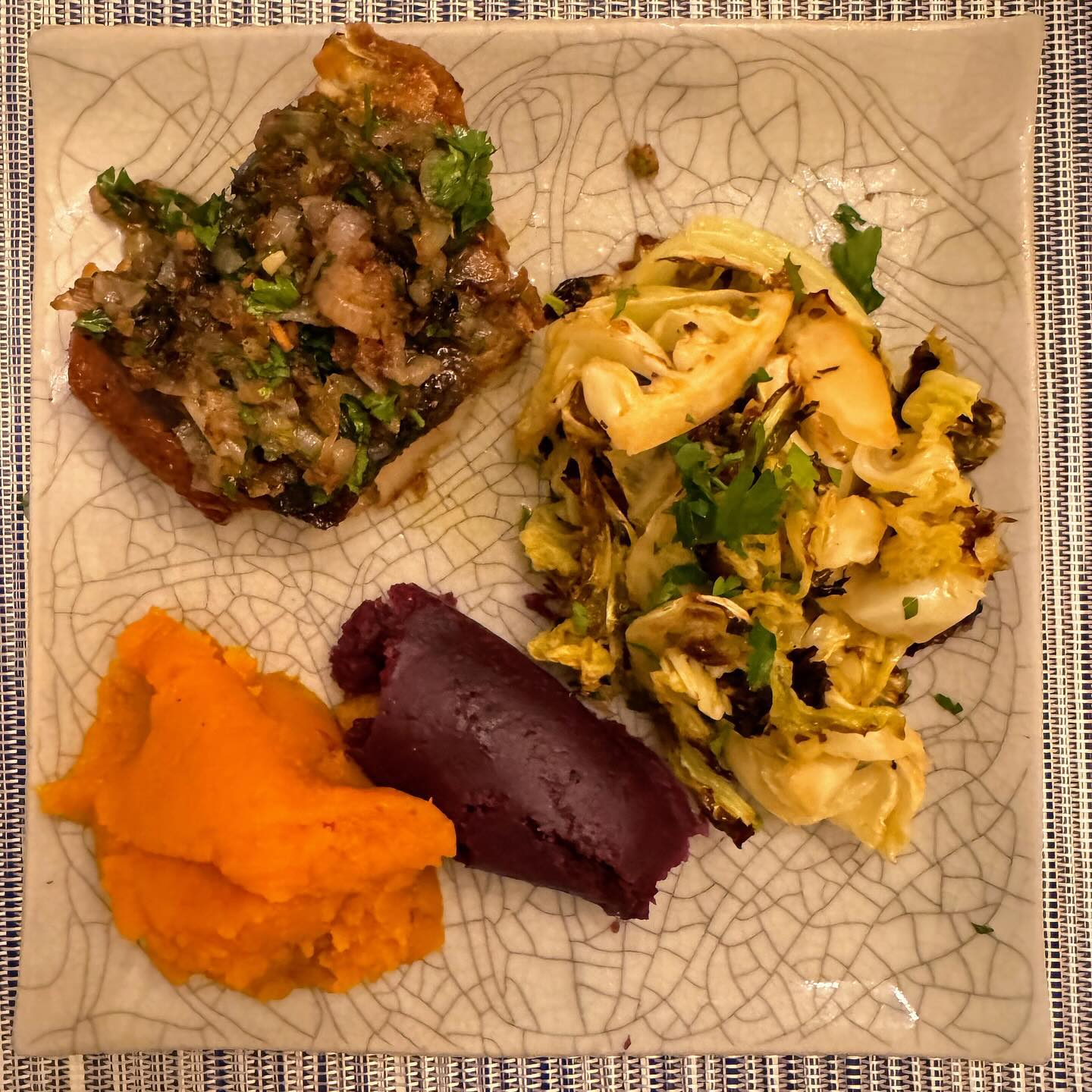
Roasted Black Cod
A hot oven browns the edges while black cod’s abundant natural fat keeps the flesh succulent. Adding the miso topping after roasting avoids scorching it.
Ingredients
- 4 6-ounce skin-on black cod fillets, pin bones removed
- 2 teaspoons olive oil
- 1/4 teaspoon fine sea salt
- 1/4 teaspoon freshly ground black pepper
Instructions
- Heat the oven to 425°F. Pat the fish very dry and place skin-side down on a lightly oiled, foil-lined sheet pan.
- Rub with olive oil and season lightly with salt and pepper; the miso topping will provide most of the salt.
- Roast for 12–18 minutes, depending on thickness, until the flesh separates easily into moist flakes and the thickest part reaches 145°F.
- If the surface needs more color, broil briefly at the end, watching continuously. Spoon the warm chanterelle miso and shallots over the fish just before serving.
Notes
- Black cod is also sold as sablefish; it is not interchangeable with lean true cod for timing and texture.
Chanterelle Miso and Shallot Topping
Slowly softened shallots supply sweetness and texture, while mushroom miso adds concentrated savory depth. A small amount of lemon keeps the topping from feeling heavy.
Ingredients
- 4 medium shallots, thinly sliced
- 2 tablespoons olive oil
- 3 tablespoons Shared Cultures chanterelle miso
- 3 tablespoons warm water, plus more as needed
- 1–2 teaspoons fresh lemon juice
- 2 tablespoons roughly chopped cilantro
Instructions
- Warm the olive oil in a small skillet over medium-low heat. Add the shallots and cook for 12–15 minutes, stirring regularly, until soft and golden at the edges rather than crisp.
- Whisk the miso with the warm water. Lower the heat, stir the mixture into the shallots, and warm gently for 1 minute without boiling.
- Remove from the heat and add 1 teaspoon lemon juice. Taste and add the remaining teaspoon if needed.
- Fold in the cilantro just before spooning over the fish. Add water a teaspoon at a time if necessary to make a moist, spoonable topping.
Notes
- Miso salinity varies considerably. Start with 2 tablespoons if yours is especially salty, then add more to taste.
Toasted Cabbage with Forager’s Vinaigrette
Roasting gives cabbage tender ribs and dark, crisp leaf edges. Dressing it while warm lets the vinaigrette coat the folds without softening everything into a stew.
Ingredients
- 1 medium head Savoy cabbage, about 2 pounds
- 2 tablespoons olive oil
- 1/4 teaspoon fine sea salt
- 3 tablespoons Noma Projects Forager’s Vinaigrette, plus more to taste
- 2 tablespoons roughly chopped cilantro
Instructions
- Heat the oven to 425°F. Quarter the cabbage, remove the tough core, and cut the leaves into broad 2–3-inch pieces. Dry thoroughly.
- Toss with olive oil and salt, then spread on a large sheet pan with as little overlap as possible.
- Roast for 25–30 minutes, turning once, until the thick ribs are tender-crisp and the leaf edges have dark toasted patches.
- Transfer to a bowl and toss with the Forager’s Vinaigrette while still warm. Taste before adding more dressing or salt.
- Fold in the cilantro immediately before serving.
Notes
- If the cabbage crowds the pan, use two pans; trapped steam prevents the toasted edges.
Mashed Butternut Squash
Roasting concentrates the squash’s sweetness and removes excess moisture, producing a mash that holds its shape on the plate.
Ingredients
- 1 medium butternut squash, about 2 1/2 pounds, halved lengthwise and seeded
- 2 teaspoons olive oil
- 2 tablespoons unsalted butter
- 1/2 teaspoon fine sea salt, plus more to taste
- 1 teaspoon fresh lemon juice
Instructions
- Heat the oven to 425°F. Rub the squash’s cut surfaces with olive oil and place cut-side down on a parchment-lined sheet pan.
- Roast for 45–60 minutes, until the thickest part yields easily to a knife.
- Scoop the hot flesh into a saucepan. Mash with the butter, salt, and lemon juice until mostly smooth.
- If loose or watery, stir over low heat for 3–5 minutes to evaporate moisture. Taste and adjust the salt, then cover and keep warm.
Mashed Purple Sweet Potato
Purple sweet potatoes make a naturally dense, earthy mash. Butter and small additions of hot water soften the texture without diluting the color.
Ingredients
- 1 1/2 pounds purple-fleshed sweet potatoes, scrubbed
- 2 tablespoons unsalted butter
- 1/4–1/2 cup hot water, as needed
- 1/2 teaspoon fine sea salt, plus more to taste
Instructions
- Heat the oven to 425°F. Prick the sweet potatoes several times and place on a lined sheet pan.
- Roast for 50–70 minutes, until completely tender through the center; a skewer should slide in without resistance.
- Split while hot and scoop the flesh into a saucepan. Mash thoroughly with the butter and salt.
- Stir in hot water a tablespoon at a time until smooth enough to spoon but still firm enough to hold a mound. Cover and keep warm over very low heat.
Notes
- Choose purple-fleshed sweet potatoes, not Japanese sweet potatoes with purple skins and pale interiors.
Overall Timing / Workflow
The mashes tolerate holding, leaving the final oven window for cabbage and fish. The shallot topping can also wait briefly off heat.
Instructions
- 0:00 — Heat the oven to 425°F. Prepare the squash and sweet potatoes and start roasting them on the lower-middle rack.
- 0:15 — Slice the shallots, make the miso-shallot topping, and set it aside before adding the cilantro. Cut and dry the cabbage.
- 0:50 — Check the roots and squash; remove each when fully tender. Mash them and hold covered over very low heat, stirring occasionally.
- 1:00 — Roast the cabbage on the upper-middle rack. Pat dry and season the fish.
- 1:12 — Put the fish on the lower-middle rack. Roast until cooked through, checking early if the fillets are thin.
- 1:25 — Dress the hot cabbage, gently rewarm the shallot topping, and fold in the herbs. Check the mashes’ consistency and plate everything hot.
Notes
- Allow another 10–15 minutes if the sweet potatoes are especially large. Use tenderness rather than the clock to decide when to mash them.
Plating
Keeping the two mashes separate preserves their contrasting colors and flavors. A loose pile of cabbage provides height beside the rich fish.
Instructions
- On each warm plate, place a generous spoonful of orange squash mash beside a smaller mound of purple sweet potato mash.
- Set a black cod fillet alongside the mashes and spoon the warm chanterelle miso and shallots over its surface.
- Pile the dressed cabbage beside the fish, leaving its toasted edges visible. Divide any remaining herbs and dressing from the cabbage bowl among the plates.
Leftover Path
Separate storage protects the fish from overhandling and keeps the vegetable textures distinct. The mashes reheat well with a little added moisture.
Instructions
- Refrigerate the fish and shallot topping, cabbage, and mashes in separate covered containers within 2 hours. Use the fish within 2 days and the vegetables within 3–4 days.
- Reheat the mashes in covered saucepans over low heat with a splash of water, stirring until hot.
- Warm the cabbage in a 400°F oven until hot and lightly crisp at the edges.
- Reheat the fish covered in a 300°F oven with a spoonful of water until it reaches 165°F. Warm the topping separately and spoon it over afterward.
- Alternatively, flake the chilled fish over leftover cabbage for a cold lunch, with the mashes served warm alongside.