Seared Duck Breast with Pluot Sauce, Dill-Anchovy Cabbage and Ghee-Fried Japanese Sweet Potatoes
Crisp-skinned duck and a chunky, sweet-tart pluot sauce sit alongside cabbage cooked until its browned leaves yield to a fork. A generous dill, anchovy and walnut dressing keeps the plate bright and savory, while Japanese sweet potatoes get creamy centers and deeply golden edges from a final fry in ghee. A good Friday-night dinner with most of the work done before the duck hits the pan.
By Jonathan Katzman · Cooked and photographed · Recipe updated
Serves: 4 servings
Tags: gluten-free, paleo
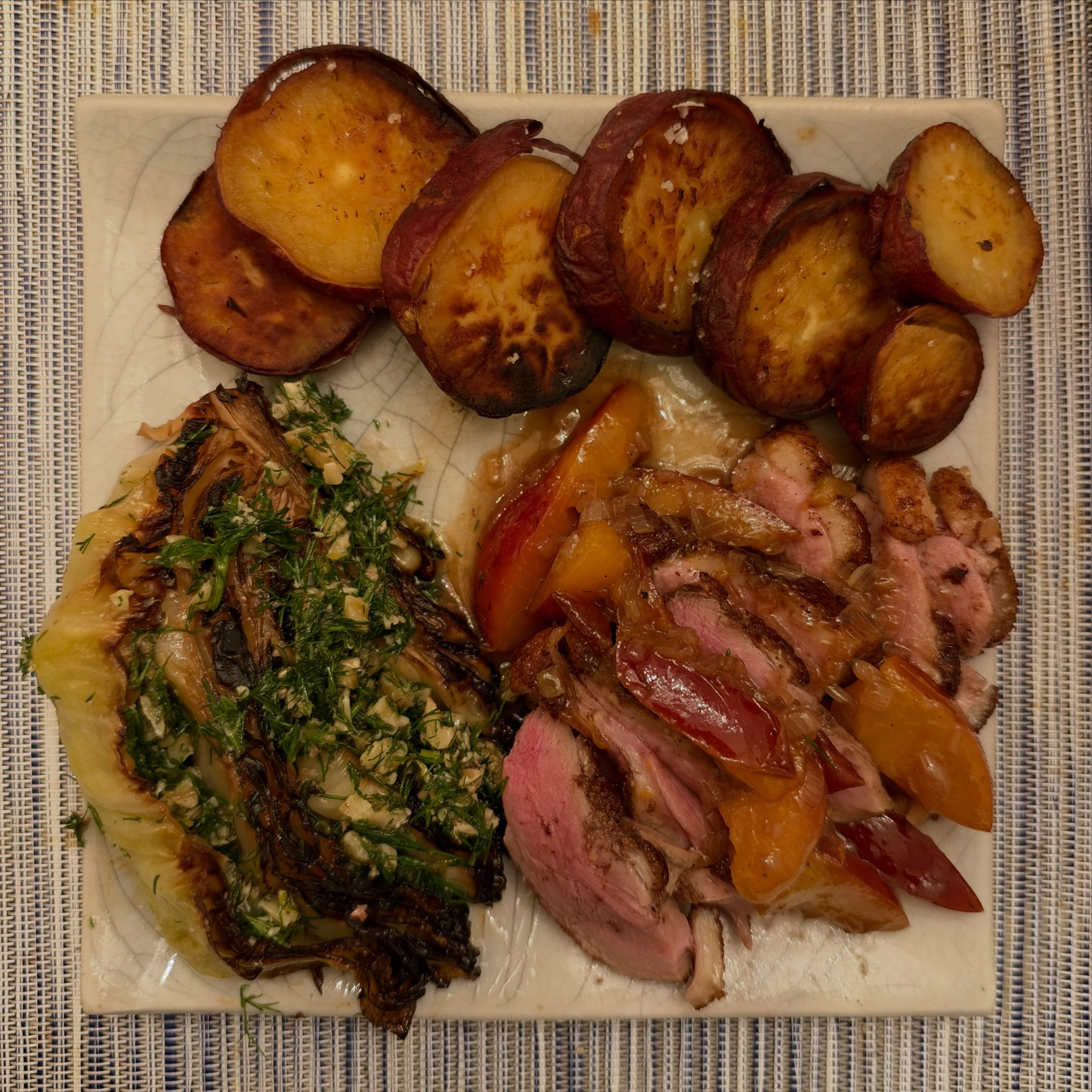
Seared Duck Breast
Starting skin-side down in a cool pan renders the fat gradually, making the skin crisp without overcooking the breast.
Ingredients
- 2 lb boneless, skin-on duck breasts, preferably pasture-raised
- 1 1/2 tsp kosher salt, plus more to taste
- 1/2 tsp freshly ground black pepper
- 1 tsp ghee
Instructions
- Pat the breasts dry. Score the skin in a shallow crosshatch, cutting through the skin and fat but not into the meat. Season with salt; if time permits, refrigerate uncovered overnight.
- Heat the oven to 400°F if it is not already on for the vegetables. Pat the duck skin dry again and season the flesh with pepper.
- Spread the ghee in a thin film in a cool, heavy ovenproof skillet. Add the breasts skin-side down without crowding; use two skillets if necessary. Set over medium-low heat.
- Render for 12–18 minutes, pouring excess fat into a heatproof container periodically. Press lightly during the first minute to establish even contact. The skin should become deep golden and crisp; lower the heat if it darkens before the fat has rendered.
- Turn and sear the flesh side for 1–2 minutes. Check the center with an instant-read thermometer. If needed, transfer the skillet to the oven, skin-side up, for 3–8 minutes, checking frequently.
- For the pink finish pictured, remove at 130–135°F and rest skin-side up for 8–10 minutes. Slice across the grain about 1/4 inch thick just before serving.
Notes
- Pink duck breast is below the USDA poultry recommendation of 165°F and carries greater food-safety risk. Cook to 165°F for the conservative safety standard, particularly for vulnerable diners.
- Strain and refrigerate the rendered fat for another meal; keep the captioned ghee for frying the sweet potatoes.
Chunky Pluot-Shallot Sauce
Briefly cooking the fruit keeps recognizable wedges in a light sauce. Vinegar balances both the fruit's sweetness and the richness of the duck.
Ingredients
- 1 lb pluots, pitted and cut into thick wedges, fresh or thawed frozen with their juices
- 1 large shallot, finely diced
- 1 tbsp olive oil
- 1/2 cup water
- 1 tbsp red wine vinegar, plus more to taste
- 1/4 tsp kosher salt, plus more to taste
- 1/4 tsp freshly ground black pepper
Instructions
- Warm the olive oil in a small saucepan over medium-low heat. Add the shallot and a pinch of the salt; cook for 4–5 minutes until translucent, without browning.
- Add the pluots, water, vinegar, remaining salt and pepper. Bring to a gentle simmer.
- Cook uncovered for 8–12 minutes, folding gently, until the fruit is tender and some flesh has softened into the liquid while several wedges remain intact.
- Adjust salt and vinegar. The sauce should be spoonable and lightly coat the fruit, not resemble thick jam. Keep warm over very low heat.
Notes
- Use frozen summer pluots when fresh ones are unavailable; add their thawing juices and reduce the added water accordingly.
- If the sauce becomes too thick, add water a tablespoon at a time. Very tart fruit can be rounded with a teaspoon of honey.
Fall-Apart Roasted and Braised Cabbage
A covered first stage steams the dense wedges until tender. Uncovering concentrates the juices and browns the exposed leaves.
Ingredients
- 1 medium head green cabbage, about 2 1/2 lb
- 3 tbsp olive oil
- 3/4 cup water
- 3/4 tsp kosher salt
- 1/4 tsp freshly ground black pepper
Instructions
- Heat the oven to 400°F. Remove any damaged outer leaves and cut the cabbage through the core into 8 wedges, leaving enough core to hold each wedge together.
- Arrange the wedges snugly in a shallow baking dish. Coat with olive oil, salt and pepper, then pour the water around them.
- Cover tightly with foil or a lid and bake for 45–55 minutes, until a knife slides easily through the thickest portion. Add a splash of hot water if the dish dries out.
- Uncover and roast for 20–30 minutes more, carefully turning once if practical, until the cut surfaces are deep brown and the leaves are collapsing. Spoon the pan juices over the cabbage.
- Transfer gently to a serving dish and generously spoon the dill-anchovy-walnut dressing over the warm wedges.
Notes
- Tenderness matters more than the clock: a tightly packed cabbage may need another 10–15 minutes covered before browning.
- If the cabbage is fully tender but still pale, broil briefly, watching closely.
Dill, Anchovy and Walnut Dressing
Anchovies season the cabbage throughout the dressing, while walnuts add texture and a large handful of fresh dill lifts the long-cooked leaves.
Ingredients
- 1/2 cup walnut halves
- 6 oil-packed anchovy fillets, drained and minced
- 1 small clove garlic, finely grated
- 1 cup loosely packed fresh dill fronds and tender stems, roughly chopped
- 1/4 cup extra-virgin olive oil
- 2 tbsp fresh lemon juice
- 1/4 tsp freshly ground black pepper
Instructions
- Toast the walnuts in a dry skillet over medium-low heat for 5–7 minutes, stirring frequently, until fragrant. Cool briefly and chop into small, irregular pieces.
- Mash the anchovies and garlic together in a bowl. Stir in the olive oil, lemon juice and pepper.
- Fold in the walnuts and dill shortly before serving. Taste before adding salt; the anchovies may provide enough.
- Spoon over the hot cabbage, letting some dressing run between the leaves.
Notes
- Prepare the anchovy-oil mixture ahead, but keep the walnuts and dill separate until the final few minutes for better texture and color.
Ghee-Fried Japanese Sweet Potatoes
Roasting whole concentrates the sweet potatoes' flavor. Cooling firms the flesh so thick slices can develop a golden crust without falling apart.
Ingredients
- 2 lb Japanese sweet potatoes, preferably similar in diameter
- 4 tbsp ghee, divided
- 1/2 tsp flaky sea salt, plus more to taste
Instructions
- Heat the oven to 400°F. Scrub and dry the sweet potatoes, leaving the skins on. Pierce each a few times and place on a lined baking sheet.
- Roast whole for 55–80 minutes, depending on thickness, until a skewer passes through the center without resistance.
- Cool uncovered for 30–45 minutes, until firm enough to slice cleanly. For advance preparation, refrigerate once cooled.
- Cut crosswise or on a slight diagonal into 1/2-inch-thick rounds. Gently blot any surface moisture.
- Heat 2 tablespoons ghee in a wide skillet over medium heat. Add a single layer of rounds and fry undisturbed for 3–5 minutes per side, until deeply golden with crisp edges and hot centers. Lower the heat if they darken too quickly.
- Transfer to a wire rack and repeat with the remaining ghee and potatoes. Finish with flaky salt and serve promptly.
Notes
- The potatoes can be roasted a day ahead. Refrigerate whole, then slice cold for especially tidy rounds.
- Hold fried batches uncovered on a rack in a 200°F oven; stacking or covering softens the crust.
Overall Timing / Workflow
The oven does the long cooking first, leaving only duck searing and potato frying for the final stretch.
Instructions
- The day before, optionally salt the duck and roast the sweet potatoes. Refrigerate both appropriately; leave the duck uncovered to dry the skin.
- 0:00 — Heat the oven to 400°F. Prepare and start roasting the whole sweet potatoes and covered cabbage on separate racks.
- 0:20 — Make the pluot sauce. Toast and chop the walnuts; mix the anchovy, garlic, oil and lemon dressing base.
- 0:50 — Check cabbage tenderness and uncover when ready. Remove the sweet potatoes as they become completely tender and let them cool.
- 1:15–1:30 — Finish browning the cabbage. It can wait loosely covered while you complete the last cooking. Slice the cooled potatoes.
- About 35 minutes before serving — Begin rendering the duck. Rewarm the sauce gently and set out warm serving plates.
- About 20 minutes before serving — Fry the potatoes in a separate skillet, holding completed batches uncovered on a rack in a low oven once the duck is finished.
- Final 10 minutes — Rest the duck, fold dill and walnuts into the dressing, and dress the hot cabbage. Slice the duck and serve everything immediately.
Notes
- Allow extra time for large sweet potatoes; do not rush the cooling stage. Roasting them ahead makes the final service much easier.
Plating
Keeping the crisp potatoes clear of the sauce preserves their crust, while a loose fan of duck gives the fruit sauce room to settle between slices.
Instructions
- Place two tender cabbage wedges on one side of each warm plate and cover generously with the dill-anchovy-walnut dressing.
- Fan sliced duck alongside the cabbage, keeping the browned skin visible.
- Spoon warm pluot sauce and intact fruit wedges over and around the meat, leaving some skin uncovered.
- Arrange the sweet potato rounds along the remaining edge of the plate, away from pooled sauce. Serve immediately.
Leftover Path
Separate storage keeps the potatoes from soaking up sauce and makes it easier to reheat each component without drying out the duck.
Instructions
- Refrigerate leftovers within 2 hours in separate shallow, airtight containers. Use the duck, cabbage, sauce and potatoes within 3–4 days.
- Rewarm cabbage covered in a 350°F oven with a splash of water. Warm the pluot sauce gently in a small saucepan.
- Recrisp sweet potato rounds on a preheated sheet pan in a 425°F oven for 10–15 minutes, turning once.
- For hot leftover duck, reheat gently with a little sauce until it reaches 165°F; it will no longer retain the original pink finish. Alternatively, serve properly chilled duck thinly sliced with cabbage and dill as a cold lunch.
Notes
- Refrigerate any unused dressing separately and use within 3 days; its dill will soften, but it remains good spooned into warm cabbage.