Seared Duck Hearts with Pistachio-Hazelnut Herb Sauce, Spring Greens, and Cauliflower–Celery Root Purée
Rich, browned duck hearts get a bright counterpoint from a chunky pistachio-and-hazelnut herb sauce. Sweet snap peas and asparagus keep the plate firmly in spring, while a silky cauliflower–celery root purée catches the juices.
By Jonathan Katzman · Cooked and photographed · Recipe updated
Serves: 4 servings
Tags: gluten-free
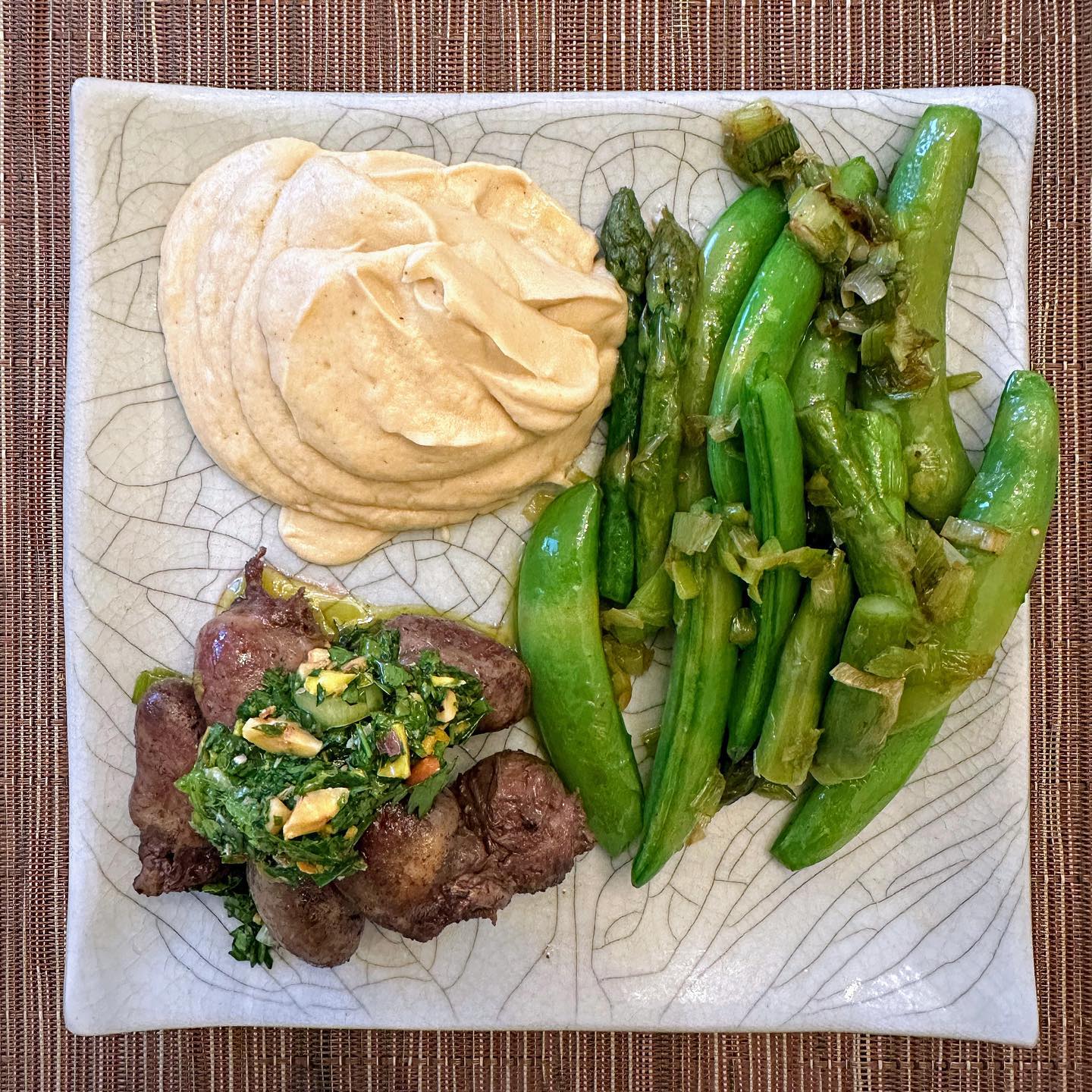
Seared Duck Hearts
A hot pan and small batches brown the hearts without steaming them. Trimming and opening the hearts makes cleaning easier and helps them cook evenly.
Ingredients
- 1½ lb duck hearts
- 1½ tbsp ghee
- ¾ tsp kosher salt, plus more to taste
- ¼ tsp freshly ground black pepper
Instructions
- Trim the tough vessels and excess fat from the tops of the hearts. Split lengthwise, remove any clots, and pat thoroughly dry.
- Season with salt and pepper just before cooking. Heat a heavy skillet over medium-high heat, then add half the ghee.
- Add half the hearts in a single layer. Sear undisturbed for about 2 minutes, until browned, then turn and cook another 2–4 minutes, adjusting the heat to prevent scorching. Check a thick heart with a thin-tip thermometer; poultry giblets should reach 165°F.
- Transfer to a warm plate and repeat with the remaining ghee and hearts. Rest briefly while finishing the vegetables, then serve with the herb sauce.
Notes
- Avoid crowding the skillet or holding the cooked hearts for long; both work against a browned exterior and tender texture.
Pistachio-Hazelnut Herb Sauce
Coarsely chopped nuts give the sauce crunch, while herbs, lemon, and vinegar cut through the richness of the hearts. Hand chopping preserves the distinct textures visible in the finished sauce.
Ingredients
- ¼ cup shelled unsalted pistachios
- ¼ cup hazelnuts
- 1 cup loosely packed flat-leaf parsley leaves and tender stems
- ¼ cup loosely packed mint leaves
- 1 scallion, finely sliced
- 1 small garlic clove, finely grated
- 1 tsp finely grated lemon zest
- 1½ tbsp lemon juice
- 1 tsp red wine vinegar
- ¼ cup extra-virgin olive oil
- ¼ tsp kosher salt, plus more to taste
- to taste freshly ground black pepper
Instructions
- Heat the oven to 350°F. Toast the hazelnuts for 6–8 minutes, adding the pistachios for the final 4 minutes, until fragrant. Rub loose skins from the warm hazelnuts with a towel, then cool both nuts.
- Coarsely chop the nuts. Finely chop the parsley and mint without grinding them into a paste.
- Mix the scallion, garlic, lemon zest, lemon juice, vinegar, salt, and pepper. Stir in the olive oil, herbs, and nuts.
- Taste and adjust the salt and acidity. The sauce should be spoonable and chunky, with enough oil to lightly pool around the herbs.
Notes
- For advance preparation, keep the toasted nuts and chopped herbs separate from the dressing until shortly before serving.
- If too thick, loosen with a little more olive oil; if too sharp, add a small splash of water before adding more oil.
Asparagus and Sugar Snap Peas with Scallions
Brief blanching cooks the thicker asparagus evenly, while a quick pan finish keeps the peas sweet and crisp. Soft scallions add a savory layer without obscuring the spring vegetables.
Ingredients
- 1 lb asparagus, woody ends removed
- 12 oz sugar snap peas, strings removed
- 4 scallions, sliced, whites and greens separated
- 1½ tbsp ghee
- 2 tsp lemon juice
- to taste kosher salt and freshly ground black pepper
Instructions
- Bring a large pot of salted water to a boil. Leave medium asparagus spears whole; halve very thick spears lengthwise.
- Blanch the asparagus for 2–3 minutes, adding the snap peas for the last 45–60 seconds. Drain when bright green and still slightly underdone. Spread on a towel to dry; if preparing ahead, chill in ice water first, then dry thoroughly.
- Heat the ghee in a wide skillet over medium heat. Add the scallion whites and cook for 2 minutes, until softened with a few golden edges.
- Add the asparagus and snap peas. Toss over medium-high heat for 2–3 minutes, until hot, glossy, and crisp-tender.
- Add the scallion greens, lemon juice, salt, and pepper. Toss briefly and serve immediately.
Cauliflower and Celery Root Purée
Celery root gives cauliflower an earthy sweetness and more body. Drying the cooked vegetables before blending prevents a watery purée, while butter and a little cream make it smooth and spoonable.
Ingredients
- 1 lb peeled celery root, cut into ½-inch cubes
- 1 lb cauliflower florets
- 3 tbsp unsalted butter
- ⅓ cup heavy cream, warmed
- ½ tsp kosher salt, plus more to taste
- to taste freshly ground black pepper
Instructions
- Set a steamer basket over simmering water. Add the celery root, cover, and steam for 10 minutes.
- Add the cauliflower and continue steaming for 15–20 minutes, until both vegetables are completely tender and crush easily with a fork.
- Transfer the vegetables to an empty saucepan over low heat. Stir for 2–3 minutes to release excess moisture without browning.
- Blend the hot vegetables with the butter, half the warm cream, salt, and pepper until very smooth, venting the blender lid safely. Add the remaining cream as needed to make a thick purée that holds a soft mound.
- Return to the saucepan and keep warm over very low heat, covered. Taste for salt before serving.
Notes
- If the blender struggles, add warm water a tablespoon at a time rather than making the purée overly rich.
- For an especially fine texture, pass the blended purée through a fine-mesh sieve.
Overall Timing / Workflow
The purée holds well, while the hearts and green vegetables are best served freshly cooked. Making the sauce first leaves only quick pan work at the end.
Instructions
- 0:00 — Heat the oven for the nuts and start the celery root steaming. Prep the cauliflower, herbs, and green vegetables.
- 0:10 — Add the cauliflower to the steamer. Toast and cool the nuts, then prepare the herb sauce.
- 0:20 — Trim and dry the hearts using a separate board, then clean and sanitize the work area. Bring the blanching water to a boil.
- 0:30 — Blend the purée and keep it warm. Blanch and thoroughly drain the asparagus and snap peas.
- 0:40 — Sear the hearts in batches. During the final batch, finish the vegetables in a second skillet.
- 0:50 — Check the sauce and purée for seasoning, then plate and serve.
Plating
Keeping the three main elements distinct preserves the purée's smoothness and the vegetables' snap. The herb sauce belongs directly on the hearts so each bite gets acidity and crunch.
Instructions
- Use warm plates. Spoon a generous mound of purée onto one side and sweep it into a broad swirl.
- Arrange the asparagus and snap peas alongside, keeping the spears roughly aligned, and spoon the softened scallions over them.
- Place the hearts in a compact pile in the remaining space. Spoon the chunky herb sauce over the hearts, allowing a little herb oil to run onto the plate.
Leftover Path
Separate storage keeps the herb sauce fresh and lets the purée reheat gently without overcooking the vegetables or hearts.
Instructions
- Refrigerate the hearts, purée, vegetables, and herb sauce in separate airtight containers within 2 hours. Use the cooked components within 3–4 days and the herb sauce within 2–3 days.
- Reheat the purée over low heat with a splash of water, stirring until hot. Warm the vegetables briefly in a skillet.
- Slice the hearts and reheat gently in a covered skillet with a spoonful of water until they reach 165°F. Remove promptly to limit toughening.
- Serve the reheated hearts and vegetables over the purée, adding the herb sauce after heating.