Seared Salmon Wings with Tomato Miso Butter, Caramelized Cabbage, and Corn–Japanese Sweet Potato Hash
Salmon wings turn crisp at the edges while staying rich and juicy around the bones, with tomato miso butter melting into every crevice. Deeply browned cabbage and a golden corn–Japanese sweet potato hash make this a generous late-summer supper with plenty of sweet, savory contrast.
By Jonathan Katzman · Cooked and photographed · Recipe updated
Serves: 4 servings
Tags: gluten-free, nut-free, pescatarian
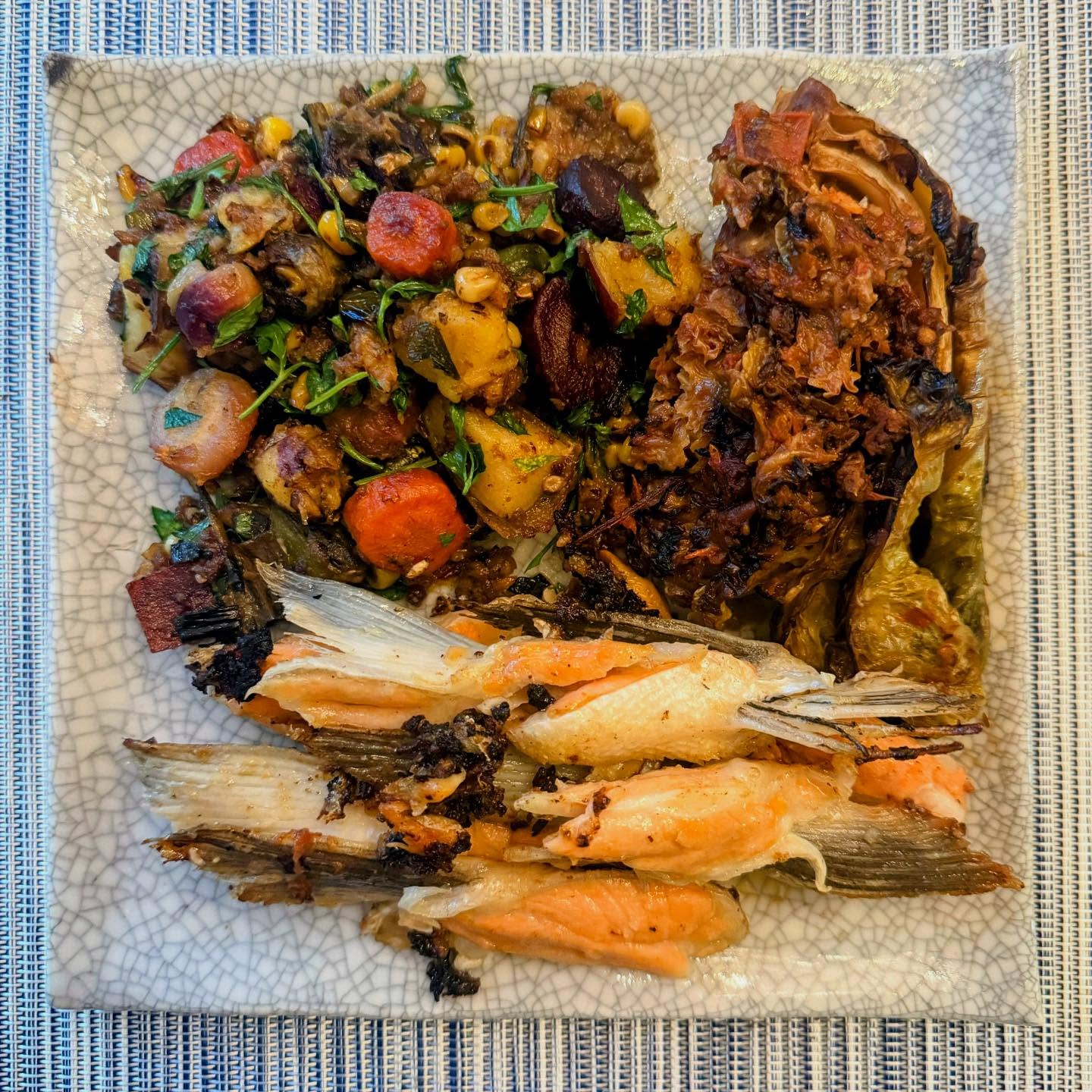
Quick-Seared Salmon Wings
The fatty meat around the fins stays succulent under a hard, brief sear. Adding the miso butter only after lowering the heat keeps its fermented sweetness from scorching.
Ingredients
- 3 lb salmon wings or fin-on collar pieces, scaled and cleaned
- 1/2 tsp fine sea salt, plus more only if needed
- 1/4 tsp freshly ground black pepper
- 2 tbsp ghee
- 1 batch Tomato Miso Butter, prepared separately
Instructions
- Pat the salmon very dry, checking for loose scales and bone fragments. Season lightly with salt and pepper; the butter will supply additional salt.
- Heat a large cast-iron or heavy skillet over medium-high heat. Add the ghee, then lay in the wings with their broadest skin or flesh surface against the pan. Work in batches rather than crowding.
- Sear undisturbed for 3–4 minutes, until the contact surface is browned and releases readily. Turn and cook for another 2–4 minutes, adjusting the heat if the thin fin edges begin to burn.
- For unusually thick pieces, lower the heat and cover for 1–3 minutes to finish. Check the thickest meat away from the bone with an instant-read thermometer; cook to 145°F.
- Take the skillet off the heat and let the fierce sizzling subside. Spoon a portion of the tomato miso butter over the wings and turn gently to coat. Serve immediately, with the remaining butter alongside.
Notes
- Wing size varies considerably. Buy by weight and use thickness and temperature rather than a fixed piece count to judge cooking.
- Use a clean pan or wipe out scorched residue between batches.
Tomato Miso Butter
Tomato miso gives the butter concentrated savory depth and a little sweetness. Lemon and a splash of water keep the finish bright and spoonable rather than heavy.
Ingredients
- 4 tbsp unsalted butter, softened
- 1 1/2 tbsp gluten-free tomato miso, preferably Shared Cultures
- 1 tsp fresh lemon juice, plus more to taste
- 1–2 tbsp warm water
Instructions
- Mash the softened butter with the tomato miso until evenly blended.
- Shortly before serving, warm the mixture in a small saucepan over the lowest heat just until melted. Whisk in the lemon juice and 1 tablespoon warm water.
- Add a little more water if needed for a loose, glossy sauce. Taste before adding any salt, and keep warm off the heat rather than boiling.
Notes
- Tomato misos vary in salt and acidity. Start with 1 tablespoon if yours is particularly salty, then increase to taste.
- If the sauce separates, remove it from the heat and whisk in a teaspoon of warm water.
Caramelized Cabbage with Tomatoes
Roasting cut-side down gives cabbage a deeply browned surface while its center softens. Tomatoes added partway through concentrate into a tangy coating without preventing the initial browning.
Ingredients
- 1 medium head green cabbage, about 2 lb
- 1 lb ripe summer tomatoes, cut into 3/4-inch pieces
- 3 tbsp olive oil, divided
- 2 cloves garlic, thinly sliced
- 3/4 tsp fine sea salt, divided
- 1/4 tsp freshly ground black pepper
- 1–2 tsp red wine vinegar
Instructions
- Heat the oven to 425°F. Cut the cabbage through its core into 8 wedges, leaving enough core to hold each wedge together.
- Coat the cabbage with 2 tablespoons olive oil, 1/2 teaspoon salt, and the pepper. Arrange on a large metal roasting pan with a cut face down and space between the wedges.
- Roast for 18–20 minutes, until the undersides are deeply browned.
- Toss the tomatoes and garlic with the remaining olive oil and salt. Turn the cabbage onto its other cut side and scatter the tomato mixture around and partly over it.
- Roast for another 15–20 minutes, until the cabbage is tender through the core, its edges are dark, and the tomatoes have collapsed. If the pan begins to scorch before the cabbage is tender, add 2 tablespoons water to the bare pan.
- Spoon the concentrated tomatoes and pan juices over the cabbage. Finish with the vinegar, starting with 1 teaspoon and adding more to taste.
Notes
- Use a spacious pan: crowded cabbage steams instead of caramelizing. A few nearly black outer leaf tips are welcome, but the thicker leaves should be brown rather than burned.
Corn and Japanese Sweet Potato Hash
A short parboil cooks the dense sweet potato centers before pan-browning. Corn goes in near the end so it picks up color without losing its summer sweetness and pop.
Ingredients
- 1 1/2 lb purple-skinned Japanese sweet potatoes, scrubbed and cut into 3/4-inch chunks
- 3 ears sweet corn, kernels cut from the cobs, about 2 cups
- 1 small red onion, cut into 1/2-inch pieces
- 2 tbsp ghee
- 3/4 tsp fine sea salt, plus more for the boiling water
- 1/4 tsp freshly ground black pepper
- 1/3 cup roughly chopped flat-leaf parsley
- 2 tsp fresh lemon juice
Instructions
- Place the sweet potato chunks in a saucepan, cover with cold water, and salt the water lightly. Bring to a boil, then simmer for 6–8 minutes, until a knife enters with a little resistance. Drain thoroughly and let steam-dry for 3 minutes.
- Heat the ghee in a wide skillet over medium-high heat. Add the sweet potatoes in a single layer and leave undisturbed for 4–5 minutes, until their undersides develop a golden crust.
- Turn the potatoes, add the onion, and cook for another 5–6 minutes, turning occasionally, until the potatoes are tender and the onion has browned edges.
- Add the corn, salt, and pepper. Cook for 4–5 minutes, stirring occasionally, until the kernels are hot and lightly blistered. Avoid constant stirring so the vegetables have time to brown.
- Remove from the heat and fold in the parsley and lemon juice. Taste and adjust the salt before serving.
Notes
- Use a 12-inch or larger skillet; with a smaller pan, brown the sweet potatoes in batches and reunite everything when adding the corn.
Overall Timing / Workflow
The oven handles the cabbage while the hash cooks on the stove. Searing the salmon last keeps its edges crisp and the butter fresh.
Instructions
- 0:00 — Heat the oven to 425°F. Cut and season the cabbage, then put it in the oven.
- 0:10 — Cut and parboil the sweet potatoes. Prepare the corn, onion, tomatoes, garlic, and parsley; mix the tomato miso butter.
- 0:20 — Turn the cabbage and add the tomatoes. Drain and steam-dry the sweet potatoes, then begin browning the hash.
- 0:30 — Pat the salmon dry and season it. Add the corn to the hash as the potatoes finish browning.
- 0:35 — Check the cabbage for tenderness. Finish the hash with parsley and lemon, then keep it warm uncovered over very low heat.
- 0:35–0:50 — Sear the salmon, allowing additional time if batches are necessary. Gently warm the tomato miso butter and finish the cabbage with vinegar.
- Serve as soon as the final salmon batch is cooked.
Notes
- Allow about 50–55 minutes overall with overlapping prep. Two skillets make it easier to finish the hash and salmon close together.
Plating
Keeping the three dishes distinct preserves the hash's browned edges and lets the salmon butter mingle with the vegetables only as you eat.
Instructions
- Set a generous scoop of hash on one side of each warm plate and place two cabbage wedges beside it.
- Spoon the roasted tomatoes and their juices over the cabbage.
- Arrange the salmon wings along the open side of the plate, with the browned surfaces facing up. Spoon a little tomato miso butter over the meat without flooding the crisp skin.
- Provide a small dish for bones and fins; lift the salmon flesh away carefully as you eat.
Leftover Path
Separating the salmon from its bones while it is still easy to handle makes leftovers more useful. Gentle reheating protects the fish, while a hot skillet restores texture to the hash.
Instructions
- Remove leftover salmon meat from the bones and fins, checking carefully for small bones. Refrigerate the fish, vegetables, and remaining butter in separate covered containers within 2 hours of cooking.
- Use the salmon within 2 days and the vegetables within 3–4 days.
- Reheat the hash in a skillet until hot and crisp at the edges. Warm the cabbage covered with a splash of water.
- For a next-day meal, gently fold the flaked salmon into the hot hash and heat until the fish reaches 165°F. Add any leftover tomato miso butter off the heat.